Comparative analysis Normal Math Worksheets for Ages 7-9
3 filtered results
-
From - To
Explore our dynamic collection of Normal Math Worksheets for Ages 7-9, designed to enhance your child's analytical skills. These engaging worksheets focus on comparative analysis, helping young learners understand and compare numbers, patterns, and mathematical concepts. Perfect for advancing problem-solving abilities and critical thinking, our expertly crafted resources align with educational standards and cater to various learning styles. With colorful visuals and interactive layouts, children will find these worksheets both fun and informative, ensuring a solid foundation in math fundamentals. Equip your child for academic success with our comprehensive and thoughtfully curated math worksheets at Kids Academy.
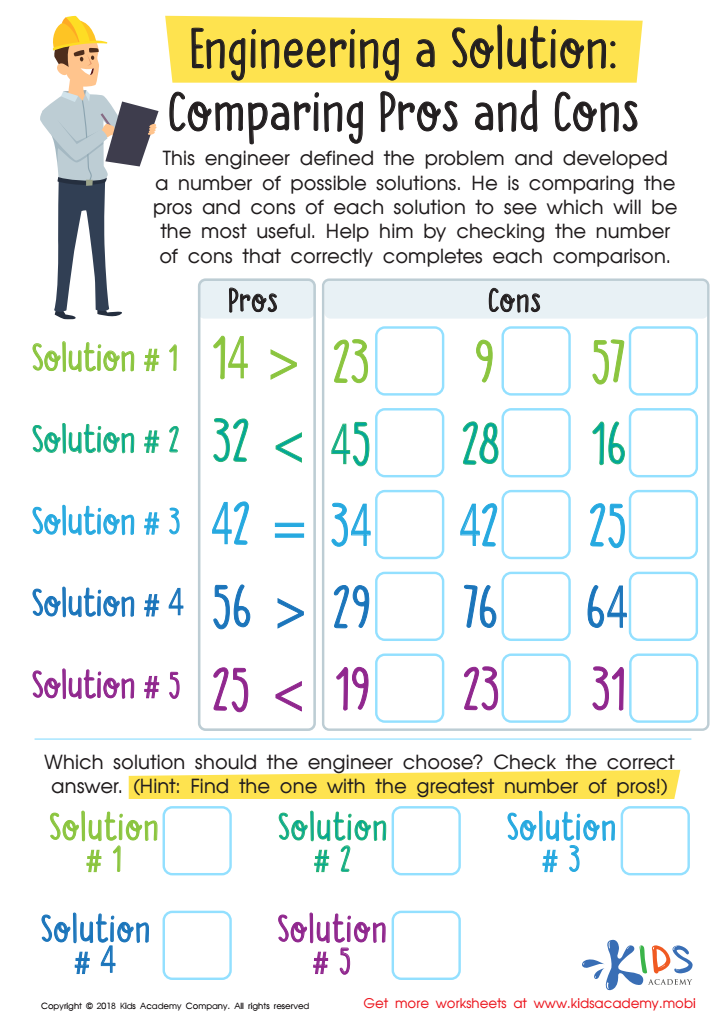
Engineering a Solution: Comparing Pros and Cons Worksheet
 Assign to My Students
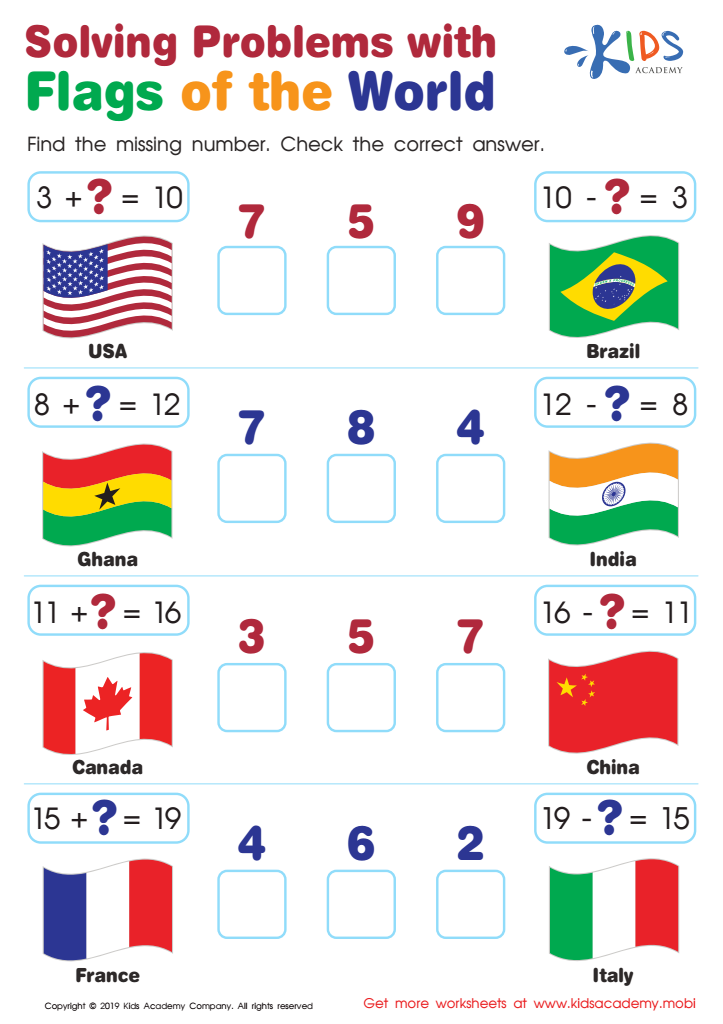
Solving Problems with Flags of the World Worksheet







Comparative analysis in normal math education for children aged 7-9 is crucial for both parents and teachers for several reasons. First, it provides a clear benchmark to gauge a child's mathematical development against standard educational expectations. By comparing a child’s performance to typical achievements at this age, parents and teachers can identify whether the child is on track, excelling, or possibly struggling.
Understanding these benchmarks allows for targeted intervention and support. For instance, if a child is falling behind, localized strategies and resources can be applied to help them catch up. Conversely, for those excelling, advanced materials ensure they remain challenged and engaged.
Moreover, comparative analysis cultivates a holistic understanding of mathematics education. It goes beyond simple test scores to find gaps in conceptual understanding or skill proficiency. This detailed insight supports personalized learning plans that cater to individual strengths and weaknesses. Importantly, this process emphasizes the need for maintaining a positive, encouraging attitude towards learning. Parents and teachers who proactively address learning differences can help foster greater confidence and enjoyment in math for their children.
Overall, employing comparative analysis in math education at these formative ages ensures that each child receives the support and challenges they need, laying a strong foundation for future learning and academic success.








