Comparing Fractions Normal Math Worksheets for Ages 7-9
4 filtered results
-
From - To
Boost your child's fraction skills with our "Comparing Fractions Normal Math Worksheets for Ages 7-9." These engaging, expertly designed worksheets help young learners grasp the concepts of comparing and ordering fractions. Through a range of activities, children will confidently identify greater, lesser, and equivalent fractions using visual aids and logical reasoning. Each worksheet aims to strengthen their understanding, making fractions fun and accessible. Perfect for classroom use or home practice, these resources will enhance your child's mathematical abilities, preparing them for more advanced math challenges. Join the learning adventure and watch your child's confidence grow with every completed worksheet!
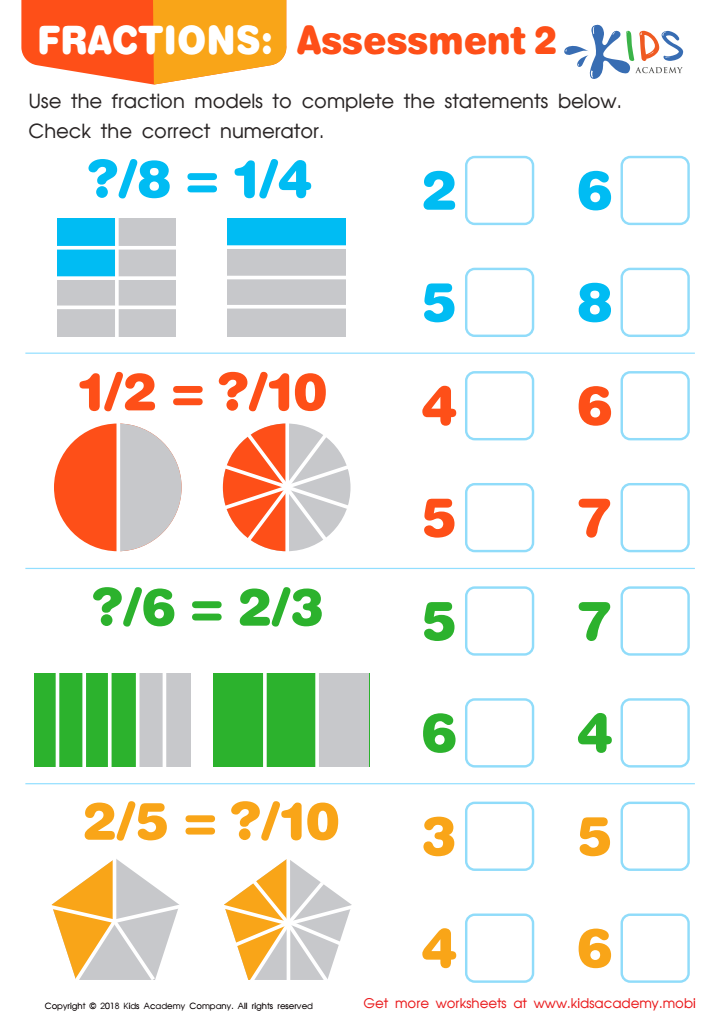
Fractions: Assessment 2 Worksheet
 Assign to My Students
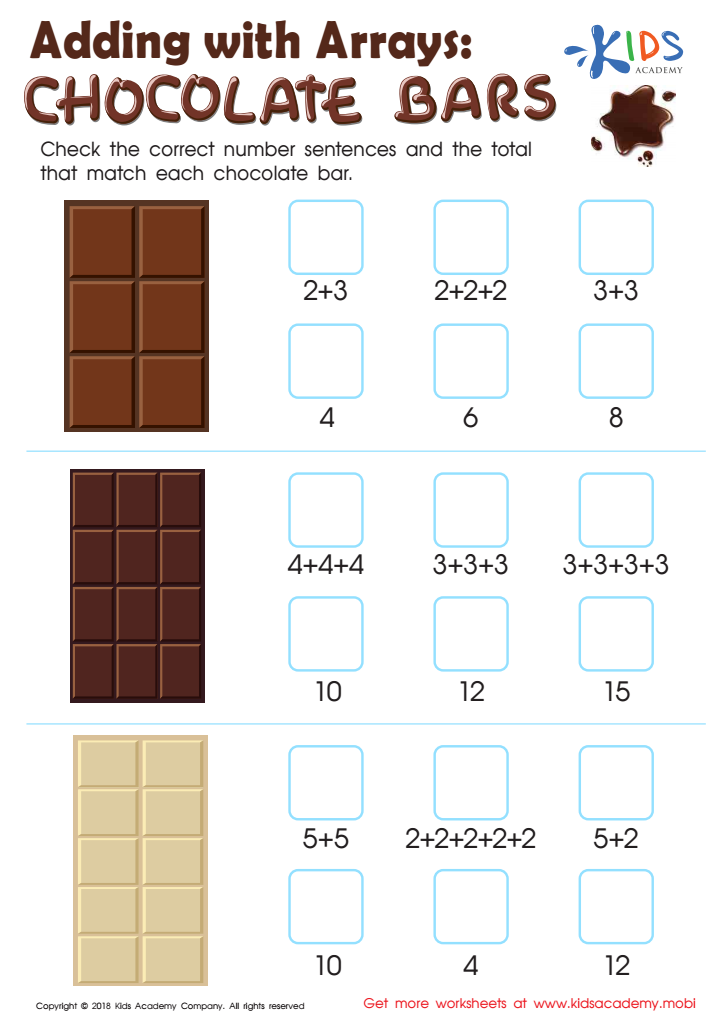
Adding with Arrays: Chocolate Bars Worksheet
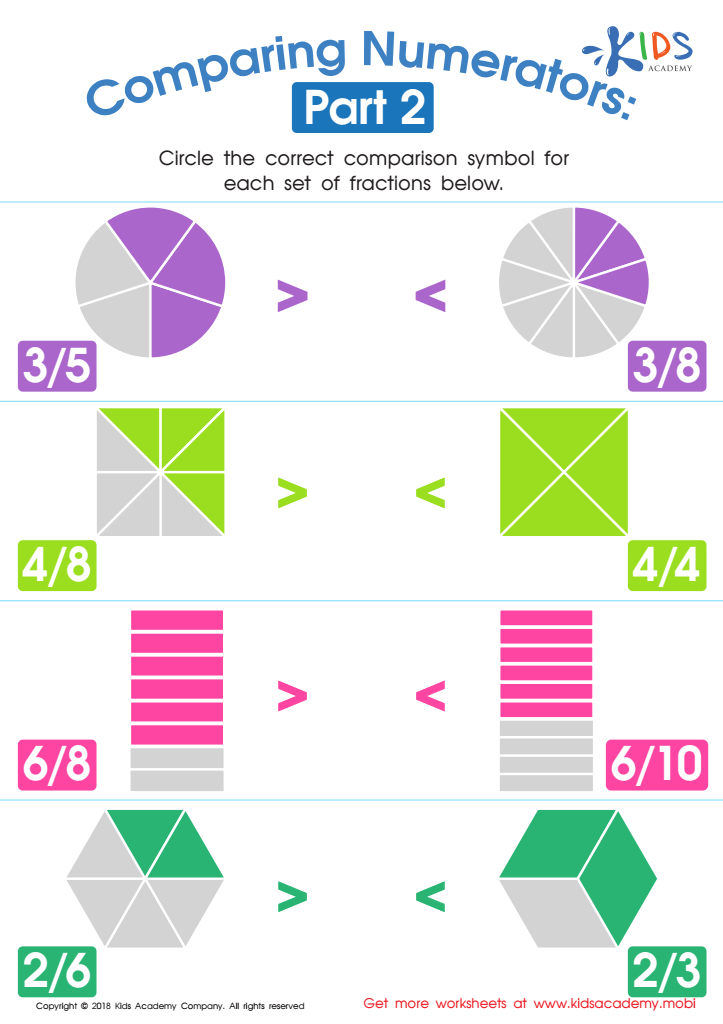
Comparing Numerators Part 2 Worksheet
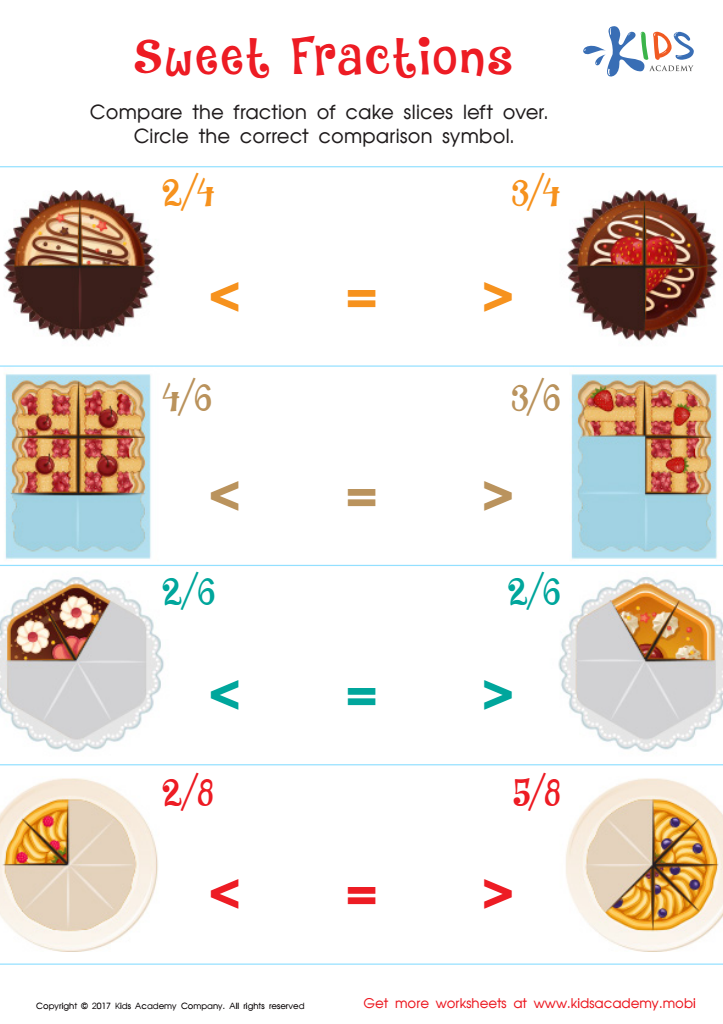
Compare Fractions Worksheet




Introducing the concept of comparing fractions to children ages 7-9 plays a crucial role in forming their mathematical foundation. At this developmental stage, children's cognitive skills are rapidly evolving. Understanding fractions early on helps them grasp more complex mathematical concepts in the future, such as ratios, proportions, and algebra.
When parents and teachers emphasize comparing fractions, they are teaching critical thinking and problem-solving skills. Children learn to reason, analyze quantities, and make meaningful mathematical connections. These skills extend beyond the classroom, helping children approach real-life scenarios systematically.
Moreover, a firm understanding of fractions allows children to develop numerical literacy. They comprehend the idea that numbers can represent parts of a whole, which is essential for everyday tasks like cooking, shopping, and even time management. For instance, realizing that 1/2 of a pizza is smaller than 3/4 enables practical thinking and decision-making.
Fostering an early interest in fractions also promotes a positive attitude toward math. When children master comparing fractions, they gain confidence in their abilities, increasing their willingness to tackle more complex subjects enthusiastically. This solid foundation leads to academic success, providing them with the skills necessary for a lifetime of learning and development.








