
Hand-eye Coordination Normal Math Worksheets for Ages 7-9
5 filtered results
Difficulty Level
Grade
Age
-
From - To
Subject
Activity
Standards
Enhance your child's learning with our Hand-eye Coordination Normal Math Worksheets for Ages 7-9. Perfectly designed to blend math skills with physical development, these worksheets inspire young learners to synchronize visual information with hand movements. Packed with engaging activities, they not only reinforce math concepts such as addition, subtraction, and geometry but also boost fine motor skills necessary for academic success. Crafted by educational experts, our worksheets provide a fun and productive way for children to improve their hand-eye coordination while mastering essential math principles. Unlock your child's potential and make learning interactive and enjoyable today!
Favorites
With answer key
Interactive
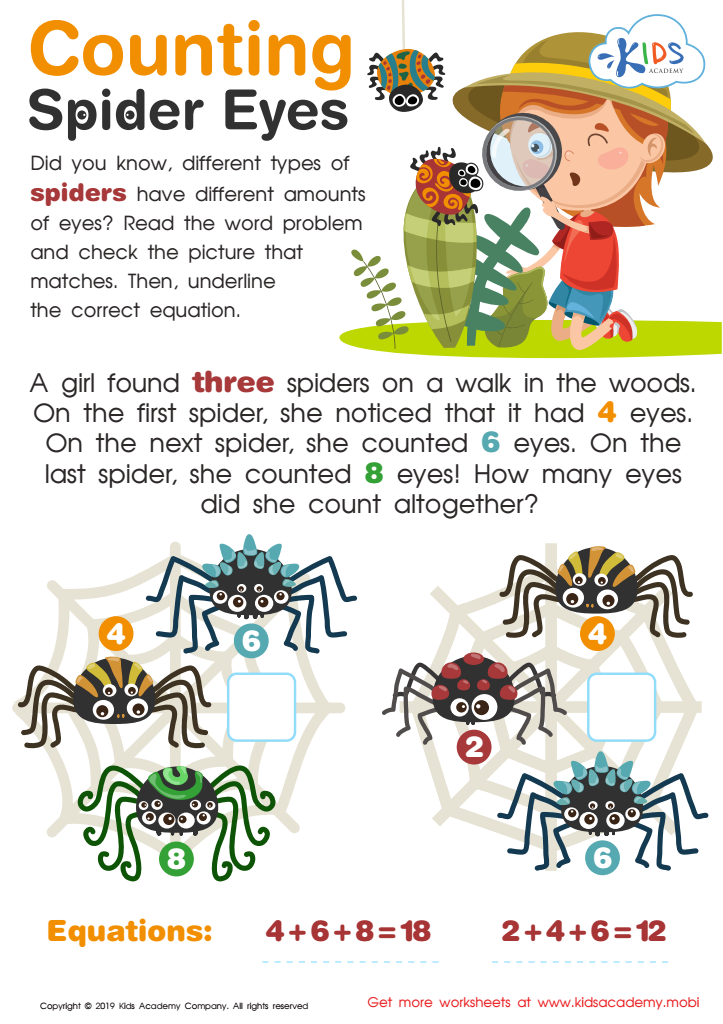
Counting Spider Eyes Worksheet
Did you know different spiders have different eye numbers? Kids will love learning this fact and solving the spider word problems on this free worksheet! Word problems promote a deeper understanding of the concept, plus they get to add up the spiders’ eyes while solving addition problems with more than one addend. Fun and math all in one!
 Assign to My Students
Counting Spider Eyes Worksheet
Worksheet
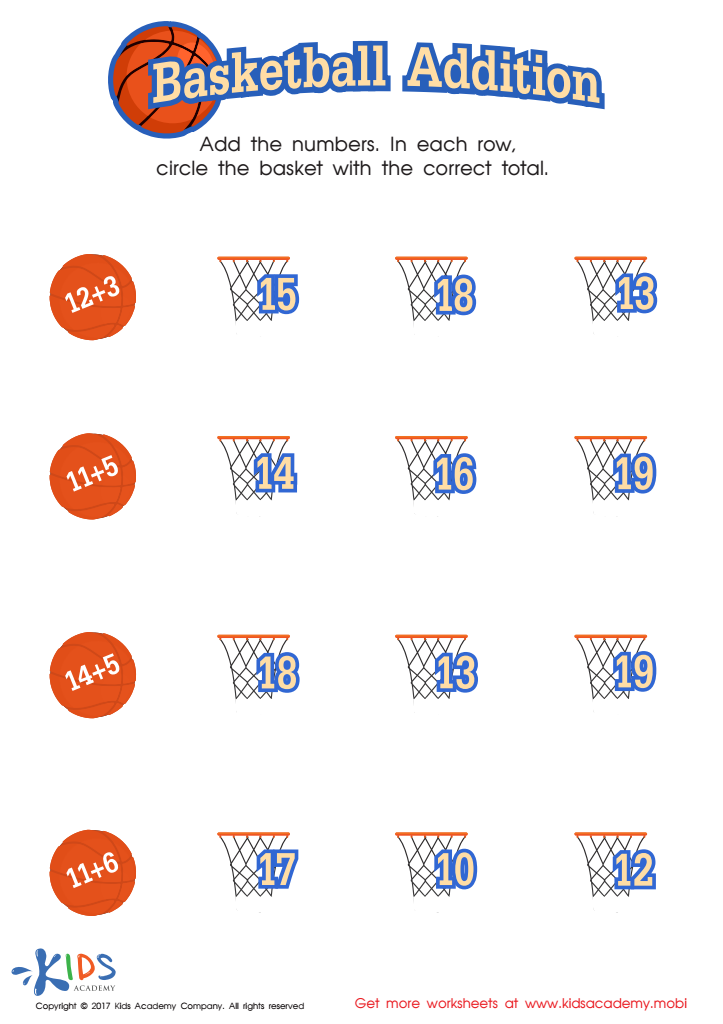
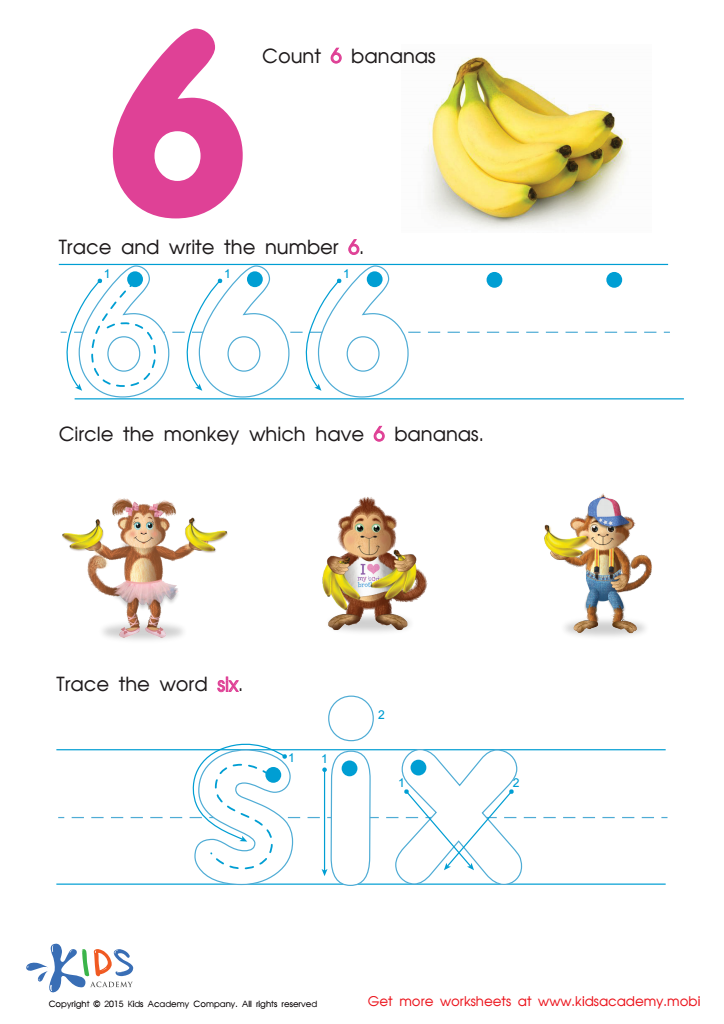
Tracing And Writing Number 6 Worksheet
Learn numbers in a fun way with our preschool number worksheets. Count six bananas, trace and write the number, find the monkey with six bananas, and trace the word "six." Explore more activities at Kids Academy.
Tracing And Writing Number 6 Worksheet
Worksheet
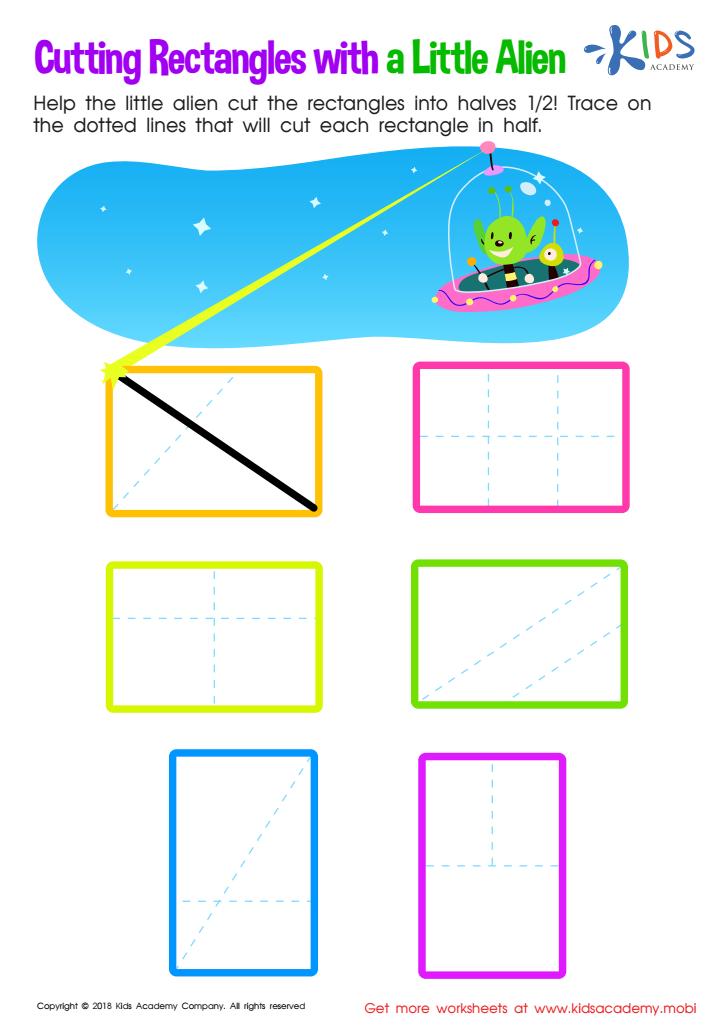
Cutting Rectangles with Alien Worksheet
If your students are interested in aliens and otherworldly events, they'll love this exercise! It requires them to help a small alien cut rectangles into halves (½). They must trace the dotted lines to accurately cut each rectangle.
Cutting Rectangles with Alien Worksheet
Worksheet
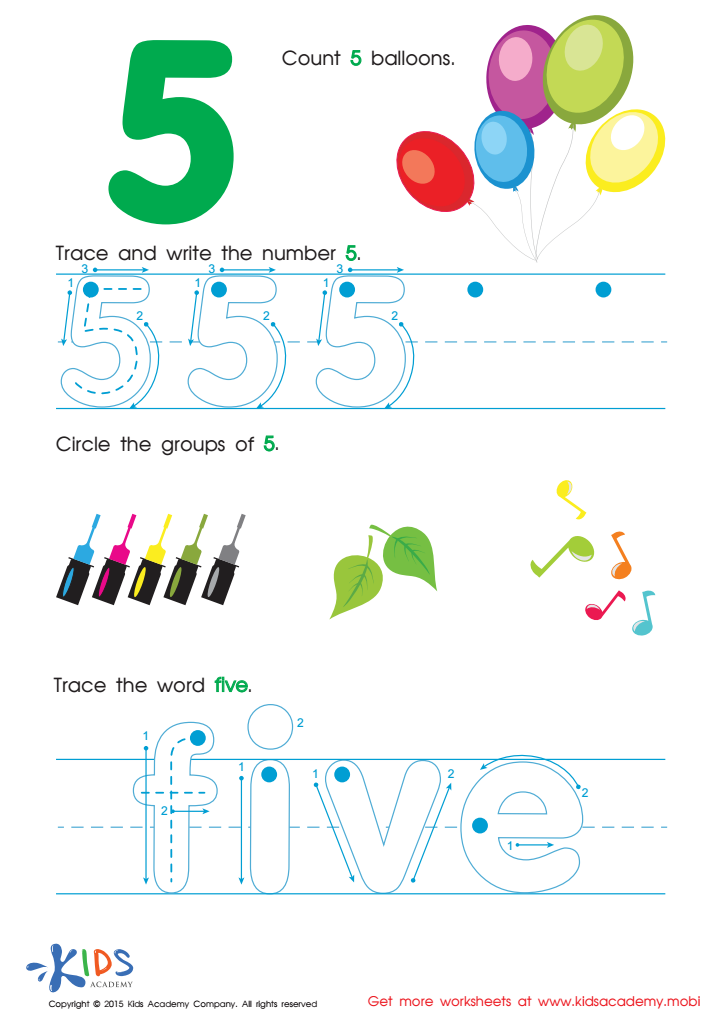
Practice Writing Number 5 Worksheet
Make learning numbers fun! Let your kids count the balloons, trace numbers, and circle the groups with five items. Also, have them trace the word "five" for letter revision. Get the full collection of preschool number worksheets from Kids Academy for a fun and interactive learning experience.
Practice Writing Number 5 Worksheet
Worksheet
Join Kids Academy for Free
Who is primarily going to use this learning content?








Hand-eye coordination is essential for children aged 7-9 as it profoundly influences their academic and physical development. At this critical stage, children are honing the skills required for various educational tasks, and strong hand-eye coordination directly impacts their ability to perform activities such as writing, reading, and other fine motor tasks. For instance, accurately copying shapes, letters, and numbers from the board to their paper demands synchronization between their visual system and hand movements.
Furthermore, mathematical learning is particularly reliant on this coordination. Engaging with objects during arithmetic exercises, manipulating geometric shapes, and drawing graphs all demand a seamless connection between vision and manual dexterity. Enhanced hand-eye coordination means fewer frustration and more positive learning experiences, creating a constructive relationship with mathematics.
Beyond academics, good hand-eye coordination underpins success in physical activities like sports, which are vital for social development, self-esteem, and physical health. Catching a ball, tying shoelaces, or riding a bicycle all fall into this category. By supporting the development of these skills, parents and educators lay the foundation for children to approach and solve problems confidently and efficiently, both in the classroom and in life. Effective intervention in these formative years can yield lasting benefits, strengthening cognitive abilities and motor skills that will serve children throughout their academic journey and beyond.








