Reading analog clocks Normal Math Worksheets for Ages 7-9
3 filtered results
-
From - To
Introducing our engaging "Reading Analog Clocks Normal Math Worksheets" designed for children aged 7 to 9! These worksheets provide a fun and interactive way for kids to develop their time-telling skills. With a variety of exercises, including matching times to clocks, reading hour and minute hands, and solving time-related word problems, students will gain confidence in mastering analog clocks. Created to align with educational standards, these printable resources are perfect for both classroom and home practice. Help your child become a time-telling pro while enhancing their math abilities! Explore our collection and watch their skills soar!
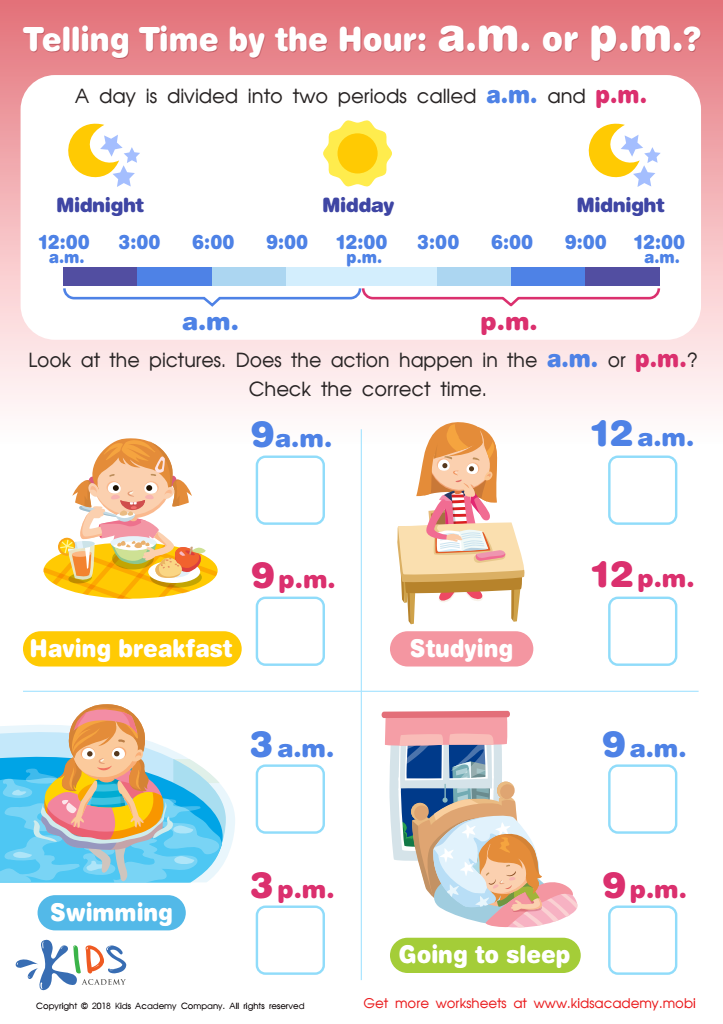
Tilling Time by the Hour: a.m. or p.m.? Worksheet
 Assign to My Students
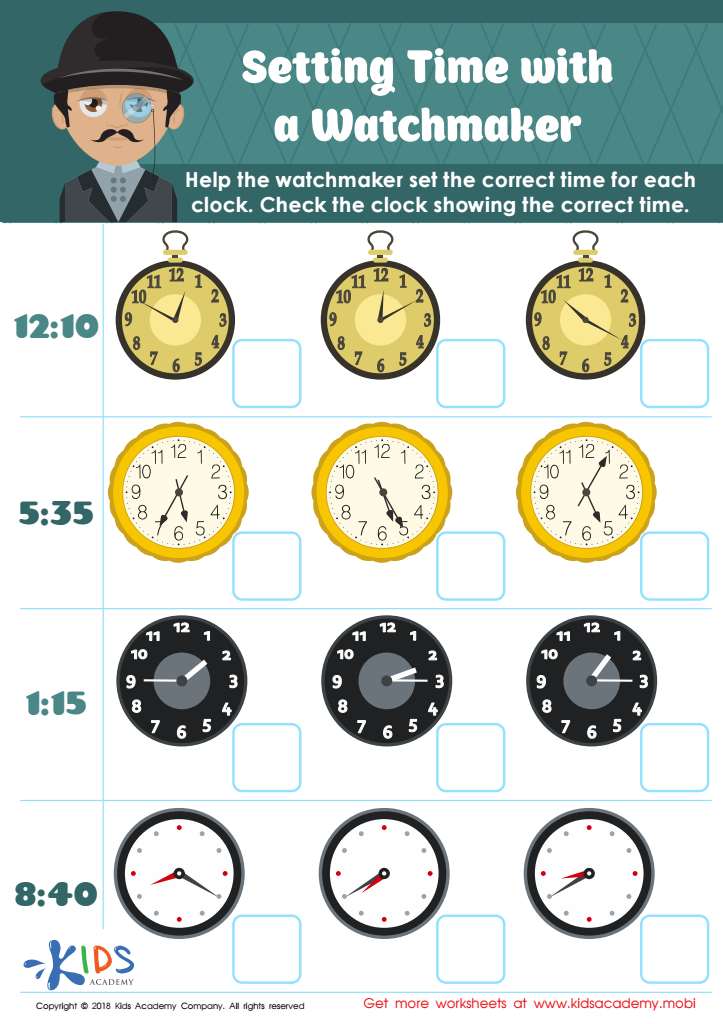
Setting Time with Watchmaker Worksheet
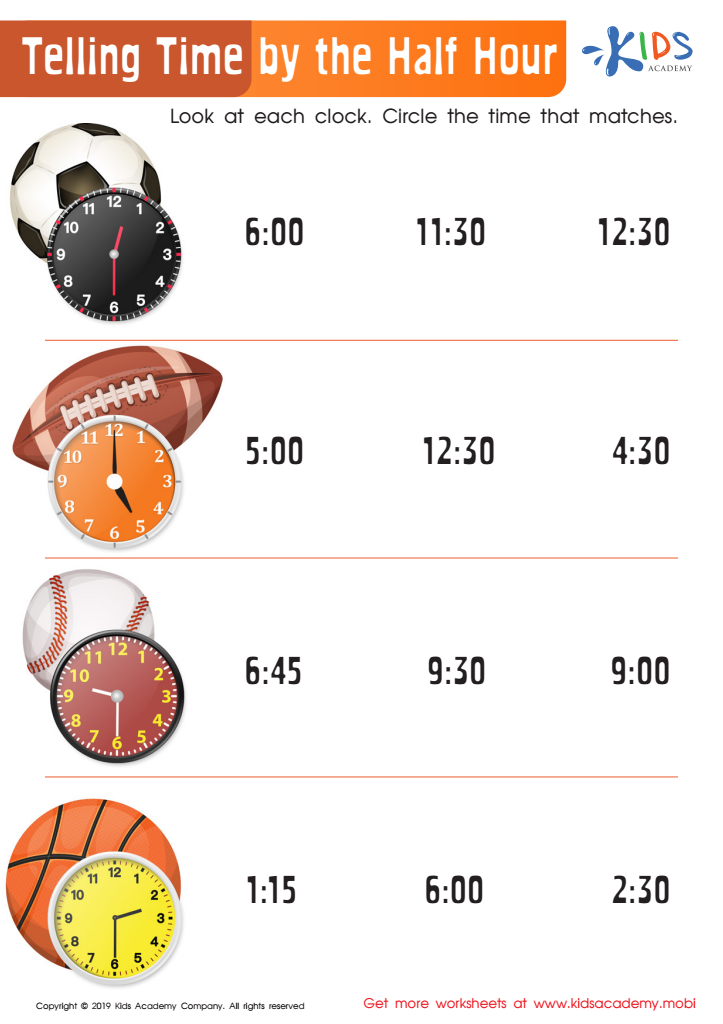
Telling Time by the Half Hour Worksheet




%20(1).jpg)
.jpg)

Understanding how to read analog clocks is a crucial skill for children ages 7-9, and parents and teachers play a vital role in this learning process. Proficiency in reading analog clocks fosters a sense of time management and independence, which are essential in our fast-paced world. Unlike digital clocks, analog clocks promote a deeper comprehension of time concepts, helping children distinguish hours and minutes while visualizing the progression of time.
Moreover, mastering this skill encourages mathematical reasoning. Children engage with fractions, as they learn to recognize the division of the clock face. They also practice counting and develop spatial awareness as they track the movement of the hands. This sort of mathematical thinking promotes cognitive development and enhances overall math proficiency.
In addition, reading analog clocks strengthens critical thinking skills. When children can tell time, they start to plan their days, manage their schedules, and become more aware of their surroundings. It facilitates meaningful conversations about durations of activities and the relationship between events based on time.
By emphasizing the importance of learning to read analog clocks, parents and teachers equip children with not just a practical skill, but also essential life skills that pave the way for lifelong learning.








