Understanding fact families Normal Math Worksheets for Ages 7-9
5 filtered results
-
From - To
Unlock your child's math potential with our "Understanding Fact Families" Normal Math Worksheets designed specifically for ages 7-9! These engaging and interactive worksheets introduce essential math concepts by exploring addition and subtraction relationships. Each worksheet encourages students to identify and create fact families, helping them grasp the foundational skills needed for more complex math operations. Tailored to fit various learning styles, these worksheets boost confidence and reinforce critical thinking. With visually appealing designs and clear instructions, your child will enjoy mastering math facts while developing problem-solving skills. Foster a love for math and watch them thrive—perfect for home or classroom use!
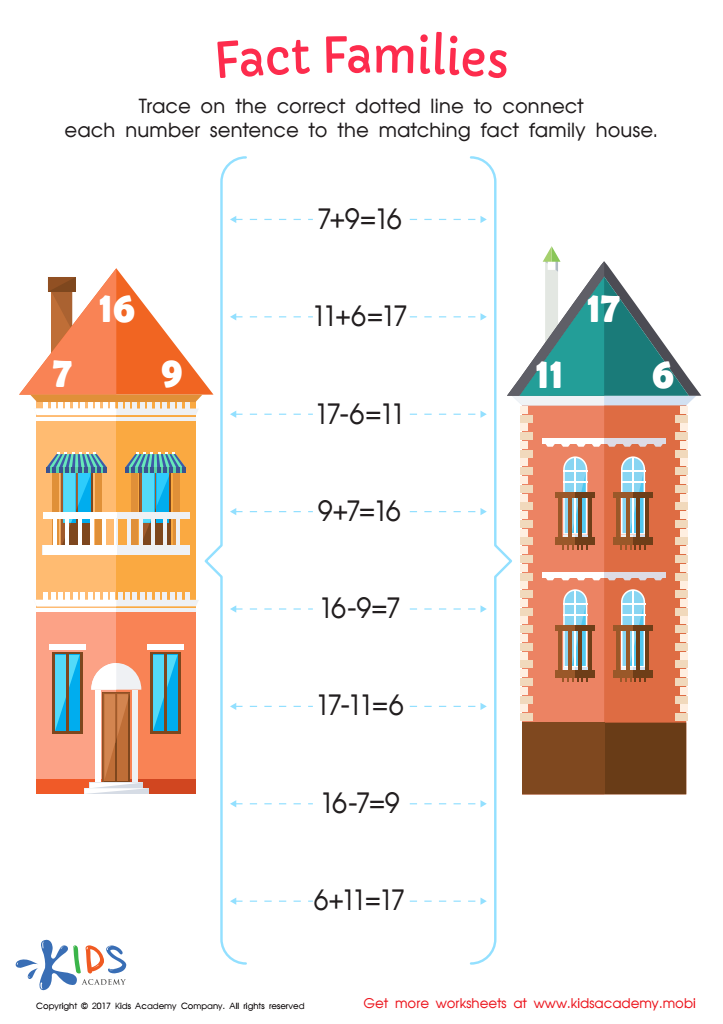
Fact Families — Add and Subtract Worksheet
 Assign to My Students
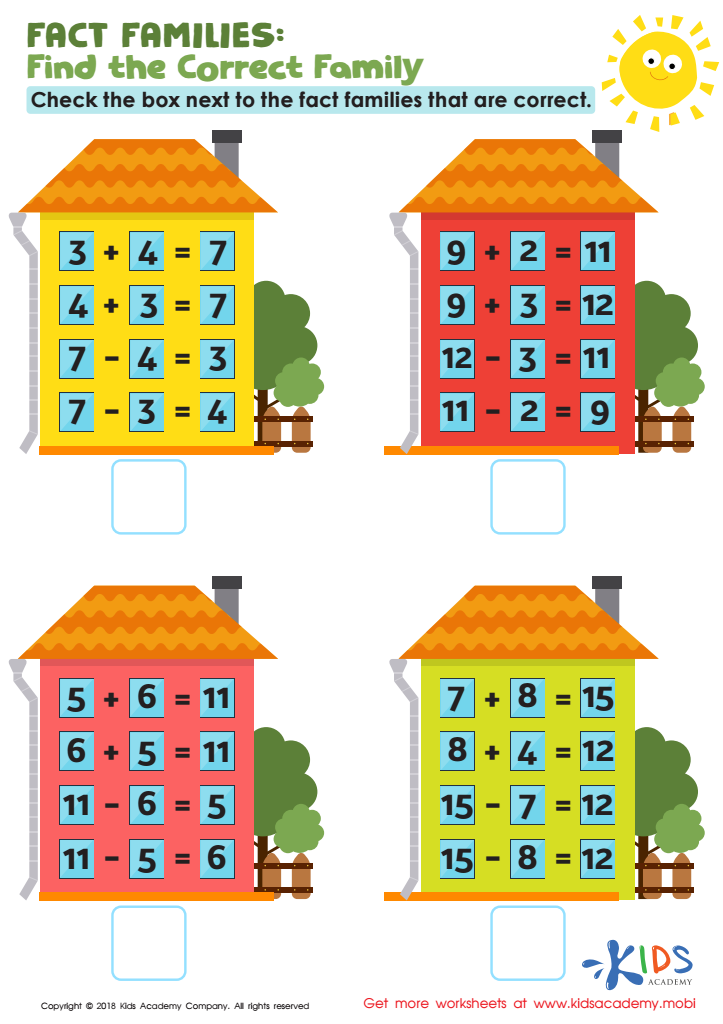
Fact Families: Find Correct Family Worksheet
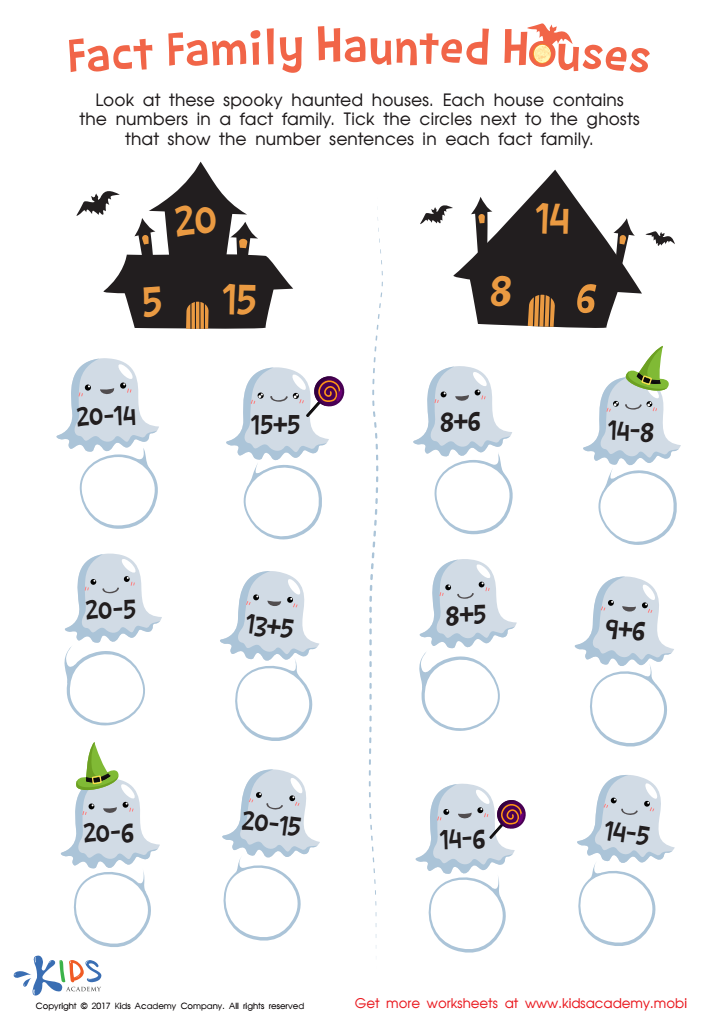
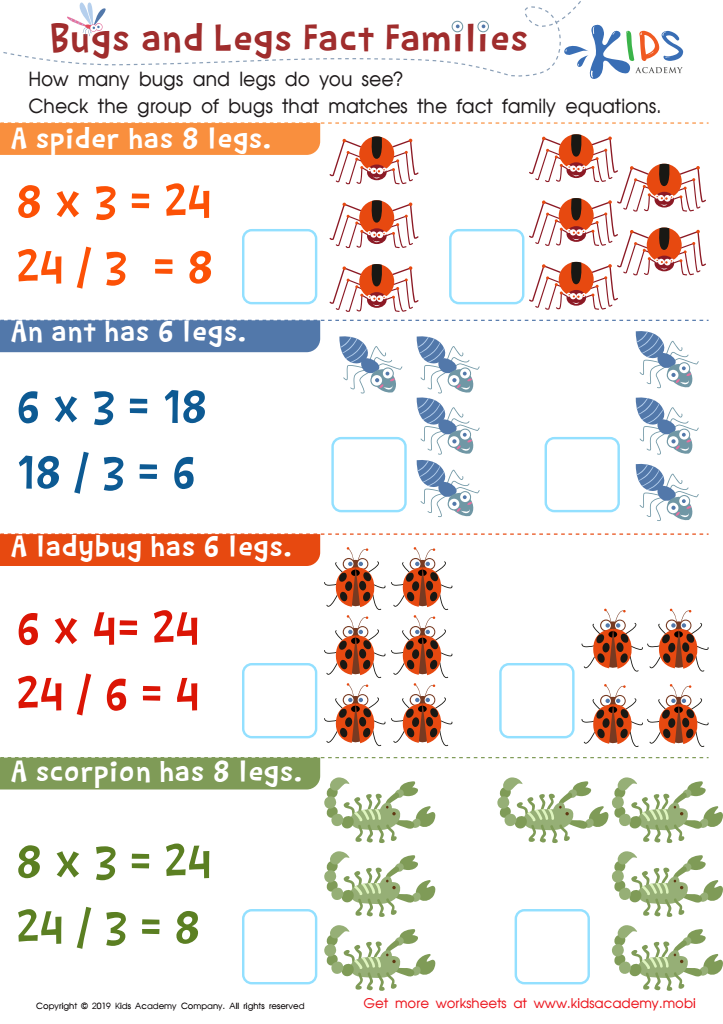
Bugs and Legs Fact Families Worksheet
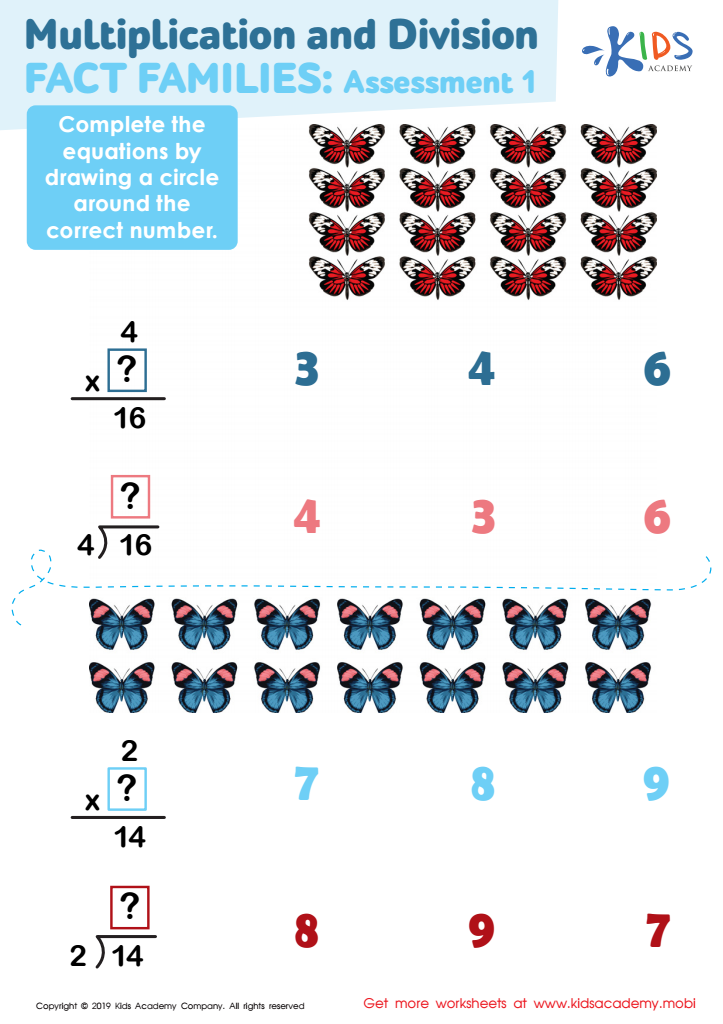
Multiplication and Division Fact Families Assessment 1 Worksheet








Understanding fact families is crucial for children aged 7 to 9, as it lays a foundational understanding of mathematical relationships, particularly in addition and subtraction. Fact families consist of sets of related numbers that demonstrate how addition and subtraction operations are connected. For instance, the numbers 3, 4, and 7 comprise the fact family: 3 + 4 = 7 and 7 - 4 = 3.
Parents and teachers should care about this concept because it helps students develop a deeper comprehension of arithmetic and enhances their problem-solving skills. Recognizing the interrelationships between numbers can lead to improved numerical fluency and the ability to tackle more complex math concepts in the future. Additionally, fact families support mental math abilities, enabling children to perform calculations quickly and efficiently, reducing reliance on rote memorization.
Furthermore, understanding fact families can foster students’ confidence in math, reducing anxiety by showing them a systematic way to approach problem-solving. Engaging with fact families encourages a collaborative learning environment where parents can participate in their children's education, reinforcing the importance of math skills in everyday life. Overall, nurturing this understanding supports lifelong math proficiency and critical thinking abilities.








