Subtraction practice Normal Subtraction Worksheets for Ages 7-9
6 filtered results
-
From - To
Boost your child's math skills with our engaging Subtraction Practice Worksheets, designed specifically for ages 7-9! These printable resources provide a variety of normal subtraction challenges that help young learners grasp essential concepts in a fun and interactive way. Each worksheet features a range of problems focusing on different skill levels, allowing kids to practice and enhance their subtractive reasoning. Our user-friendly format makes it easy for parents and educators to incorporate these exercises into daily learning routines. Foster your child's confidence in math while reinforcing basic subtraction skills—download our worksheets today and watch their abilities soar!
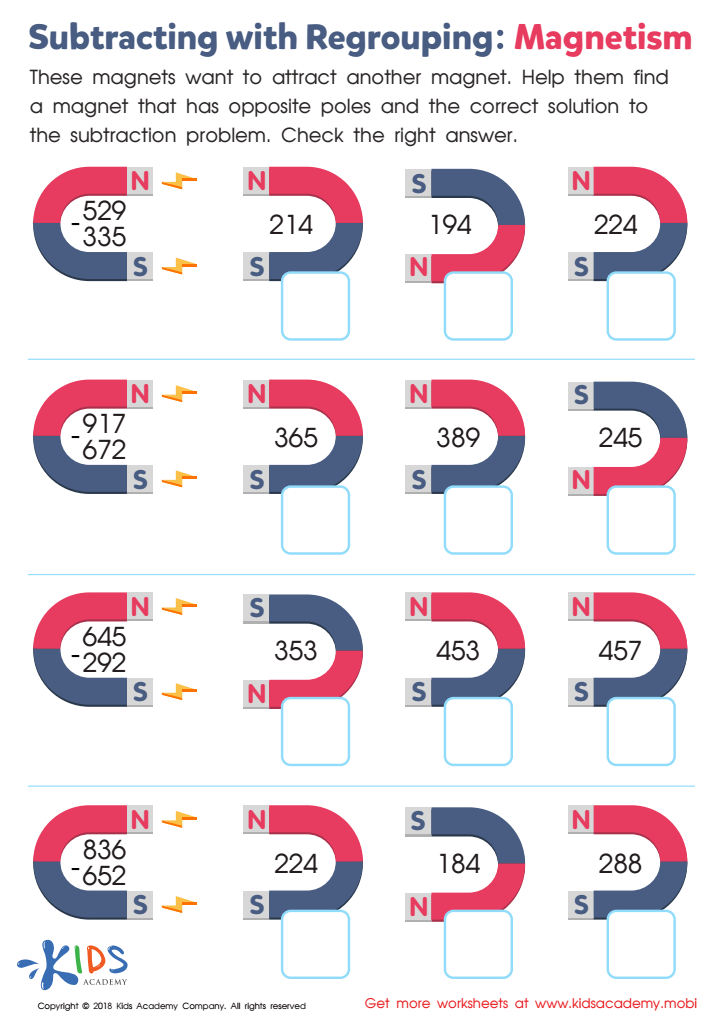
Subtracting with Regrouping: Magnetism Worksheet
 Assign to My Students
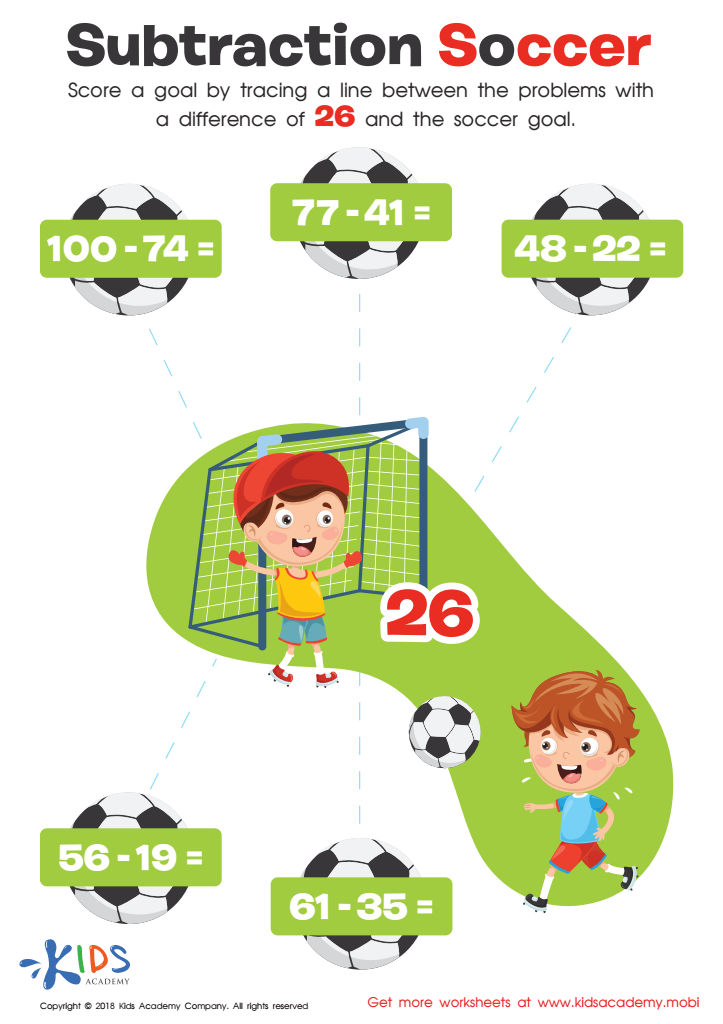
Subtraction Soccer Worksheet
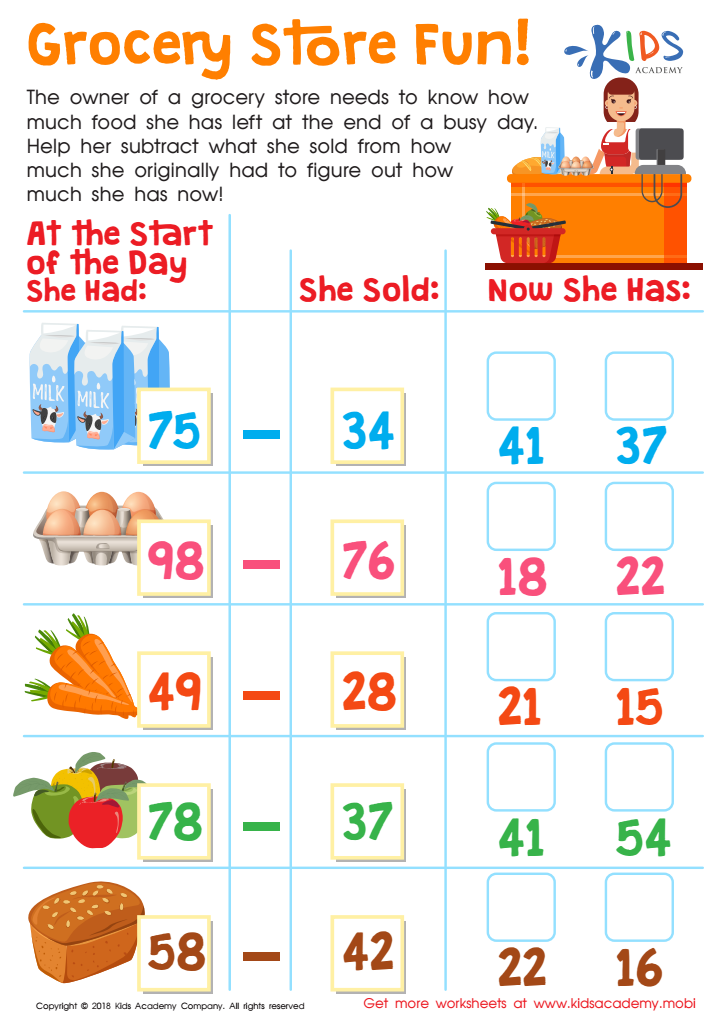
Grocery Store Fun! Worksheet
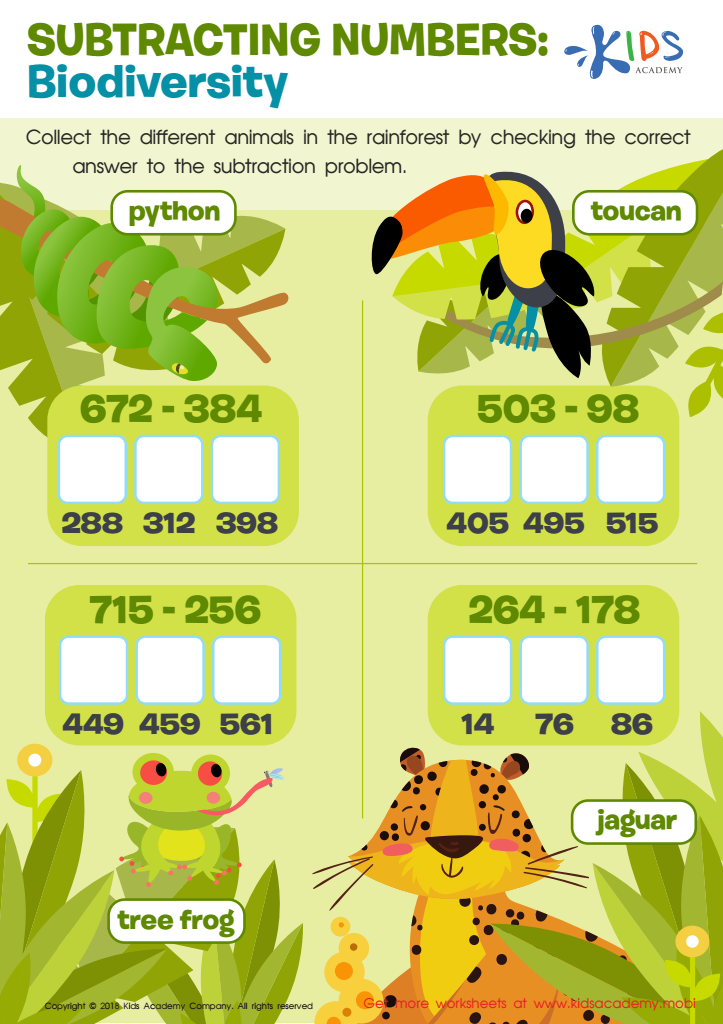
Subtracting Numbers: Biodiversity Worksheet
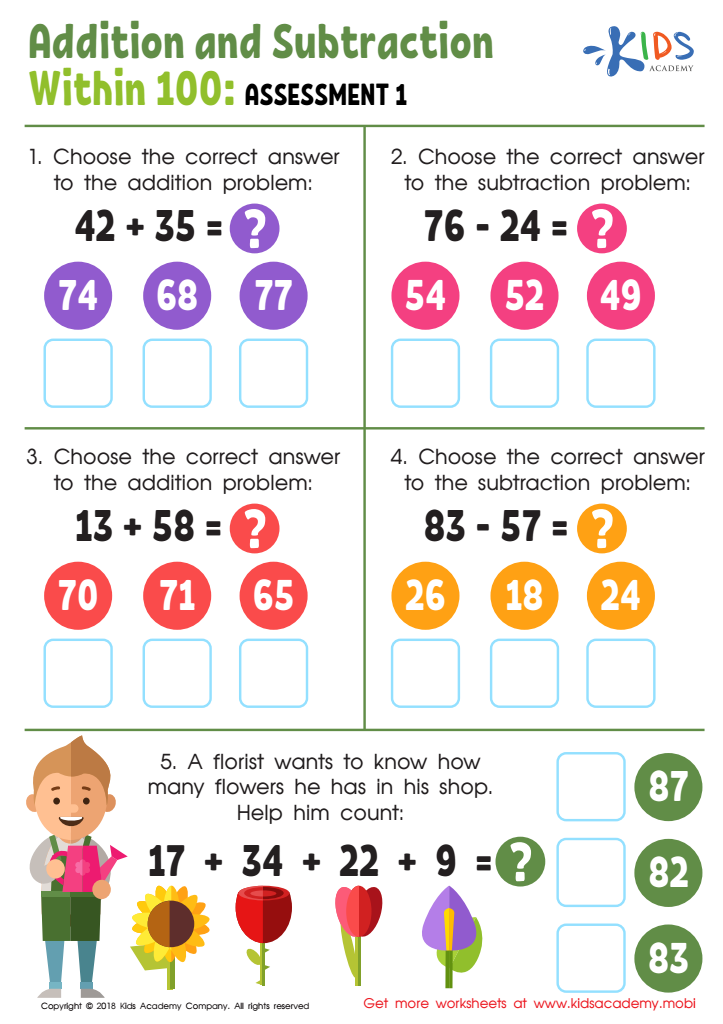
Addition and Subtraction Within 100 Worksheet
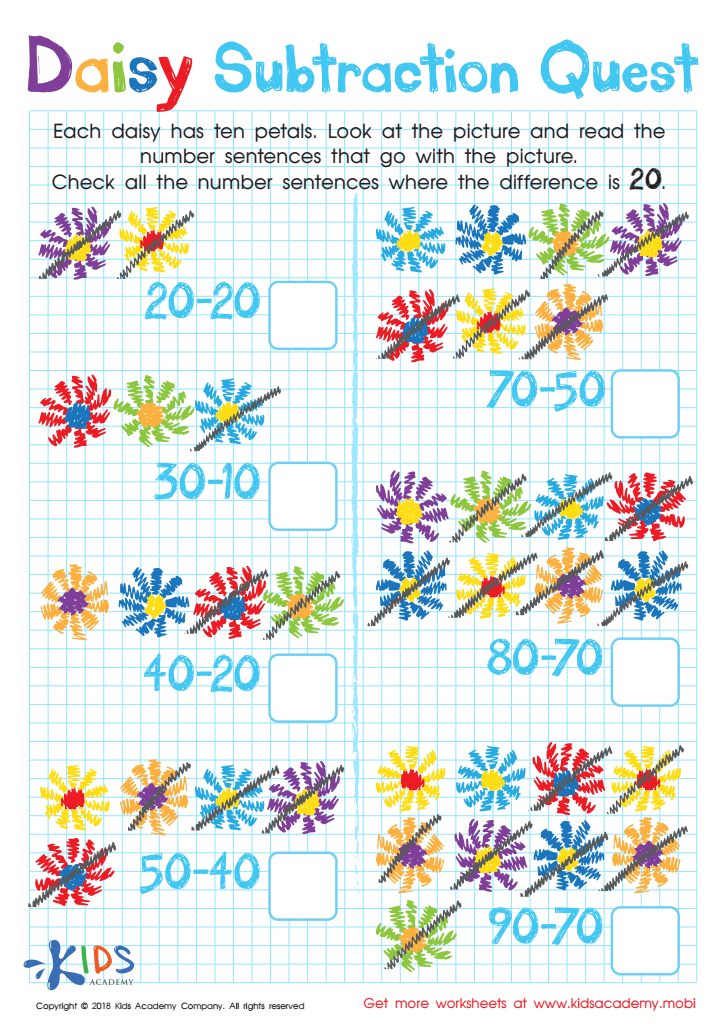
Daisy Subtraction Quest Worksheet








Subtraction practice is essential for children aged 7-9 as it forms the foundation for their mathematical understanding and problem-solving skills. At this stage, students are transitioning from basic arithmetic to more complex concepts, making effective subtraction practice crucial. Mastery of subtraction enhances a child's ability to handle larger numbers and equations, as well as enables them to tackle everyday situations that require mathematical reasoning, such as budgeting, shopping, and time management.
Additionally, engaging in normal subtraction practices helps reinforce critical thinking and analytical skills. It also boosts confidence, allowing children to approach math with a positive mindset. Struggles with subtraction can lead to feelings of frustration, which may discourage students from further engaging with math.
Furthermore, proficient subtraction encourages a smoother transition to more advanced math topics, including algebra. Teachers and parents should incorporate fun and varied subtraction activities, making learning enjoyable and relatable. This holistic approach not only nurtures a solid arithmetic foundation but also fosters a love for learning. In essence, cultivating strong subtraction skills in young learners benefits their academic journey and prepares them for challenges ahead, ensuring they develop a well-rounded approach to mathematics.