Normal Time Worksheets for Ages 7-9
5 filtered results
-
From - To
Welcome to our engaging collection of Normal Time Worksheets designed for children aged 7-9! These worksheets provide interactive and educational exercises to help young learners master the concept of telling time on analog and digital clocks. Our thoughtfully crafted activities support the development of essential time-related skills, such as recognizing time increments and calculating durations. With a variety of fun and relatable activities, your child will enhance their understanding of normal time, all while enjoying the process of learning. Perfect for home or classroom use, these worksheets will make mastering time enjoyable and effective! Explore, learn, and have fun with time today!
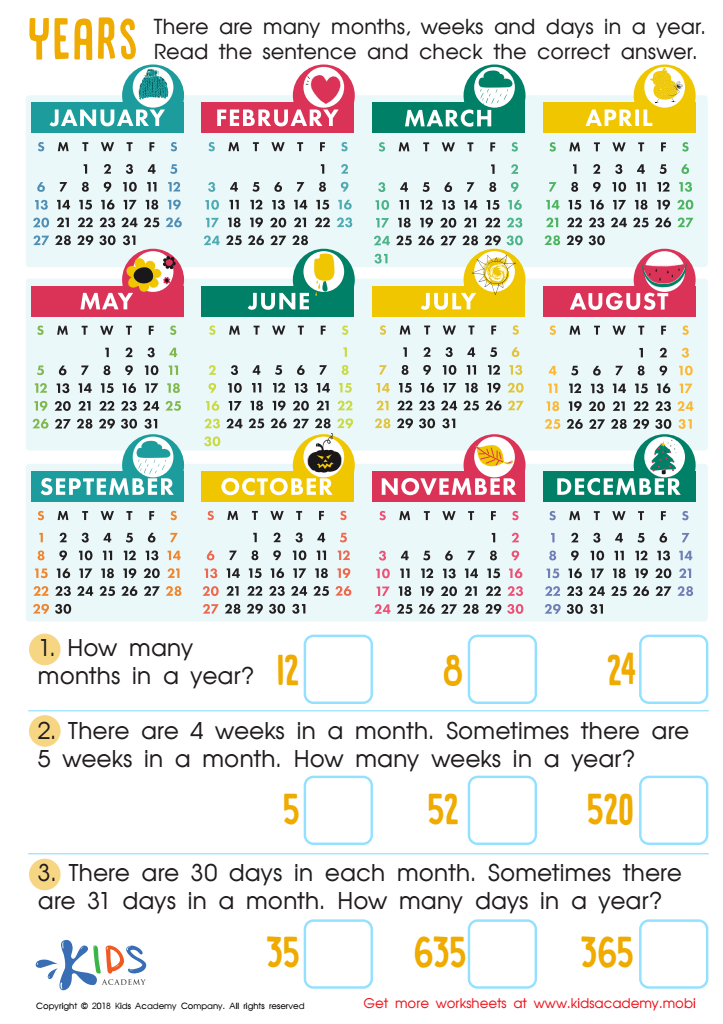
Years Worksheet
 Assign to My Students
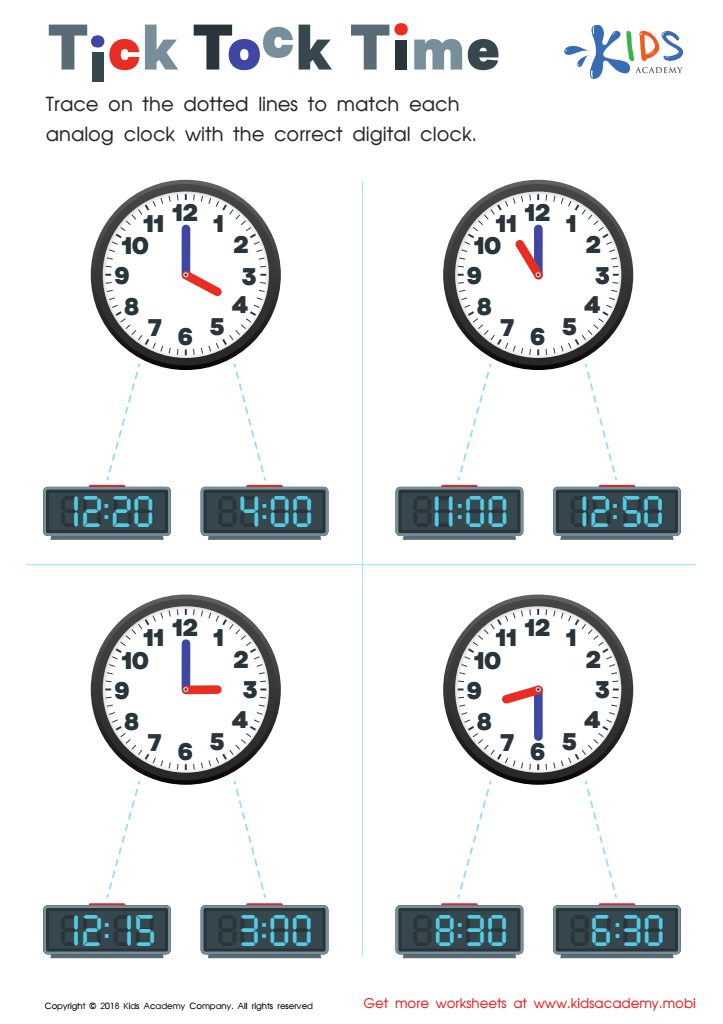
Tick Tock Time Worksheet
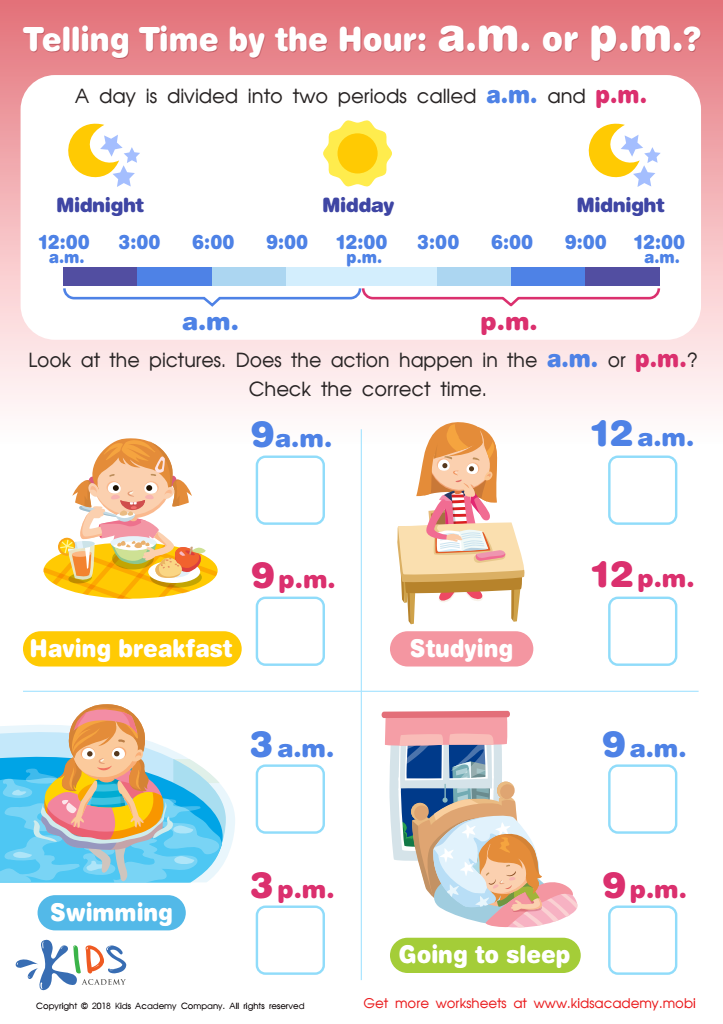
Tilling Time by the Hour: a.m. or p.m.? Worksheet
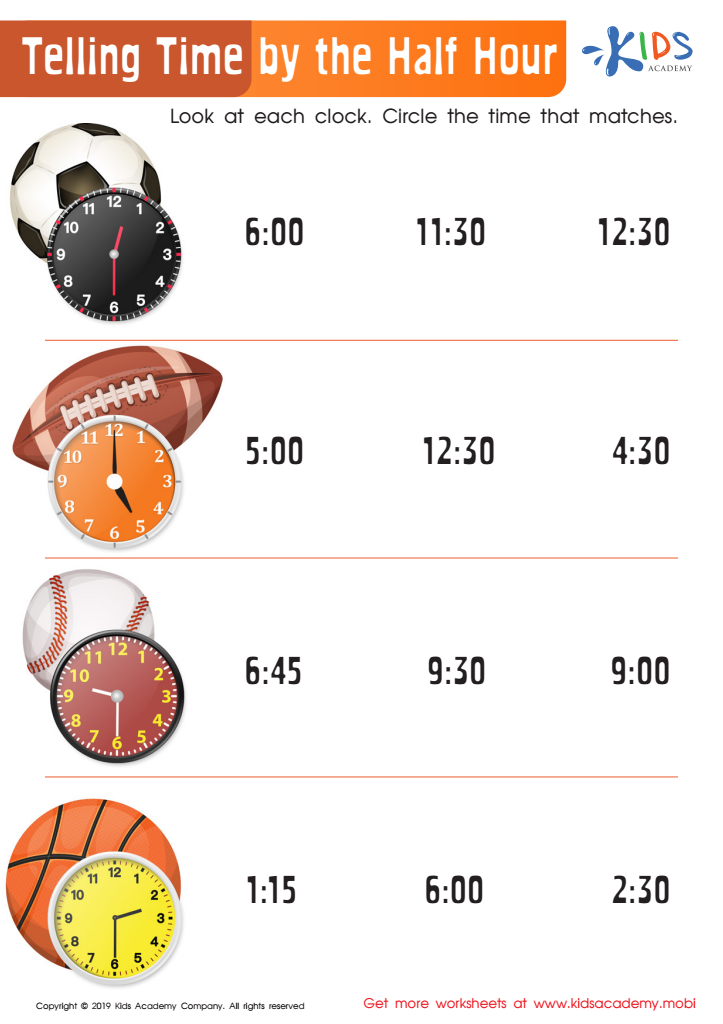
Telling Time by the Half Hour Worksheet
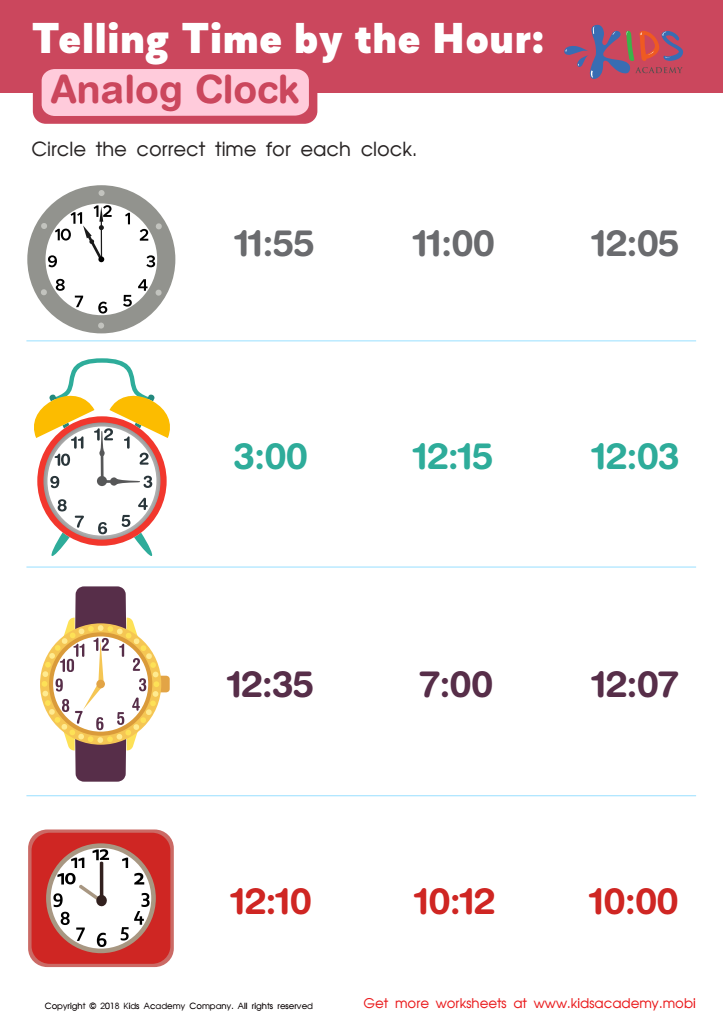
Telling Time by the Hour: Analog Clock Worksheet








Normal Time, or the conventions of timekeeping and understanding time, is a crucial subject for children aged 7-9. This period marks a significant stage of cognitive development, where kids increasingly comprehend abstract concepts. Understanding time shapes children's ability to manage schedules, understand routines, and develop responsibility, ultimately contributing to their overall independence and time management skills.
Learning how to read clocks, distinguish between minutes and hours, and appreciate different units of time fosters mathematical reasoning and problem-solving abilities. Moreover, Normal Time helps children grasp the importance of punctuality and is vital for participating in daily activities, such as school timetables or extracurricular commitments.
When parents and teachers emphasize the importance of time, they effectively equip children with essential skills for everyday life. Encouraging a sense of time can enhance organizational skills and boost self-discipline, encouraging children to balance schoolwork, chores, and play.
Additionally, understanding time promotes historical and cultural awareness, as children learn about past events and sequences. Overall, Normal Time is not just a lesson in mathematics but a holistic approach to nurturing responsible, socially aware individuals prepared for the bigger world ahead.








