Understanding vowel sounds Normal Reading Worksheets for Ages 7-9
3 filtered results
-
From - To
Enhance your child's reading skills with our engaging "Understanding Vowel Sounds" worksheets designed specifically for ages 7-9. These resources focus on helping young learners recognize and differentiate various vowel sounds, laying the foundation for fluent reading and comprehension. Packed with fun activities and colorful illustrations, the worksheets encourage interactive learning while ensuring children grasp essential phonetic concepts. Perfect for both classroom use and home practice, these worksheets align with educational standards to support your child's literacy journey. Equip your little ones with the tools they need to succeed in reading, making learning enjoyable with our comprehensive and user-friendly materials!
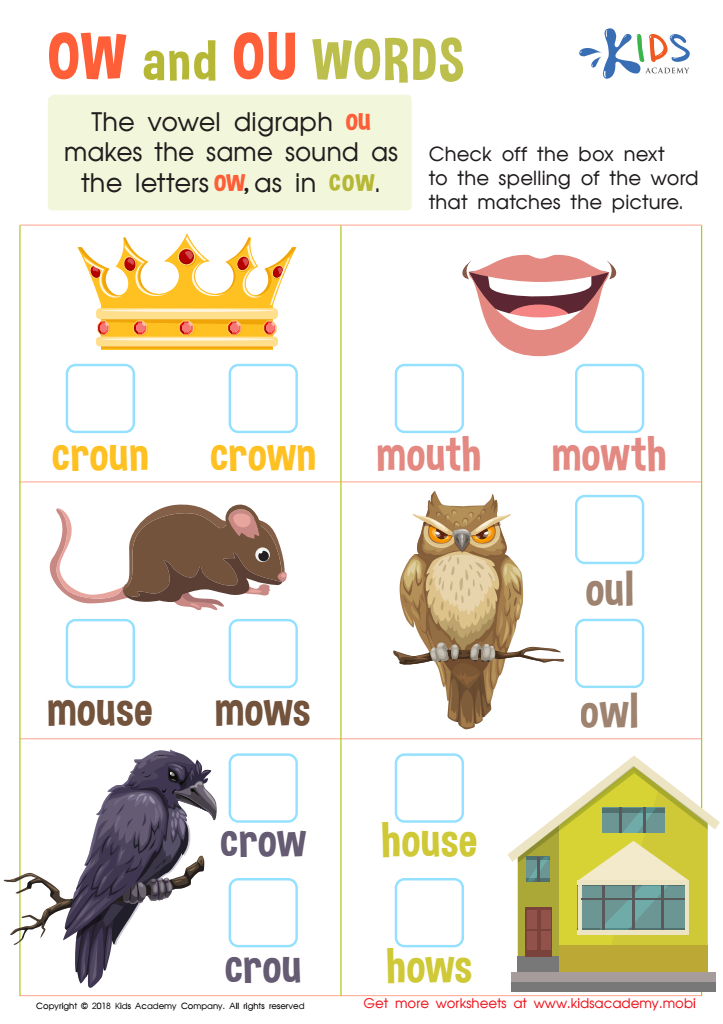
Reading: OW and OU Words Worksheet
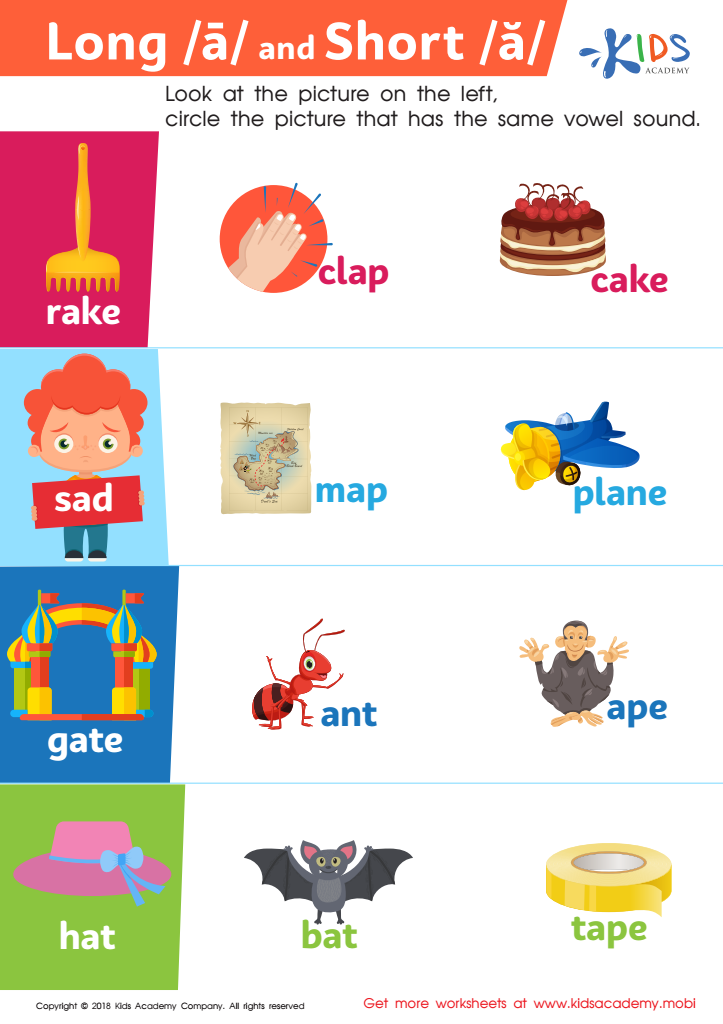
Reading: Long a and Short a Worksheet
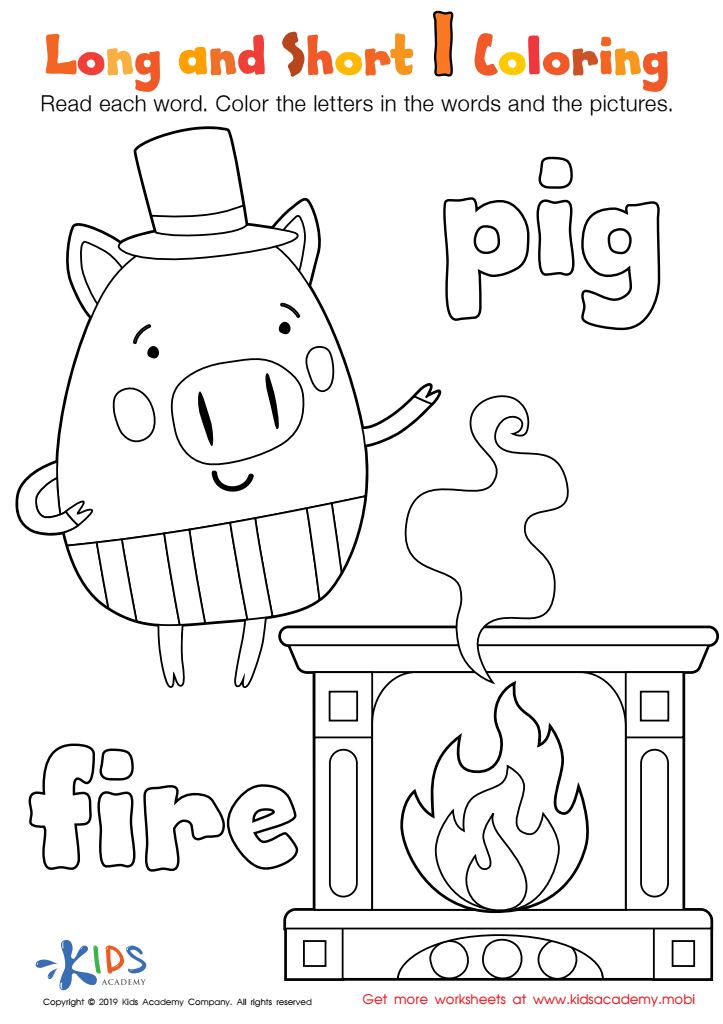
Long and Short I Worksheet
 Assign to My Students








Understanding vowel sounds is crucial for children aged 7-9, as it forms the foundation for effective reading and language development. At this age, children are transitioning from learning to read to reading to learn, making them more proficient and confident in their skills. Vowel sounds are integral to phonics, the system that helps students decode words. Mastery of these sounds enhances a child’s ability to tackle unfamiliar vocabulary, boosting their comprehension and fluency.
Parents and teachers should care about this aspect of reading instruction because strong foundational skills in phonics contribute to overall academic success. Children who grasp vowel sounds can form words more accurately and understand sentence structures better, fostering improved writing abilities as well. Moreover, engagement with language through plays on sounds or phonetic games encourages a love for reading and learning.
Supporting children in understanding vowel sounds can also mitigate frustration and anxiety associated with reading, which often deters young learners. As children build confidence in their reading abilities, it instills a positive attitude towards education, setting the stage for lifelong learning. Together, parents and teachers can create a rich, supportive environment that prioritizes these essential skills, leading to a more rewarding educational experience.








