
Historical Knowledge Normal Science Worksheets for Ages 7-9
5 filtered results
Difficulty Level
Grade
Age
-
From - To
Subject
Activity
Standards
Discover the fascinating world of science with our Historical Knowledge Normal Science Worksheets, specifically designed for ages 7-9. These engaging and educational worksheets draw connections between historical events and scientific discoveries, boosting kids' curiosity and understanding of the world. Crafted by educational experts, our activities include thought-provoking puzzles, informative reading passages, and exciting experiments. Help your children enhance their learning skills in a fun way as they dive into the history behind significant scientific milestones. Perfect for both classroom settings and home learning, these worksheets are a fantastic resource for young, budding scientists. Explore and download now on Kids Academy!
Favorites
With answer key
Interactive
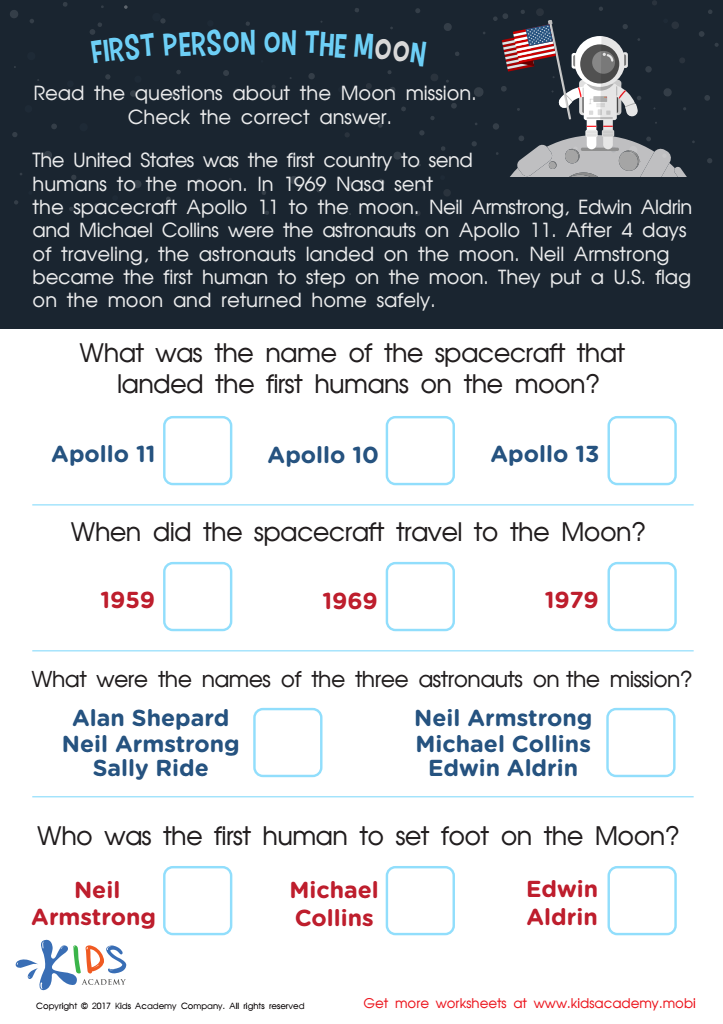
First Person on the Moon Worksheet
In 1969, Neil Armstrong made history by becoming the first person to step foot on the moon! With this fun worksheet, you can teach kids fascinating facts about the Apollo 11 mission. After reading, they can show off what they've learned with a quiz!
 Assign to My Students
First Person on the Moon Worksheet
Worksheet
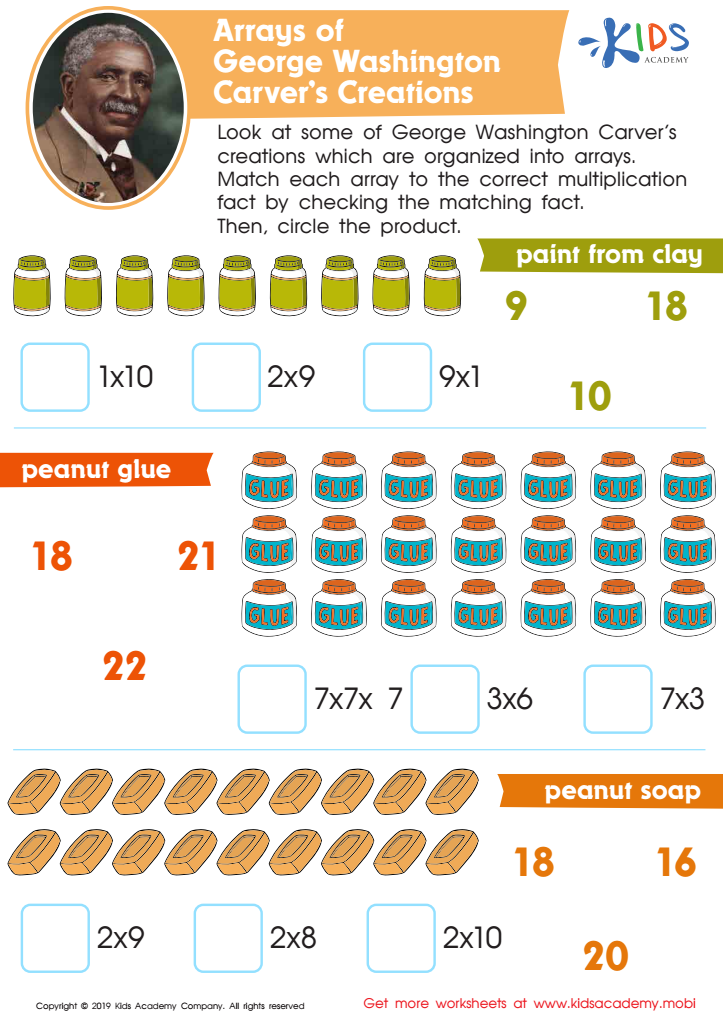
Arrays of George Washington Carver’s Creations Worksheet
Remind your child of what George Washington Carver created. Can they tell you? This worksheet has arrays with his creations. Match the array to the multiplication fact and help your child to circle the product.
Arrays of George Washington Carver’s Creations Worksheet
Worksheet
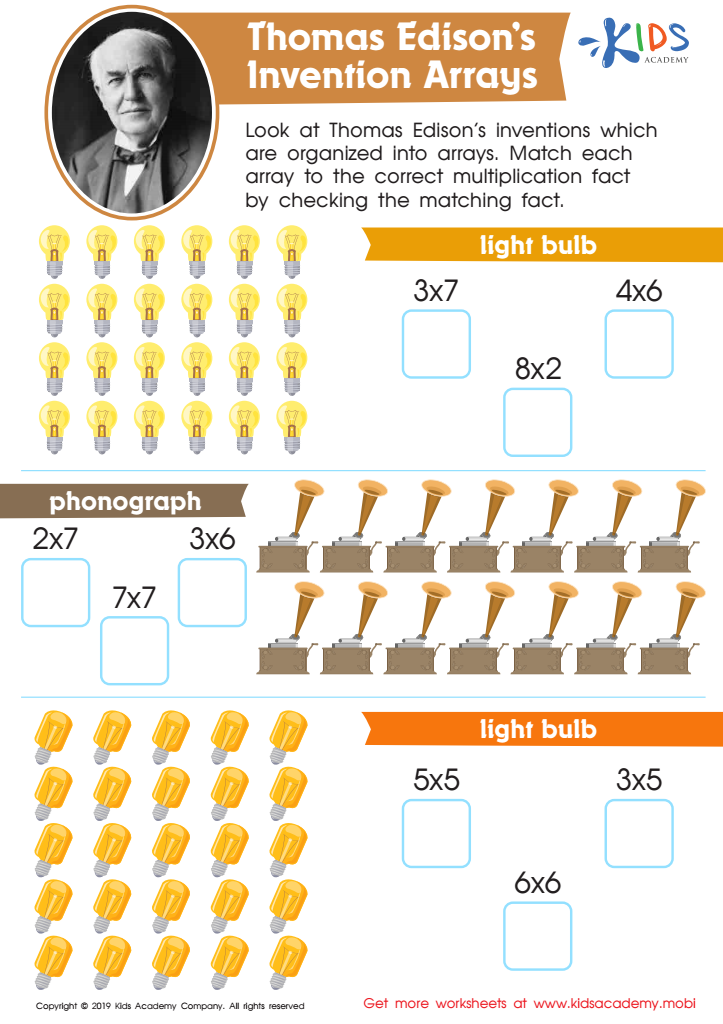
Thomas Edison’s Invention Arrays Worksheet
Test your students' knowledge on history by asking them what Thomas Edison invented. If they get the right answer, provide more information on other inventors. Check out this printout of Edison's light bulb inventions laid out in arrays. Get them to match each array to the correct multiplication fact.
Thomas Edison’s Invention Arrays Worksheet
Worksheet
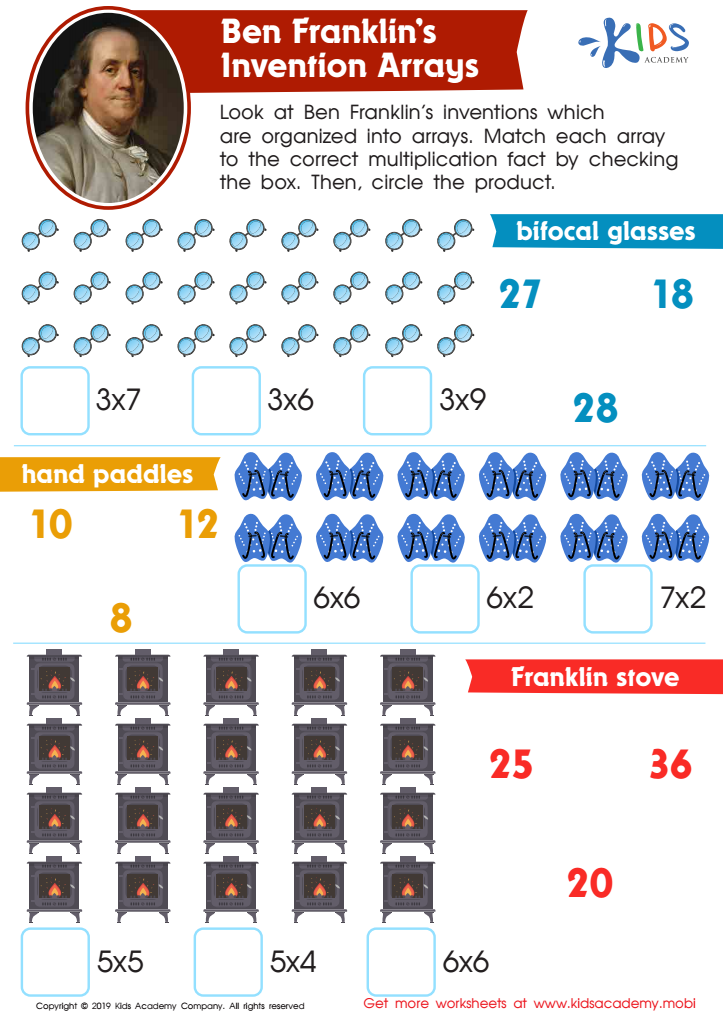
Ben Franklin’s Invention Arrays Worksheet
Have your child guess some of the inventors of the popular items we use today. For instance, the light bulb was invented by Thomas Edison. Look at Ben Franklin's inventions and help your kids match the arrays to the correct multiplication fact. Check the box and circle the product.
Ben Franklin’s Invention Arrays Worksheet
Worksheet
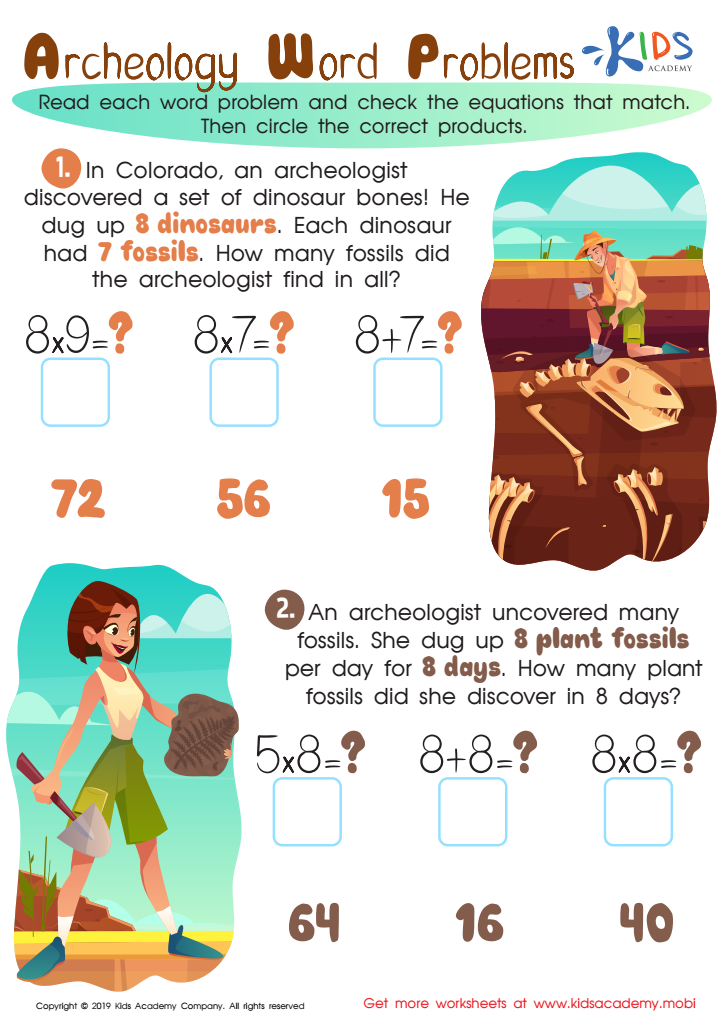
Archeology Word Problems Worksheet
Encourage your child to explore their career options! Show them an archeologist's job with this worksheet - featuring a picture of a dinosaur bone discovery. Read the accompanying text, then solve the word problems. Help your kids circle the correct answers to better understand this profession.
Archeology Word Problems Worksheet
Worksheet
Join Kids Academy for Free
Who is primarily going to use this learning content?



.jpg)

Introducing historical knowledge and normal science to children ages 7-9 is crucial for several reasons. Engaging young minds in history fosters a sense of identity and belonging by showing them how past events shape the present. It encourages critical thinking and helps children understand the complexity of social, political, and cultural developments over time.
Delving into normal science—understanding the foundational principles that underpin everyday scientific facts—equips children with a systematic approach to observing and interacting with the world. Knowledge of scientific concepts like gravity, photosynthesis, and the water cycle provides them with the tools to ask questions, make observations, and solve problems in a methodical way.
Both historical knowledge and science cultivates curiosity and a love of learning. When children explore significant historical events and scientific discoveries, they develop empathy, and appreciation for different perspectives and cultures. It opens their eyes to the diversity of human experiences and achievements, helping them form a well-rounded worldview.
For parents and teachers, instilling historical and scientific understanding at a young age builds a strong educational foundation. It prepares children for more advanced studies, supports cognitive development, and fosters lifelong skills such as analysis, reasoning, and evidence-based decision-making. Ultimately, these knowledge areas enrich learning experiences and shape informed, inquisitive, and empathetic individuals.







