Geography knowledge Normal Our Planet and Environment Worksheets for Ages 7-9
3 filtered results
-
From - To
Discover our engaging Geography Knowledge worksheets tailored for children ages 7-9, focusing on "Our Planet and Environment." These resources provide an exciting way to learn about ecosystems, landforms, and environmental conservation. Our carefully crafted activities encourage critical thinking, spatial awareness, and an appreciation for the world we live in. Designed to complement early science education, these worksheets incorporate fun illustrations and interactive formats, making learning both enjoyable and effective. Help young learners develop essential geography skills while fostering their curiosity about the natural world. Explore our collection today and inspire a lifelong love for geography and the environment!
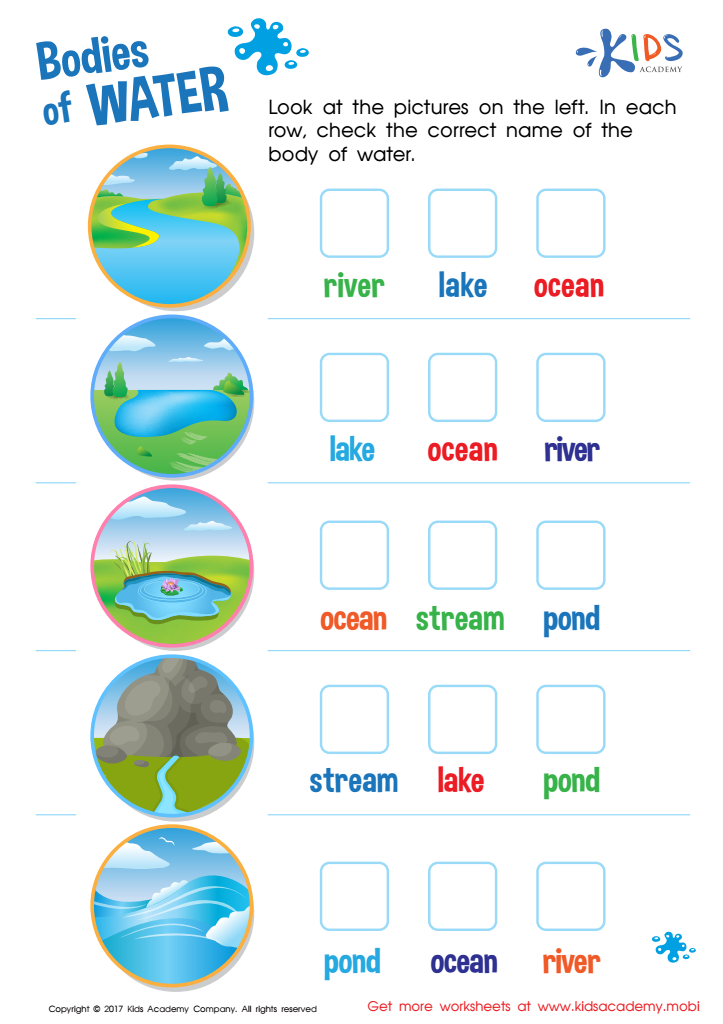
Bodies of Water Worksheet
 Assign to My Students
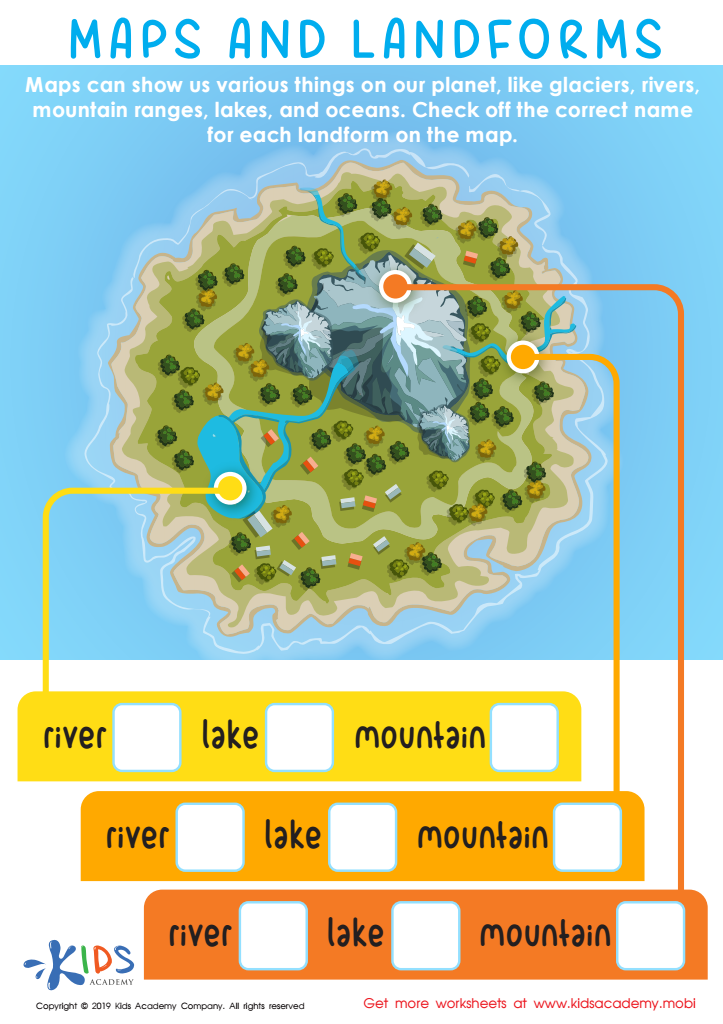
Maps and Landforms Worksheet
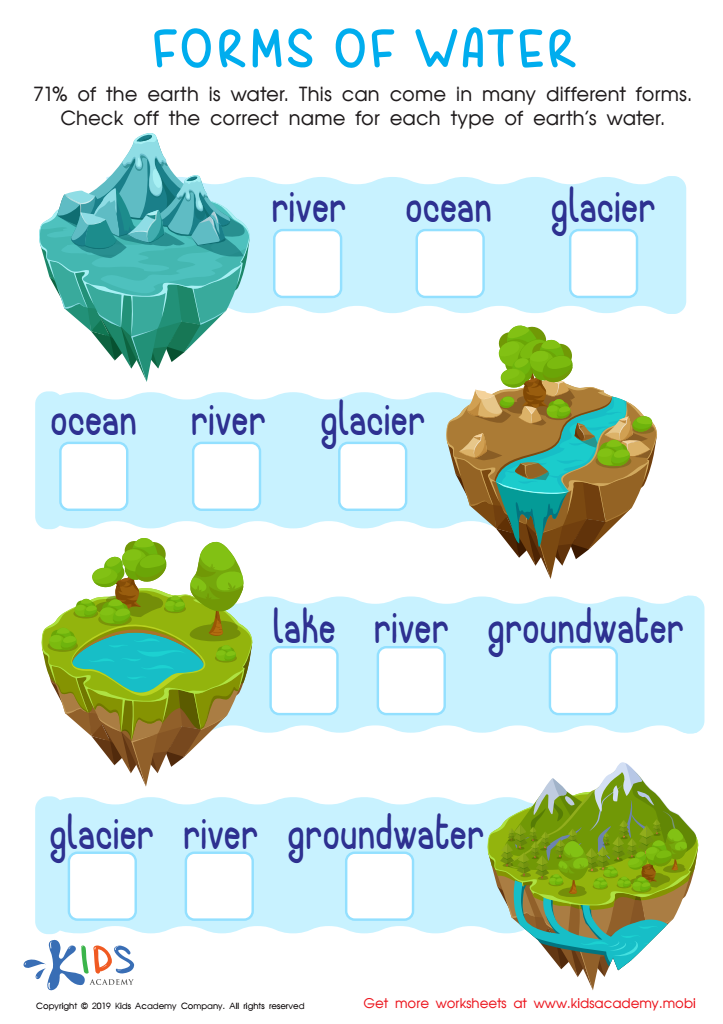
Forms of Water Worksheet





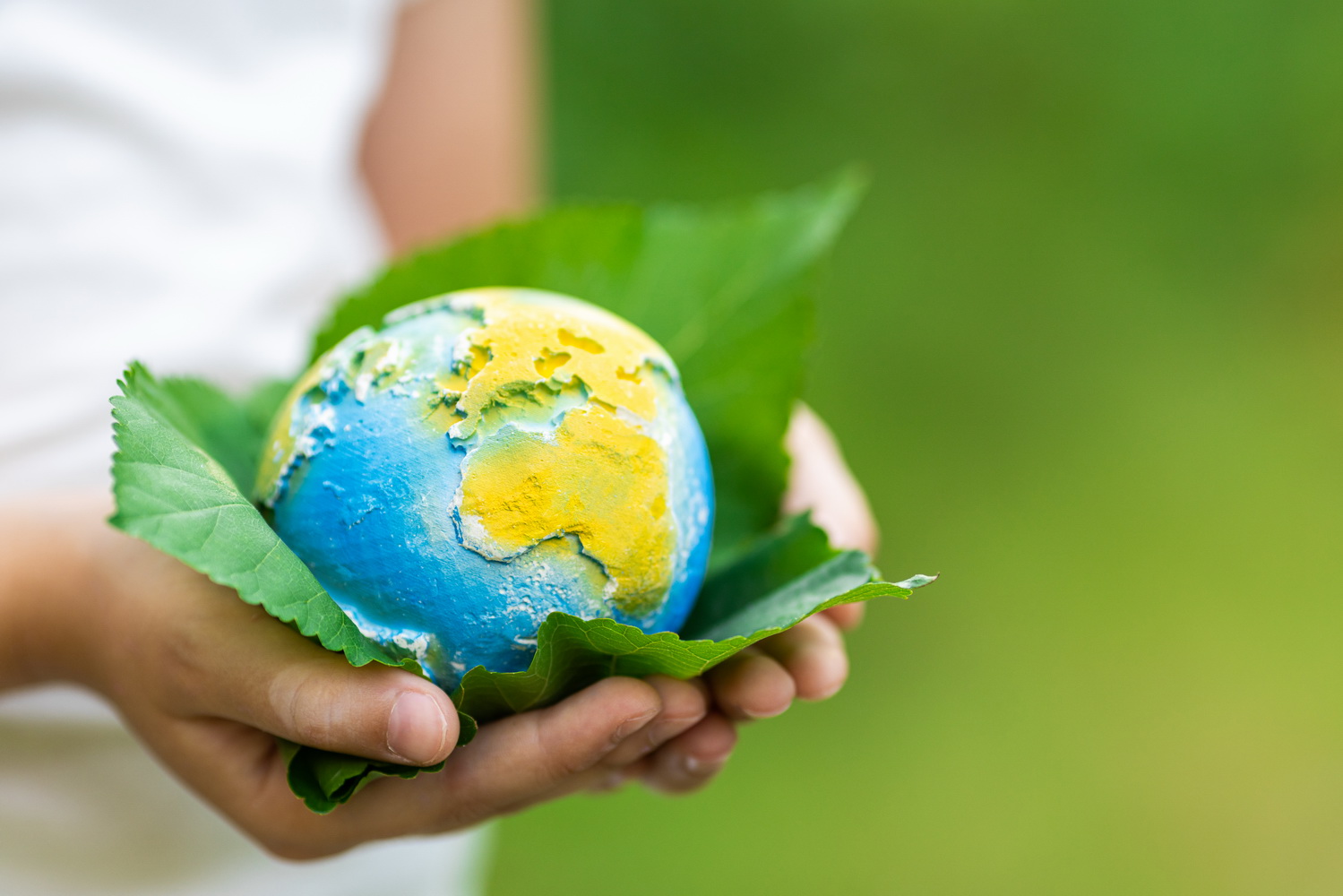
Understanding geography, particularly knowledge of our planet and environment, is vital for children aged 7-9 as it forms the foundation for their world awareness and environmental stewardship. During these formative years, kids are naturally curious about their surroundings. Teaching geography inspires this curiosity and fosters a sense of responsibility toward the planet.
Firstly, by learning about different landscapes, climates, and ecosystems, children can appreciate the diversity of the Earth. This knowledge helps them understand how various components interact, promoting critical thinking about ecological relationships. Moreover, in a rapidly changing world marked by climate change and environmental degradation, geography education equips children with the awareness needed to address these pressing issues.
Secondly, geography enhances map-reading skills and spatial reasoning, essential tools for navigating the world. This early instruction aids in developing global citizens who can think critically about complex issues such as resource distribution and pollution.
Lastly, encouraging an appreciation for cultures and communities fosters empathy and social awareness. Children learn to value diversity and experience different perspectives. In summary, geography knowledge empowers young learners, encouraging them to become informed, responsible stewards of the planet while also laying the groundwork for future academic success.







