
Enhancing observational skills Normal Physical Science Worksheets for Ages 7-9
5 filtered results
Difficulty Level
Grade
Age
-
From - To
Subject
Activity
Standards
Enhancing observational skills is essential for young learners, fostering curiosity and critical thinking in science. Our Normal Physical Science Worksheets for Ages 7-9 provide engaging activities designed to develop these skills through hands-on exercises and real-world observations. Students will explore their environment, learn to ask questions, and make connections between what they see and scientific concepts. These worksheets promote active learning, encouraging children to track changes, categorize objects, and draw conclusions. Ideal for classroom use or at-home study, our resource supports foundational scientific knowledge, ensures a fun learning experience, and prepares students for future exploration in science and the world around them.
Favorites
With answer key
Interactive
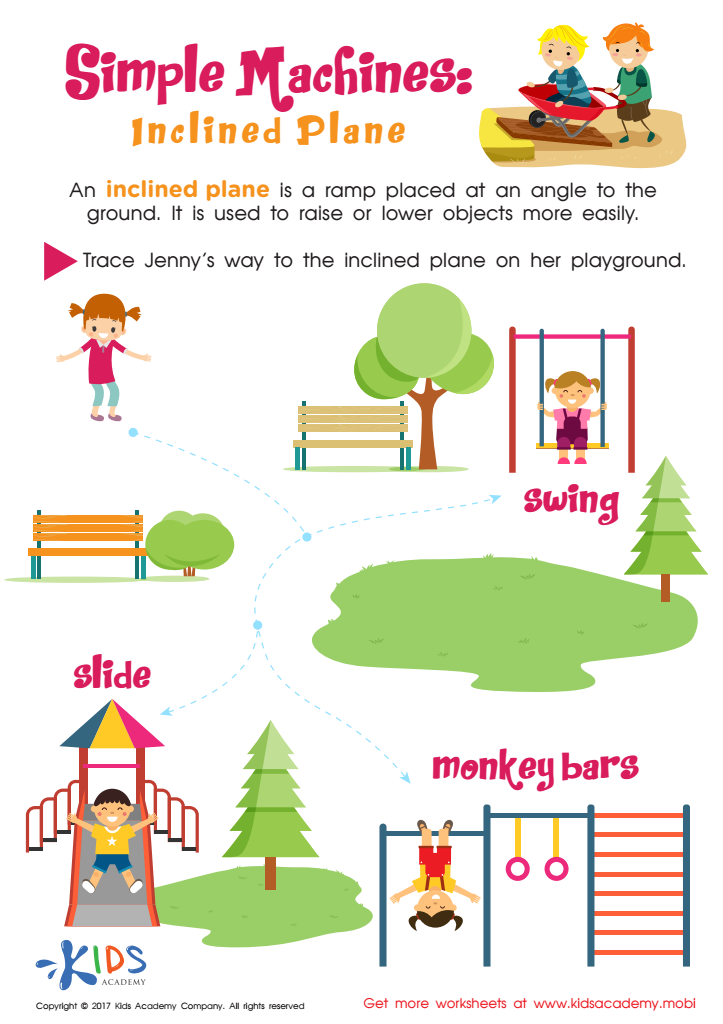
Simple Machines Inclined Plane Worksheet
This fun worksheet will help them increase their science skills while they have fun.
 Assign to My Students
Simple Machines Inclined Plane Worksheet
Worksheet
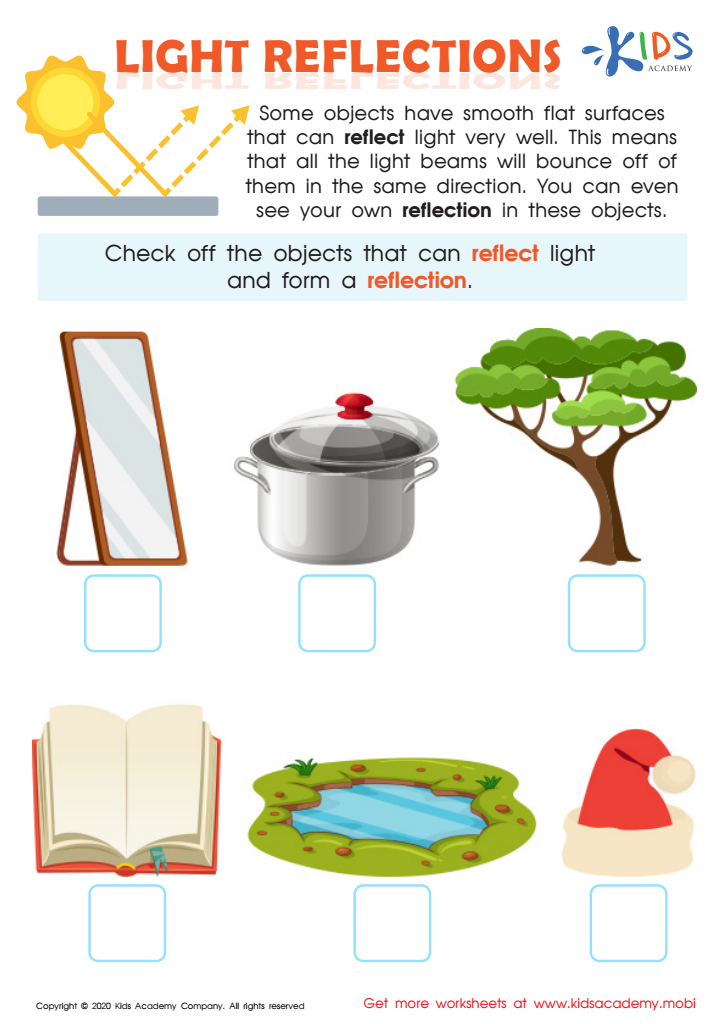
Light Reflections Worksheet
Teach your students that some objects reflect light and form a reflection. Ask them to name examples, then look at pictures and check off which objects can do this. Have them note how the light bounces off these surfaces, and observe their own reflections.
Light Reflections Worksheet
Worksheet
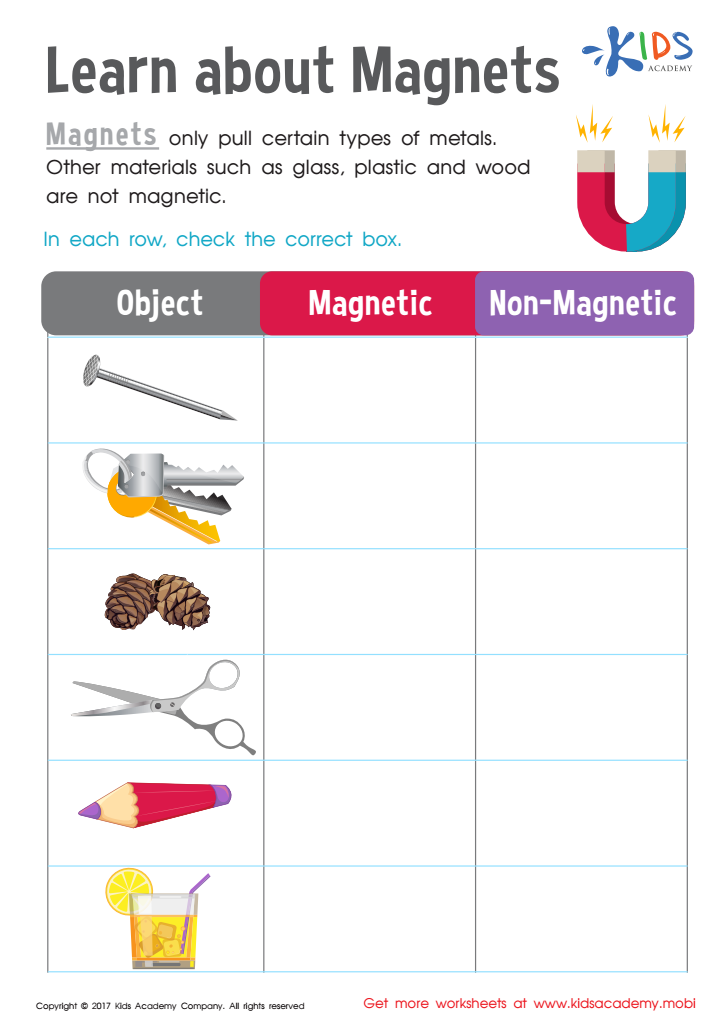
Magnetic Or Not Worksheet
Kids will love discovering the magical power of magnetism with this fun worksheet.
Uncover the magic of magnetism with this fun worksheet! Kids will love identifying objects that are magnetic and those that are not. Objects made of metal and those that aren't can be identified, helping your child to gain valuable practice and explore the mysterious power of magnetism!
Magnetic Or Not Worksheet
Worksheet
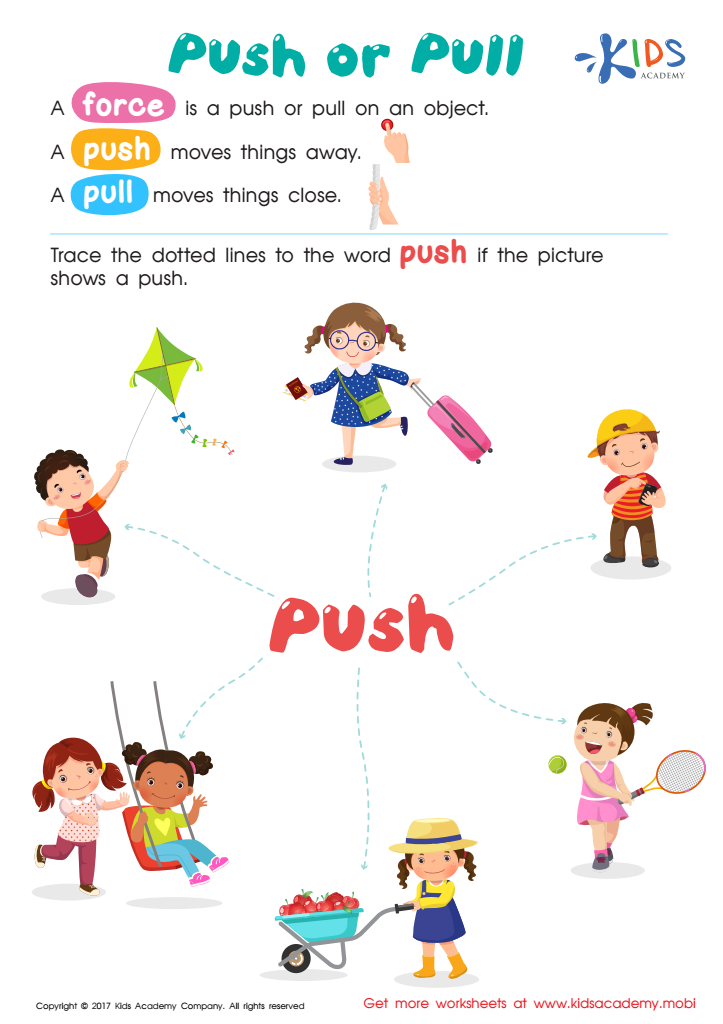
Push or Pull Worksheet
and which involve pulling! With this fun worksheet, your child will learn about force and its simple application in everyday activities. Get them started with Push or Pull! (80 words)
Push or Pull Worksheet
Worksheet
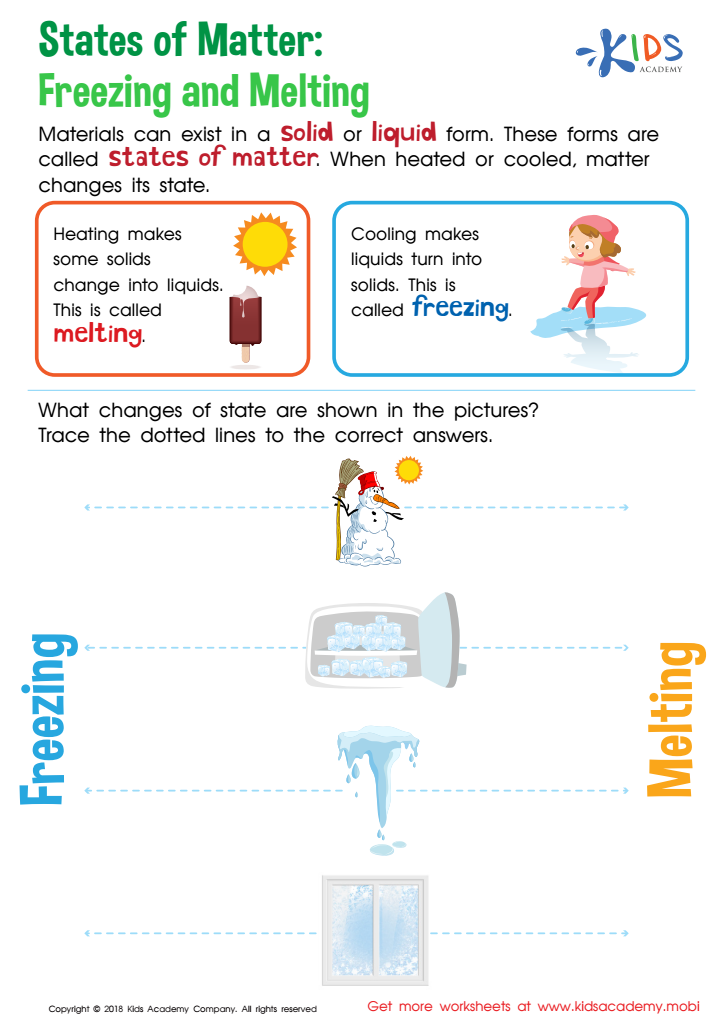
States of Matter: Freezing and Melting Worksheet
Have students look through the pics in the worksheet. Ask them what changes of state are shown, then trace the lines to the right answers. Matter can come in liquid or solid form, and changes between the two when heated or cooled (melting/freezing).
States of Matter: Freezing and Melting Worksheet
Worksheet
Join Kids Academy for Free
Who is primarily going to use this learning content?








Enhancing observational skills in Normal Physical Science for children aged 7-9 is essential for several reasons. First, this age group is naturally curious, and fostering their observational skills nurtures their innate desire to explore and understand the world around them. By encouraging keen observation, parents and teachers help children develop critical thinking and analytical abilities early on, skills that are vital for scientific inquiry.
Observational skills also support academic learning across subjects. For example, noticing patterns in nature or understanding basic physical principles lays a foundation for mathematics and literacy development. When children learn to observe details, they become better problem solvers and active learners.
Furthermore, enhancing these skills through hands-on activities cultivates motor skills and promotes collaboration, as partners work together to observe and hypothesize. It builds confidence and motivation in science by making learning interactive and fun.
Finally, developing strong observational skills at a young age encourages lifelong learning habits, promoting a proactive attitude towards investigation and discovery. In a world increasingly driven by science and technology, nurturing these skills prepares young learners to engage with their environment thoughtfully and purposefully, fostering responsible and informed future citizens.







