Word Recognition Normal Tracing Words Worksheets for Ages 7-9
6 filtered results
Difficulty Level
Grade
Age
-
From - To
Subject
Activity
Standards
Help your child master essential reading skills with our Word Recognition Normal Tracing Words Worksheets for ages 7-9 from Kids Academy! Designed to build a strong foundation in reading, these engaging worksheets combine fun and learning. Kids will trace and recognize commonly used words, improving vocabulary, spelling, and handwriting in the process. With vibrant visuals and structured activities, our worksheets turn learning into an enjoyable experience, promoting better word recognition and literacy skills. Ideal for home practice or classroom use, these resources ensure your child gains confidence and proficiency in reading. Nurture your child's educational journey today!
Favorites
With answer key
Interactive
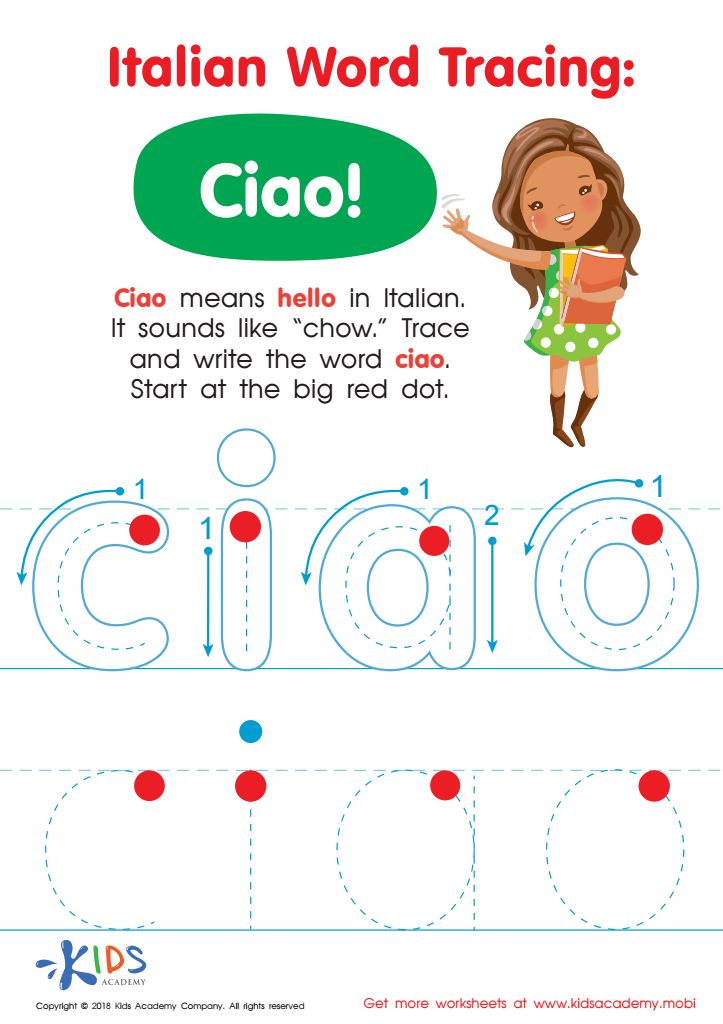
Italian Word Tracing: Ciao Worksheet
Help kids learn to greet people in different languages with this fun worksheet! Featuring the Italian word 'Ciao', it helps kids trace and learn the pronunciation. Plus, it teaches hand-eye coordination and fine-motor skills. Global connectivity can start with this activity!
 Assign to My Students
Italian Word Tracing: Ciao Worksheet
Worksheet
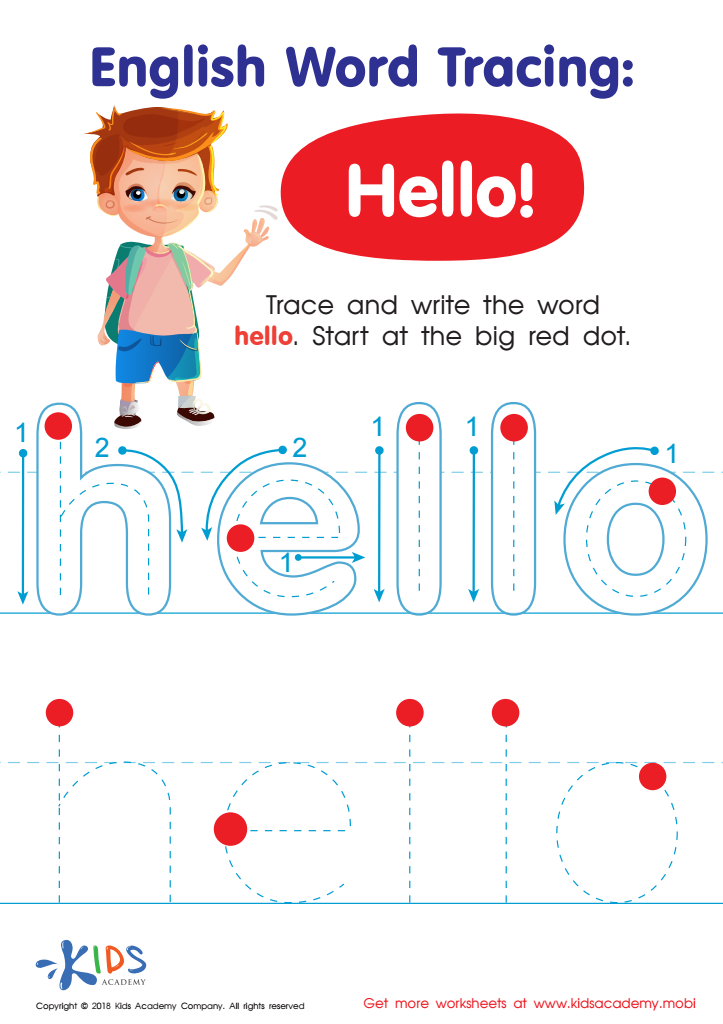
English Word Tracing: Hello Worksheet
Searching for free worksheets to help your kids refine their motor skills, handwriting and English word knowledge? Get this cheerful PDF! It offers your children the chance to practice tracing words like Hello, while following a top-to-bottom, left-to-right patterning.
English Word Tracing: Hello Worksheet
Worksheet
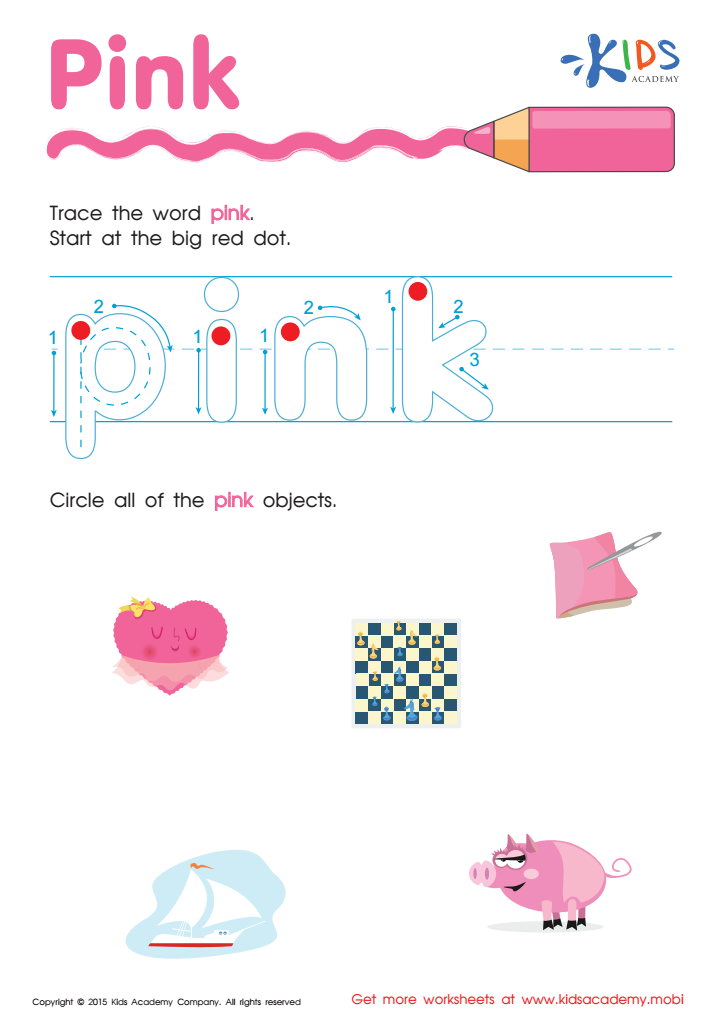
Pink Tracing Color Words Worksheet
Trace 'pink' with a pink crayon for an exciting handwriting lesson! Build fine motor skills and learn about sight words with this fun printable. Get creative and give it a splash of color for a colorful learning experience. For more tracing color words, explore here.
Pink Tracing Color Words Worksheet
Worksheet
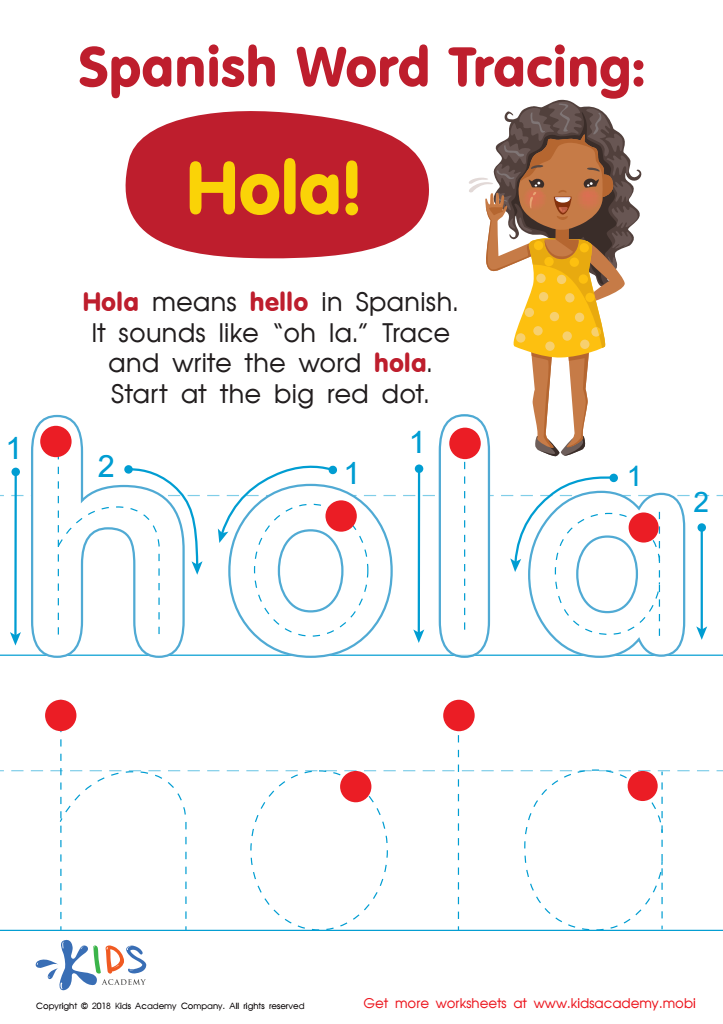
Spanish Word Tracing: Hola Worksheet
This PDF provides a fun way for students to learn "Hola" (Hello) in Spanish! Kids can practice fine motor and handwriting skills while they trace the letters. They'll get the hang of top-to-bottom, left-to-right patterning while they learn how to say and write in Spanish. With practice, they'll soon feel confident speaking and writing Spanish!
Spanish Word Tracing: Hola Worksheet
Worksheet
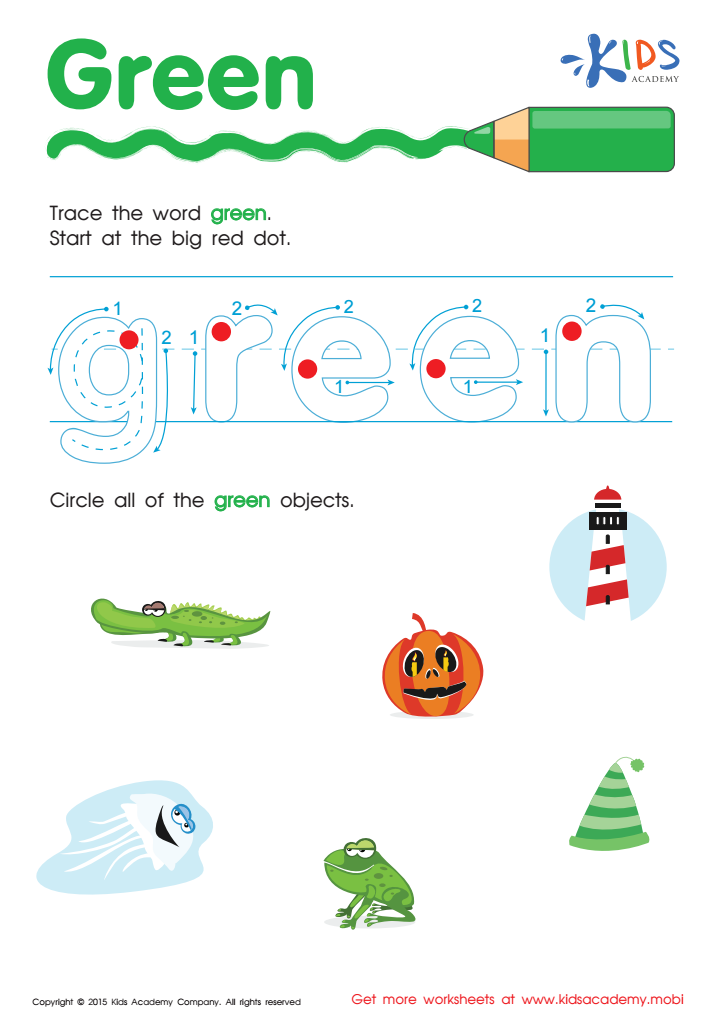
Green Tracing Color Words Worksheet
Encourage writing and spelling practice with this vibrant free handwriting worksheet. Have your child trace the new name of a primary color, "green," and circle green items in the picture. Ask them what else can be green for a challenging activity. Through this worksheet, your kindergartener can learn and play at the same time. For more free printables, look here.
Green Tracing Color Words Worksheet
Worksheet
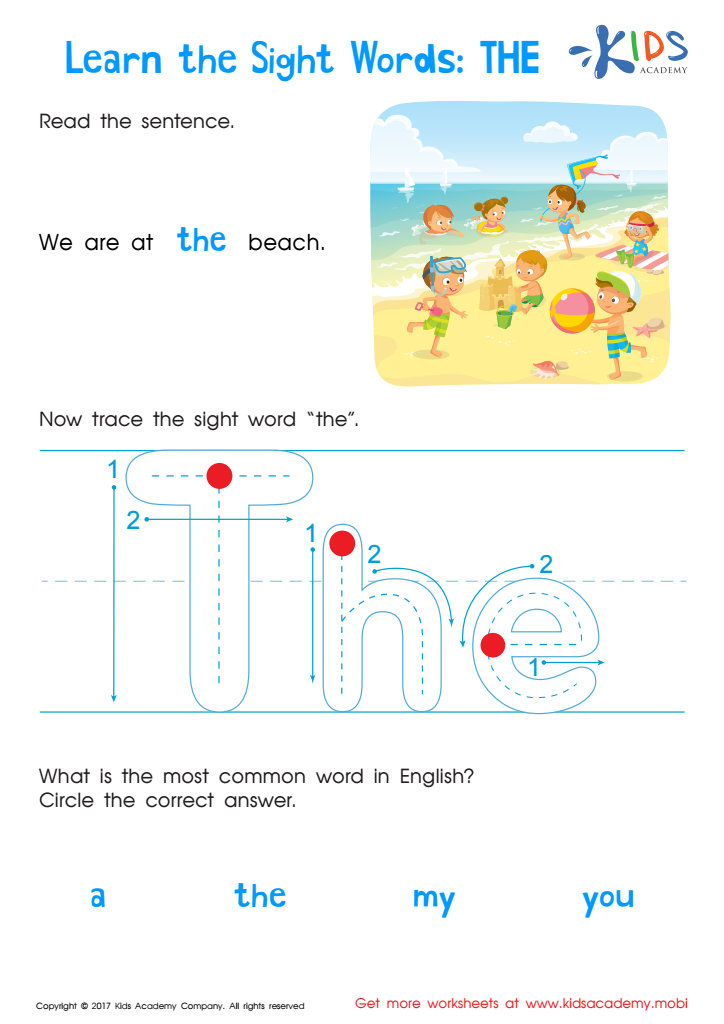
Sight Words: The Worksheet
Get the worksheet and start now.
The word "the" is an essential part of English. Teaching your child to read and write it is easy with this sight words worksheet. They'll practice reading the word, tracing it, and using it in sentences. It's the perfect way to take your child's language skills to the next level! Get the worksheet today.
Sight Words: The Worksheet
Worksheet
Join Kids Academy for Free
Who is primarily going to use this learning content?








Word Recognition Normal Tracing Words for ages 7-9 is a vital tool for early childhood education as it directly relates to several fundamental aspects of learning and development. This phase in a child’s literacy journey, typically between first and third grades, is when students transition from learning to read to reading to learn. Strong word recognition skills essentially set the foundation for fluency, which in turn affects overall comprehension and the ability to engage with text meaningfully.
By engaging in activities that enhance word recognition through normal tracing words, children are also developing fine motor skills and consolidating the connection between the visual appearance of words and their phonetic counterparts. This blend of sensory input helps strengthen memory recall, making reading less laborious and more automatic. Automaticity in reading frees cognitive resources, allowing children to focus more on the meaning of the text rather than the mechanical process of decoding words.
Parents and teachers should prioritize normal tracing word exercises because they cater to different learning styles - visual, auditory, and kinesthetic. This comprehensive approach not only supports the diverse needs of learners but also cultivates an enjoyable learning environment. A strong basis in word recognition during these formative years provides lasting educational benefits, making future academic endeavors more attainable and less frustrating for young learners.