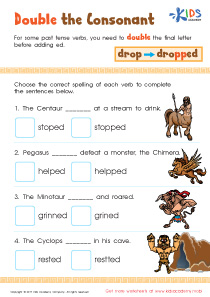
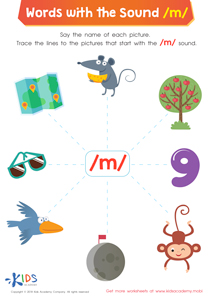
Word Recognition Normal Consonant Digraphs Worksheets for 7-Year-Olds
5 filtered results
-
From - To
Discover our specially designed Word Recognition Normal Consonant Digraphs Worksheets for 7-Year-Olds. These engaging and educational worksheets are tailored to enhance your child's understanding of consonant digraphs, such as "ch", "sh", "th", and "wh". Ideal for second graders, they combine fun activities with essential reading skills development. Each worksheet encourages young learners to recognize and decode words, reinforcing their ability to read and write confidently. Our expertly crafted materials ensure that children remain engaged and motivated, making learning an enjoyable experience. Elevate your child’s literacy skills with our unique and effective resources.
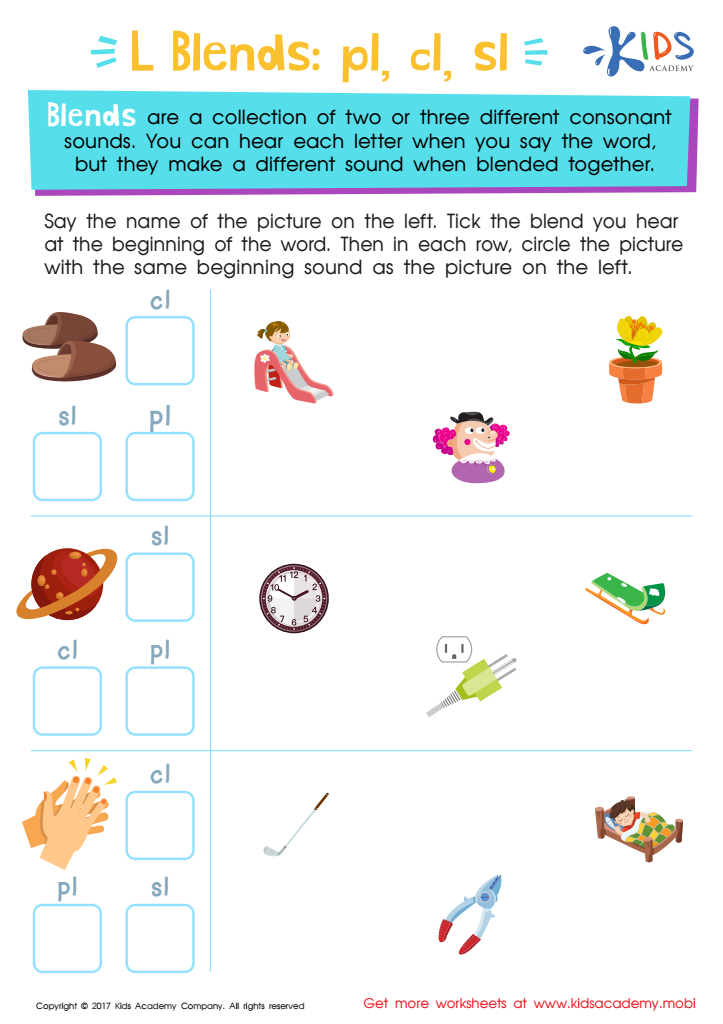
L Blends: "Pl", "Cl" and "Sl" Printable
 Assign to My Students
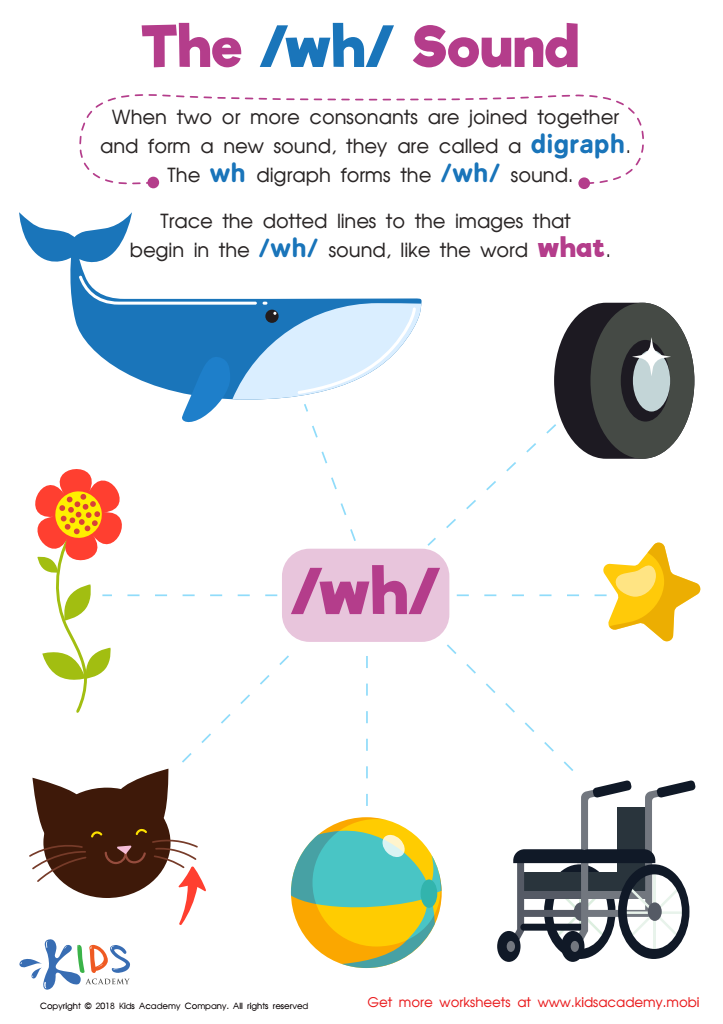
The /wh/ Sound Worksheet
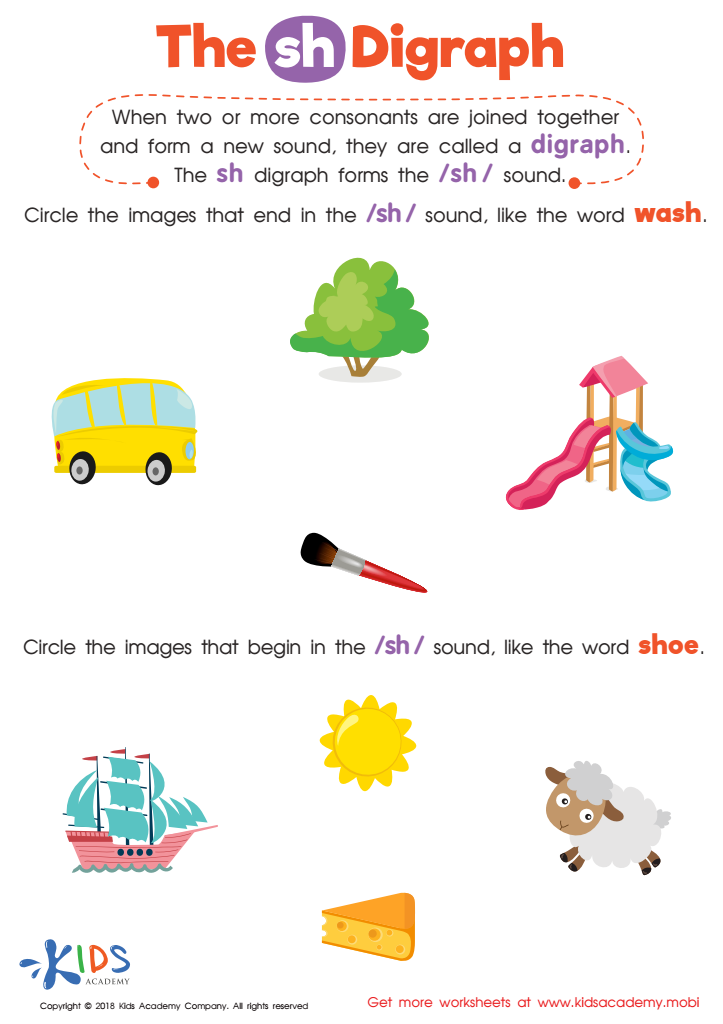
The SH Digraph Worksheet
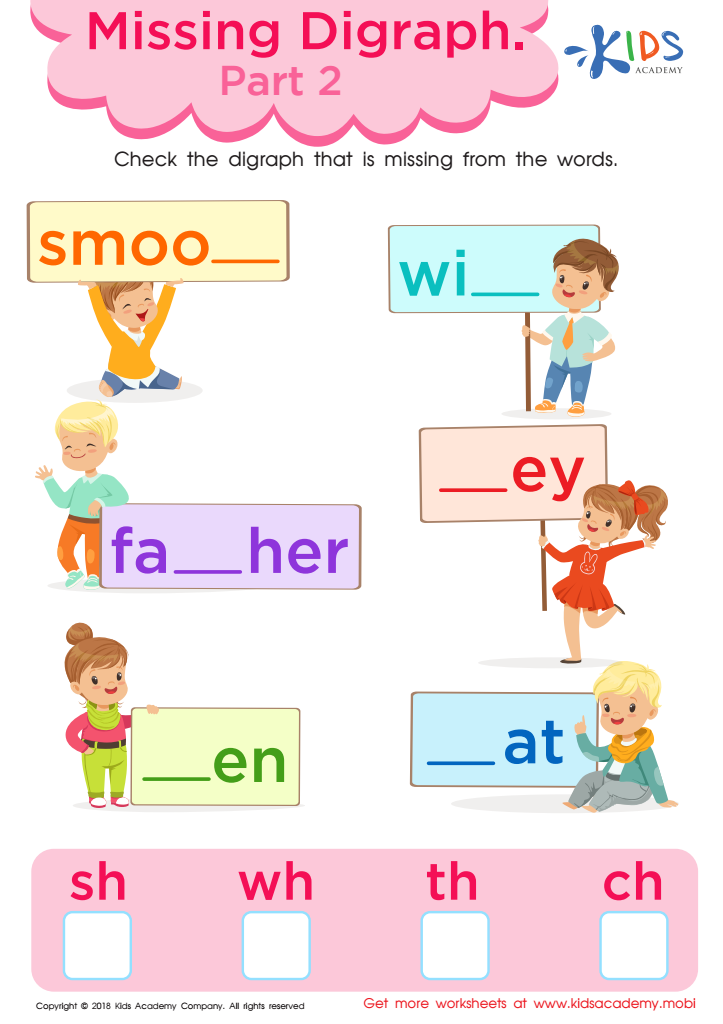
Missing Digraph: Part 2 Worksheet
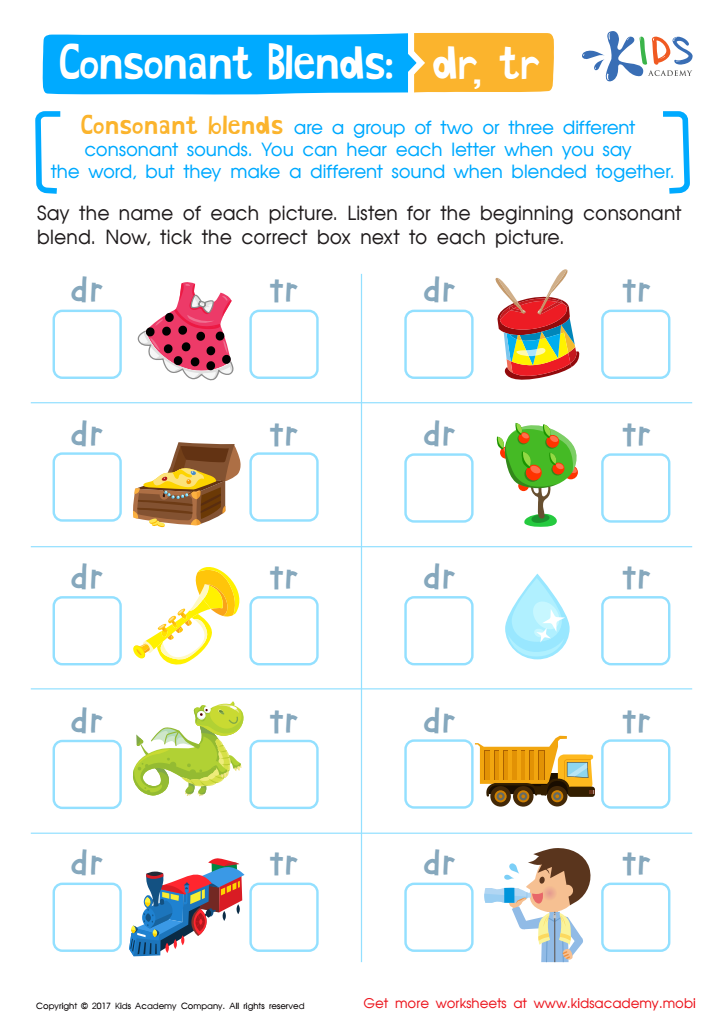
Consonant Blends: "Dr" and "Tr" Printable


Parents and teachers should care about word recognition of normal consonant digraphs for 7-year-olds because mastery of this fundamental skill is crucial for developing proficient reading and writing abilities. Consonant digraphs are pairs of consonants that produce a single sound, such as "sh," "ch," "th," and "wh." Understanding these combinations allows children to decode words more accurately and confidently, leading to improved fluency and comprehension.
At this developmental stage, children transition from learning to read to reading to learn. Strong word recognition skills enable them to tackle more complex texts, expand their vocabulary, and better enjoy their reading experiences. This competency is foundational for academic success across subjects, as reading is integral to understanding instructions, following narratives, and engaging in new content areas.
When children struggle with consonant digraphs, they may face challenges in reading, causing frustration and disengagement. Consistent practice with digraphs helps solidify these patterns in young minds, making reading a smoother, more enjoyable process.
Incorporating enjoyable learning activities, such as phonics games or interactive reading sessions, can help parents and teachers provide supportive learning experiences. Investing time and attention in developing these skills at an early age establishes a solid literacy foundation for future educational growth and lifelong learning.