
Spelling Skills Normal Alphabet Worksheets for 7-Year-Olds
5 filtered results
Difficulty Level
Grade
Age
-
From - To
Subject
Activity
Standards
Boost your 7-year-old’s spelling abilities with our engaging Spelling Skills Normal Alphabet Worksheets! Designed for young learners, these worksheets provide hands-on practice that enhances vocabulary and phonics understanding. Each activity features fun words that build confidence and promote literacy in a playful way. From matching letters to fill-in-the-blank exercises, these resources ensure your child will grasp essential spelling concepts while enjoying their learning journey. Perfect for home or classroom use, our worksheets cater to different learning styles and make mastering the alphabet enjoyable. Explore our collection today and set your child on the path to spelling success!
Favorites
With answer key
Interactive
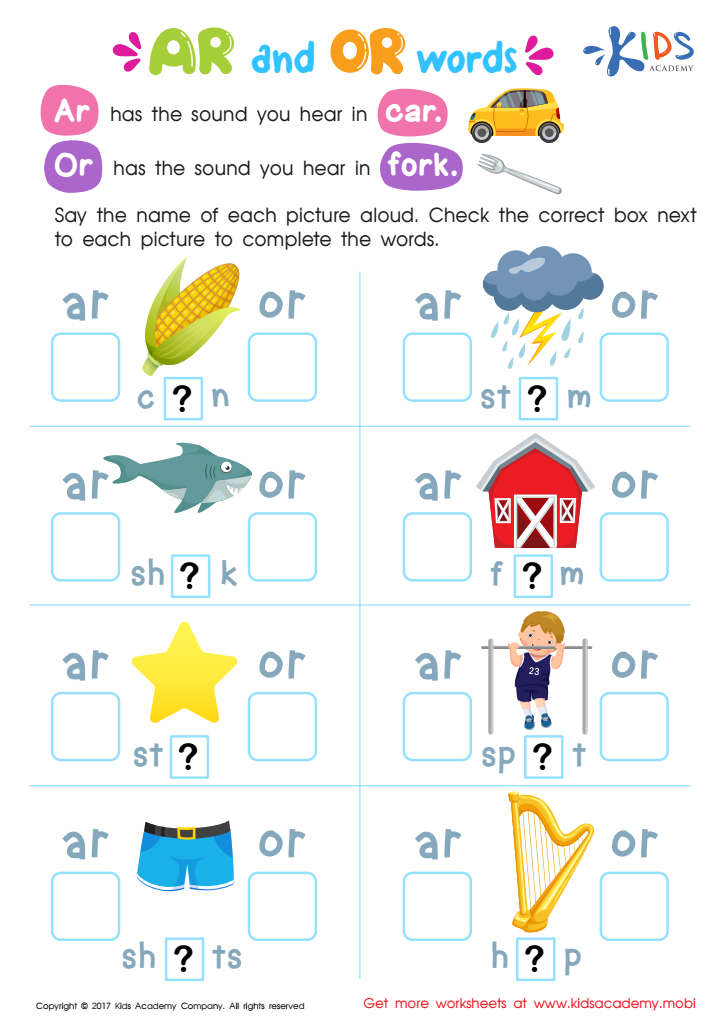
Ar and Or Words Phonics Worksheet
Master the distinct digraphs 'ar' and 'or' with this fun phonics worksheet from Kids Academy! With meaningful illustrations, it'll guide your child to choose the right one. Get ready for the great results!
Ar and Or Words Phonics Worksheet
Worksheet
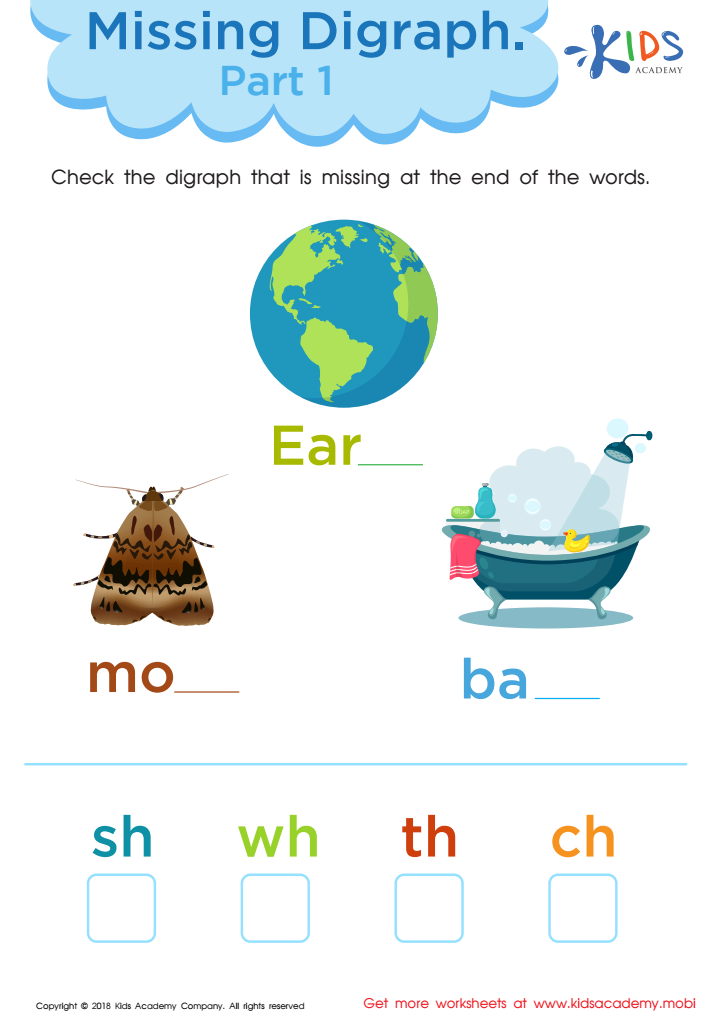
Missing Digraph: Part 1 Worksheet
Practice the 'th' digraph with this worksheet! Ask kids to say the words shown and sound out the letters below each image. Check the box with the correct digraph to complete. Examples include 'earth', 'bath' and 'moth', all ending with the same two letters. Phonics teaches that digraphs are two letters that make one sound.
Missing Digraph: Part 1 Worksheet
Worksheet
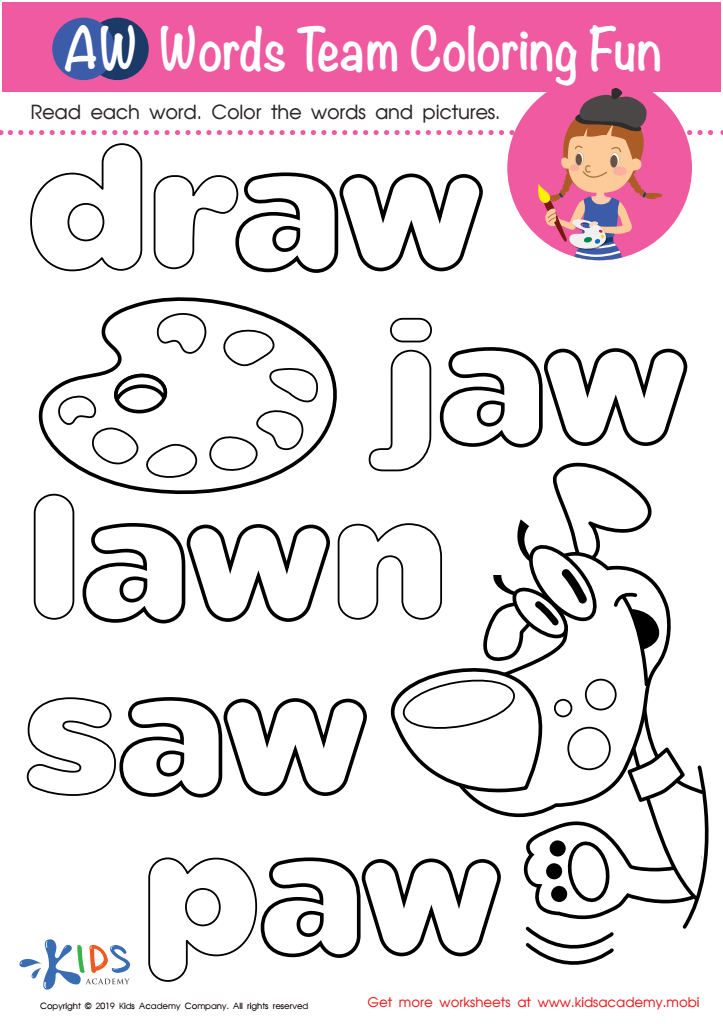
AW Words Team Coloring Fun Worksheet
Coloring words they can read is a blast for little learners! This worksheet offers emerging readers the chance to practice and gain confidence in reading words from the -aw family, while also improving fine-motor and creativity skills. Without knowing it, they'll learn about phonetic teams along the way!
Download (PDF)
 Assign to My Students
Assign to My Students
AW Words Team Coloring Fun Worksheet
Worksheet
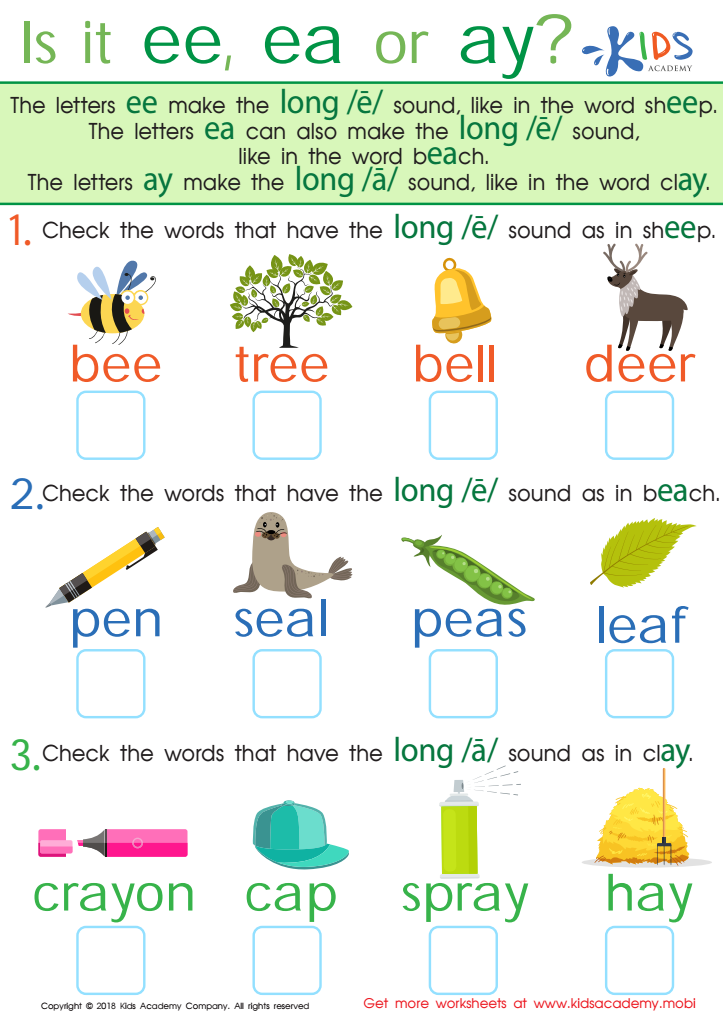
Is It EE, EA, or AY? Worksheet
When 'ee', 'ea' and 'ay' are in words, they usually make the long /e/ and /a/ sounds. Examples of words with 'ee' are "sheep", 'beach' and 'seat' with 'ea', and 'clay' and 'play' with 'ay'. Check this colourful worksheet with your kids; help them find the words that make the long /e/ sound like 'sheep'.
Is It EE, EA, or AY? Worksheet
Worksheet
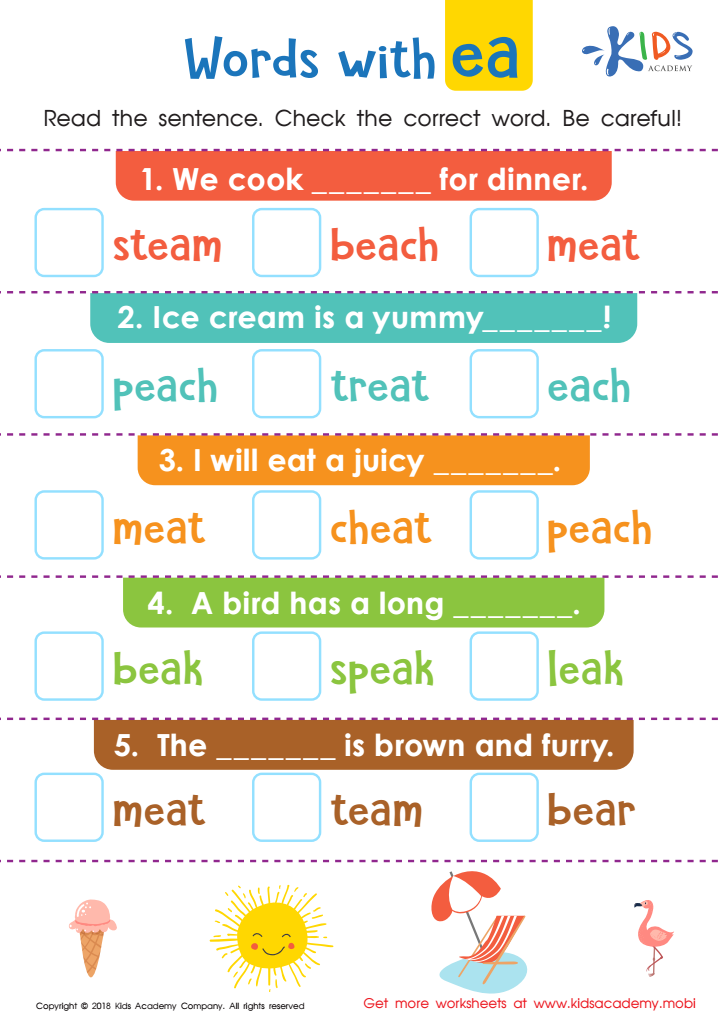
Words with ea Worksheet
Beginning readers may struggle with -ea vowel digraphs, which can have multiple sounds and be tricky to decode. This cheerful worksheet helps kids practice reading sentences with missing -ea words, using context clues to fill in the blanks. They'll also be exposed to various -ea sound examples, and build their sight word knowledge.
Words with ea Worksheet
Worksheet
Join Kids Academy for Free
Who is primarily going to use this learning content?







Spelling skills in young children, particularly those around 7 years old, are foundational to their academic success and overall literacy development. At this age, children are transitioning from learning to read to reading to learn. Proficient spelling helps them decode words efficiently, which is crucial for comprehension.
Teachers and parents should care about spelling because it fosters confidence in writing and communication. A strong grasp of spelling allows children to express their thoughts clearly and creatively, which is important for their emotional and intellectual growth. Furthermore, spelling skills are often linked to other language arts areas, such as vocabulary development and grammar.
Good spelling confidence can also influence children's motivation to write. When children spell correctly, they feel more competent in their abilities, encouraging them to engage more in written expression. In this digital age, where communication often happens through text, strong spelling skills remain vital in conveying meaning accurately.
Moreover, targeting spelling at this age can prevent future learning difficulties. Early intervention, in the form of effective spelling instruction, ensures that children are equipped with the necessary tools to explore more complex language concepts as they grow. In short, nurturing spelling skills is critical for holistic educational development and long-term success.







