
Reading proficiency Normal Phonics Worksheets for 7-Year-Olds
5 filtered results
Difficulty Level
Grade
Age
-
From - To
Subject
Activity
Standards
Boost your 7-year-old's reading proficiency with our engaging Normal Phonics Worksheets! Designed specifically for early learners, these resources help children master essential phonics skills through fun and interactive activities. Covering key concepts like letter sounds, word recognition, and blending, our worksheets make learning enjoyable and effective. Perfect for at-home practice or classroom use, these printable materials support diverse learning styles and cater to various skill levels. As your child engages with our colorful, user-friendly worksheets, they'll build confidence and lay a solid foundation for lifelong reading success. Explore our collection and watch your young learner thrive in their reading journey!
Favorites
With answer key
Interactive
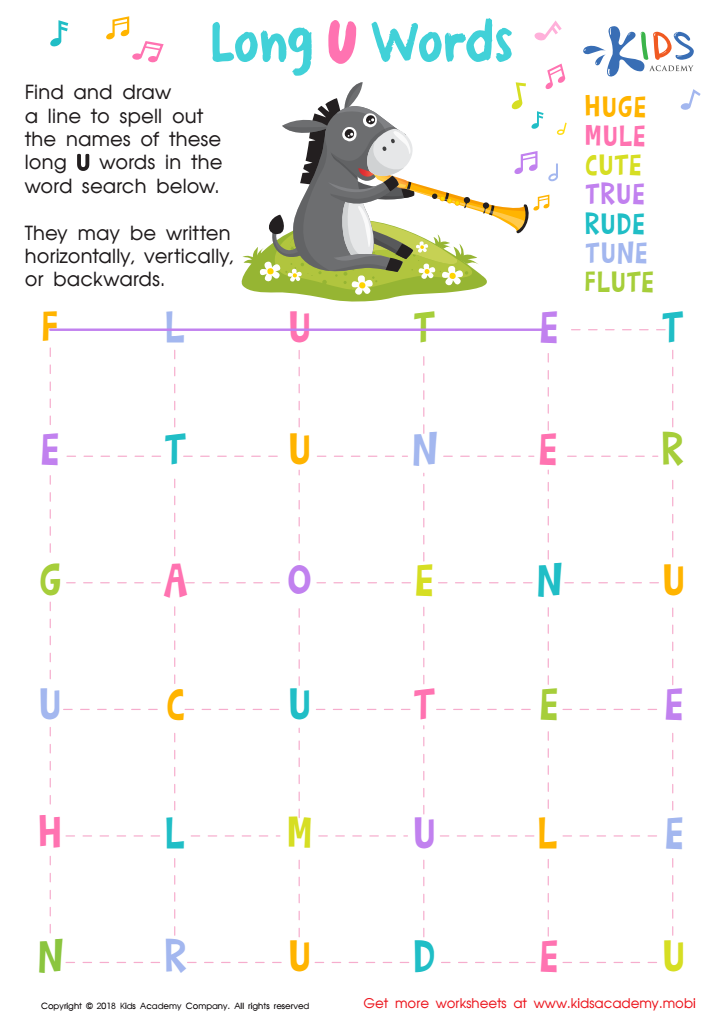
Long /u/ Words Worksheet
Your child needs to learn phonetics to enunciate and differentiate words. This fun worksheet encourages them to find and draw lines connecting the long 'U' words in the word search. Help them read the words on the right side of the picture, then look for them in the word search (horizontally, backwards or vertically).
Long /u/ Words Worksheet
Worksheet
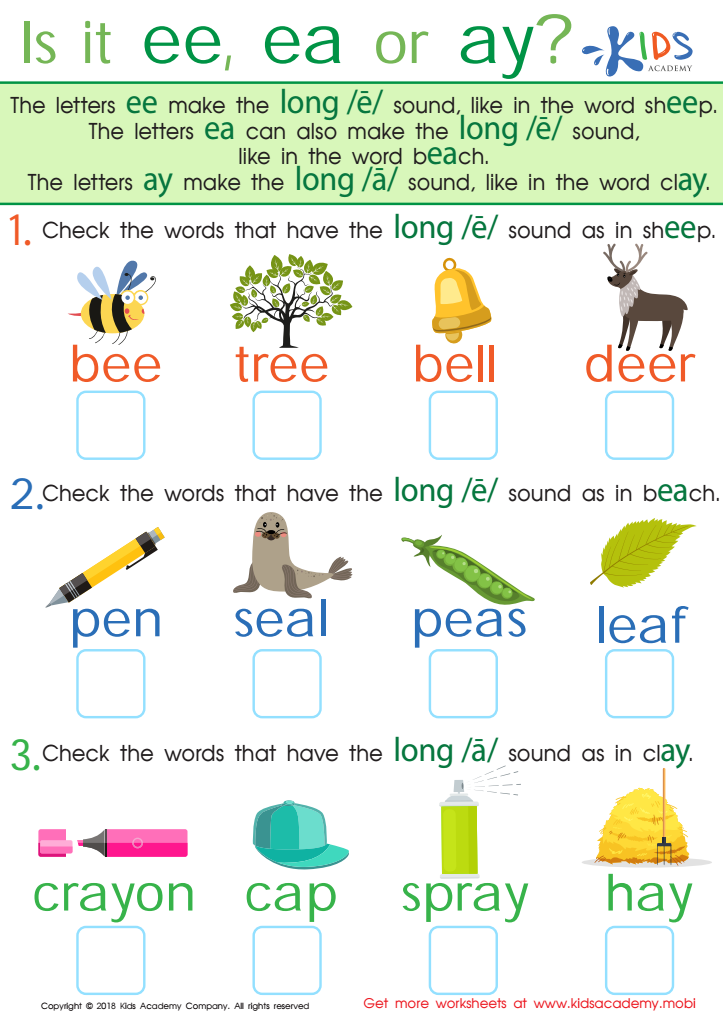
Is It EE, EA, or AY? Worksheet
When 'ee', 'ea' and 'ay' are in words, they usually make the long /e/ and /a/ sounds. Examples of words with 'ee' are "sheep", 'beach' and 'seat' with 'ea', and 'clay' and 'play' with 'ay'. Check this colourful worksheet with your kids; help them find the words that make the long /e/ sound like 'sheep'.
Is It EE, EA, or AY? Worksheet
Worksheet
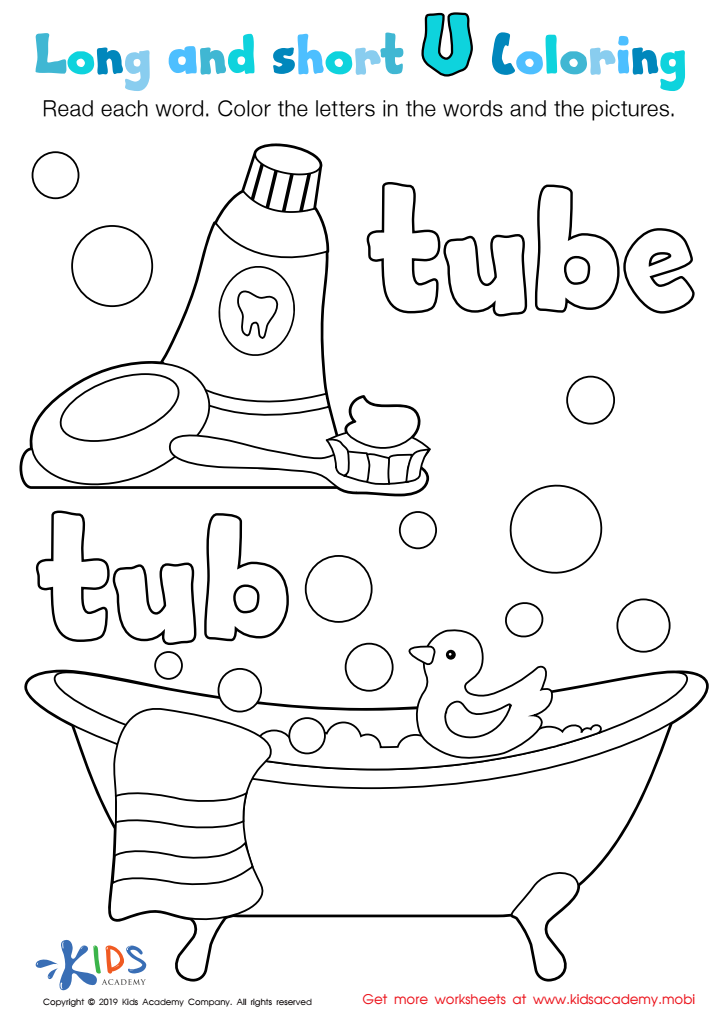
Long and Short U Worksheet
Revised: Spice up your lesson on long and short vowels with this fun printout! Kids read the words "tube" and "tub," then reinforce the sound by coloring in the words and pictures. It's a great way to make phonics class enjoyable!
Download (PDF)
 Assign to My Students
Assign to My Students
Long and Short U Worksheet
Worksheet
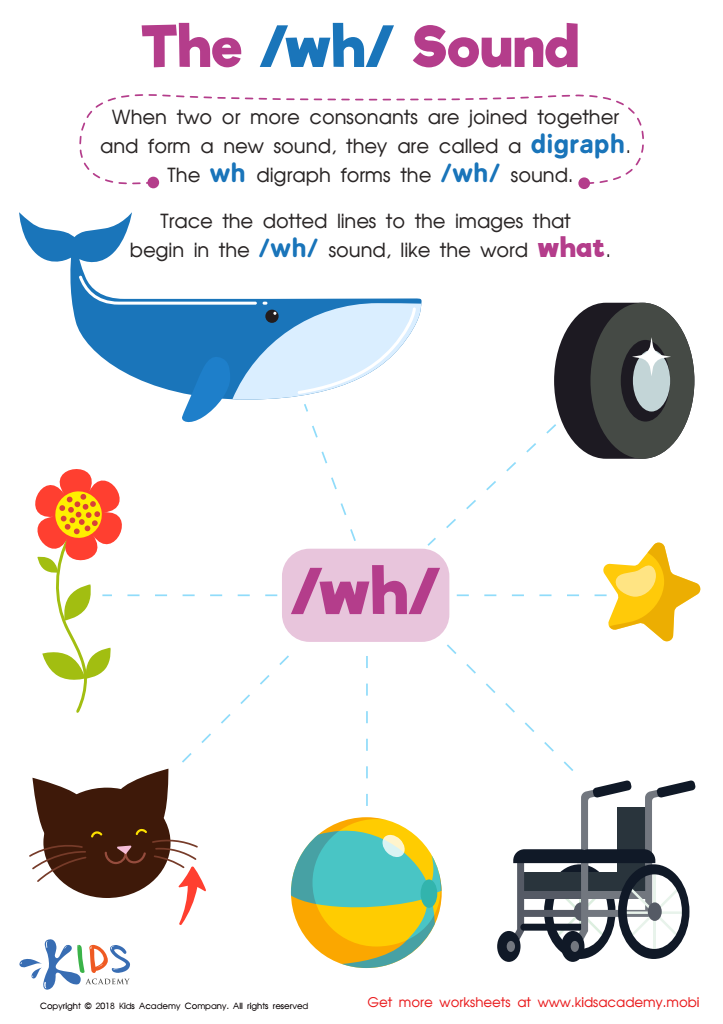
The /wh/ Sound Worksheet
Digraphs join two consonants to make a new sound, like /wh/. Give examples, like "whale", "when" and "why". Ask kids to name pictures in a worksheet and trace dotted lines to images beginning with the /wh/ sound; "what" is one example.
The /wh/ Sound Worksheet
Worksheet
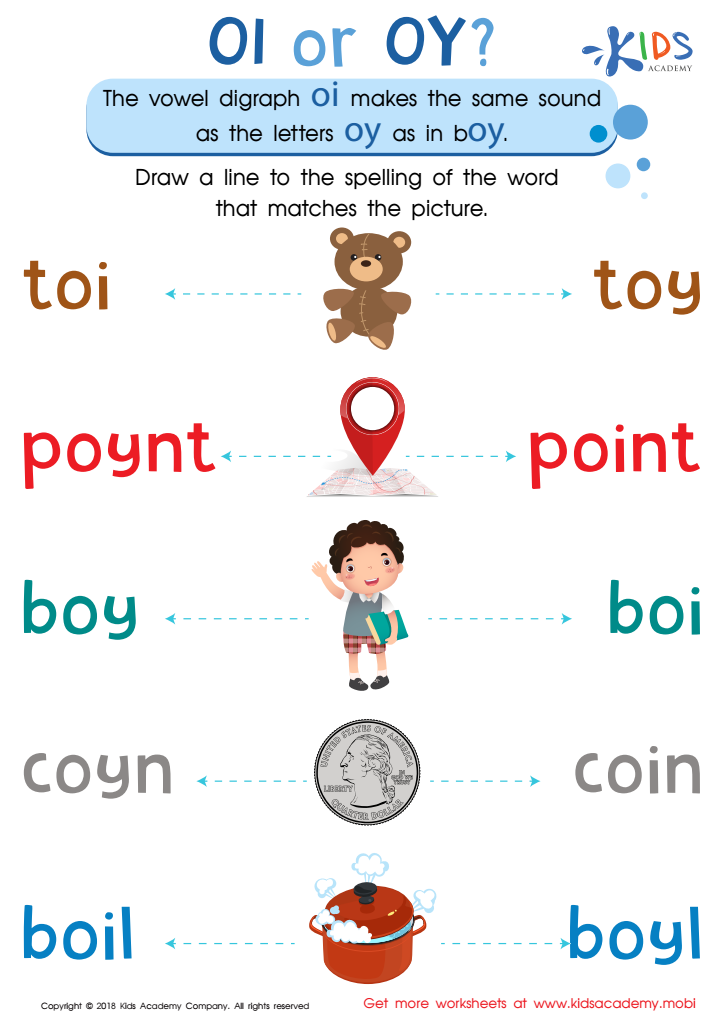
Reading: OI and OY Worksheet
Ask your students if they know the rule for words with /oi/ or /oy/ sound. If not, it's easy to learn! Rule: If /oy/ at end of word, spell with 'oy'; if /oi/ in middle of word, spell with 'oi'. Use this worksheet to help them master these digraphs and improve their ability to decode.
Reading: OI and OY Worksheet
Worksheet
Join Kids Academy for Free
Who is primarily going to use this learning content?








Reading proficiency, particularly in normal phonics, is crucial for 7-year-olds as it lays the foundation for a child’s academic success and lifelong learning. At this age, children transition from learning to read to reading to learn. Strong phonics skills enable them to decode words effectively, which enhances their comprehension and vocabulary. Parents and teachers should care about reading proficiency because it directly influences a child's confidence and engagement in school.
Additionally, reading proficiency is associated with improved performance across various subjects, establishing a strong educational pathway. Children who struggle with phonics may experience frustration, leading to negative attitudes toward reading and learning as a whole. Early intervention can help mitigate these issues, fostering a positive learning environment where children feel supported.
Moreover, reading serves not just academic purposes but also nurtures critical thinking and creativity, empowering children to explore concepts beyond their immediate experiences. When parents and teachers actively promote normal phonics and monitor reading proficiency, they play a vital role in shaping a child’s cognitive development, social skills, and emotional well-being, ultimately contributing to a more literate, informed society. Investing in these skills now creates a strong framework for future success both in and out of the classroom.







