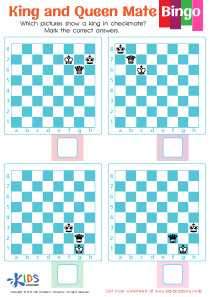
Cognitive Development Normal Chess Worksheets for 7-Year-Olds
4 filtered results
-
From - To
Enhance your child's cognitive development with our specialized Chess Worksheets for 7-year-olds. These engaging activities are designed to strengthen logical thinking, problem-solving abilities, and strategic planning. Perfectly tailored for young learners, each worksheet encourages mental growth while making chess fun and accessible. Kids practice essential skills like concentration, pattern recognition, and creativity, all crucial for academic success. With clear instructions and vibrant illustrations, our worksheets provide a stimulating and enjoyable learning experience. Give your 7-year-old a head start in cognitive development through the timeless game of chess, available for easy download at Kids Academy.
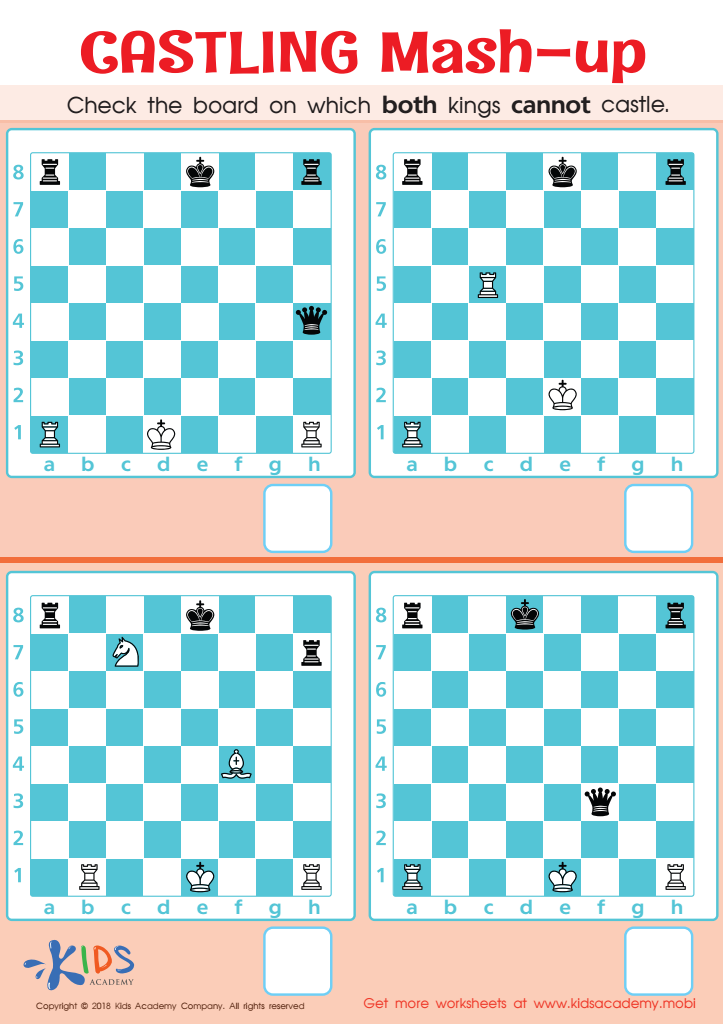
Castling Mash–up Worksheet
 Assign to My Students
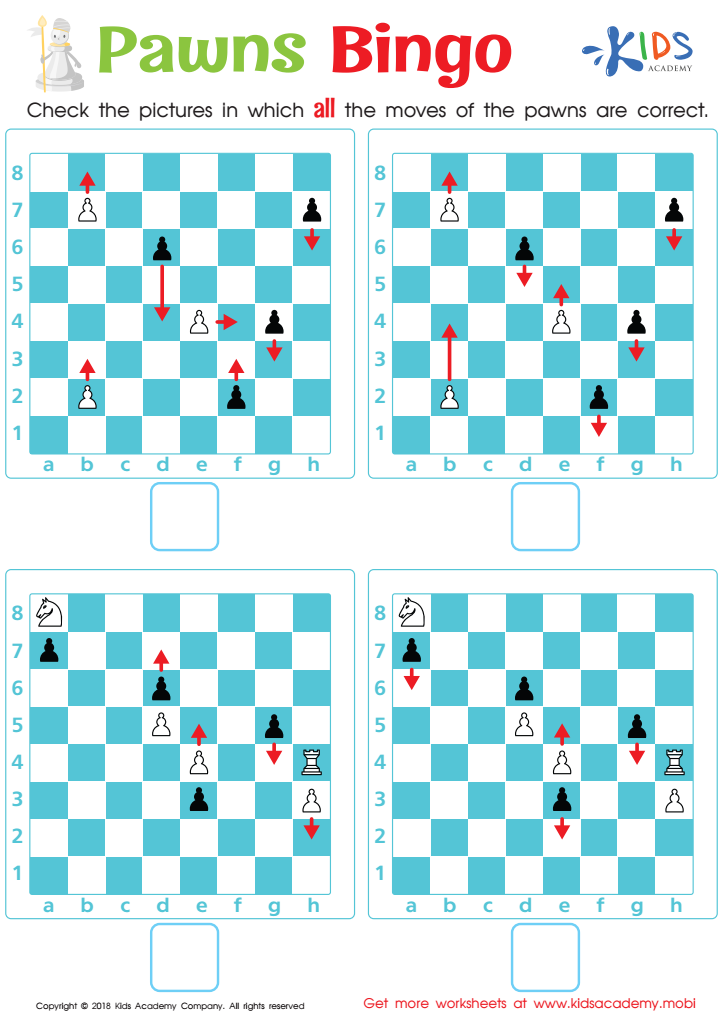
Pawns Bingo Worksheet
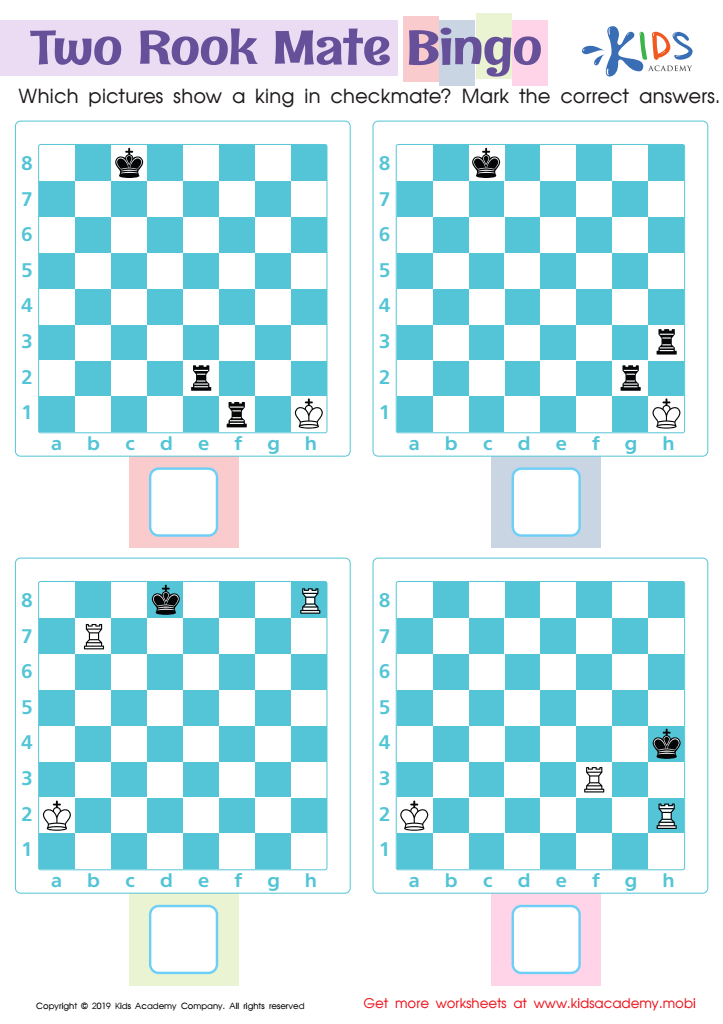
Two Rook Bingo Worksheet
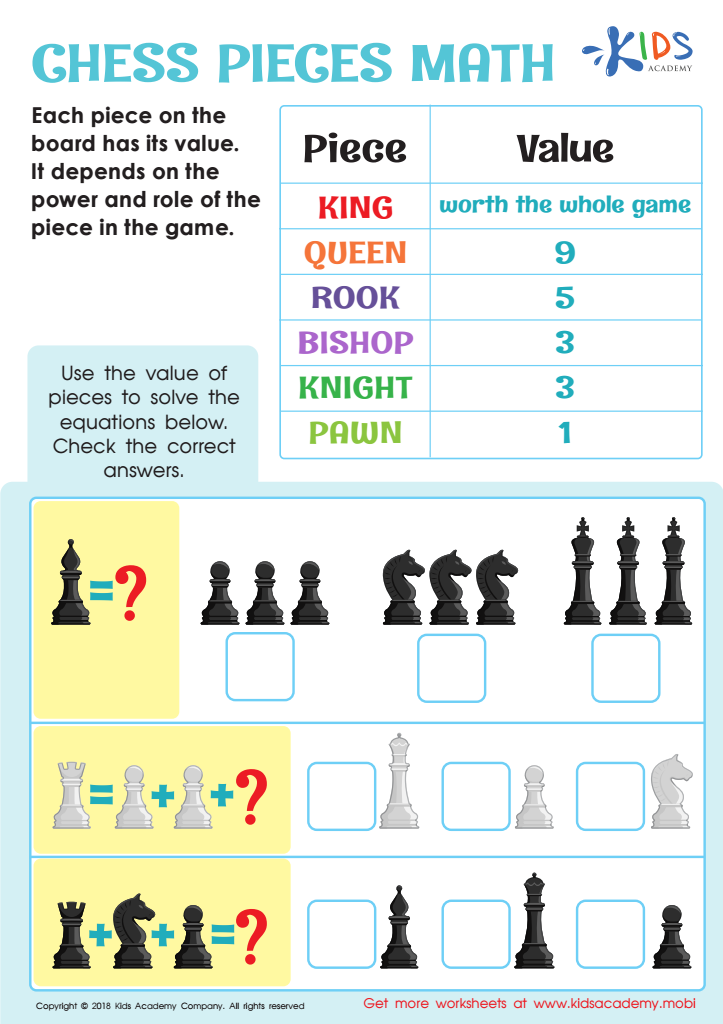
Chess Pieces Math Worksheet







Cognitive development is crucial for 7-year-olds, and integrating activities like playing chess can significantly enhance this process. Parents and teachers should care about encouraging cognitive development through activities such as chess because it strengthens critical thinking, problem-solving skills, and memory. Chess requires players to plan several moves ahead and consider the consequences of their actions, fostering advanced strategic thinking and foresight.
Moreover, chess challenges children to focus and maintain sustained attention, which is crucial for academic success. It enhances concentration skills that are transferable to classroom tasks, helping students follow instructions and complete assignments more effectively.
Playing chess also promotes emotional development, as it teaches patience, perseverance, and resilience. Children learn to manage frustration and remain composed under pressure, skills beneficial in both academic and social settings.
Socially, chess can bring children together, encouraging interactions and cooperative learning. This helps to develop communication skills, as players often discuss strategies and share experiences, which can build friendships and collaborative abilities.
By fostering these skills at a tender age, parents and teachers can prepare children for a lifetime of learning, ensuring they possess foundational cognitive abilities that will be essential in more complex areas of study and real-life situations. Thus, incorporating chess into a child’s routine is a supportive, dynamic pathway to cognitive development.