
Animal identification Normal Worksheets for 7-Year-Olds
11 filtered results
Difficulty Level
Grade
Age
-
From - To
Subject
Activity
Standards
Discover our engaging Animal Identification Normal Worksheets designed specifically for 7-year-olds! These worksheets encourage young learners to explore the fascinating world of animals while enhancing their observational and classification skills. Packed with vibrant illustrations and fun facts, each activity promotes critical thinking as children identify different species and learn about their habitats and characteristics. Ideal for at-home learning or classroom activities, these worksheets provide an interactive way to spark curiosity about nature. Get ready to embark on an educational adventure that makes animal identification enjoyable and informative for your child! Perfect for parents and teachers looking to enrich their students' learning experience.
Favorites
With answer key
Interactive
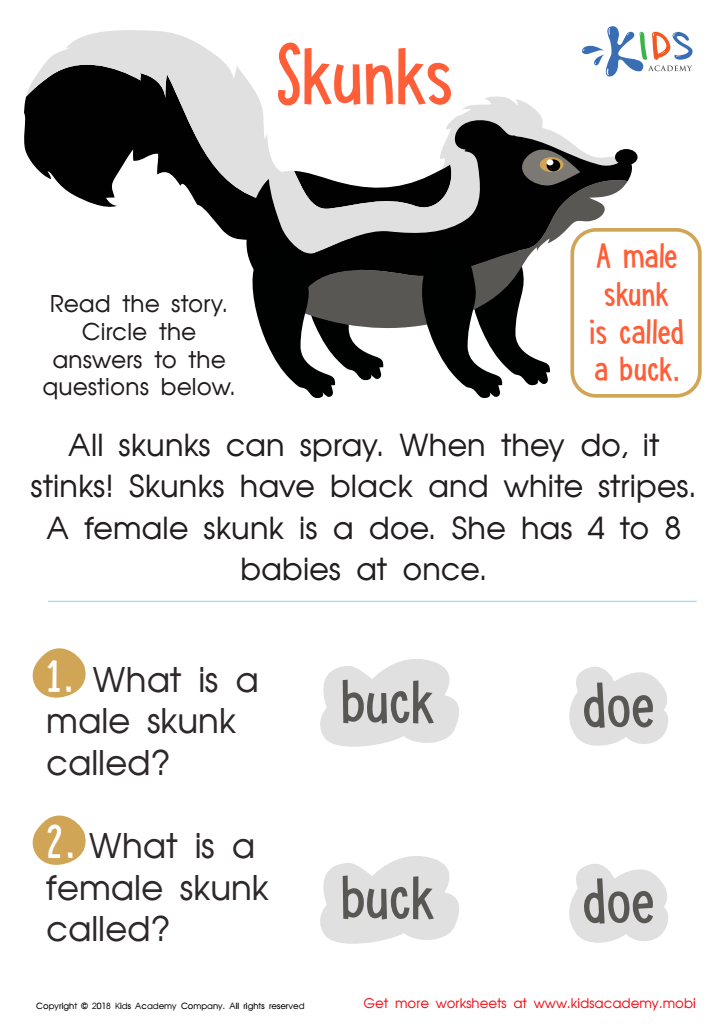
Skunks Worksheet
Kids can learn fascinating information about a beloved and smelly animal with this fun worksheet. They'll read articles, texts, and look at an accompanying picture while reading. Captions and sidebars can give extra details. Finally, answer the given questions by selecting the correct response. Reading is a fun and informative way to gain knowledge!
Skunks Worksheet
Worksheet
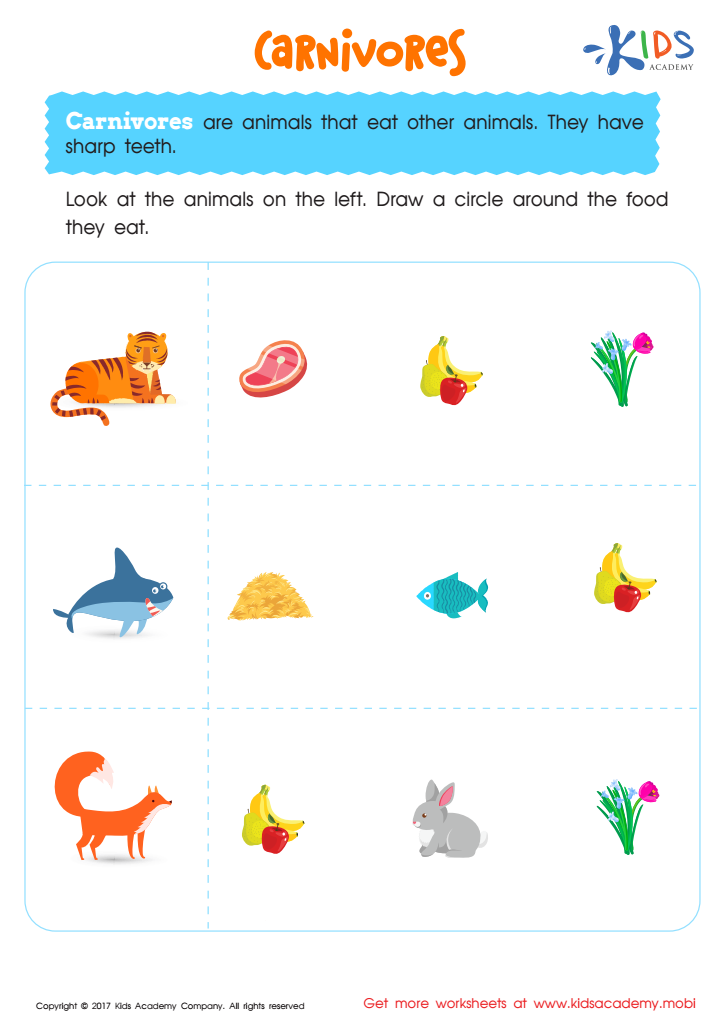
Carnivores Worksheet
Boost their vocabulary and help them explore the incredible world of carnivores.
Carnivores Worksheet
Worksheet
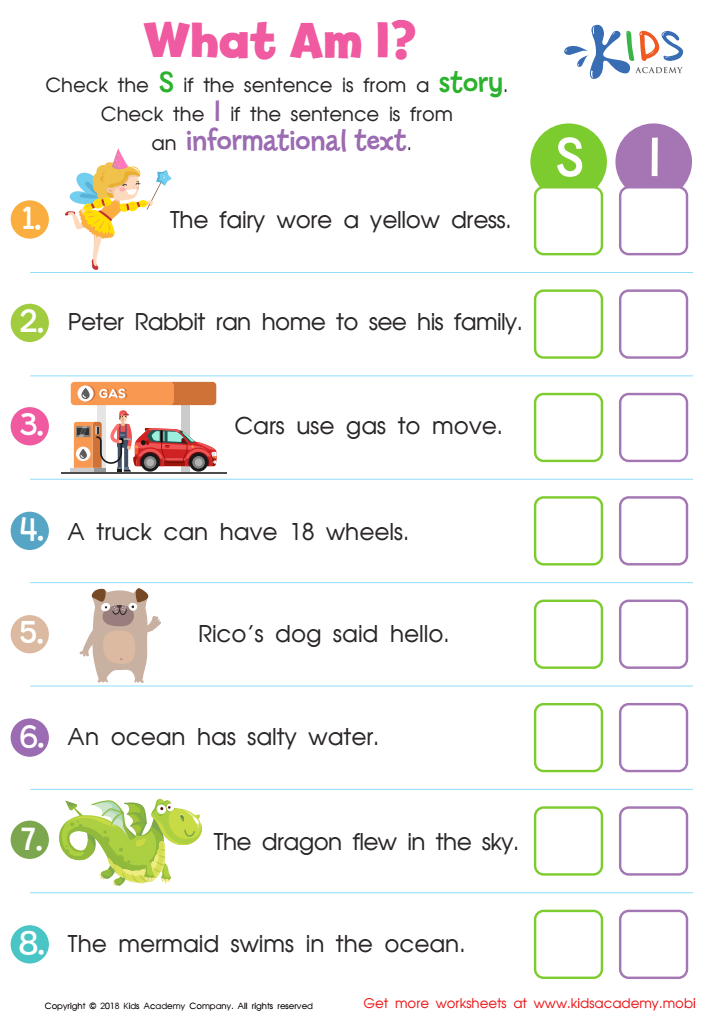
What Am I? Worksheet
This worksheet assesses students' ability to differentiate between stories and texts they read for facts. Students learn to distinguish between reading for pleasure and reading for information. It includes statements from both a story and an informational text, and students must decide what type of text it is.
What Am I? Worksheet
Worksheet
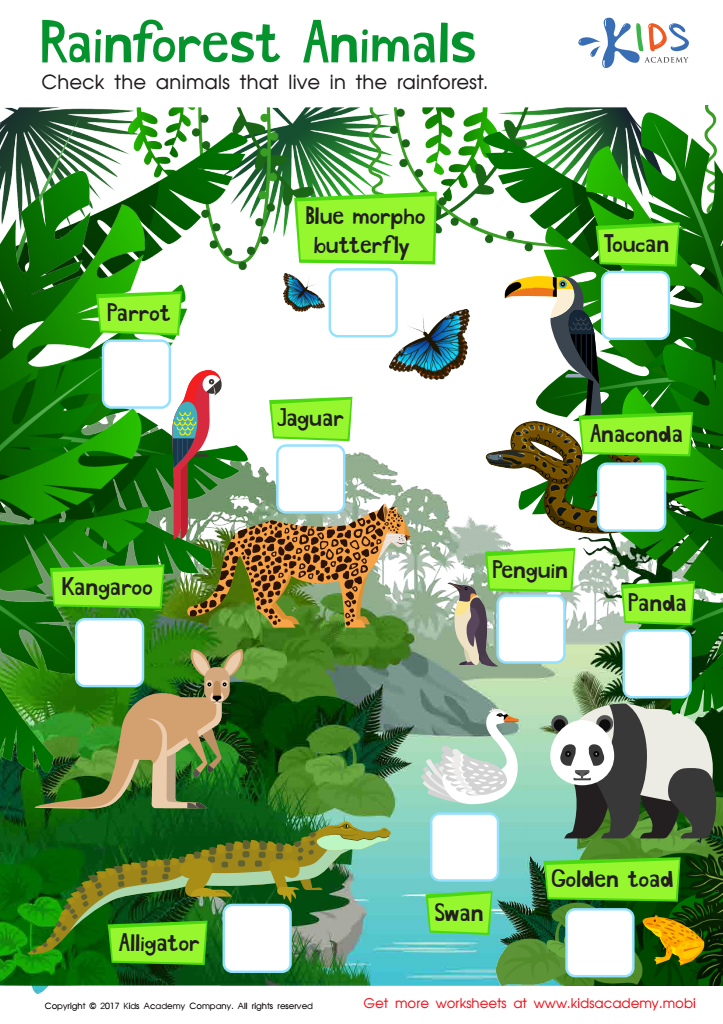
Rainforest Animals Worksheet
Kids love the bright, vivid pics of rainforest animals in this worksheet. It fuels their interest in life science and brings joy to their learning. It encourages them to study these animals in detail.
Rainforest Animals Worksheet
Worksheet
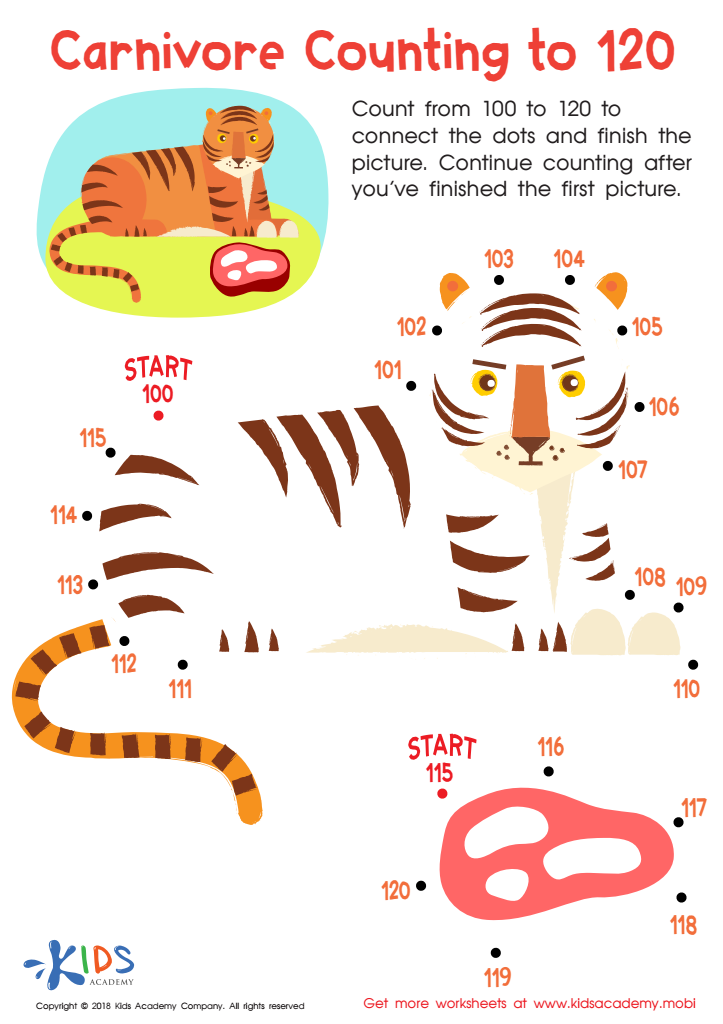
Carnivore Counting to 120 Worksheet
Ask your child to name some popular carnivores. Can they tell you what the animal in the worksheet is? A Tiger? Get them to count from 100 to 120 to connect the dots. After they finish the first picture, keep counting to help them practice!
Carnivore Counting to 120 Worksheet
Worksheet
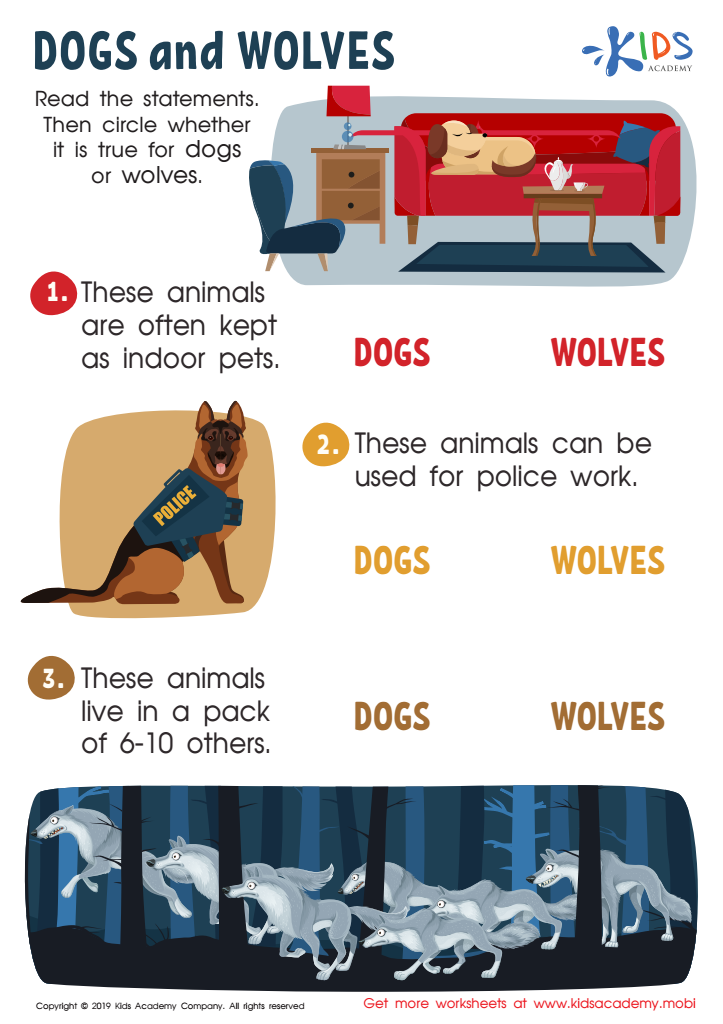
Dogs and Wolves Worksheet
Kids love dogs and wolves, so engaging them with text about them is key. This free, downloadable worksheet allows kids to read statements about dogs and wolves and use picture clues and prior knowledge to decide if the statements are true or false, strengthening their reading comprehension.
Dogs and Wolves Worksheet
Worksheet
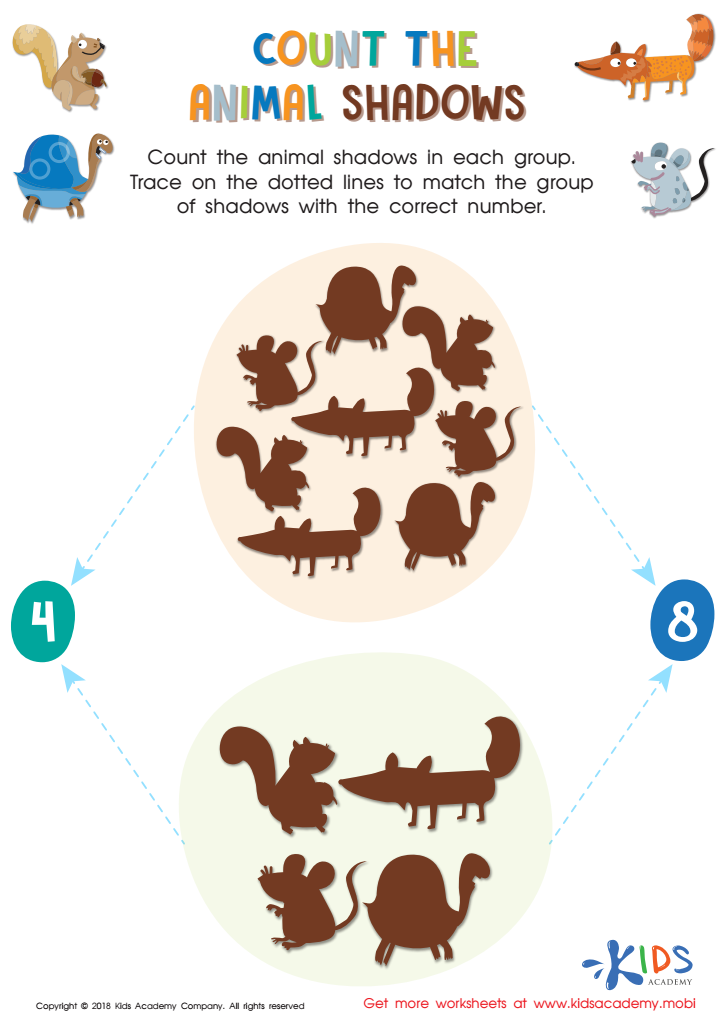
Count the Animal Shadows Worksheet
Our shadows accompany us wherever we go. Even your kids have seen theirs! Did they know that animals have shadows too? Count the animal shadows in each group with this worksheet. Ask your child to identify the animals pictured, then help them trace the dotted lines to match with the right number.
Count the Animal Shadows Worksheet
Worksheet
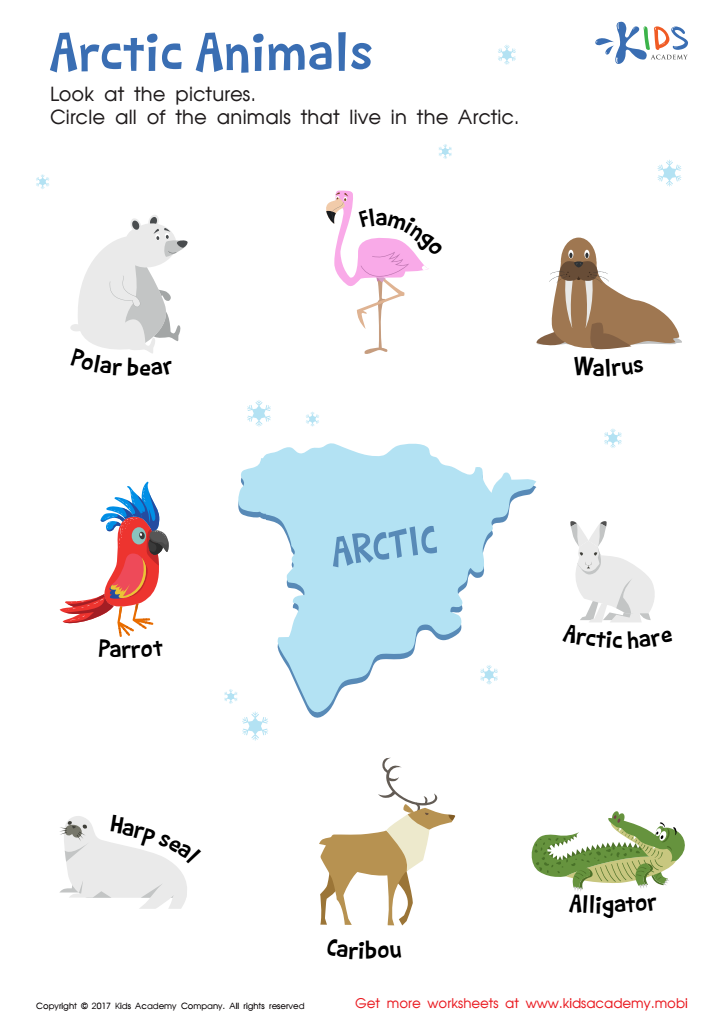
Arctic Animals Worksheet
Kids love animals and this worksheet is a great way to teach them where they live. It reinforces classification skills and introduces new animals, like the Arctic hare. Use it to discuss the Arctic climate and how these animals live, then ask your child where other animals live to keep the conversation going.
Arctic Animals Worksheet
Worksheet
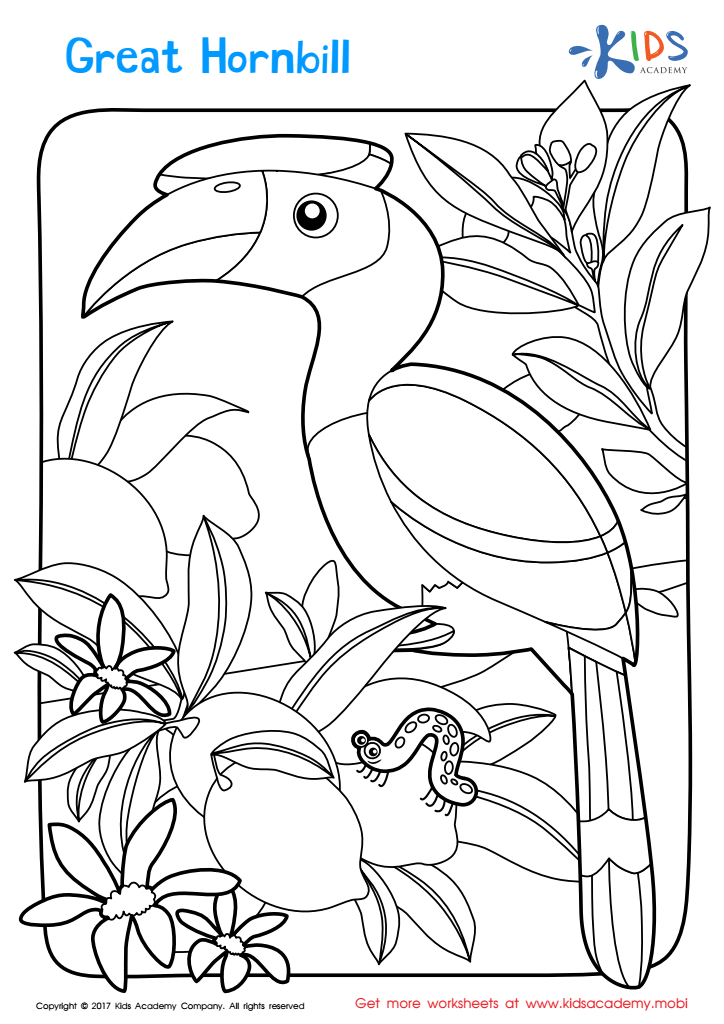
Great Hornbill Worksheet
Expand your child's knowledge with our exotic animal printable: the great hornbill coloring page. It’s a fun and easy way to explore this beautiful bird's stunning array of colors without leaving home. Look up pics online to get a better understanding of this incredible creature.
Download (PDF)
 Assign to My Students
Assign to My Students
Great Hornbill Worksheet
Worksheet
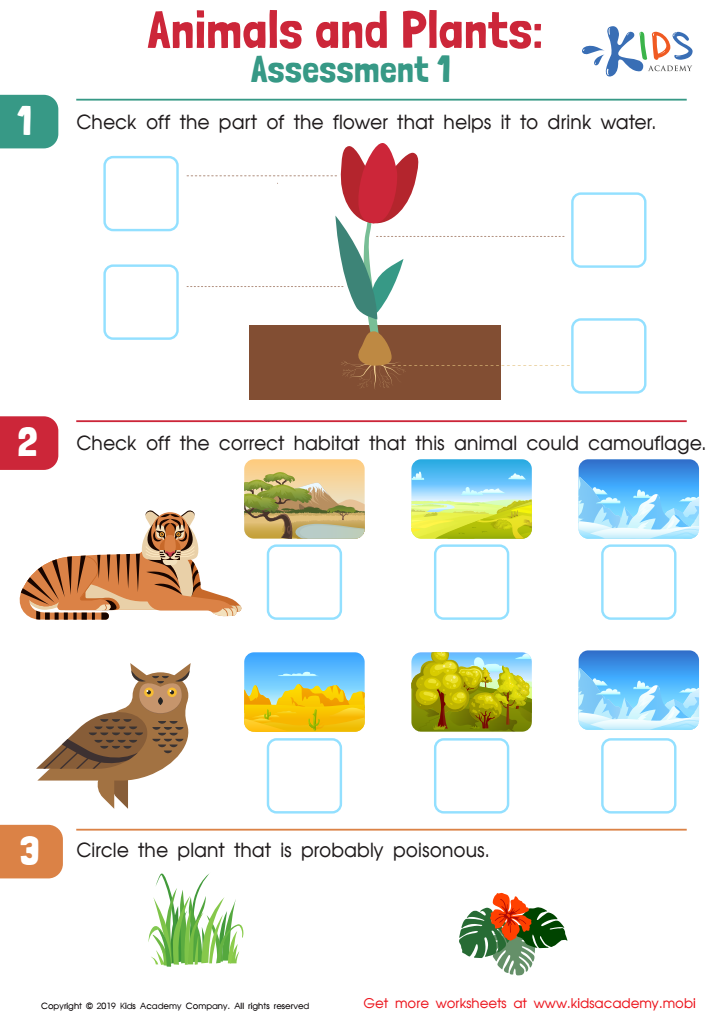
Animals and Plants: Assessment 1 Worksheet
Do you want to easily assess your child's understanding of basic science concepts? This colorful PDF offers a free opportunity for them to test their knowledge about parts of a flower, poisonous plants, animal habitats and more! Bright pictures make it fun and easy for you to see what they know.
Animals and Plants: Assessment 1 Worksheet
Worksheet
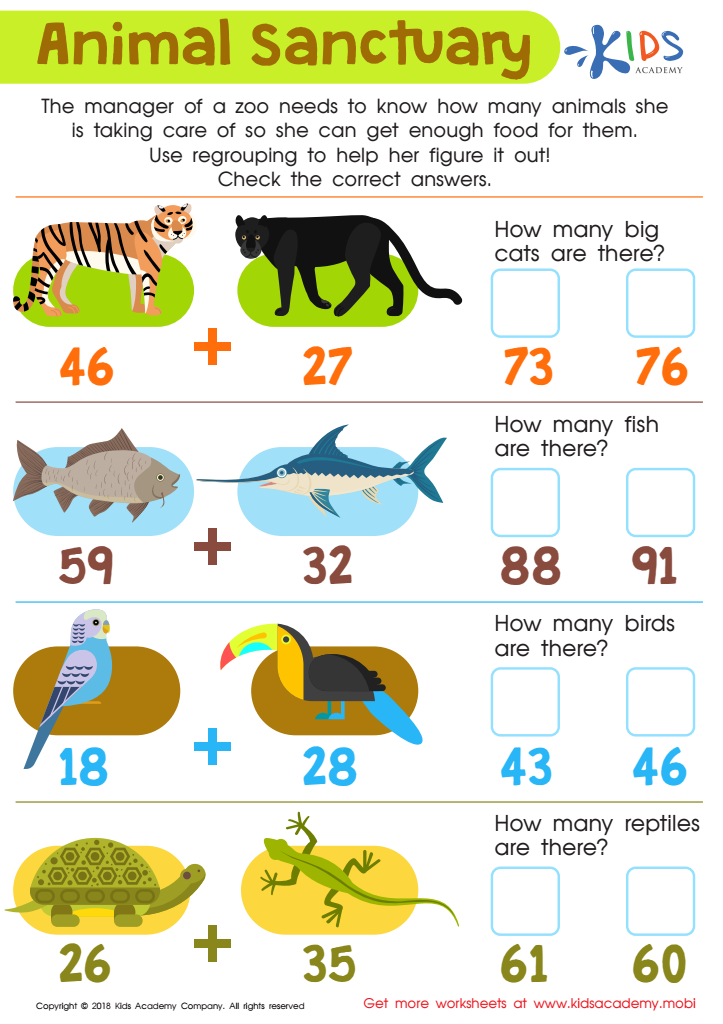
Animal Sanctuary Worksheet
Do your kids love visiting the zoo? Ask which animals they remember & which ones they liked the most. The manager needs help to get enough food for all the animals. Help your child use regrouping to figure out how many animals there are. And ask them to check the answers.
Animal Sanctuary Worksheet
Worksheet
Join Kids Academy for Free
Who is primarily going to use this learning content?



.jpg)



Animal identification is important for young learners, particularly for 7-year-olds, as it broadens their understanding of the natural world. Through recognizing different animals, children develop an appreciation for biodiversity and learn about various species’ roles in ecosystems. This knowledge encourages curiosity, prompting them to ask questions and explore the environment around them.
Additionally, animal identification fosters empathy and caring for living beings. As children learn the unique traits and behaviors of different species, they become more aware of their needs and habitats. This sparks a sense of responsibility to protect animals and their environments, encouraging a commitment to conservation.
Teaching identification skills enhances critical thinking, as kids begin to observe patterns, categorize information, and make connections about animal behaviors and their interactions within ecosystems.
Finally, engagement with animal identification can improve collaboration and communication skills, especially during group activities like nature walks or science projects. This knowledge lays a solid foundation for future learning in biology and environmental education, promoting lifelong interests in science and nature. When parents and teachers prioritize animal identification, they contribute to children's well-rounded education and encou rage them to be informed, compassionate stewards of the planet.








