Astronomy basics Normal Worksheets for 7-Year-Olds
3 filtered results
-
From - To
Explore the captivating world of astronomy with our "Astronomy Basics Normal Worksheets" tailored for 7-year-olds! These engaging worksheets introduce young learners to fundamental concepts of space, stars, planets, and the solar system in a fun and interactive way. Each activity is designed to enhance critical thinking, creativity, and a love for science as children discover the wonders of the universe. With vibrant illustrations and age-appropriate questions, these worksheets foster curiosity and encourage kids to explore celestial phenomena. Perfect for classroom or home learning, our resources make astronomy accessible and exciting for budding young astronomers. Dive into the cosmos today!
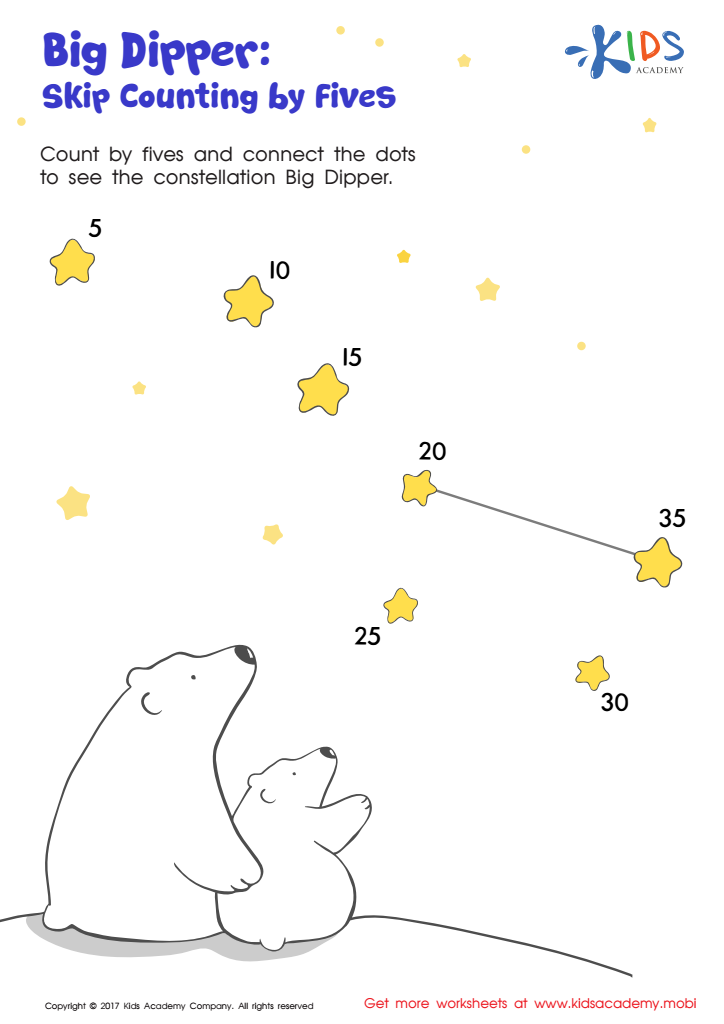
 Assign to My Students
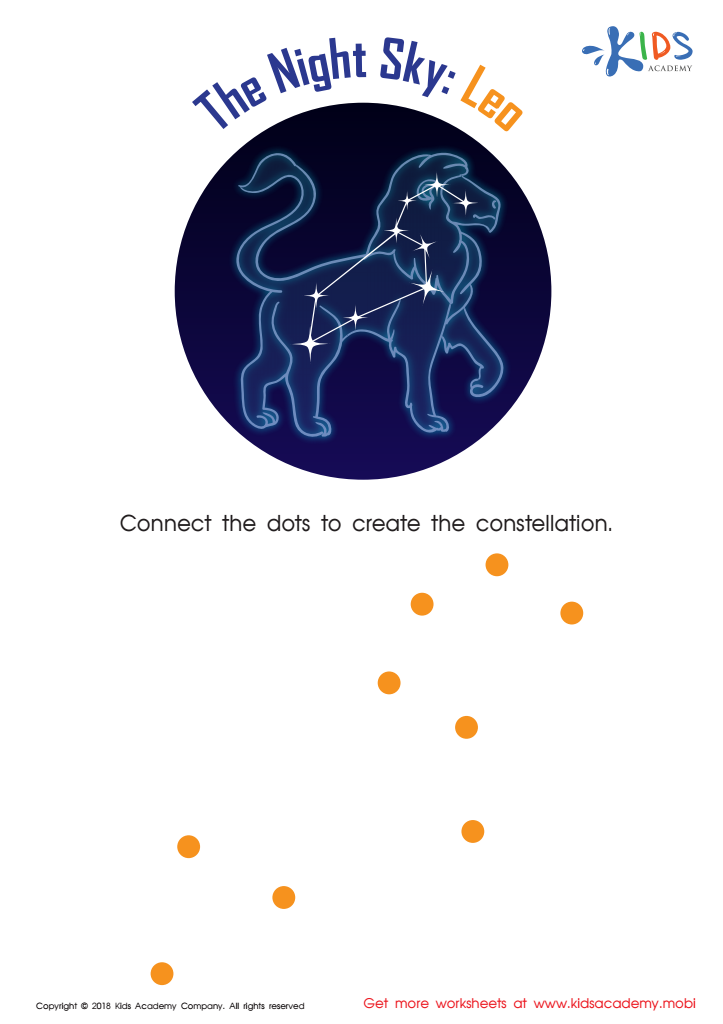
The Night Sky: Leo Worksheet
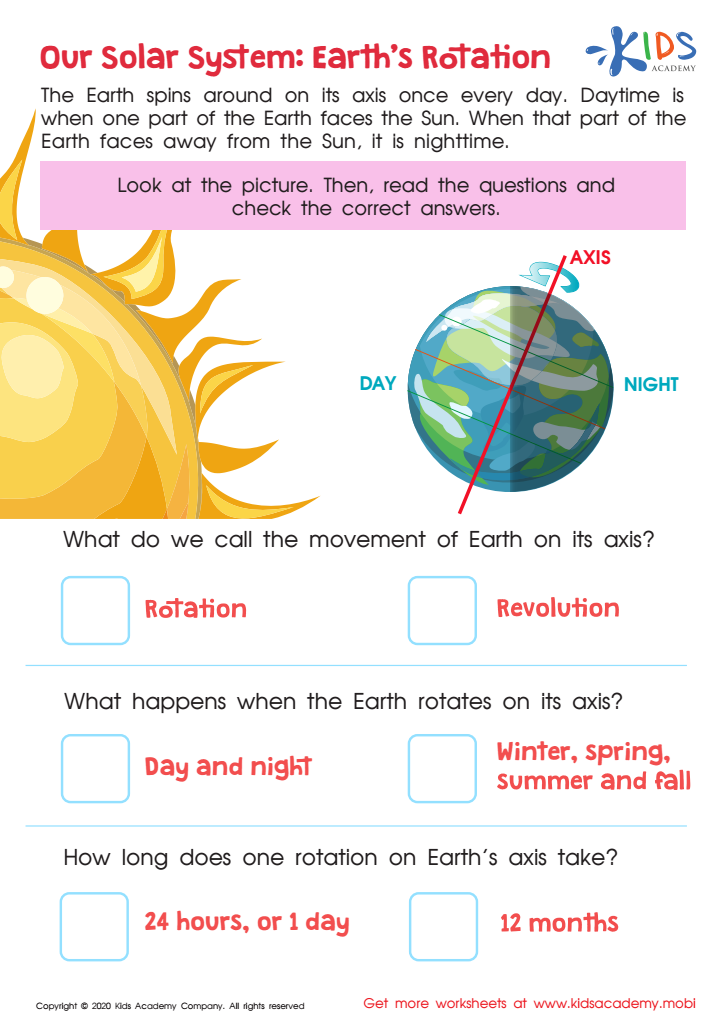
Our Solar System: Earth's Rotation Printable







Parents and teachers should care about introducing astronomy basics to 7-year-olds for several compelling reasons. First, astronomy instills a sense of wonder and curiosity about the universe. At this age, children's innate curiosity about the stars, planets, and space exploration helps stimulate their imaginations and creativity, making learning more engaging.
Understanding astronomy also nurtures key scientific skills. Kids learn to ask questions, observe patterns, and develop critical thinking—all essential skills for their educational journey and future problem-solving. It fosters inquiry, allowing them to explore concepts like gravity, light years, and the solar system in a fun context.
Additionally, astronomy provides meaningful ways to teach mathematics and physics. Learning about distances between celestial bodies or the movement of planets enhances these subjects’ relevance and builds a solid foundation to understand more complex concepts later.
Finally, teaching astronomy encourages environmental awareness. Recognizing Earth’s place in the universe can instill a sense of responsibility in children toward our planet, motivating them to care for the environment.
In short, introducing astronomy basics at an early age cultivates curiosity, fosters important skills, enhances intersubjective learning, and nurtures environmental stewardship, making it a valuable addition to any child’s early education.








