Identifying story elements Normal Worksheets for 7-Year-Olds
3 filtered results
-
From - To
Help your 7-year-old excel in reading comprehension with our "Identifying Story Elements" worksheets. These engaging and age-appropriate printables are designed to teach children the key components of a story, including characters, setting, plot, and more. Each worksheet offers fun activities to enhance their understanding, making it easier for young readers to analyze stories effectively. Perfect for both classroom and home use, these resources are essential for developing critical thinking and reading skills. Visit KidsAcademy.mobi for a wide variety of worksheets tailored to your child's learning needs and set them on the path to literary success!
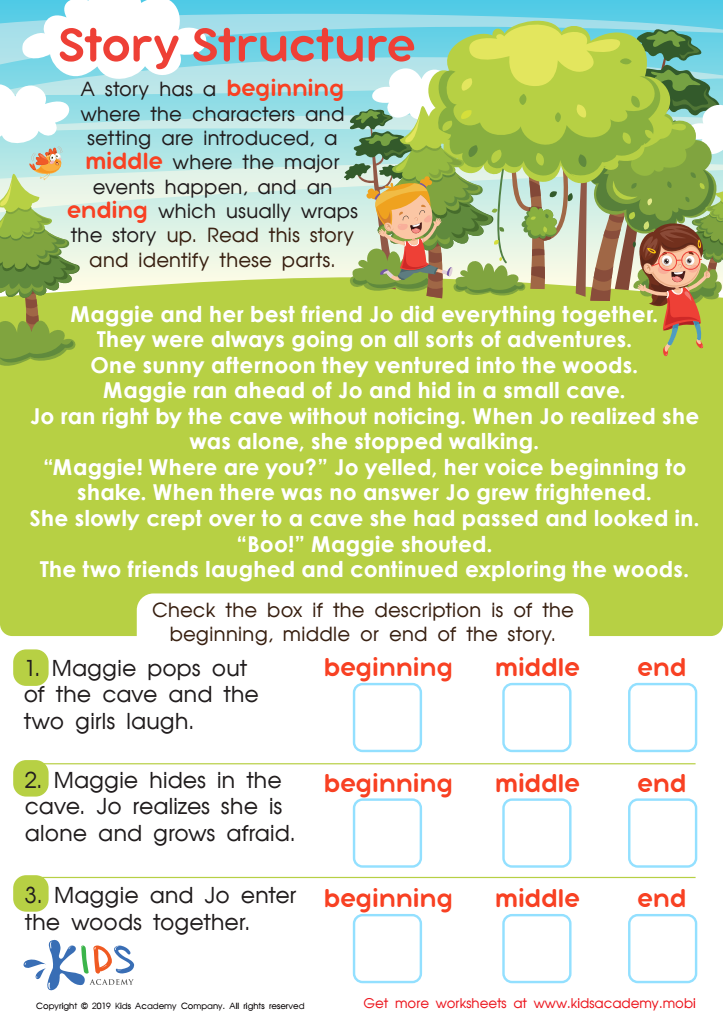
Story Structure Worksheet
 Assign to My Students
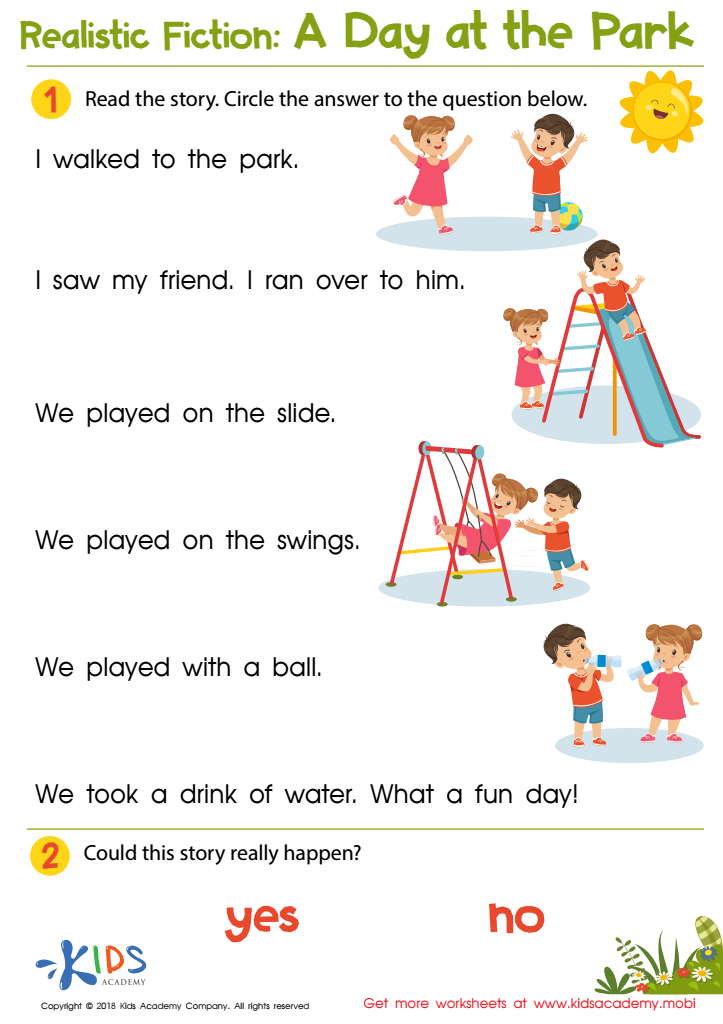
A Day at the Park Worksheet
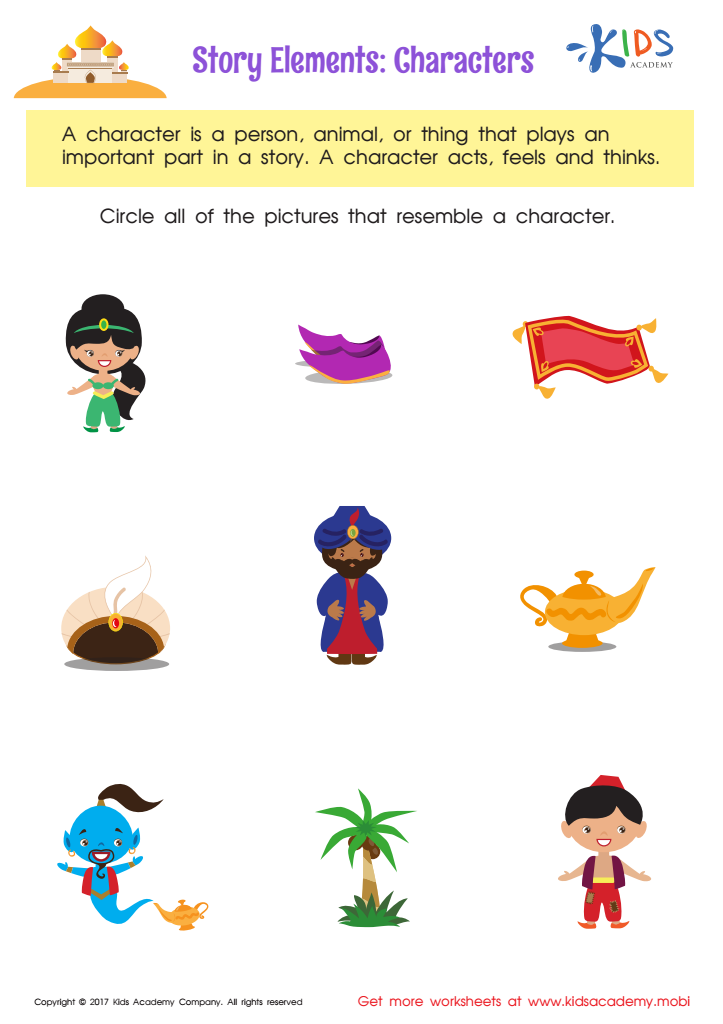
Story Elements Printable







Understanding and identifying story elements—such as characters, setting, plot, conflict, and resolution—is crucial for 7-year-olds, and parents and teachers should actively support this skill development. At this age, children are starting to move from learning to read to reading to learn. By recognizing story elements, they can deepen their reading comprehension, which is a cornerstone for future academic success.
Characters, setting, plot, and other narrative structures provide children with a framework to understand what they are reading on a deeper level. For instance, knowing the conflict and resolution in a story teaches problem-solving skills and fosters empathy as children relate to characters' challenges and triumphs.
Moreover, identifying these elements helps boost critical thinking and analytical skills. When kids think about why a character acted a certain way, or what might happen next in the plot, they are engaging in higher-level thinking processes. This also encourages active and engaged reading, rather than passive absorption of information.
Teachers and parents can make reading more interactive and enjoyable by discussing these elements, turning what might be a solitary activity into a shared and engaging experience. This involvement not only strengthens a child’s literacy skills but also nurtures a love for reading, laying a strong foundation for lifelong learning and curiosity.








