
Strategic thinking development Normal Worksheets for 7-Year-Olds
7 filtered results
Difficulty Level
Grade
Age
-
From - To
Subject
Activity
Standards
Enhance your child's problem-solving abilities with our "Strategic Thinking Development Worksheets" tailored for 7-year-olds. These engaging, printable worksheets are designed to foster critical thinking and strategic skills in young learners. Each activity encourages children to analyze scenarios, make decisions, and develop unique solutions, all while having fun! Parents and educators can easily access a variety of exercises that strengthen reasoning abilities, stimulate creativity, and promote independent thinking. Perfect for classroom or home use, these resources make learning enjoyable and effective. Equip your child with essential skills for their future—download our worksheets today and watch their strategic thinking flourish!
Favorites
With answer key
Interactive
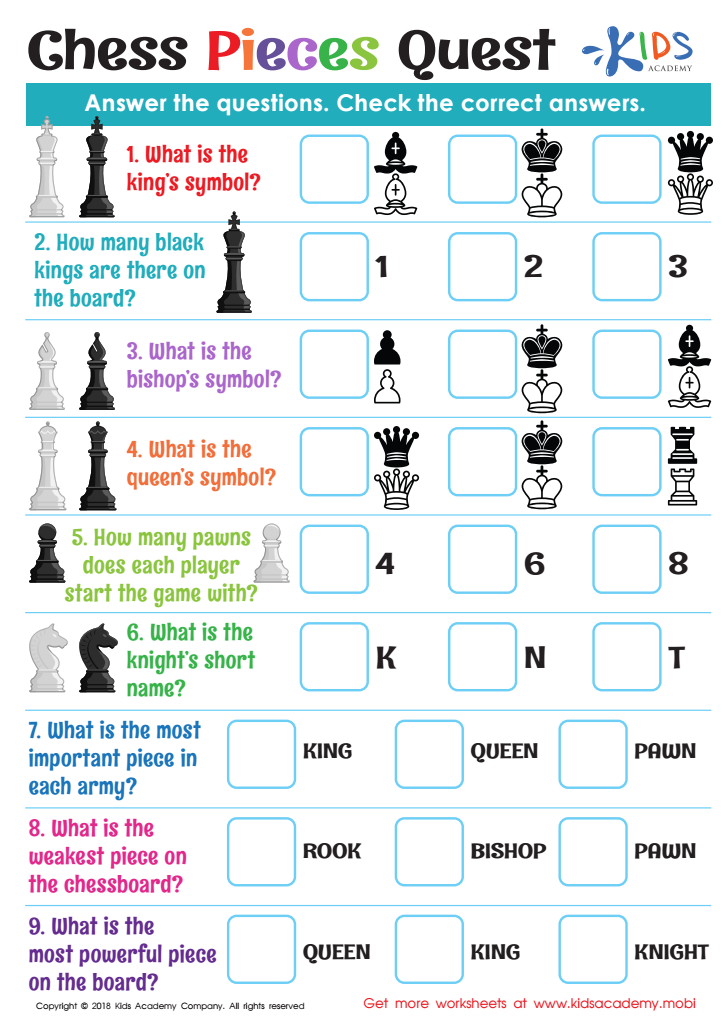
Chess Pieces Quest Worksheet
Help your child prepare for the chess quest by refreshing their knowledge of the symbols and characteristics of each chess piece. Then, have them try the 9 questions on this worksheet. These questions will assess their understanding of the symbols and how many pieces each player starts with.
 Assign to My Students
Chess Pieces Quest Worksheet
Worksheet
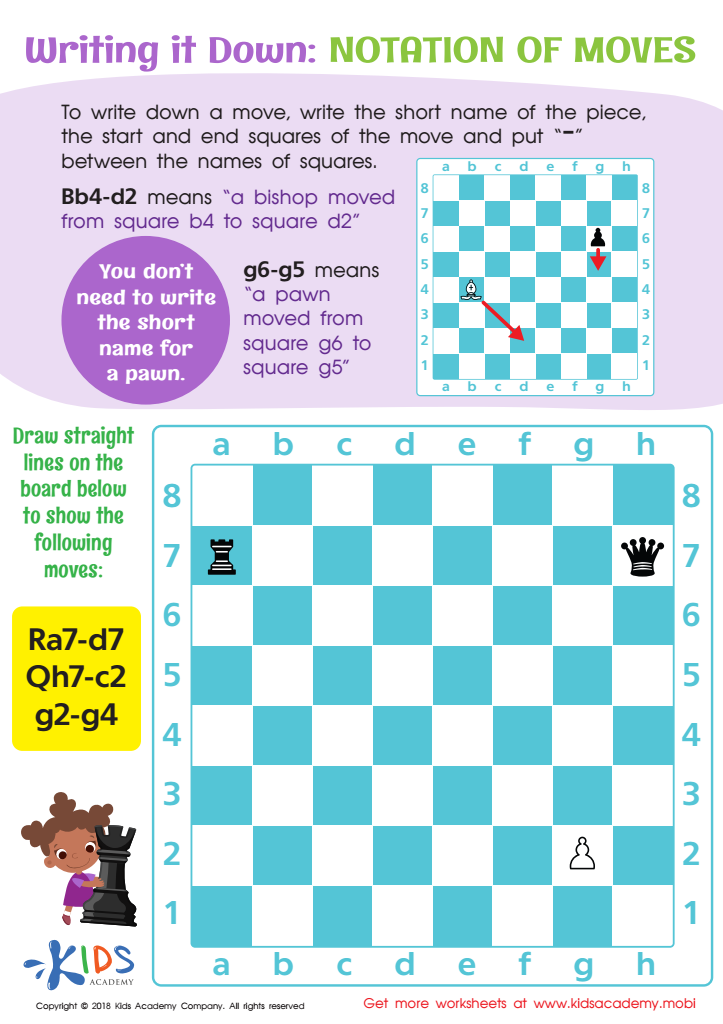
Notation of Moves Writing it Down Worksheet
Notating chess moves can be tricky for kids to learn. This worksheet will help them better understand it. To notate a move, write the piece's short name, start and end squares, and separate them with a "-". For instance, Bd4-d2 means a bishop moved from b4 to d2. No need to write pawns' short names.
Notation of Moves Writing it Down Worksheet
Worksheet
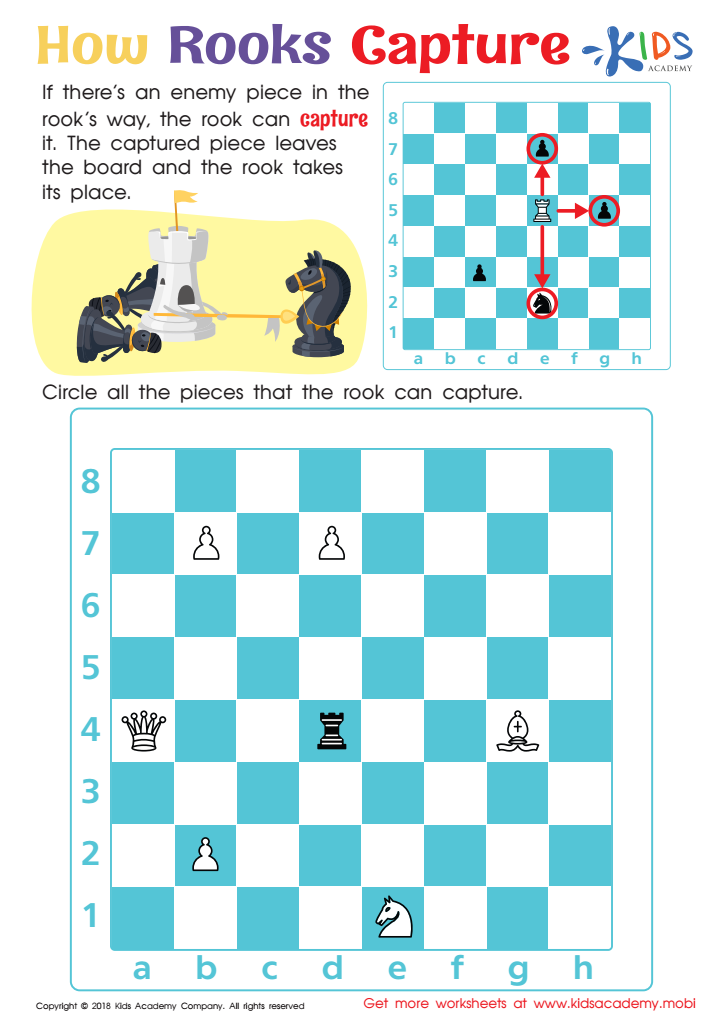
How Rooks Capture Worksheet
Chess is a game that requires skill, concentration and planning. Players must move their chess pieces strategically to capture pieces from their opponent. Do your kids know how to use the rook to capture pieces? Go through the worksheet with them and circle the pieces the rook can capture.
How Rooks Capture Worksheet
Worksheet
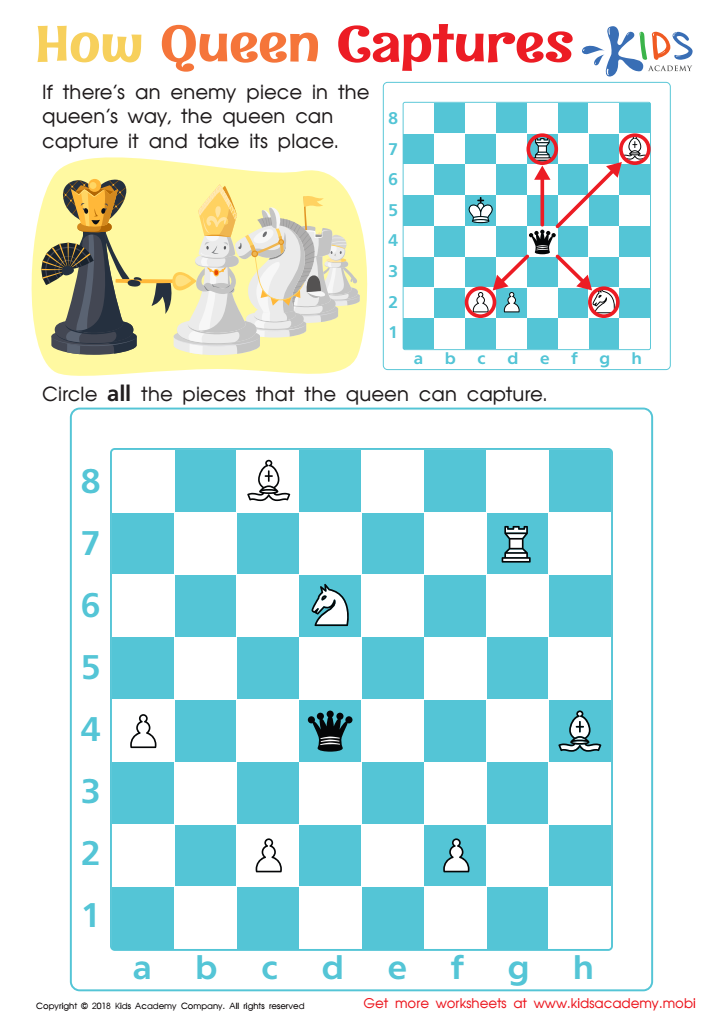
How Queen Captures Worksheet
Chess is a great game for sharpening math skills, strategic thinking, and knowledge of how each piece moves. If your child is interested, introduce them with this worksheet. It demonstrates how the queen can capture opposing pieces, such as another queen, and take their place.
How Queen Captures Worksheet
Worksheet
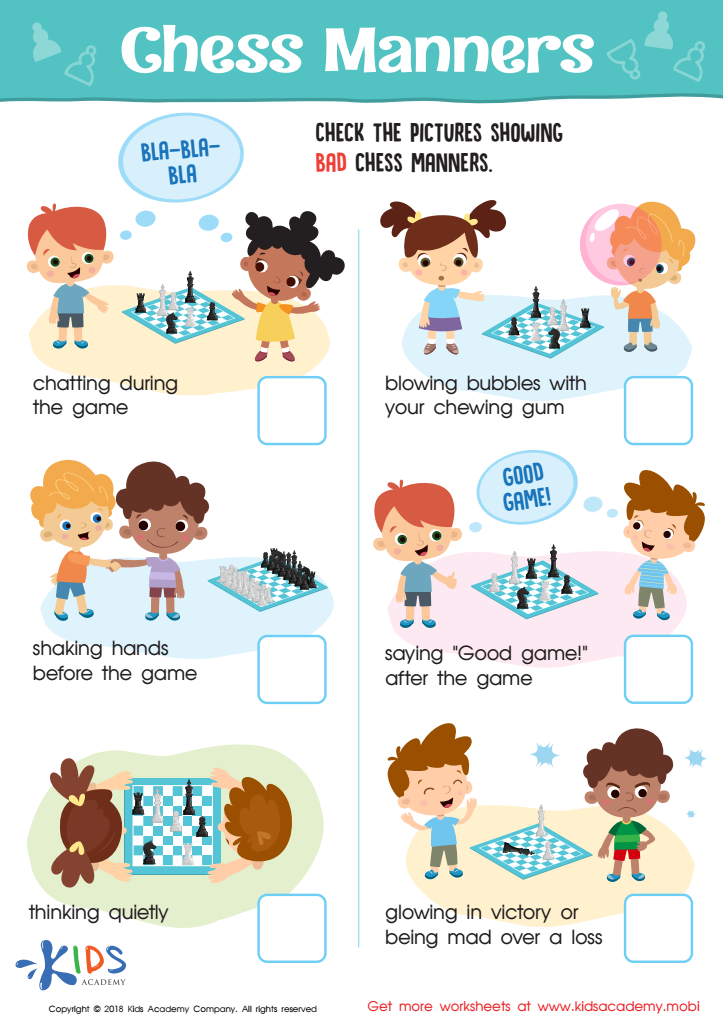
Chess Manners Worksheet
Teach your child chess manners in addition to table and social ones. Chess has clear rules and etiquette which must be followed for a proper game. Review this worksheet with your kid and discuss the pictures that show inappropriate behaviours. This will help them understand how to play the game correctly and with good manners.
Chess Manners Worksheet
Worksheet
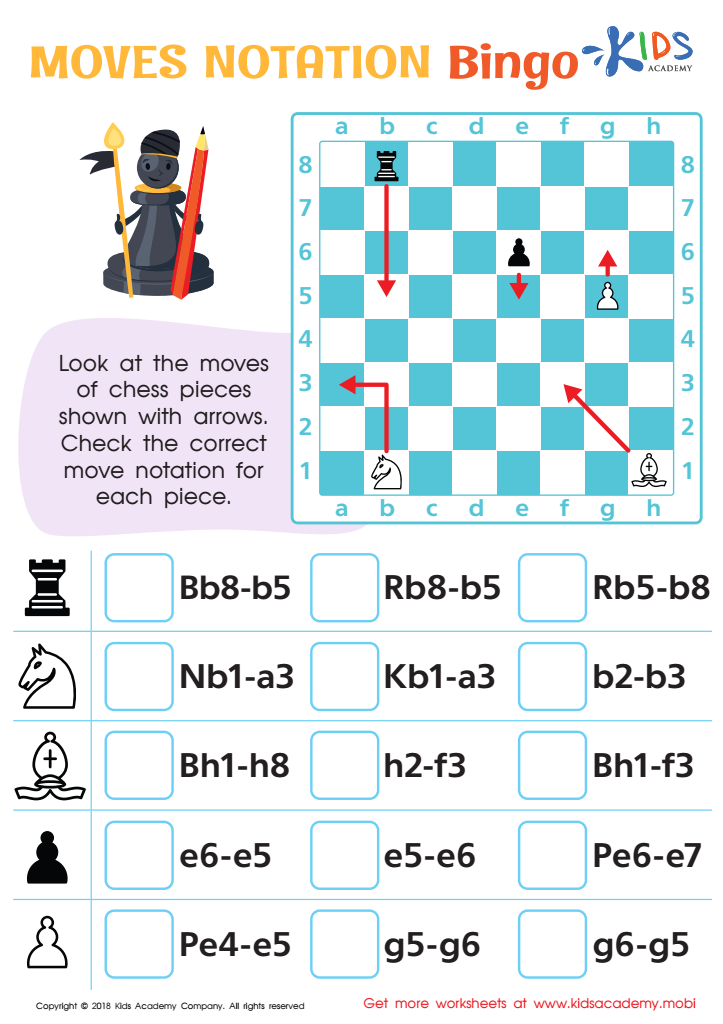
Moves Notation Bingo Worksheet
Test your child's chess notation skills with this simple worksheet. Download the PDF which shows a chess board and arrows pointing to pieces. Ask your child to identify the moves and note them down correctly. The notations needed are for bishop, pawn, rook and knight. Up to 80 words.
Moves Notation Bingo Worksheet
Worksheet
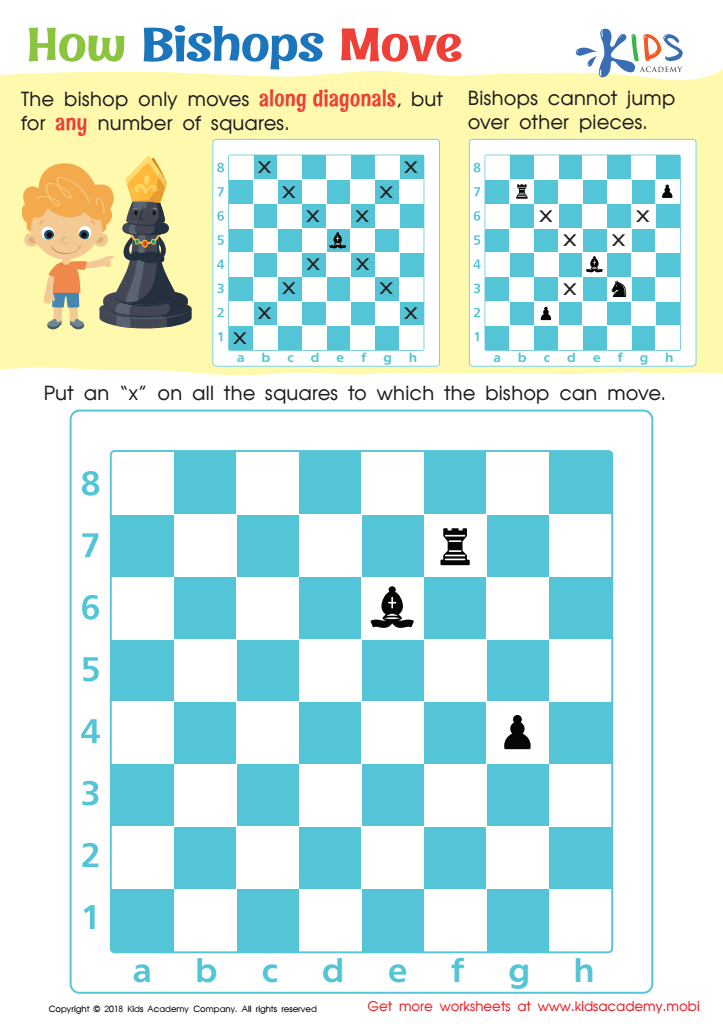
How Bishops Move Worksheet
There is no such thing as too much sharpening of skills. Encourage your child to learn more about chess technicalities with this simple worksheet. It shows them how a bishop moves: along diagonals any number of squares, but it can't jump over other pieces.
How Bishops Move Worksheet
Worksheet
Join Kids Academy for Free
Who is primarily going to use this learning content?







Parents and teachers should prioritize strategic thinking development for 7-year-olds because this skill lays a foundation for critical cognitive abilities that are essential for future learning and problem-solving. At this age, children are highly curious, eager to explore, and capable of understanding basic cause-and-effect relationships. Cultivating strategic thinking helps them learn to approach tasks methodically, encouraging them to plan, evaluate options, and consider the consequences of their actions.
Strategic thinking enhances children's ability to tackle challenges effectively, whether in academic subjects like math and reading or social situations like teamwork and conflict resolution. By developing this skill early on, children learn to weigh pros and cons, anticipate obstacles, and sew diverse perspectives into their decision-making. Additionally, such skills contribute to improved academic performance, fostering a genuine love of learning and a sense of agency.
Encouraging strategic thinking through games, puzzles, and real-life problem-solving not only makes learning enjoyable but also instills resilience and adaptability. Ultimately, fostering strategic thinking in young children supports their holistic development, preparing them to navigate an increasingly complex world while boosting their confidence and independence as learners.








