Understanding chess rules Normal Worksheets for 7-Year-Olds
5 filtered results
-
From - To
Explore our "Understanding Chess Rules Normal Worksheets" tailored for 7-year-olds! Designed to introduce young learners to the strategic world of chess, these engaging worksheets simplify the basic rules of the game. Each activity encourages critical thinking and improves concentration while making learning fun. From identifying pieces and their moves to understanding the fundamentals of gameplay, our materials make chess accessible and enjoyable. Perfect for classrooms or at home, these resources foster a love for chess while enhancing cognitive skills. Start your child’s journey into the exciting realm of chess with our easy-to-follow worksheets today!
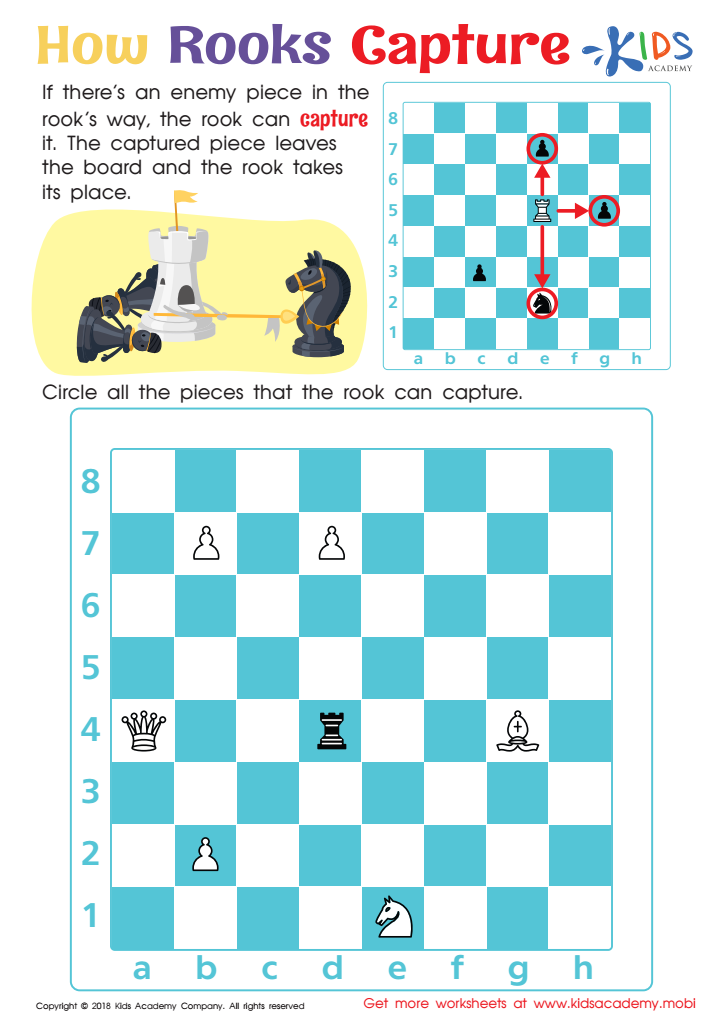
How Rooks Capture Worksheet
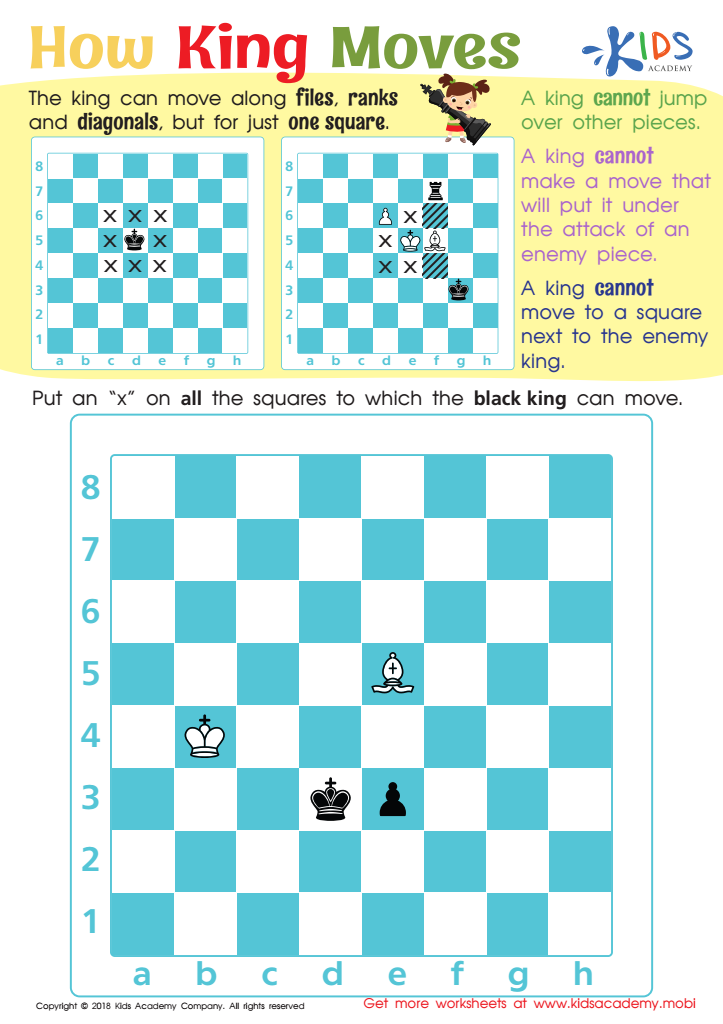
How King Moves Worksheet
 Assign to My Students
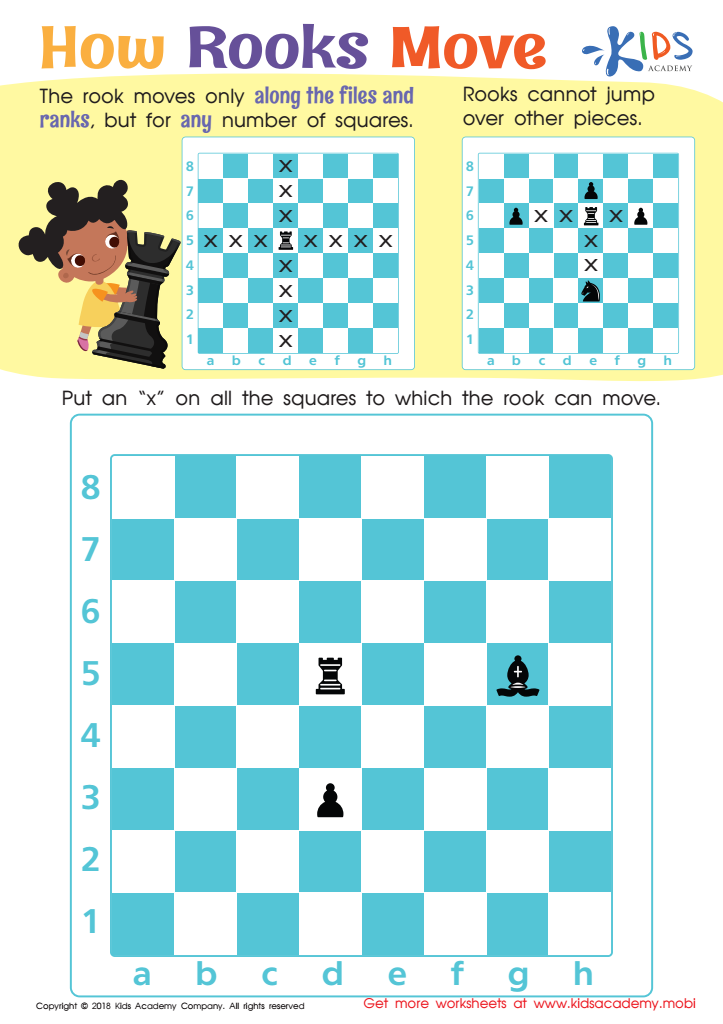
How Rooks Move Worksheet
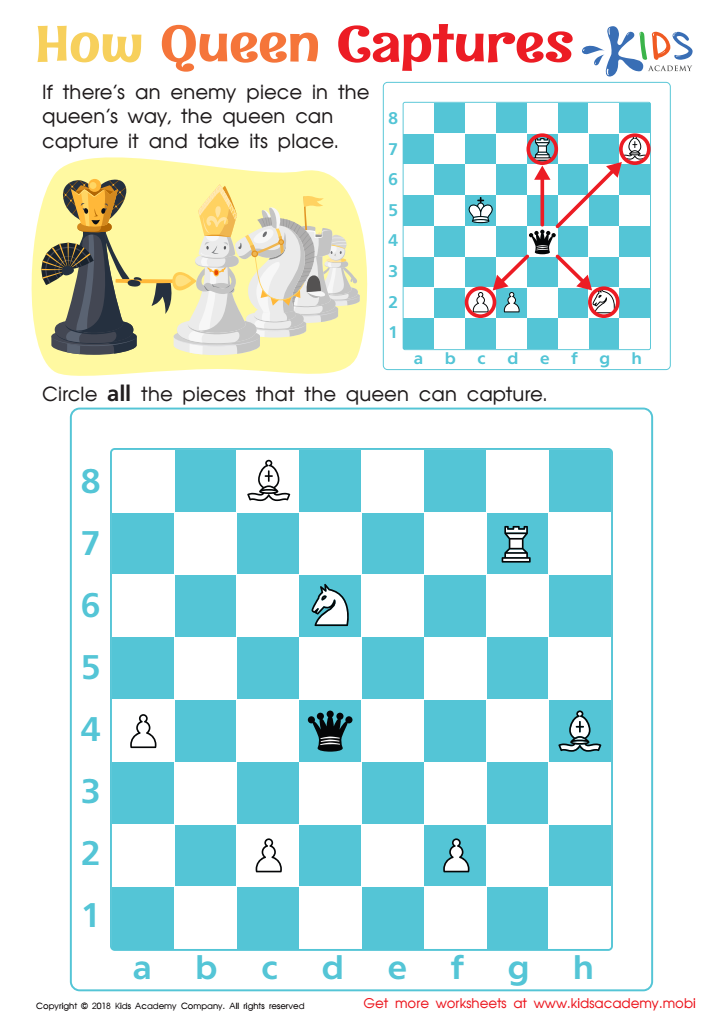
How Queen Captures Worksheet
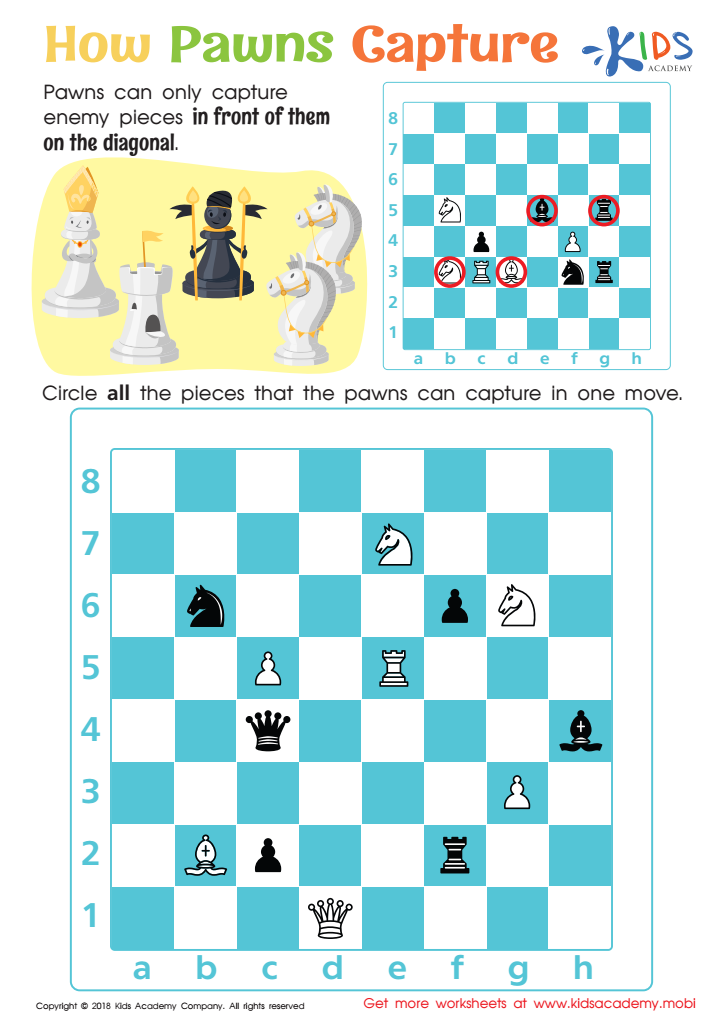
How Pawns Capture Worksheet






Understanding the rules of chess is crucial for parents and teachers of 7-year-olds for several reasons. First, chess is a game that fosters critical thinking and problem-solving skills. By learning the basic rules, children can engage in deeper cognitive processes, enhancing their academic performance in other subjects. Chess encourages patience and strategic planning, qualities that are essential for personal development.
Moreover, taking the time to understand chess helps build social skills. Playing chess often involves taking turns and respecting opponents, which promotes good sportsmanship and interpersonal relationships. For parents, guiding children through chess can strengthen family bonds: it provides a fun and educational activity that allows for quality time together.
In an educational setting, teaching chess reinforces focus and concentration. It can serve as a cerebral break from traditional lessons, stimulating a child’s brain in different ways. Additionally, learning the rules fosters a sense of achievement; mastering each piece's movement and strategies turns the game into an increasingly rewarding experience.
Ultimately, making chess a part of children's lives can promote lifelong skills such as decision-making, discipline, and resilience, all of which carry over into every facet of their development.








