Understanding weather Normal Worksheets for 7-Year-Olds
3 filtered results
-
From - To
Discover engaging and educational "Understanding Weather" worksheets tailored for 7-year-olds! These expertly designed worksheets from Kids Academy make learning about weather concepts fun and interactive. Children will explore various weather patterns, understand the impact of different weather conditions, and learn to identify common weather symbols. These activities promote critical thinking and observational skills through colorful visuals and hands-on tasks. Perfect for both classroom and at-home learning, these worksheets cater to young learners' curiosity and help establish foundational knowledge in earth sciences. Enhance your child's weather literacy and make meteorology magical with Kids Academy.
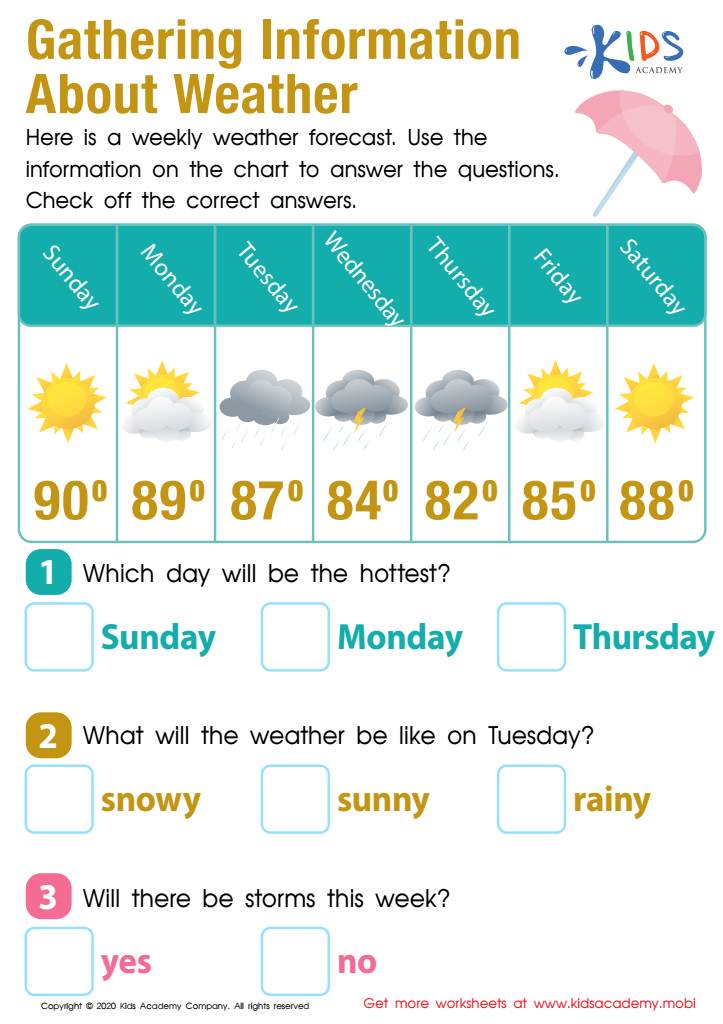
Gathering Information About the Weather Worksheet
 Assign to My Students
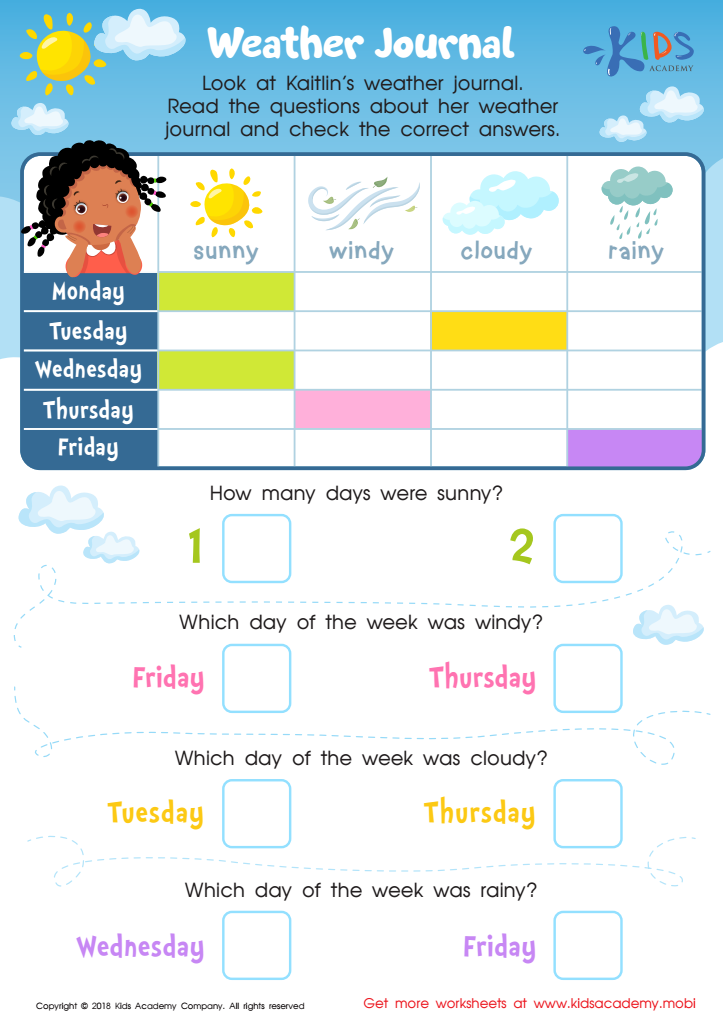
Weather Journal Worksheet
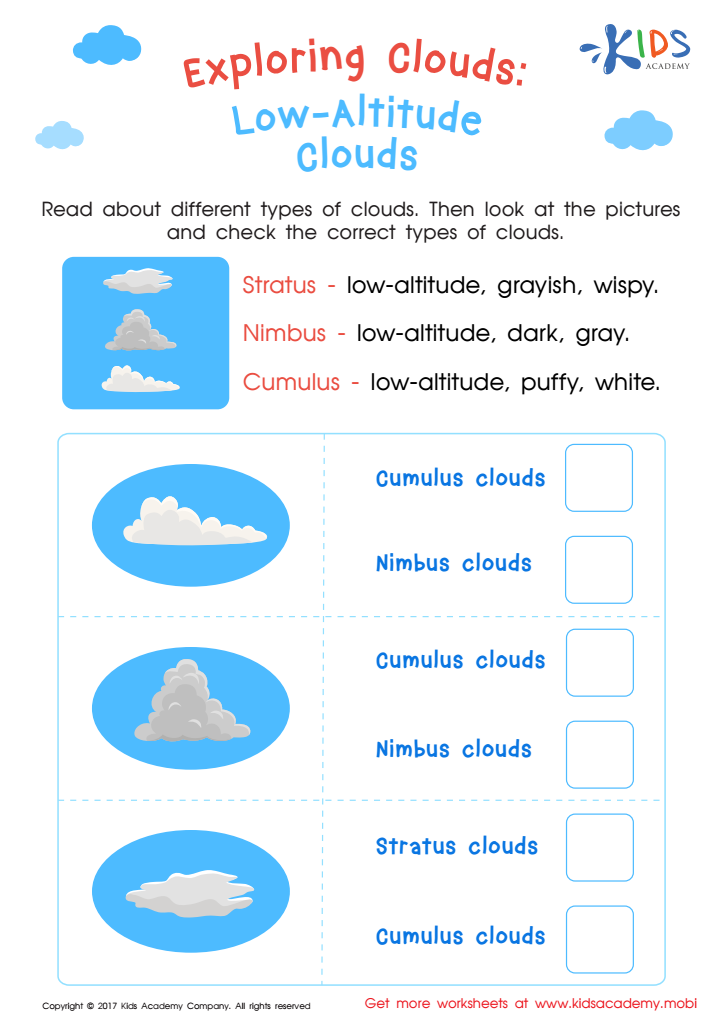
Exploring Clouds: Low Altitude Clouds Printable








Understanding weather is essential for 7-year-olds, and parents and teachers play a vital role in fostering this knowledge. At this age, children are naturally curious about their surroundings, and weather affects many aspects of their daily life, from deciding what to wear to understanding outdoor activities. Educating them about weather fosters critical thinking and scientific inquiry. It helps children recognize patterns, make predictions, and understand cause-and-effect relationships—for example, why a rainy day requires an umbrella or how wind can bring in storm clouds.
Additionally, learning about weather is a perfect gateway to broader environmental education. It promotes awareness and responsibility towards nature, teaching kids the importance of protecting their environment. For instance, through understanding weather patterns, they can grasp why certain regions have different climates and the impact of climate change.
Safety is another key reason. Parents and teachers who emphasize weather literacy can help children learn vital safety tips and preparedness for severe weather conditions. Knowing what to do in a thunderstorm, how to stay cool during a heatwave, or the importance of hydration in hot weather can keep them safe.
Overall, incorporating weather education into early learning fosters curiosity, promotes scientific thinking, enhances environmental awareness, and ensures children’s safety, making it a fundamental aspect of their growth and development.








