Visual Perception Skills Normal Worksheets for 7-Year-Olds
5 filtered results
-
From - To
Unlock young minds’ potential with our "Visual Perception Skills Normal Worksheets for 7-Year-Olds". These engaging printables are designed to enhance kids' ability to interpret and understand visual information. Children will boost their cognitive development through activities that target areas such as pattern recognition, spatial awareness, and visual discrimination. Perfect for both classroom and at-home learning, our worksheets help seamlessly integrate these critical skills into young learners’ daily practice, improving their performance in reading, writing, and math. Give your 7-year-old the tools they need to see and process the world clearly with these thoughtfully crafted exercises.
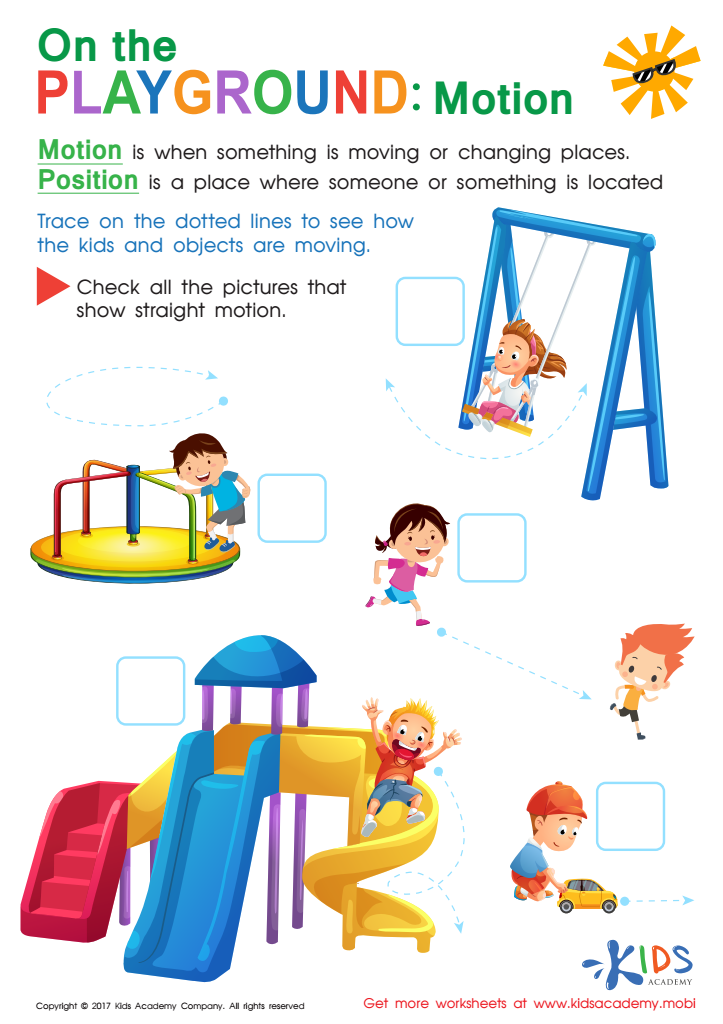
Position and Motion Worksheet
 Assign to My Students
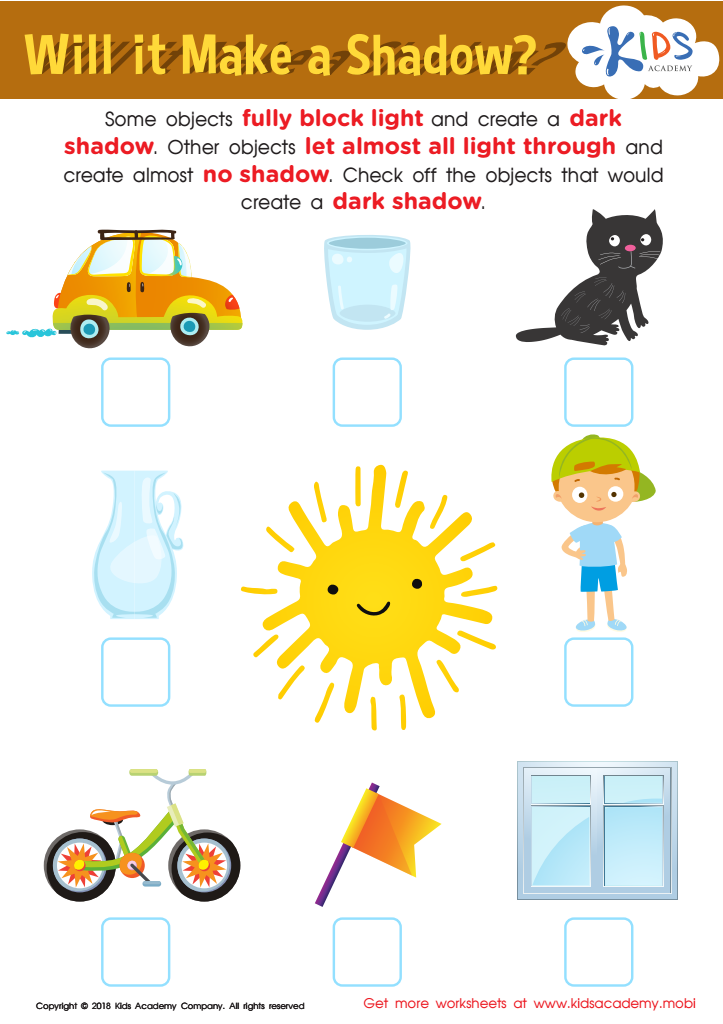
Will It Make a Shadow? Worksheet
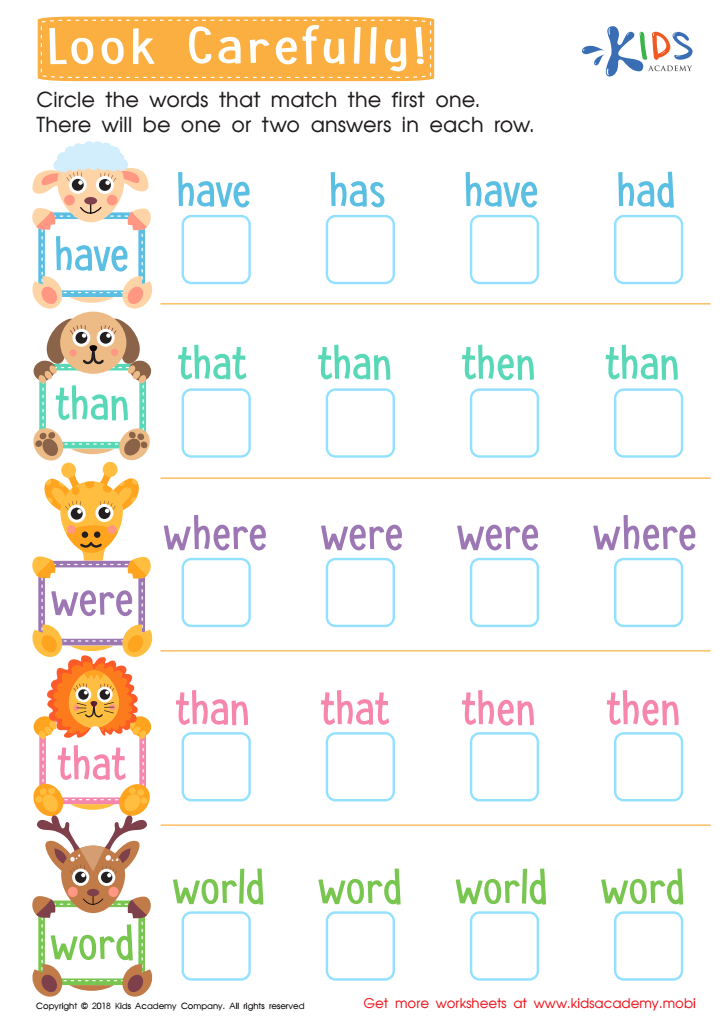
Look Carefully Worksheet
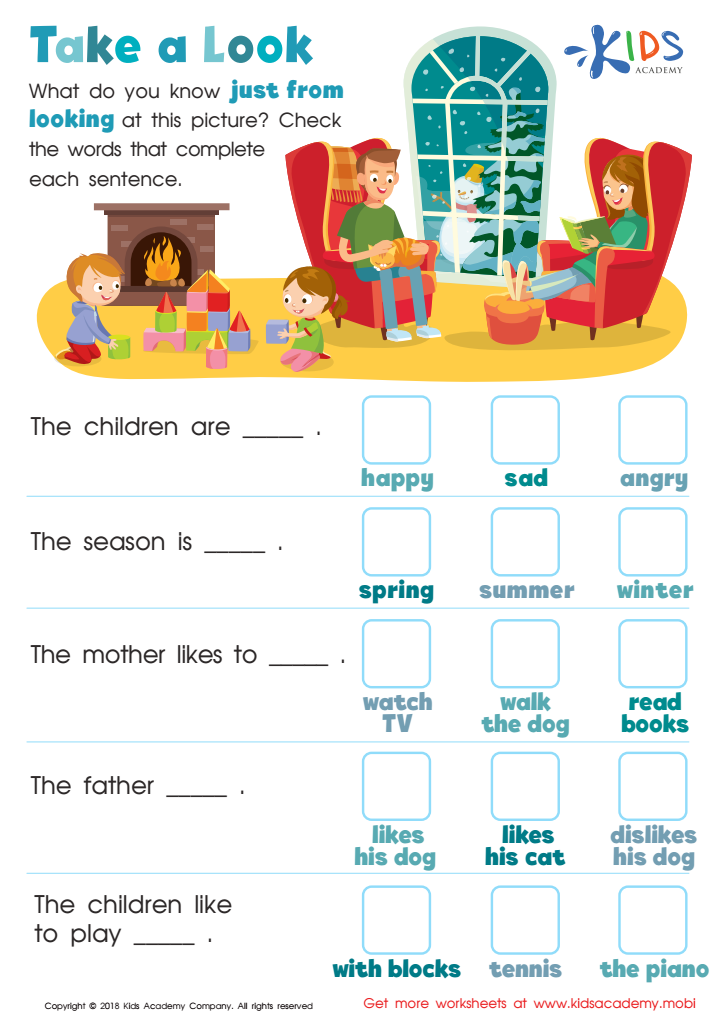
Take a Look - Part 1 Worksheet
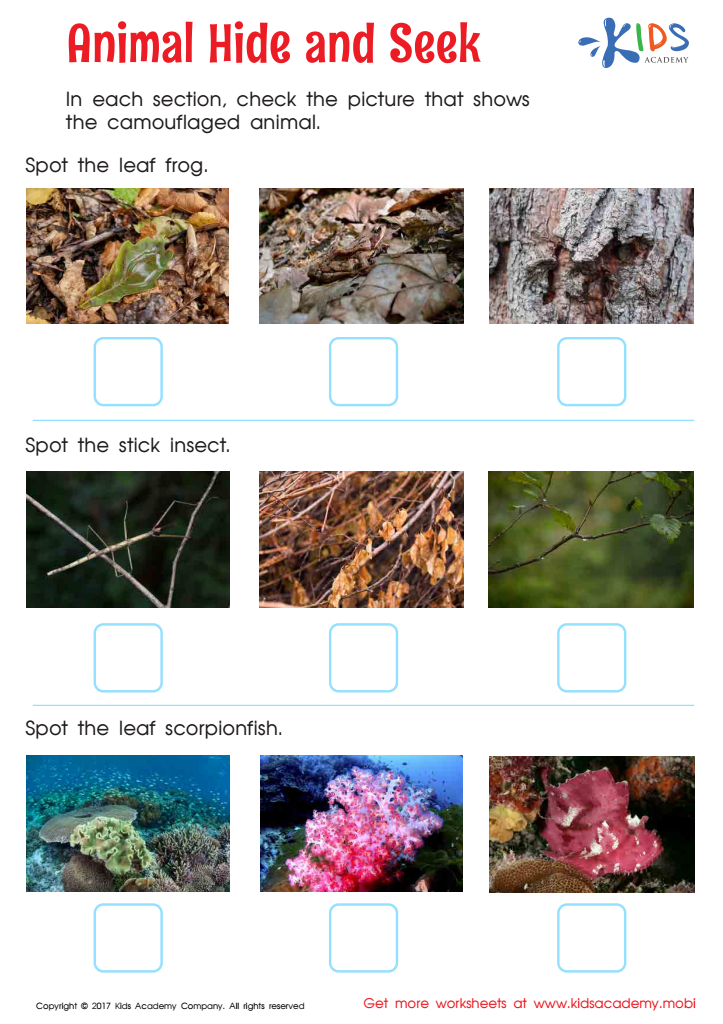
Animal Hide and Seek Worksheet






Parents and teachers should be attentive to the development of visual perception skills in 7-year-olds because these abilities play a crucial role in the child's overall learning and daily functioning. Visual perception skills—such as recognizing shapes, identifying patterns, and understanding spatial relationships—are foundational for reading, writing, mathematics, and problem-solving.
Children with well-developed visual perception skills can better distinguish letters and words, which directly impacts their reading fluency and comprehension. When these skills are deficient, children might struggle with identifying letters, reading maps, and even orienting their bodies in space, potentially leading to difficulties in academic and non-academic tasks. This might further impact their confidence and willingness to participate in learning activities.
Teachers rely on visual aids like charts, diagrams, and written instructions; if a child has poor visual perception, they may have trouble interpreting this information correctly, impairing their ability to follow along in class. Early monitoring and support can help address these issues through exercises or interventions designed to strengthen visual processing. By prioritizing the development of visual perception skills, parents and teachers ensure that children are equipped with the necessary tools for successful learning, allowing for improved academic outcomes and overall well-being.








