Time recognition Normal Measurement Worksheets for 7-Year-Olds
3 filtered results
-
From - To
Welcome to our Time Recognition Normal Measurement Worksheets designed specifically for 7-year-olds! Our engaging and interactive worksheets help young learners master the essential skill of telling time. By working through a variety of fun activities, children will develop their understanding of both analog and digital clocks, enhancing their ability to read time confidently. These worksheets align with early math standards, promoting critical thinking and problem-solving skills. Ideal for classroom use or homeschooling, our resources make learning about time an enjoyable experience for kids. Download now and help your child become a time-telling pro while reinforcing foundational measurement concepts!
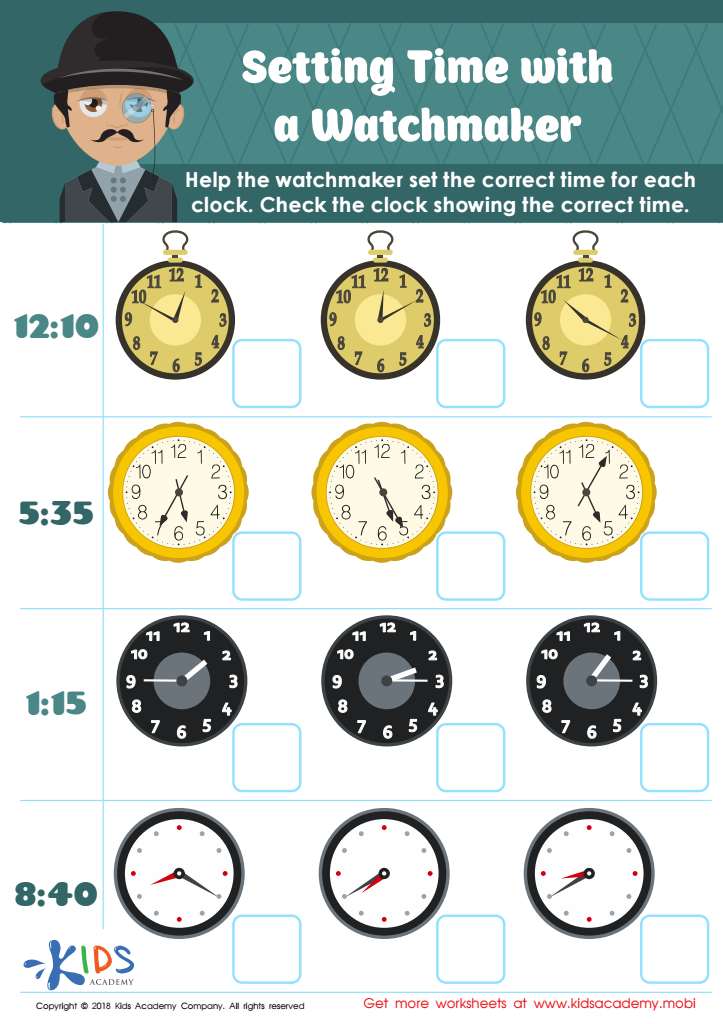
Setting Time with Watchmaker Worksheet
 Assign to My Students
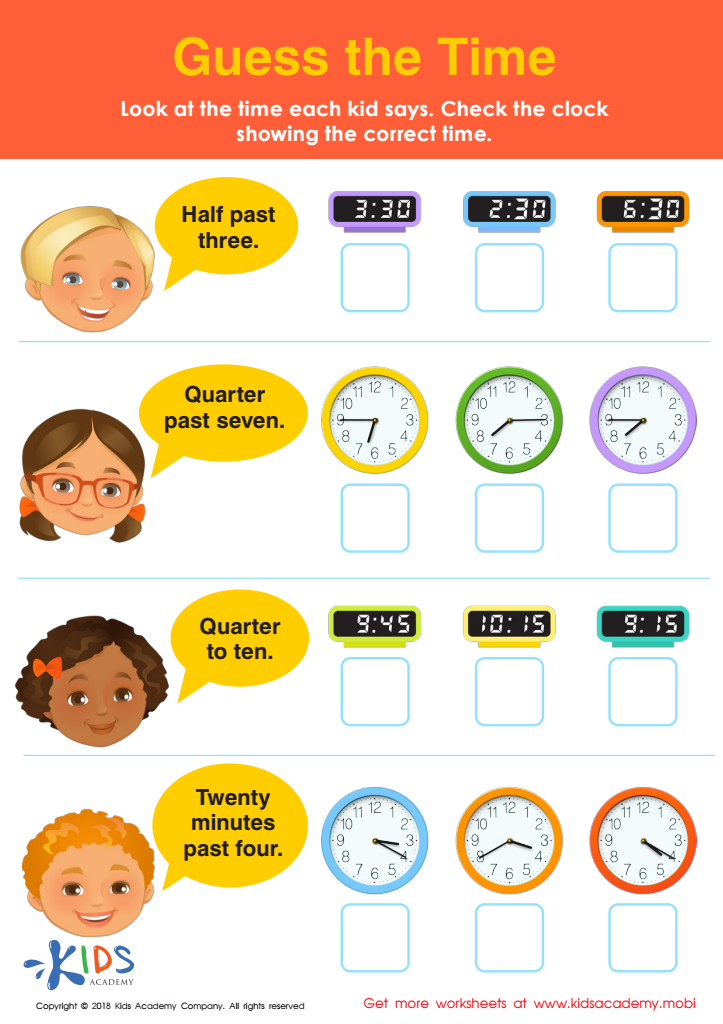
Guess the Time Worksheet
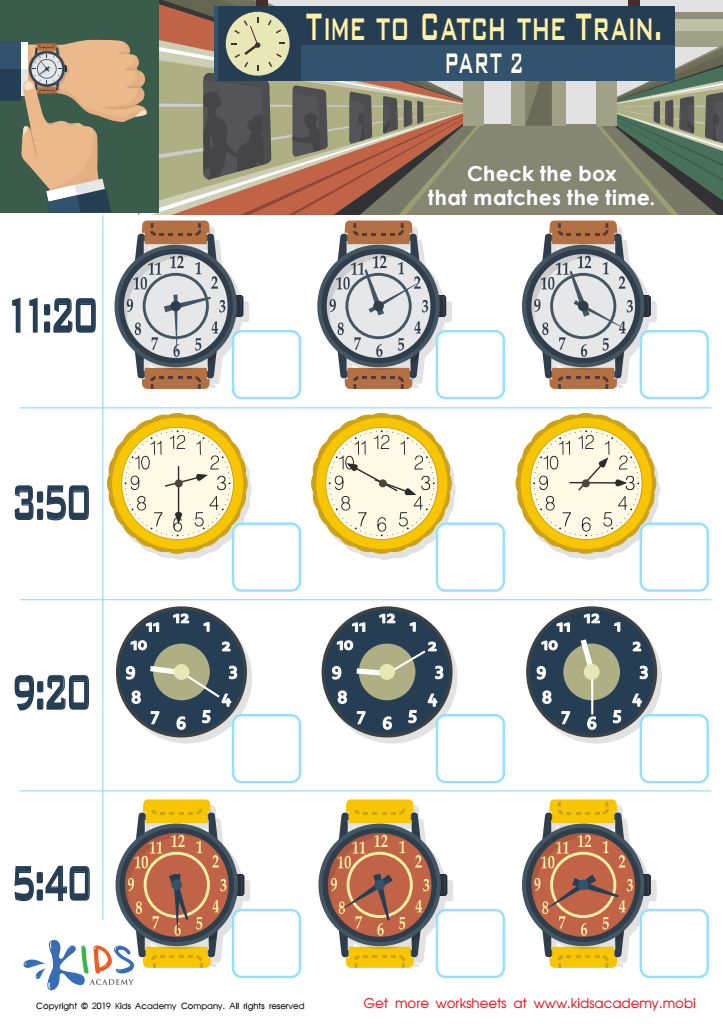
Time to Catch the Train Part 2 Worksheet







Time recognition and understanding normal measurement are crucial skills for 7-year-olds as they lay the foundation for various aspects of life and learning. First, being able to tell time helps children manage their daily routines, promotes punctuality, and fosters responsibility. Understanding concepts such as seconds, minutes, and hours allows them to schedule activities effectively and develop a sense of time management, which is vital for their academic success.
Moreover, time recognition is closely tied to social interactions, as it helps kids grasp the concept of schedules, such as school timings and playdates. By learning to read clocks and understand time, children gain independence and confidence in navigating their environments.
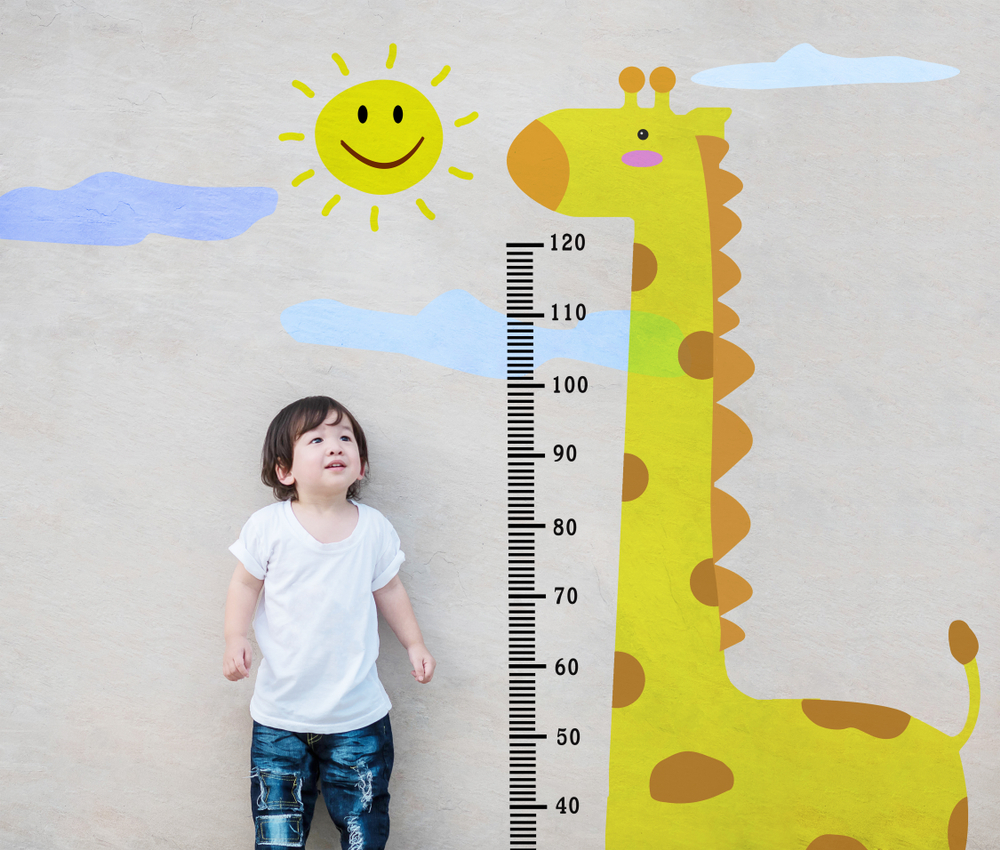
In parallel, understanding normal measurement enhances children's math skills and logical thinking. It introduces them to concepts of size, weight, and volume, which are utilized in cooking, shopping, and other practical daily activities. Furthermore, these skills are foundational for more advanced mathematical concepts and critical for problem-solving.
Ultimately, when parents and teachers prioritize time recognition and normal measurement, they help foster essential life skills that promote independent thinking and better academic performance in the future. Encouraging these skills in young learners contributes to their development into capable, responsible adults.








