Understanding pollination Normal Science Worksheets for 7-Year-Olds
3 filtered results
-
From - To
Discover the wonders of pollination with our engaging Normal Science Worksheets designed for 7-year-olds! These interactive resources simplify the concept of pollination, helping young learners grasp the crucial role it plays in nature. Through vibrant illustrations and fun activities, students will explore how plants reproduce, the importance of bees and other pollinators, and their impact on our ecosystem. Each worksheet is crafted to inspire curiosity and foster a love for science, making learning about this essential process both enjoyable and educational. Perfect for classroom use or at-home practice, these materials will surely captivate young minds and deepen their understanding of the natural world!
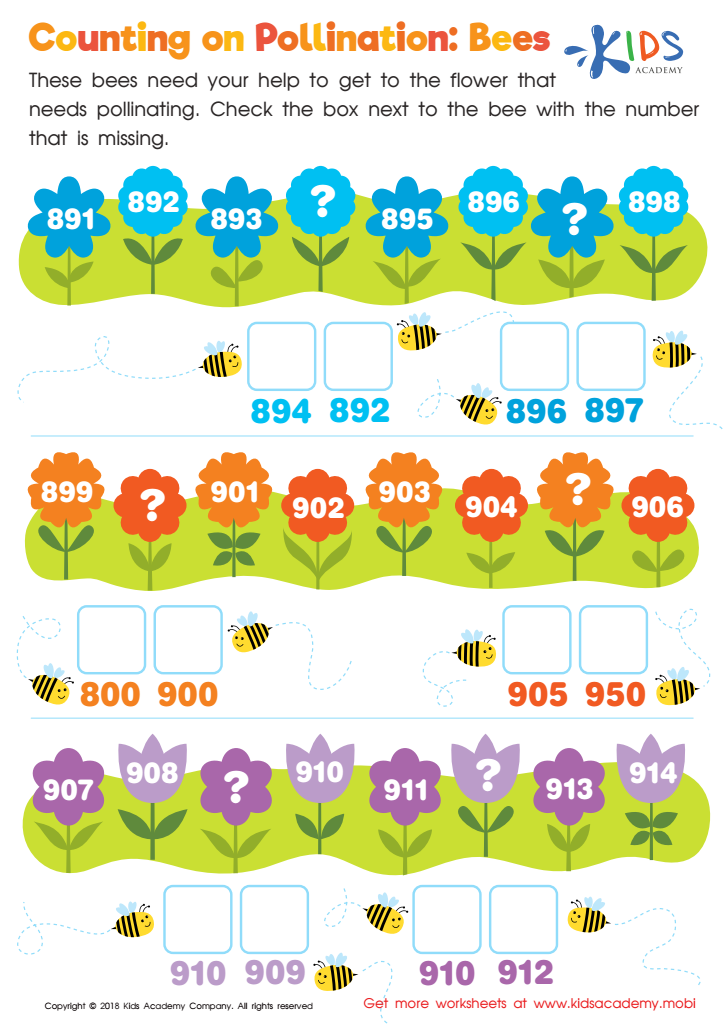
Counting on Pollination: Bees Worksheet
 Assign to My Students
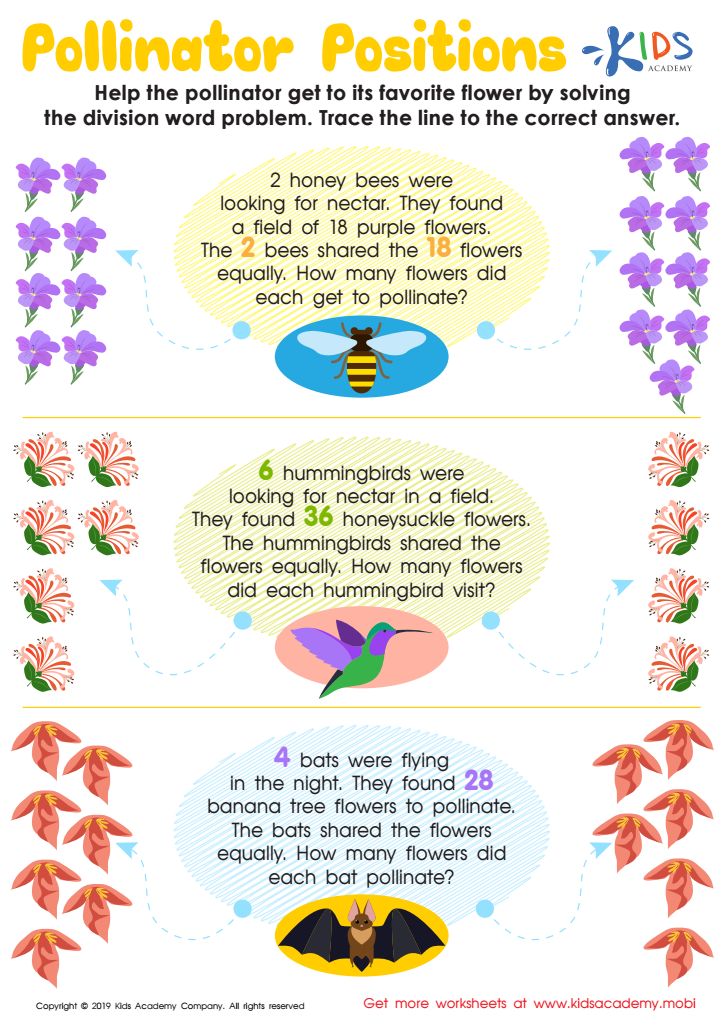
Pollinator Positions Worksheet
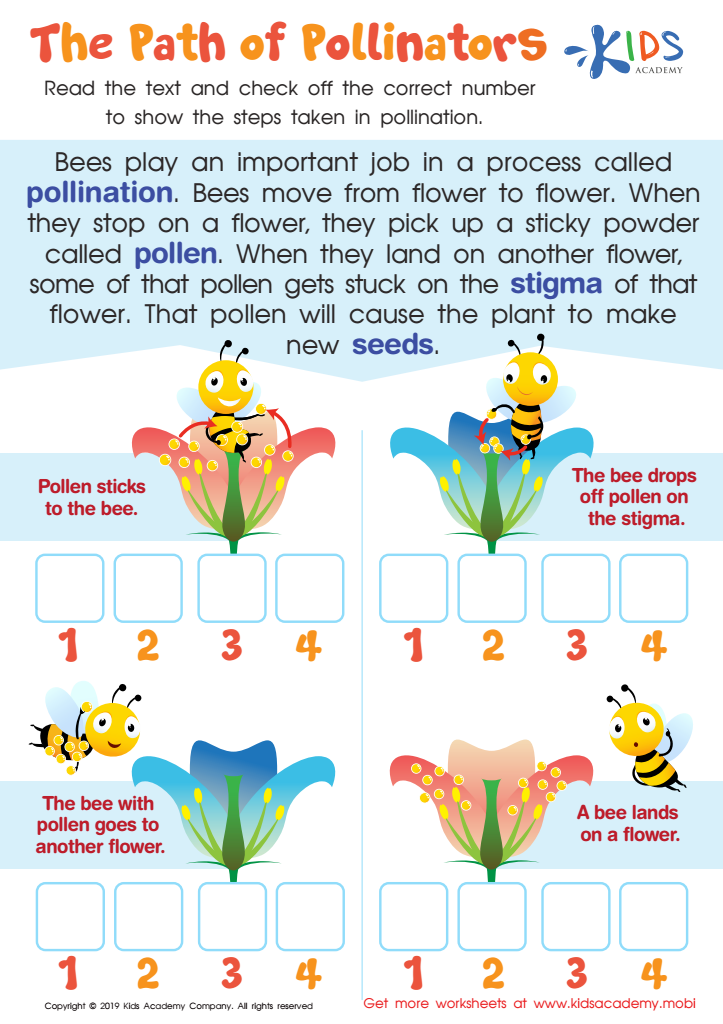
The Path of Pollinators Worksheet





Understanding pollination is crucial for parents and teachers, especially when teaching 7-year-olds. At this age, children are naturally curious about the world around them, and pollination offers a captivating way to explore essential scientific concepts. By learning about pollination, children can understand how plants reproduce, which is fundamental to life on Earth. This knowledge fosters a sense of wonder about nature and encourages them to appreciate ecosystems.
Parents and teachers also play a vital role in nurturing environmental stewardship. By teaching children about pollination, they can emphasize the importance of bees, insects, and other pollinators in our food chain. This understanding nurtures responsibility—children may feel inspired to protect pollinators by advocating for local gardens or reducing pesticide use.
Moreover, integrated science lessons on pollination can improve critical thinking and instill a love of science. Fun activities like observing flowers, engaging in hands-on experiments, or reading relatable books can make learning interactive and enjoyable. Developing early scientific literacy helps children form connections across subjects—language arts, math, and environmental studies—ultimately enhancing their overall educational experience. In short, understanding pollination equips young learners with knowledge and a sense of agency regarding their environment and food systems.







