Mental math skills Normal Worksheets for Ages 8-9
6 filtered results
-
From - To
Enhance your child's mental math abilities with our engaging worksheets designed specifically for ages 8-9. These user-friendly resources feature a variety of fun and challenging questions tailored to boost computation skills, promote whole number confidence, and reinforce mental arithmetic strategies. Through these normal worksheets, your child will develop essential skills for adding, subtracting, multiplying, and dividing—all while improving their problem-solving abilities. Perfect for classroom use or supplementary at-home practice, our mental math worksheets make learning enjoyable and effective. Help your young learners excel in mathematics and build a strong foundation for future success with our thoughtfully created activities!
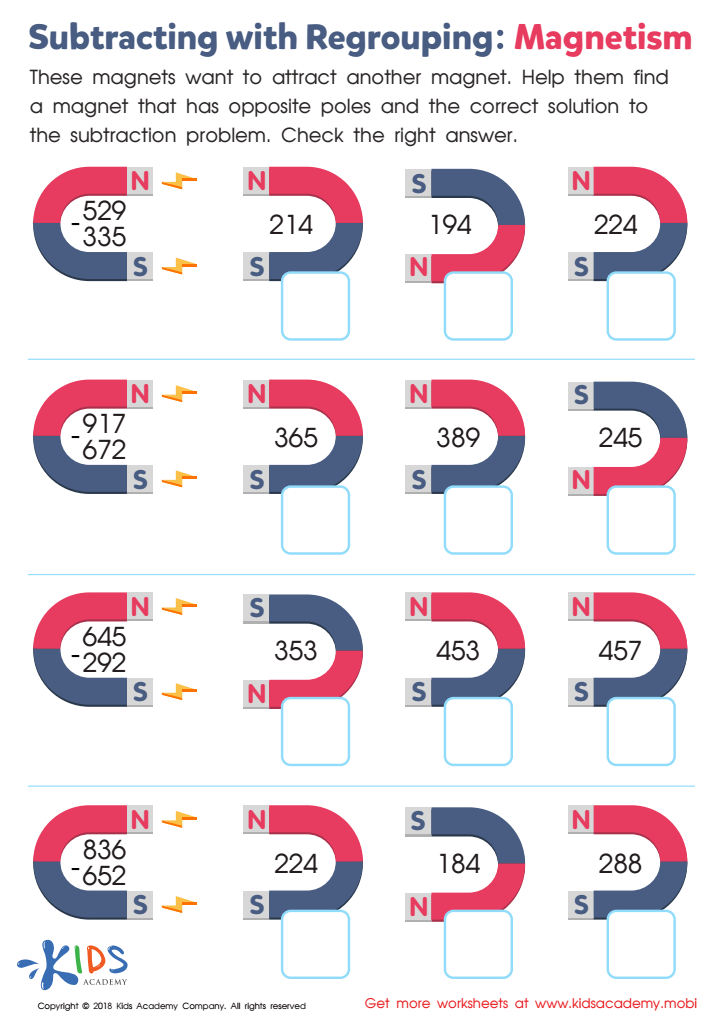
Subtracting with Regrouping: Magnetism Worksheet
 Assign to My Students
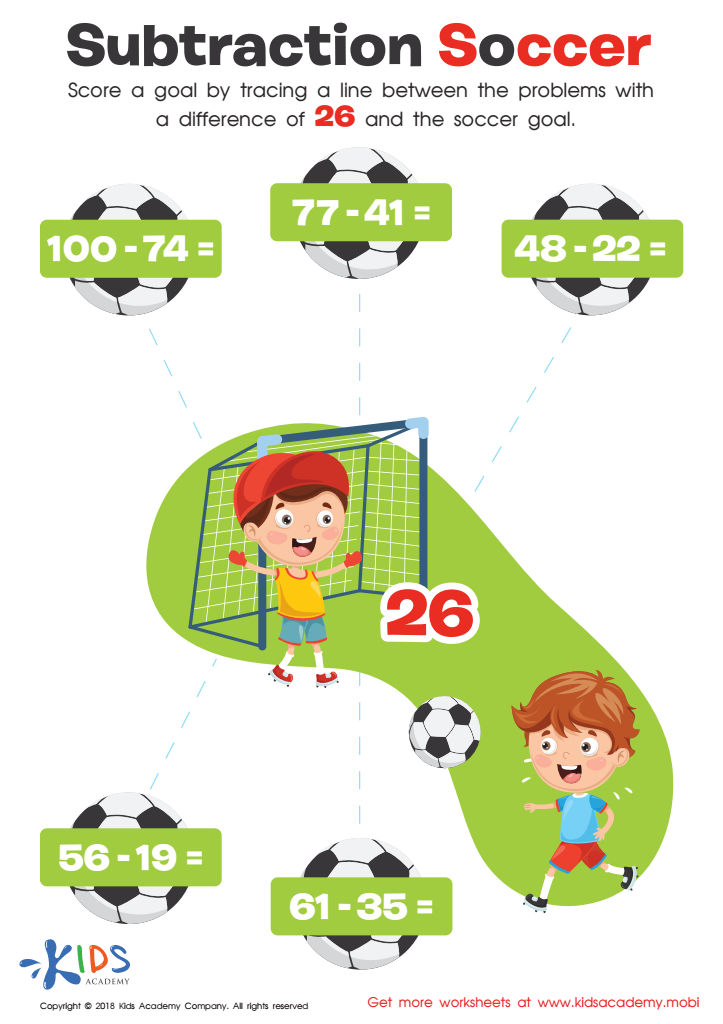
Subtraction Soccer Worksheet
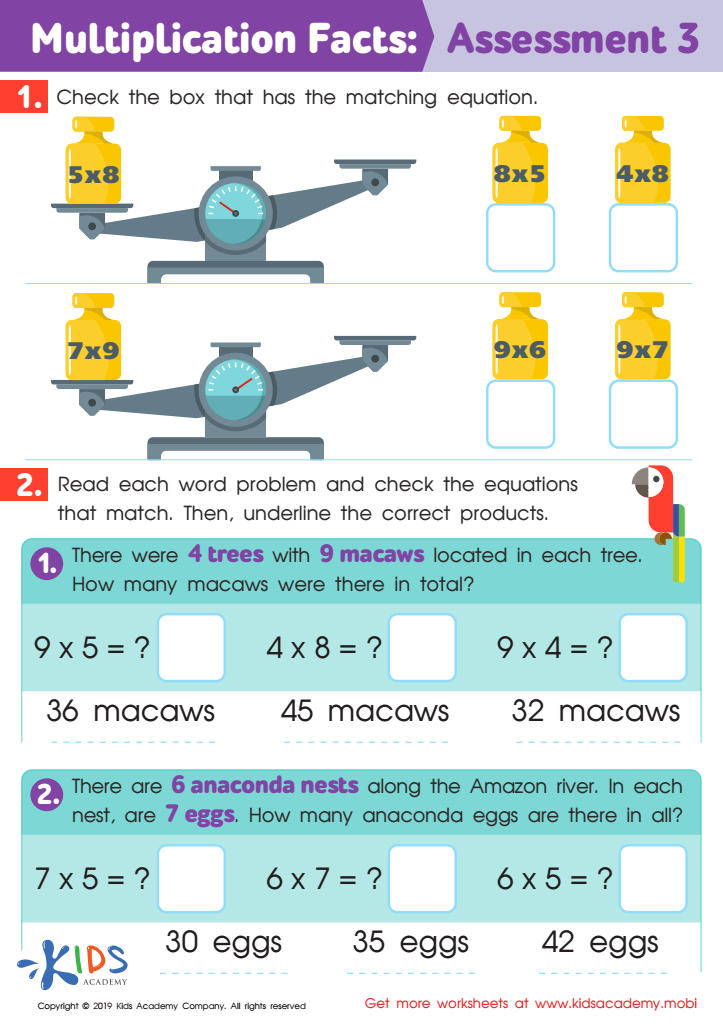
Multiplication Facts: Assessment 3 Worksheet
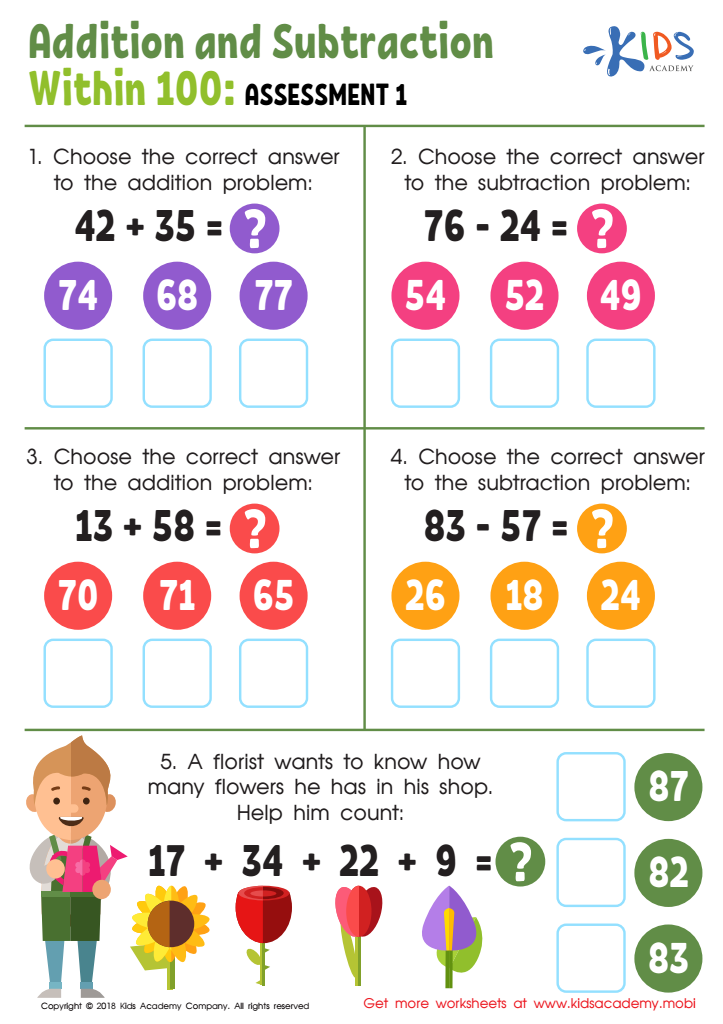
Addition and Subtraction Within 100 Worksheet
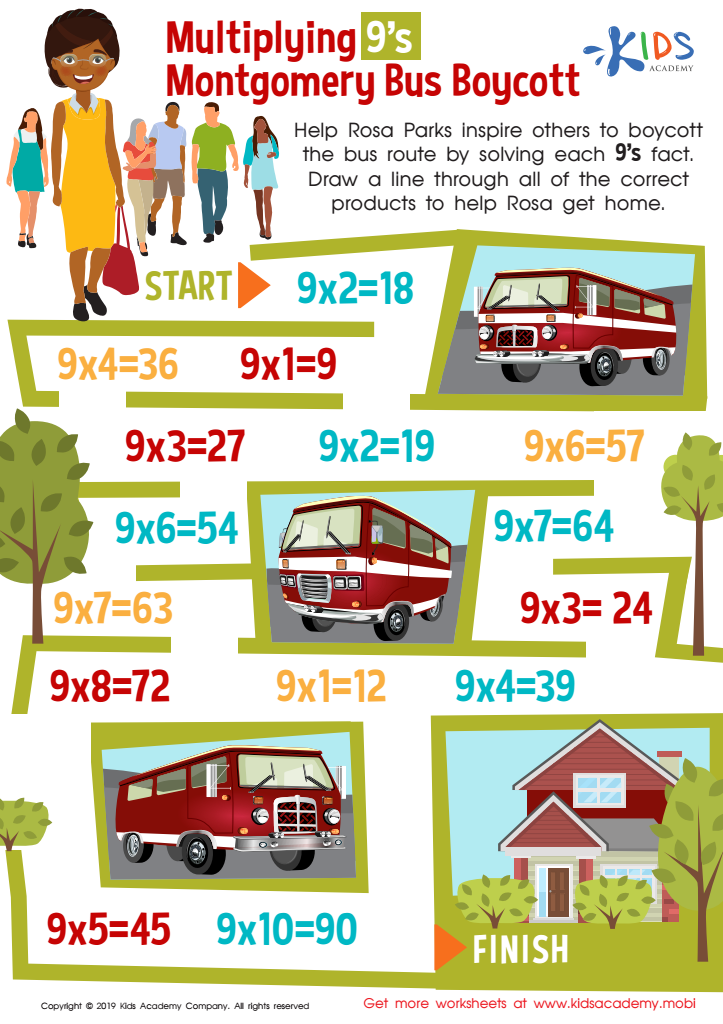
Multiplying 9’s Montgomery Bus Boycott Worksheet








Parents and teachers should prioritize mental math skills for ages 8-9 because these skills form the foundation for a lifetime of mathematical understanding and problem-solving abilities. At this age, children are developing cognitive skills that promote logical thinking and mental agility. Proficient mental math allows students to grasp basic arithmetic concepts and enhances their ability to manipulate numbers quickly and accurately, which is vital for more complex mathematical operations later on.
Furthermore, mental math boosts students' confidence in their math abilities. When children can perform calculations in their heads, they feel empowered to tackle challenges independently, reducing math anxiety—a common issue among students. This skill also fosters perseverance, as children learn to identify errors and adjust their understanding bring meaningful adversity to their learning experience.
Additionally, mental math directly supports everyday life skills, helping children efficiently handle tasks like budgeting, cooking, or estimating needs without relying on calculators. As they progress in their education, strong mental math abilities can lead to greater success in higher-level arithmetic and problem-solving tasks.
Overall, nurturing mental math skills at this critical developmental stage can greatly influence children's future academic achievements and everyday functioning.








