Understanding base ten Normal Worksheets for Ages 8-9
3 filtered results
-
From - To
Our "Understanding Base Ten Normal Worksheets for Ages 8-9" are designed to enhance your child's grasp of essential mathematical concepts through engaging and interactive exercises. Perfect for third graders, these worksheets focus on developing a solid understanding of the base ten system, critical for arithmetic and problem-solving skills. Each worksheet combines visual aids and practical examples, ensuring kids learn to count, regroup, and perform basic operations with ease. Equip your learners with the tools to build a strong mathematical foundation, cater to various learning styles, and make math both fun and accessible!
Discover our collection now at Kids Academy.
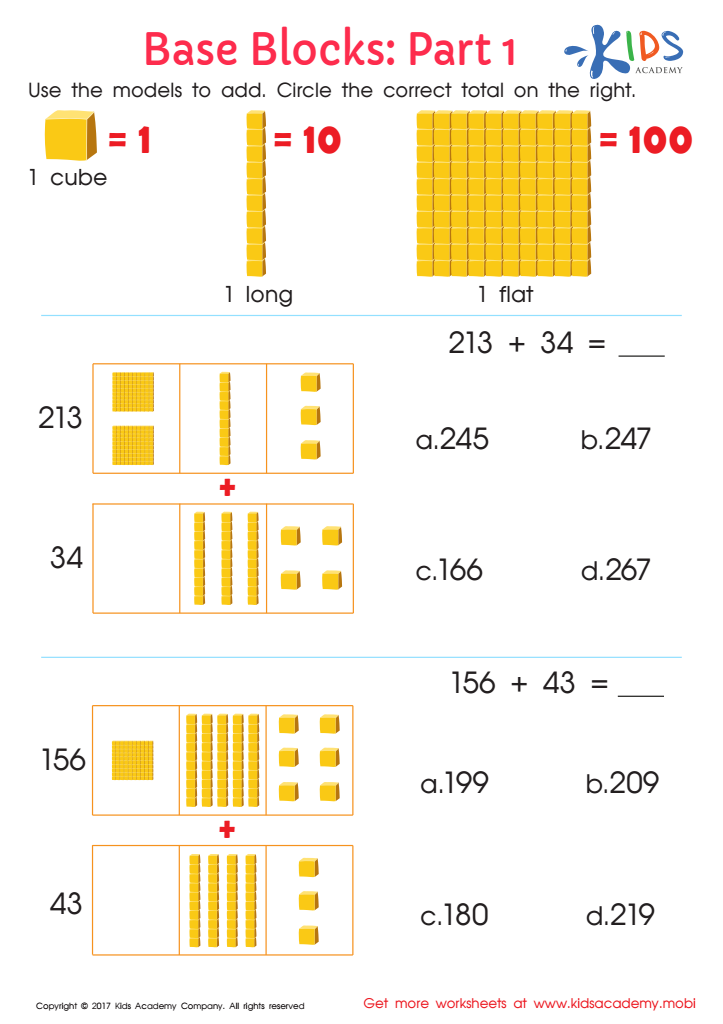
Base Ten Blocks Worksheet: Part 1
 Assign to My Students
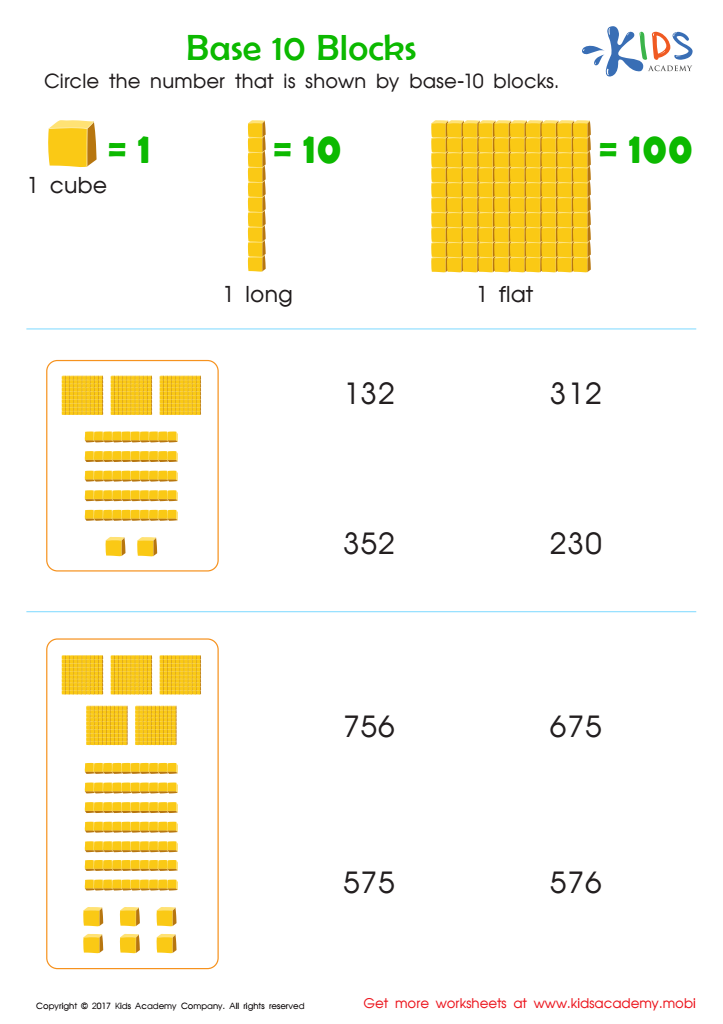
Base Ten Blocks Worksheet
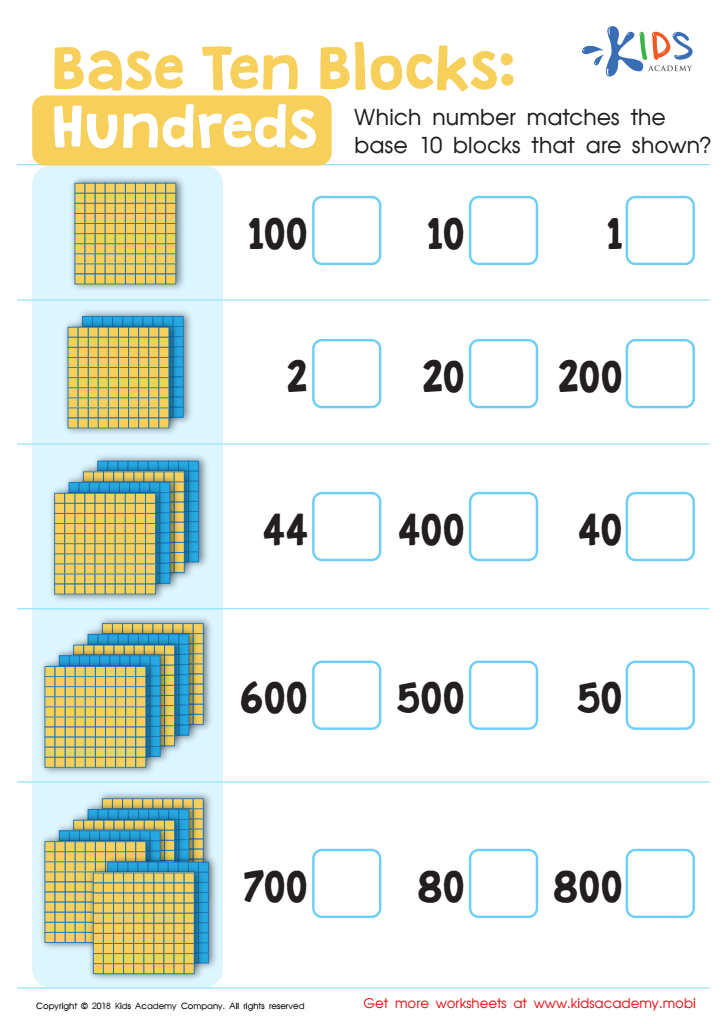
Base Ten Blocks: Hundreds Worksheet








Understanding the base ten number system is foundational for both academic success and everyday life. For children aged 8-9, grasping this concept is vital as it forms the bedrock of essential math skills such as addition, subtraction, multiplication, and division. These skills are not only crucial for more complex mathematical concepts they will encounter later, such as fractions and decimals, but are also indispensable for problem-solving in daily life.
When parents and teachers ensure that children understand base ten, they essentially fortify the child’s ability to comprehend the value of digits based on their position (units, tens, hundreds) and to perform numerical operations accurately. This comprehension fosters confidence and reduces math anxiety, creating a positive attitude towards mathematics.
Moreover, aligning with educational standards that emphasize a deep understanding of number systems, parents and teachers can provide consistent and supportive learning experiences, both in school and at home. Engaging activities like counting with objects, drawing place value charts, and using math games can make learning interactive and enjoyable.
In essence, prioritizing the understanding of the base ten system is an investment in a child's mathematical development and critical thinking skills, equipping them with tools they will use throughout their education and in managing everyday tasks.








