
Understanding patterns Normal Worksheets for Ages 8-9
5 filtered results
Difficulty Level
Grade
Age
-
From - To
Subject
Activity
Standards
Unlock the potential of young minds with our "Understanding Patterns" worksheets, expertly designed for children ages 8-9. These engaging and interactive materials from Kids Academy help students explore and master various types of patterns through fun activities and challenges. Aligned with educational standards, our worksheets enhance critical thinking, problem-solving, and analytical skills. Tailored specifically for this age group, each sheet offers a balanced mix of visual and logical exercises to make learning both exciting and effective. Equip your child with the tools to recognize, predict, and create patterns, laying a strong foundation for future success in math and beyond.
Favorites
With answer key
Interactive
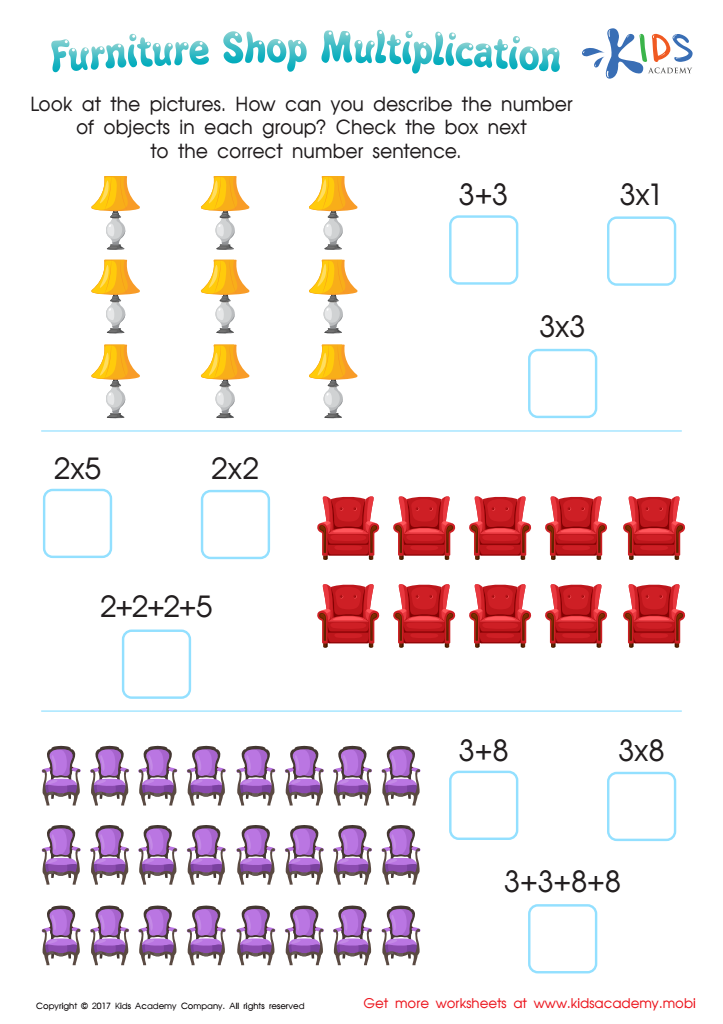
Furniture Shop Worksheet
Our multiplication PDF worksheets for 3rd grade use a visual strategy to help kids understand multiplication. Fun and colorful furniture engages kids as they use number sentences to describe each picture, aiding in memorizing multiplication tables.
 Assign to My Students
Furniture Shop Worksheet
Worksheet
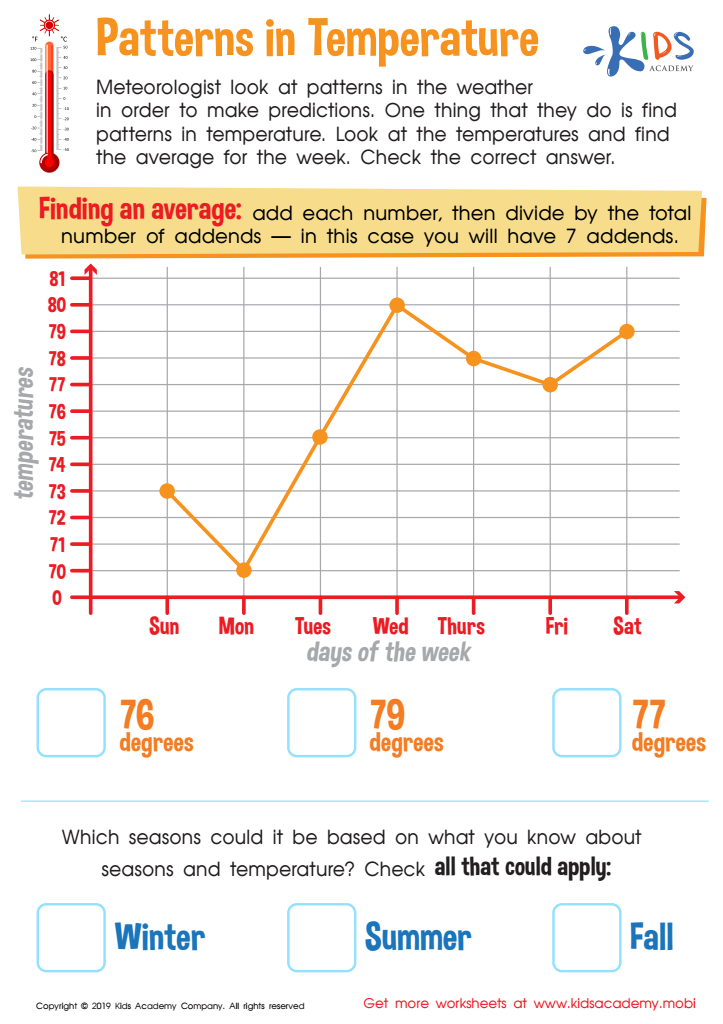
Patterns in Temperature Worksheet
Kids need to learn how to read and interpret data from graphs and charts. This free worksheet on temperature patterns helps them to do just that. They'll practice finding averages and answer questions in multiple-choice format. Plus, it provides a great learning experience!
Patterns in Temperature Worksheet
Worksheet
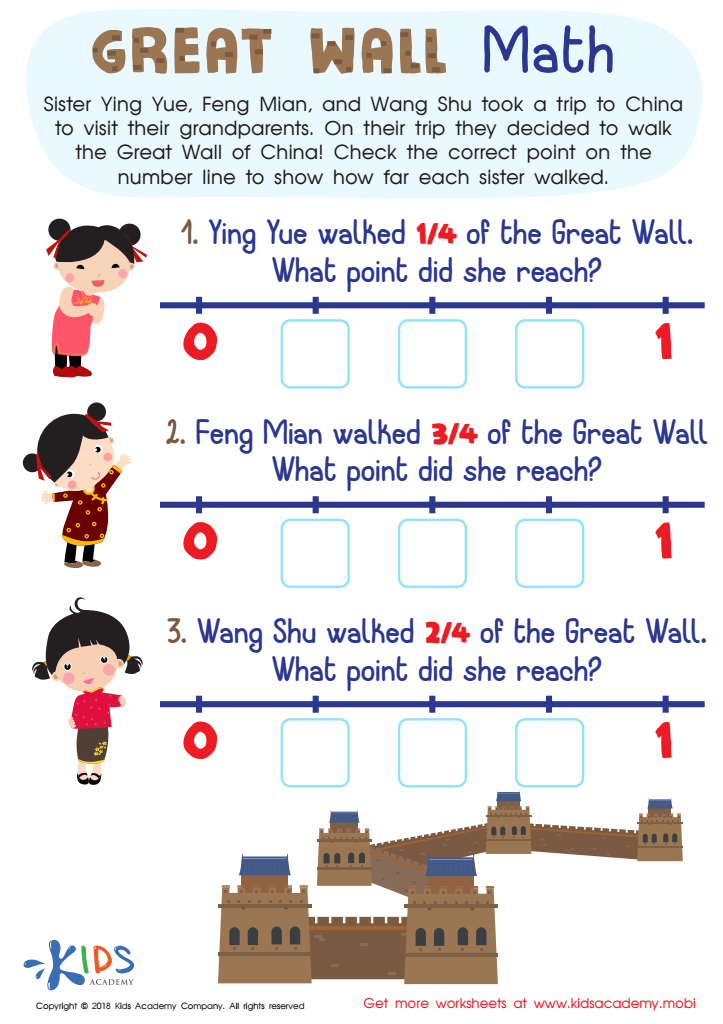
Great Wall Math Worksheet
Let your kids learn about fraction and history with this printout about the Great Wall of China. Three sisters take a trip to China to visit their grandparents and decide to walk the Great Wall. Ask them to study the pictures and pick the correct point on the number line to show how far each sister went. How about you: has your child ever been to China?
Great Wall Math Worksheet
Worksheet
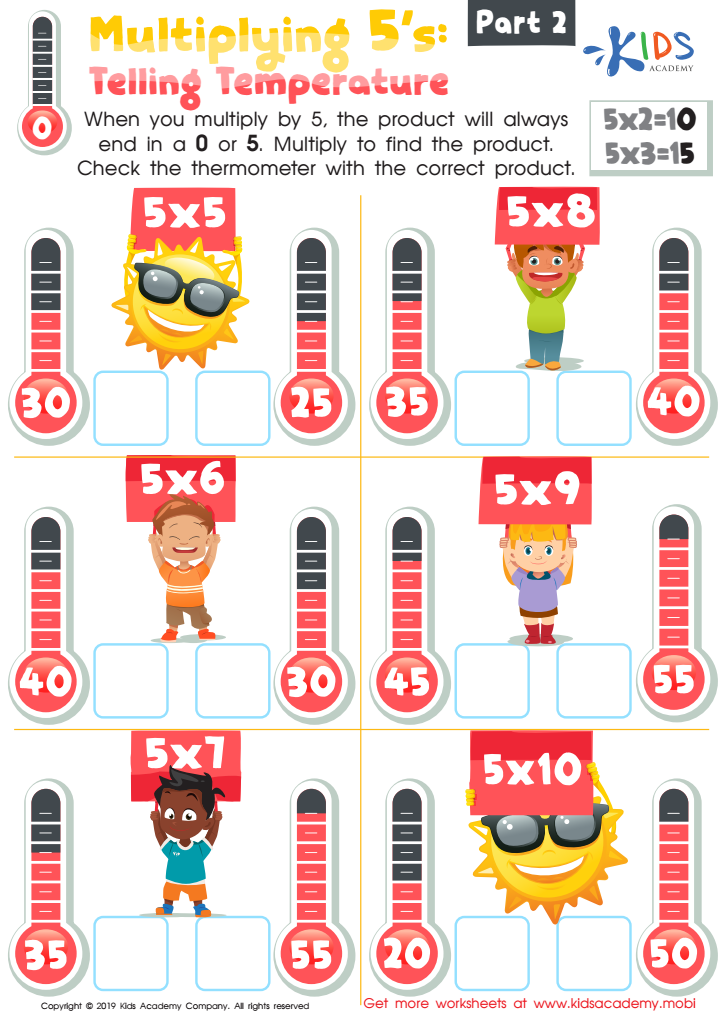
Multiplying 5’s: Telling Temperature Part 2 Worksheet
To help your child with multiplication, teach them some simple tricks. For example, when multiplying 10's the product always ends in a 0, and when multiplying by 5, the product will end in 0 or 5. Look at the problems in this worksheet and help your child find the product. Then, check the thermometer with the correct answer.
Multiplying 5’s: Telling Temperature Part 2 Worksheet
Worksheet
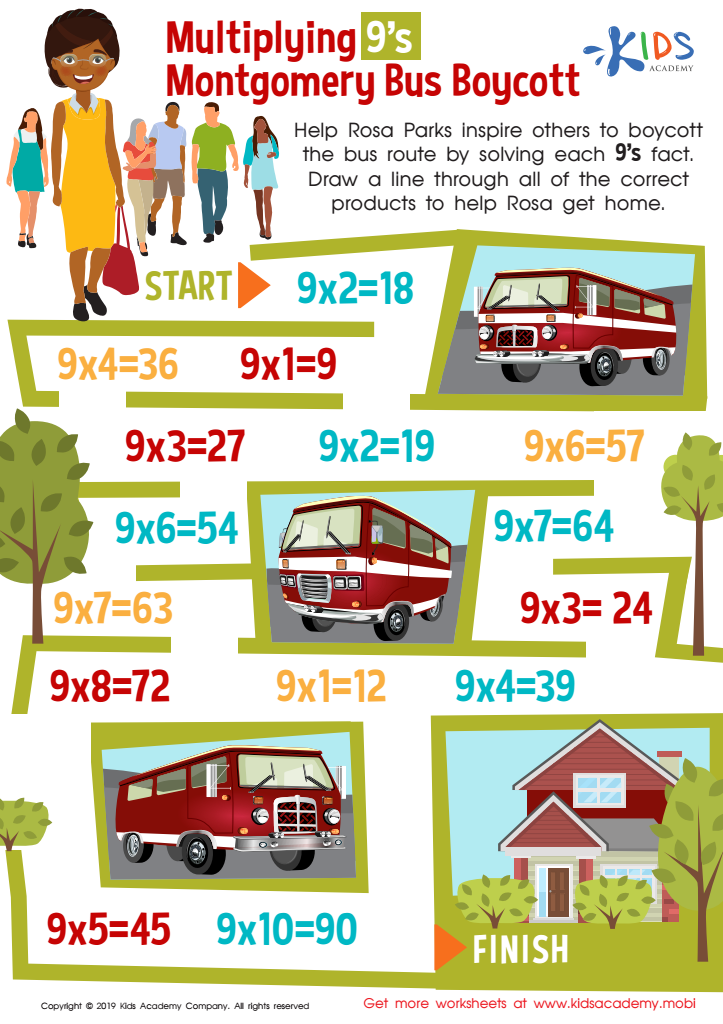
Multiplying 9’s Montgomery Bus Boycott Worksheet
As your students learn math, the numbers get bigger. This worksheet is great for learning the nine times table. Help Rosa Park get home - ask them to solve each multiplication fact, then draw a line through the correct products. Encourage your students to stand up for what's right!
Multiplying 9’s Montgomery Bus Boycott Worksheet
Worksheet
Join Kids Academy for Free
Who is primarily going to use this learning content?







Understanding patterns is crucial for children aged 8-9 as it lays the foundation for developing critical thinking and problem-solving skills. At this developmental stage, children are beginning to grasp abstract concepts and logical reasoning, and patterns offer a concrete way for them to engage with these ideas. Recognizing and predicting patterns helps in understanding number sequences, which is pivotal for later math concepts such as addition, multiplication, fractions, and further arithmetic operations.
Way beyond mathematics, patterns are ubiquitous in daily life—in language, nature, music, and art. Children who grasp patterns can better understand grammar and sentence structure in reading and writing, enhancing their literacy skills. For example, recognizing the pattern of a story’s plot can enhance comprehension and prediction skills. In science, identifying patterns can lead to natural inquisitiveness and early analytical skills, such as discerning predictable weather changes or understanding biological cycles.
Moreover, social and behavioral patterns aid in the development of empathy and improved social interactions. When children understand cause and effect in social contexts, they can navigate various interactions more effectively. Parental and teacher focus on pattern recognition supports holistic cognitive development, fostering a well-rounded, curious, and intelligent young mind prepared for a lifetime of learning.








