
Understanding Sequences Normal Worksheets for Ages 8-9
4 filtered results
Difficulty Level
Grade
Age
-
From - To
Subject
Activity
Standards
Explore our engaging "Understanding Sequences Normal Worksheets" designed specifically for children aged 8-9. These worksheets help young learners grasp the concept of sequences through interactive exercises and illustrative examples. Students will enhance their critical thinking skills as they identify patterns and predict outcomes in various scenarios. Our carefully crafted worksheets cater to different learning styles, ensuring every child has the opportunity to thrive. Perfect for both classroom and home learning, these resources make mastering sequences fun and accessible. Start your child’s journey to mathematical fluency today with our comprehensive and user-friendly worksheets tailored for their age group!
Favorites
With answer key
Interactive
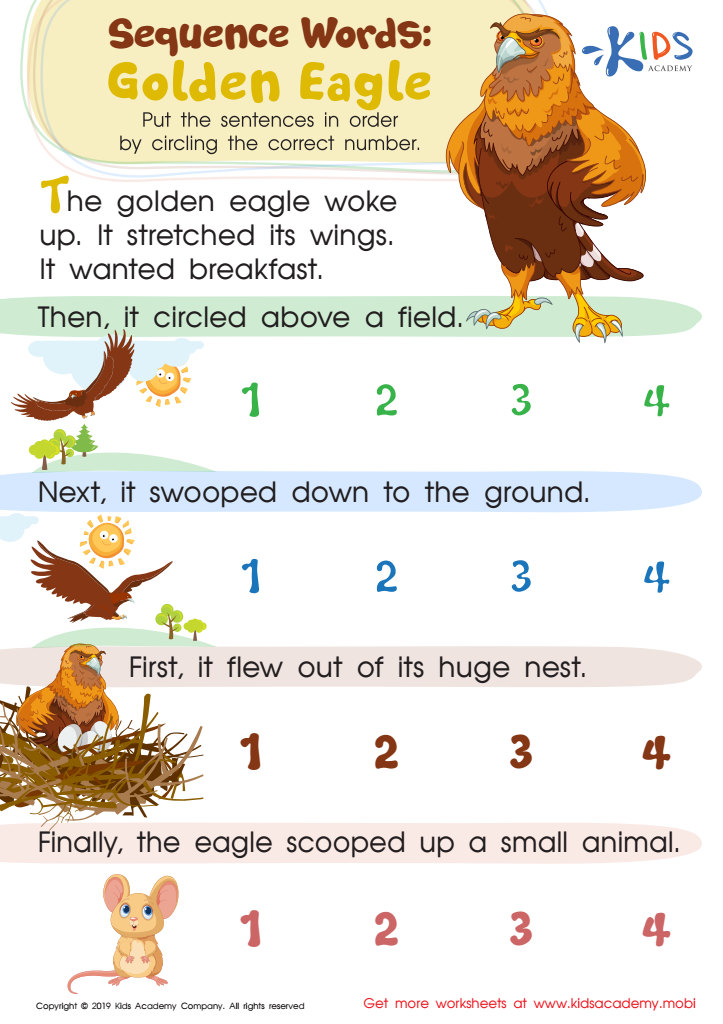
Sequence Word Eagle Worksheet
Help your child brush up on reading and writing with this fun worksheet. Read the story of the golden eagle's day, then have the child circle the numbers in the right order. Point out the sequence words that tell the order of events. This helps learners understand how to make their writing clear and understandable to others.
 Assign to My Students
Sequence Word Eagle Worksheet
Worksheet
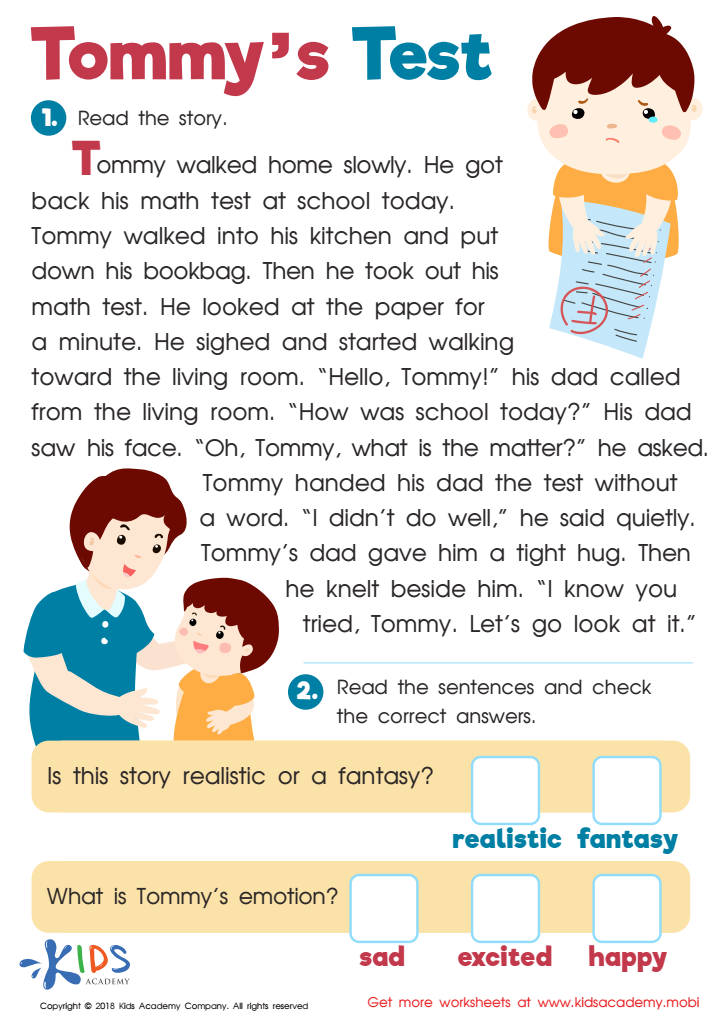
Tommys Test Worksheet
Reading short stories to your students builds a bond, teaches new words and lessons. Read the story aloud and then have them listen for details. Ask them the questions at the bottom and help them check the answers.
Tommys Test Worksheet
Worksheet
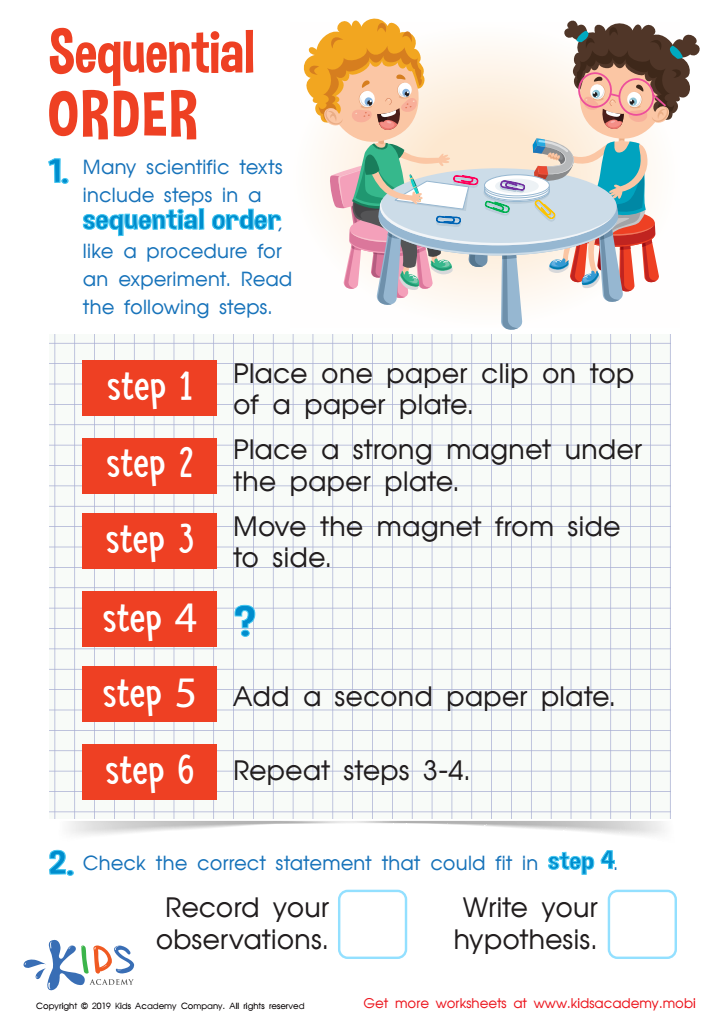
Sequencential Order Worksheet
This worksheet is perfect for science-lovers: it'll test how good your child is at following instructions by asking them to complete the steps in the right order. Have them read the steps and then choose the statements that correctly fill in the blanks. It's more than just fun experiments and results - science also requires careful procedure.
Sequencential Order Worksheet
Worksheet
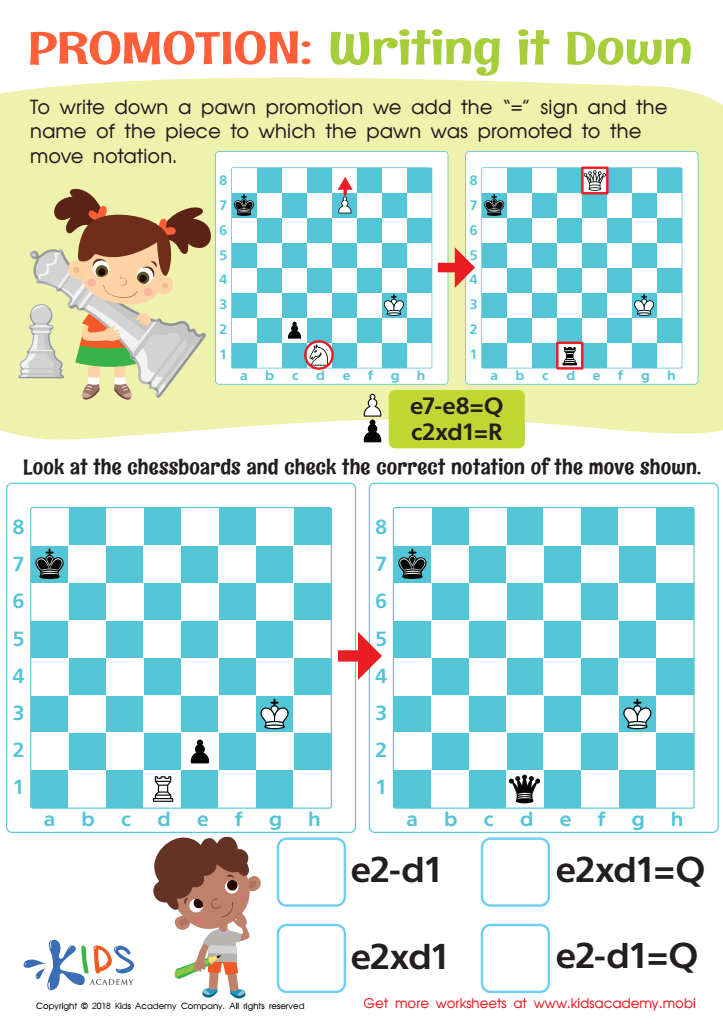
Writing it Down Worksheet
To document pawn promotion, add "=<piece name>" to the move notation. For example: e7-e8=Q. Ask your child to look at the chessboard and take note of the moves. Check the notations are correct. (80 words)
Writing it Down Worksheet
Worksheet
Join Kids Academy for Free
Who is primarily going to use this learning content?




.jpg)


Understanding sequences is a fundamental skill for children ages 8-9, crucial for their academic and everyday lives. At this age, children are developing critical thinking and problem-solving abilities, and sequences provide an ideal way to foster these skills. By mastering sequences, students learn to recognize patterns, which enhances their ability to predict and make connections within mathematics and beyond.
Furthermore, the topics of sequences tie directly into more complex mathematical concepts such as algebra, where understanding functions and variables becomes essential. In addition to math, engaging with sequences can help students refine their logical reasoning and boost their comprehension in subjects like science, where sequences play a role in understanding processes.
Beyond academic reasons, sequences can be utilized in daily life situations, including recognizing routines and making predictions based on past experiences. When parents and teachers emphasize the importance of sequences, they are encouraging students to develop a mindset that values problem-solving, organization, and critical thinking.
Overall, prioritizing understanding sequences equips children with essential life skills, setting a strong foundation for their future learning, helping them become confident and competent learners.








