Counting skills Normal Addition & Subtraction Worksheets for Ages 8-9
5 filtered results
-
From - To
Boost your child's math confidence with our Counting Skills Normal Addition & Subtraction Worksheets for ages 8-9. These expertly designed worksheets from Kids Academy focus on enhancing fundamental counting abilities crucial for mastering addition and subtraction. Perfectly suited for 2nd and 3rd graders, the exercises turn learning into fun, engaging, and rewarding activities. Each worksheet is crafted to develop number sense, provide practice in solving problems, and build a strong mathematical foundation. Help your child excel in math through these interactive and practical worksheets, ensuring they achieve counting skills proficiency for future academic success.
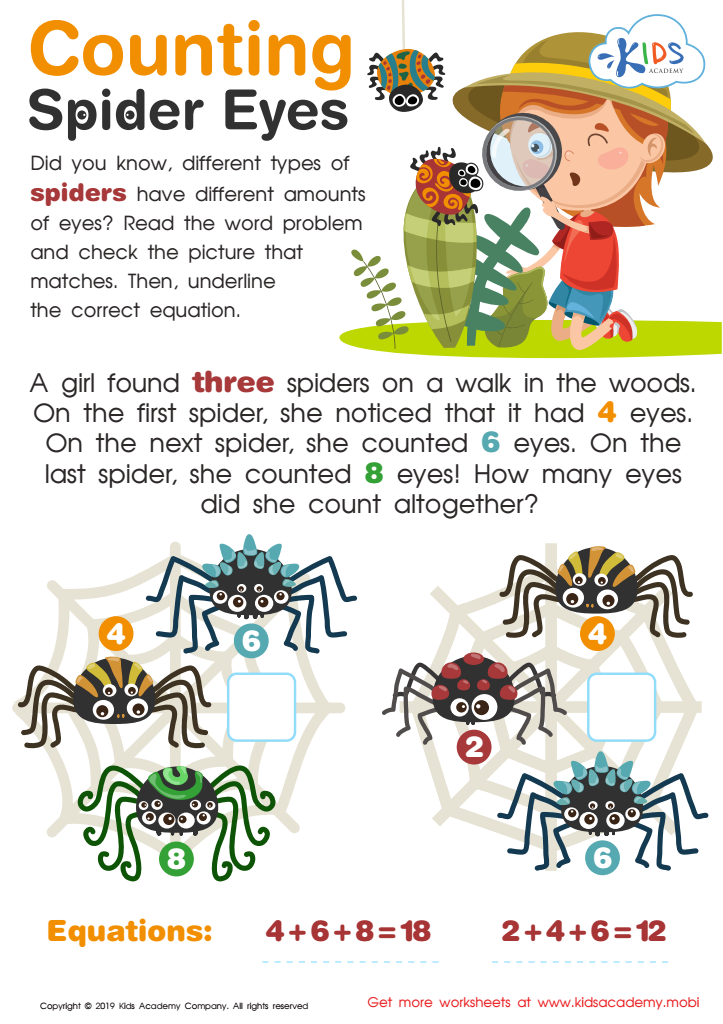
Counting Spider Eyes Worksheet
 Assign to My Students
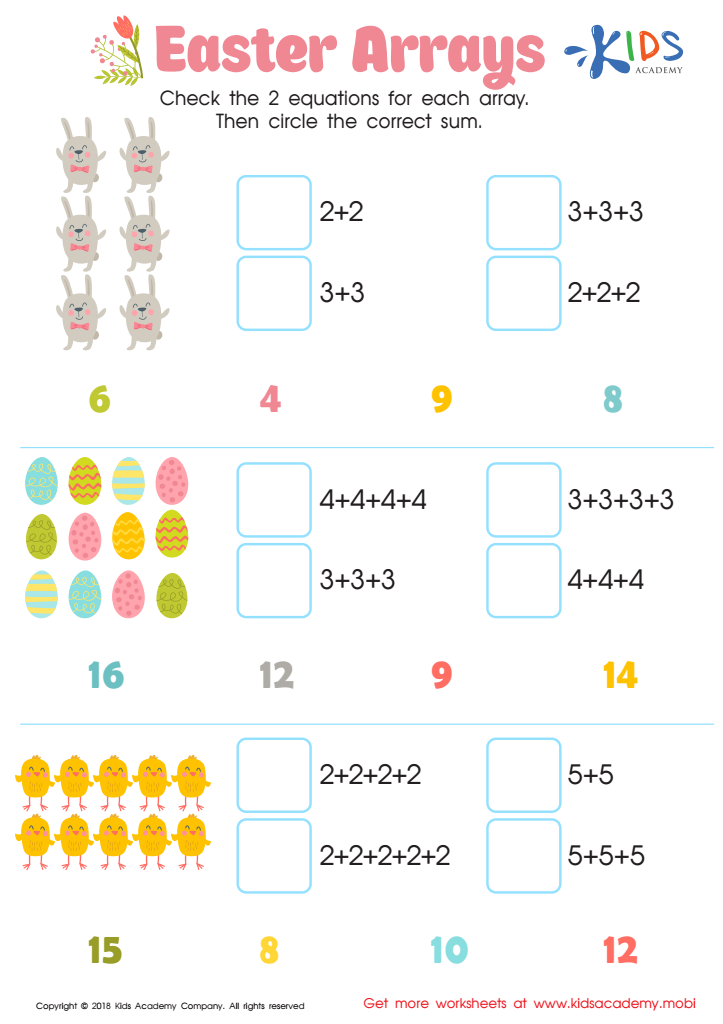
Easter Arrays Worksheet
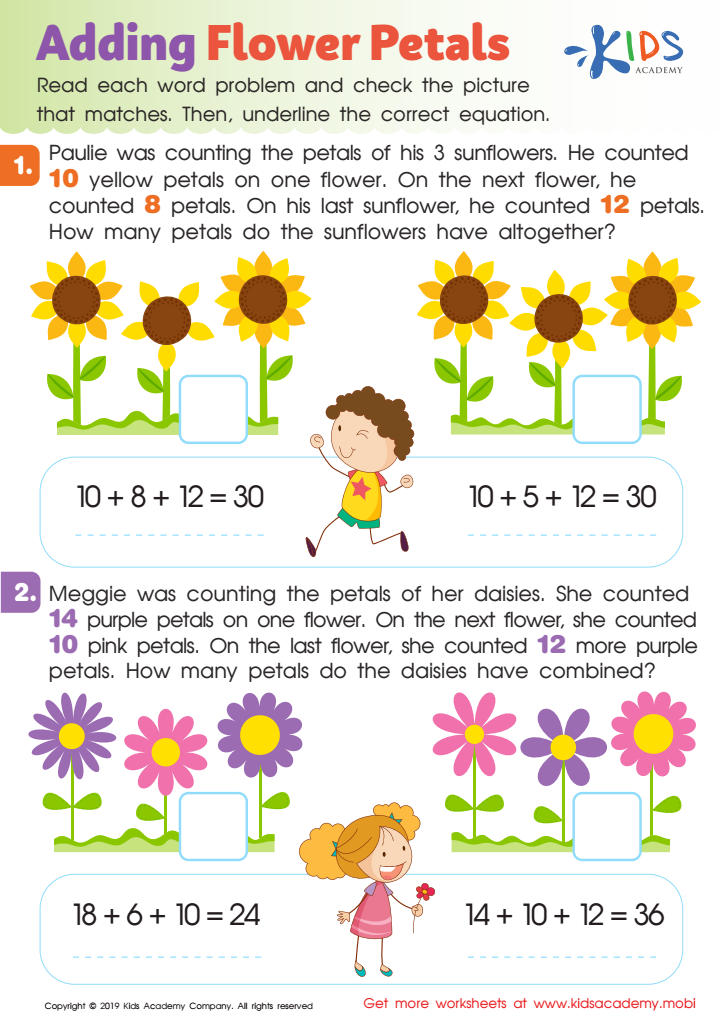
Adding Flower Petals Worksheet
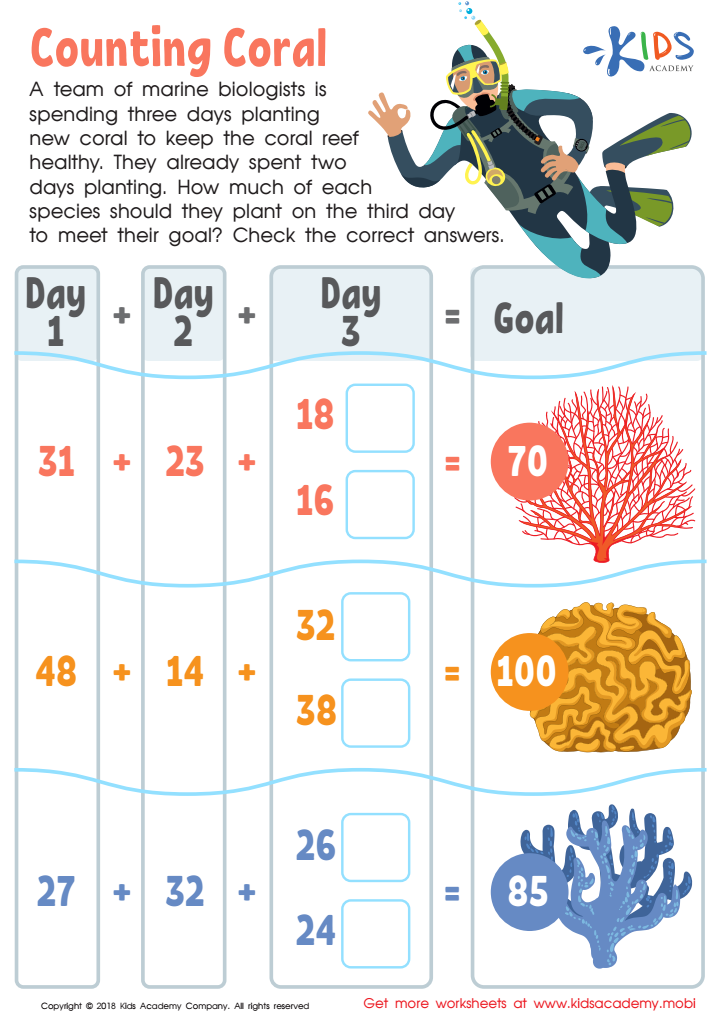
Counting Coral Worksheet
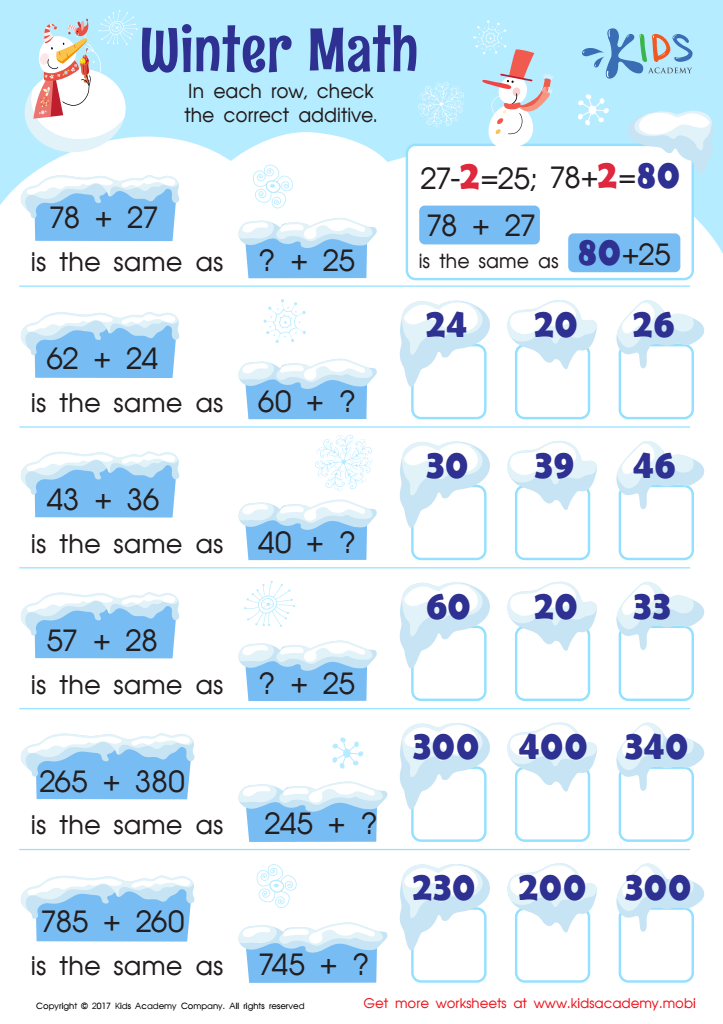
Free Addition Worksheet








Counting skills, normal addition, and subtraction form the foundational building blocks of a child's mathematical understanding, particularly for ages 8-9. This crucial developmental stage is where children transition from basic arithmetic to more complex problem-solving. Mastery in these areas ensures that they can confidently proceed to advanced topics such as multiplication, division, and later, algebra and geometry.
First, counting skills are essential for understanding number sense, enabling children to recognize the size of numbers, their order, and their relation to each other. This fosters cognitive skills such as estimation and mental math, which are valuable in everyday life.
Addition and subtraction are equally important because they represent the fundamental operations on which almost all other math concepts are built. When children get comfortable with these skills, they enhance their ability to reason logically, manage their daily activities involving money, time, and measurements more effectively.
Moreover, strong skills in these areas contribute positively to a child's self-confidence and academic interest. Struggling with basic operations can lead to math anxiety, impacting their overall academic performance and attitude toward learning. By focusing on these core skills, parents and teachers can provide children with a solid mathematical foundation, setting them up for long-term success both academically and in everyday decision-making.








