Comparing Fractions Normal Numbers Worksheets for Ages 8-9
4 filtered results
-
From - To
Welcome to our "Comparing Fractions Worksheets" designed for children ages 8-9! These engaging printables help young learners develop the essential skill of comparing fractions using normal numbers. Our worksheets include various activities that introduce concepts like identifying numerators and denominators, understanding equivalence, and using visual aids for better comprehension. Each worksheet is crafted to make learning fun and interactive, promoting both independent problem-solving and collaborative learning. Perfect for classroom use or at-home practice, these resources will bolster your child's confidence in math. Download today to give your child the tools they need to excel in comparing fractions!
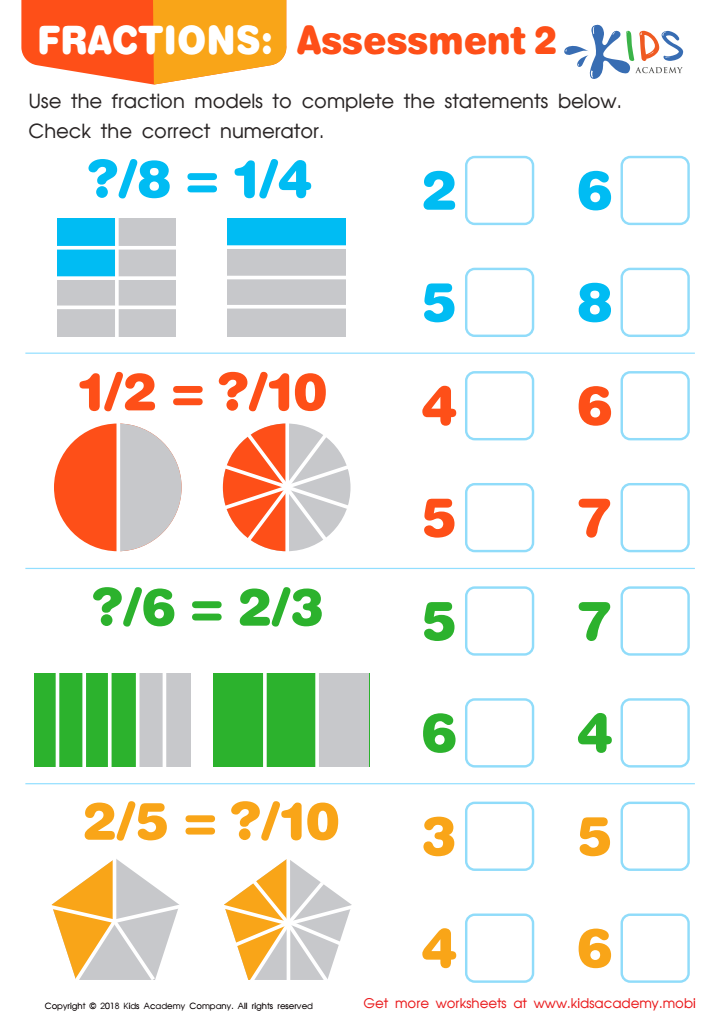
Fractions: Assessment 2 Worksheet
 Assign to My Students
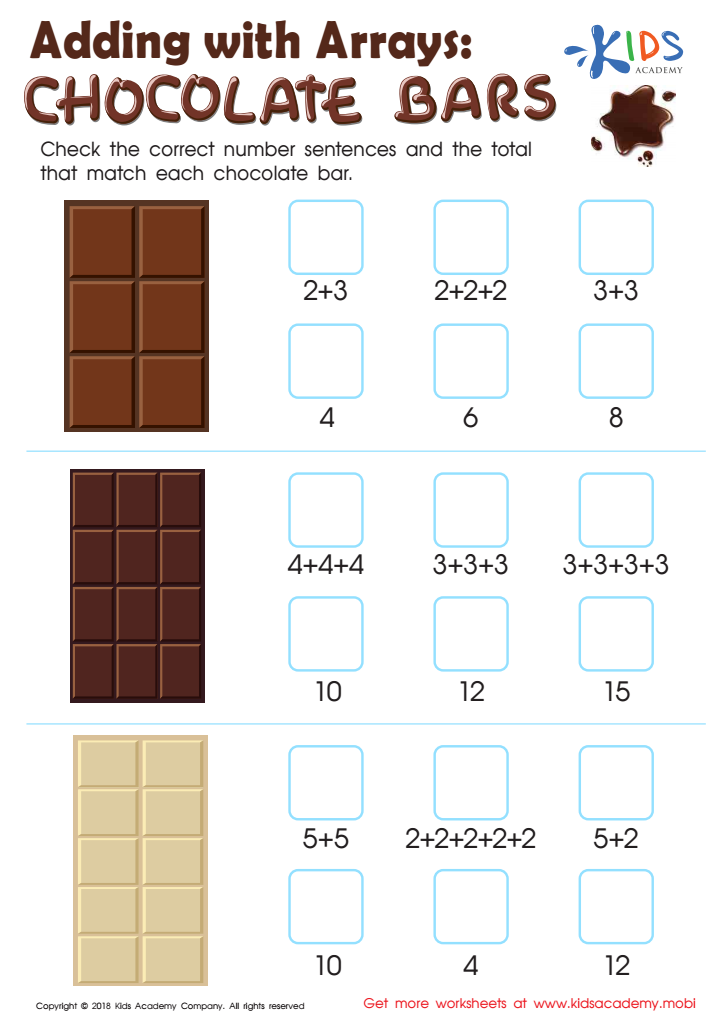
Adding with Arrays: Chocolate Bars Worksheet
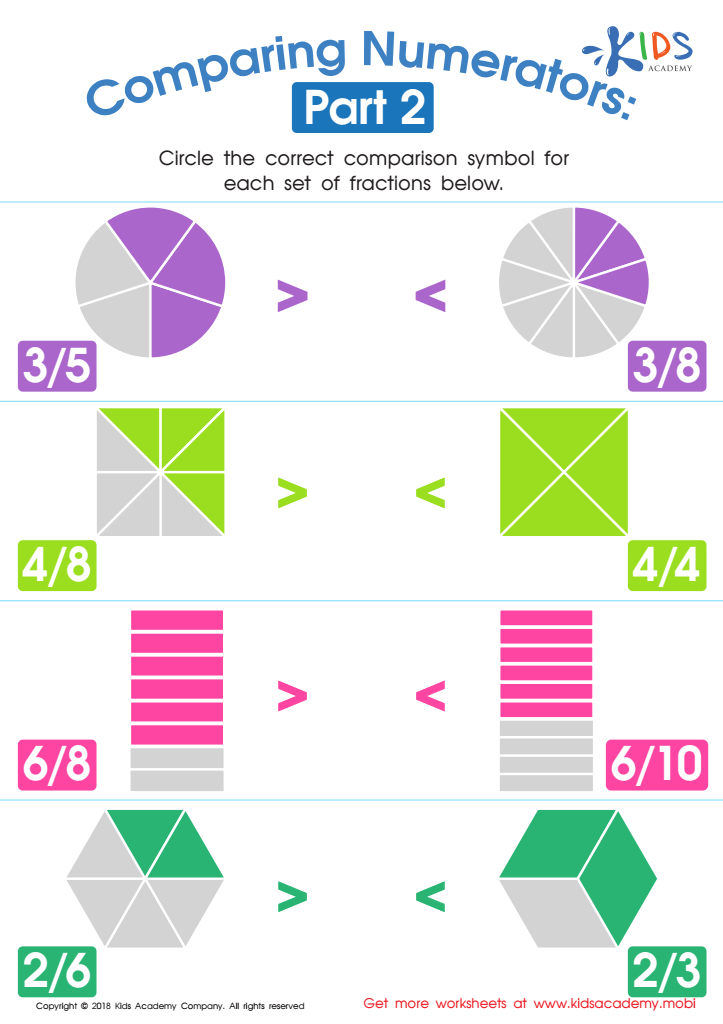
Comparing Numerators Part 2 Worksheet
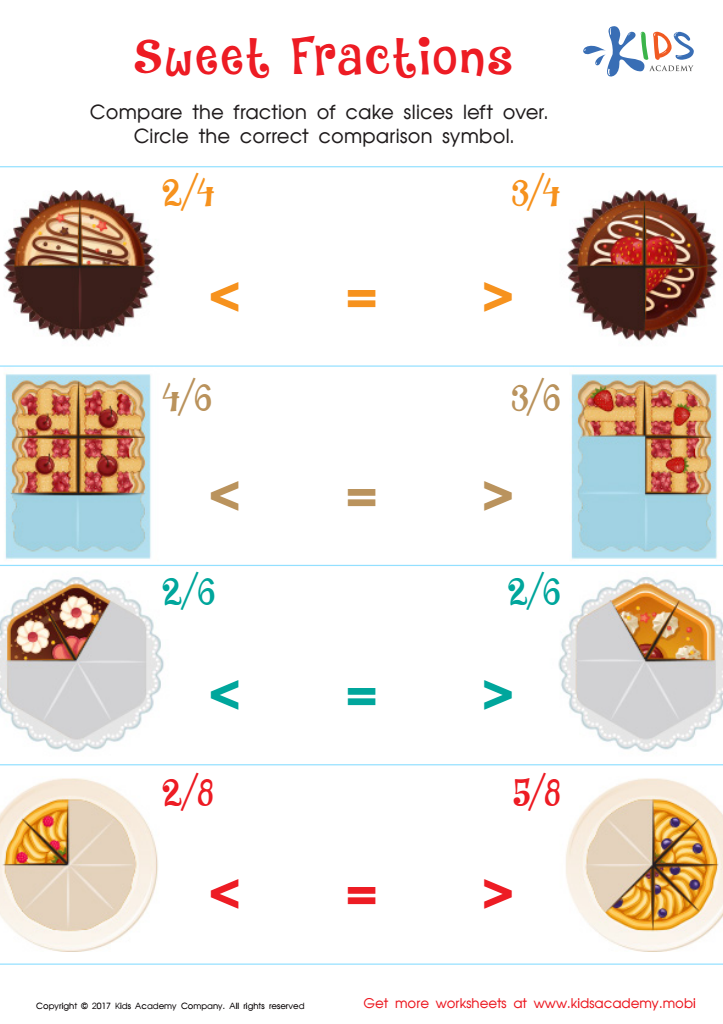
Compare Fractions Worksheet







Comparing fractions is a foundational math skill that greatly impacts children's overall mathematical understanding and problem-solving abilities. For children ages 8-9, this topic lays the groundwork for more complex concepts they'll encounter in later grades, such as adding and subtracting fractions with different denominators, understanding ratios, and engaging with real-world applications like measuring, cooking, or finance.
Parents and teachers should prioritize learning to compare fractions because it teaches children how to navigate part-to-whole relationships, fostering critical thinking and analytical skills. Mastering this skill enhances their confidence in mathematics while enabling them to make meaningful connections between numbers and their practical implications.
Additionally, understanding fractions plays a vital role in developing number sense. Children encounter fractions regularly in daily life—whether slicing pizza, comparing lengths, or discussing percentages. By equipping them with tools to compare fractions, adults are not only instilling mathematical knowledge but also empowering students to apply what they know outside the classroom.
Overall, focusing on comparing fractions creates a solid foundation for future math topics, encourages logical reasoning, and prepares children for the mathematical challenges they will face as they advance in their education.








