
Data interpretation Normal Math Worksheets for Ages 8-9
3 filtered results
Difficulty Level
Grade
Age
-
From - To
Subject
Activity
Standards
Explore our Data Interpretation Normal Math Worksheets designed specifically for children ages 8-9. These engaging and educational worksheets help your young learners grasp essential data interpretation skills through fun activities and real-life scenarios. Perfect for home or classroom use, each worksheet strengthens critical thinking and analytical abilities. Kids will enjoy interpreting charts, graphs, and tables, enhancing their ability to understand and utilize data effectively. Dive into a treasure trove of resources that support your child's math journey and build a strong foundation in data handling and interpretation techniques. Empower your kids with the skills needed for future success!
Favorites
With answer key
Interactive
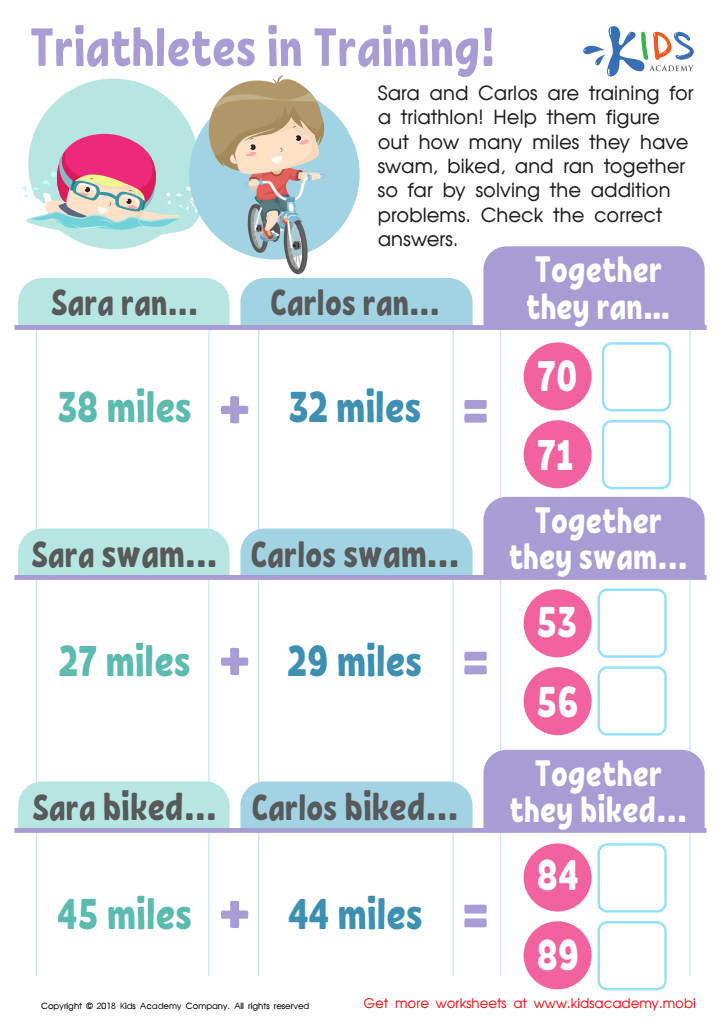
Triathletes in Training Worksheet
Sara and Carlos are training for a triathlon and need your child's help! They must solve the addition problems to figure out how many miles they've swam, ran, and biked. Help your kid check the answers and get them ready for the triathlon!
 Assign to My Students
Triathletes in Training Worksheet
Worksheet
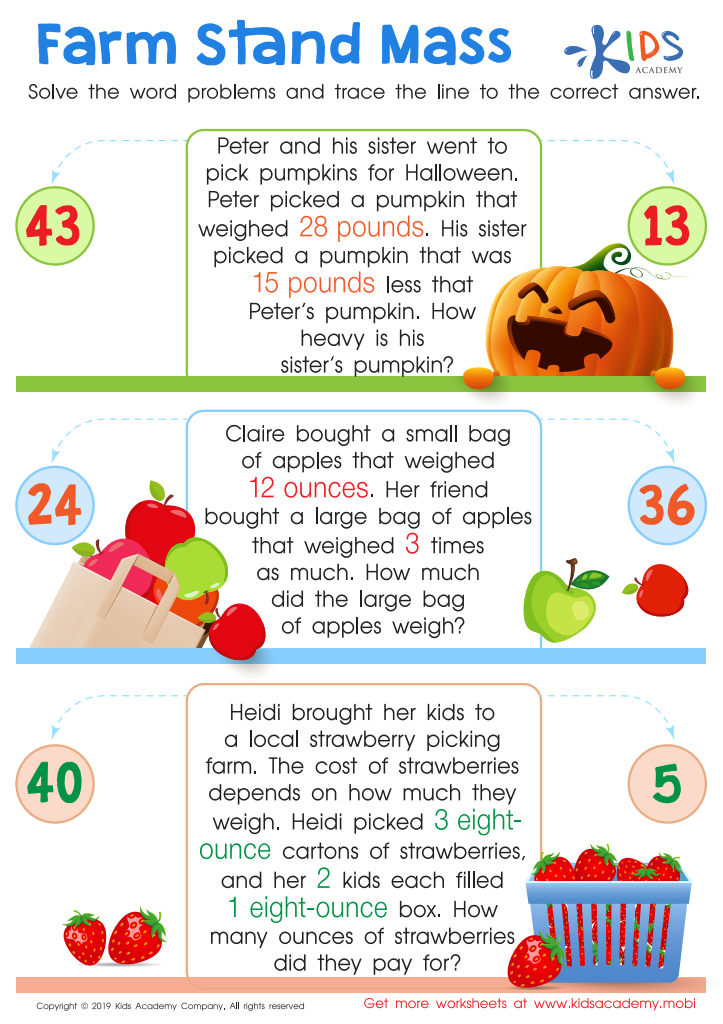
Farm Stand Mass Worksheet
Engage your kids in a fun learning adventure! Encourage them to practice what they learn in school using this worksheet. Look at the picture and read the problem together. Help them solve it and trace the line to the answer. Make learning enjoyable and your kids will be more motivated!
Farm Stand Mass Worksheet
Worksheet
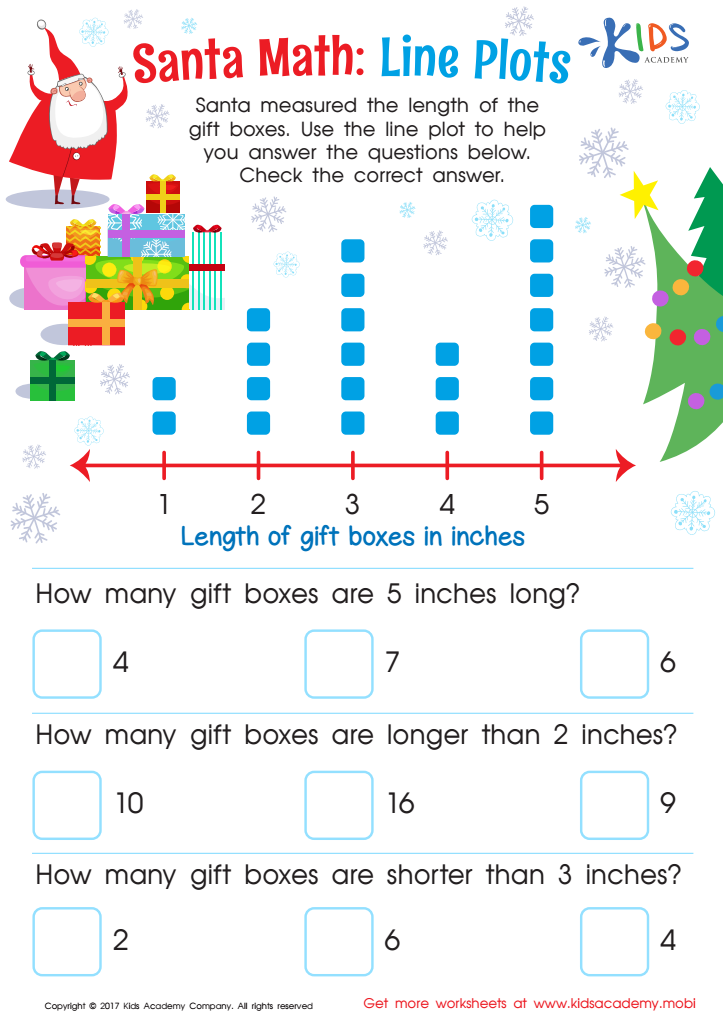
Line Plot Worksheet
Help your child measure presents with Santa using this 2nd grade line plot worksheet! It's a fun way to boost math skills and analyze data. Plus, it's sure to delight your child!
Line Plot Worksheet
Worksheet
Join Kids Academy for Free
Who is primarily going to use this learning content?








Data interpretation in mathematics is a crucial skill for children aged 8-9 because it serves as the cornerstone of logical reasoning and analytical thinking. At this age, children are learning to understand and make sense of the world around them, and data interpretation activities offer tangible ways to practice these skills. When engaging with data, students develop abilities to observe, question, and derive meaningful conclusions from various types of information such as charts, graphs, and tables.
For parents and teachers, fostering these skills early on lays a strong educational foundation. It directly supports the natural developmental progression of cognitive skills, enhancing problem-solving abilities that are essential across all academic subjects. For instance, a child interpreting a bar graph in math class simultaneously hones their attention to detail, ability to categorize information, and skills in making informed predictions.
Additionally, data interpretation propels critical thinking. As children learn to analyze data, they become adept at spotting trends and patterns, assessing accuracy, and developing empirical arguments. These capabilities are vital in preparing students for future educational demands and real-life situations where data literacy is key.
Providing consistent and thoughtful opportunities for data interpretation helps cultivate a mindset that values inquiry, reasoned decision-making, and a systemic understanding of everyday phenomena, thus promoting an overall academic and practical proficiency that benefits lifelong learning and problem-solving.








