Division practice Normal Math Worksheets for Ages 8-9
9 filtered results
-
From - To
Explore our engaging Division Practice Normal Math Worksheets for children aged 8-9! These worksheets are designed to help young learners master division concepts through interactive problems and fun exercises. With a variety of challenges, students can enhance their understanding of division while building confidence in their math skills. Our resources cater to different learning styles, ensuring that every child can practice at their own pace. Ideal for both classroom use and at-home practice, these worksheets promote essential math fundamentals in a friendly and supportive environment. Start your child’s journey to division mastery today with our accessible and visually appealing worksheets!
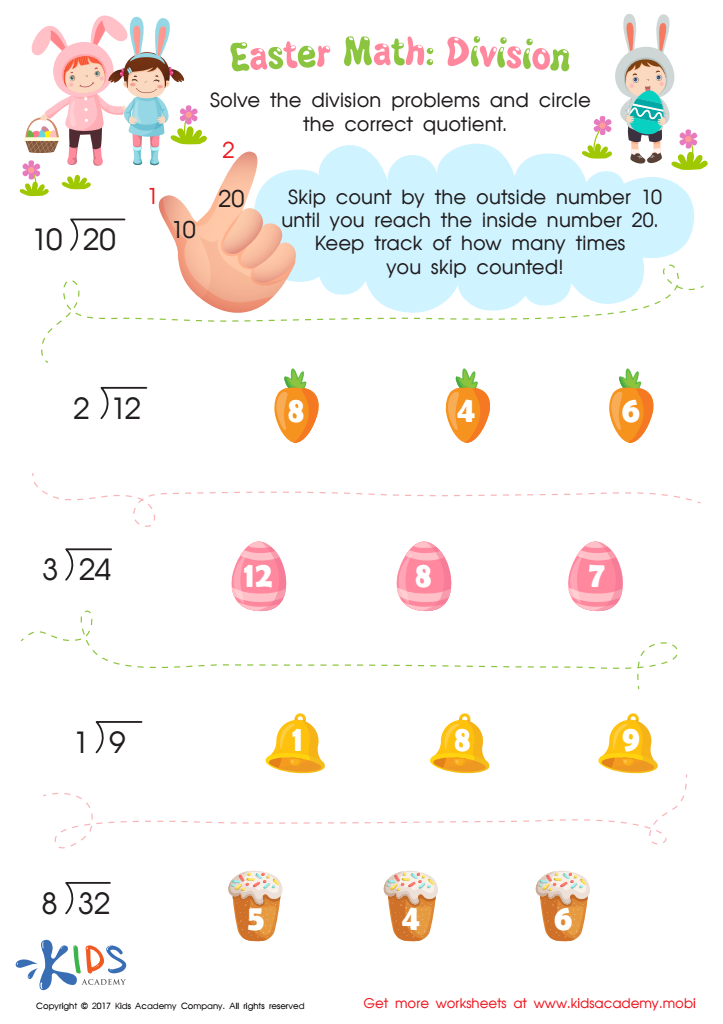
Division Worksheet
 Assign to My Students
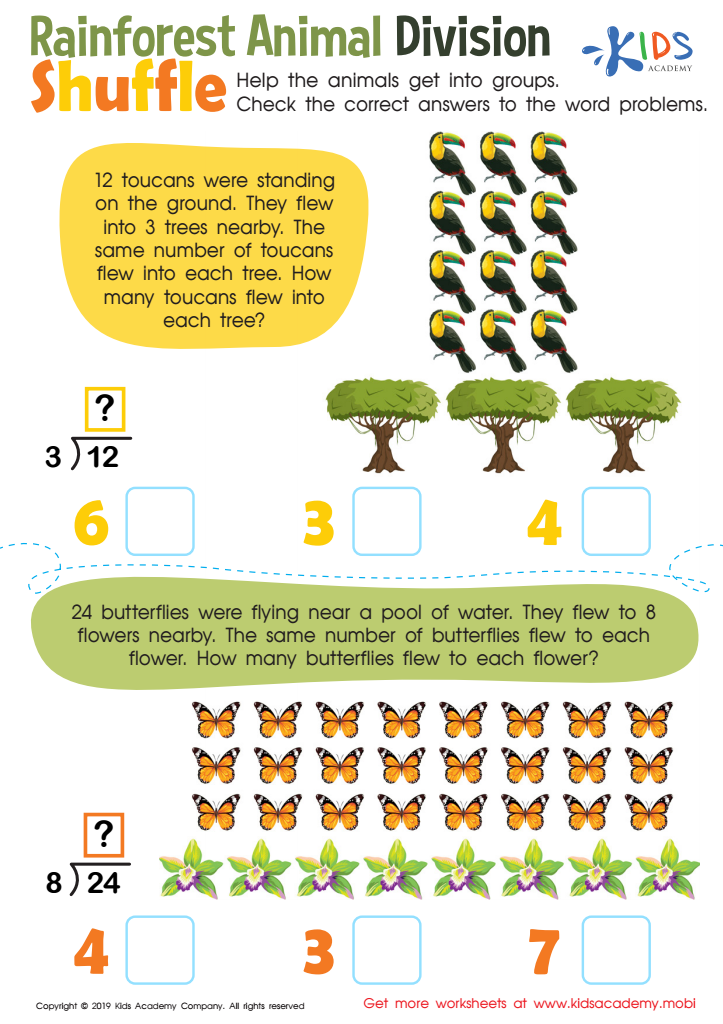
Rainforest Animal Division Worksheet
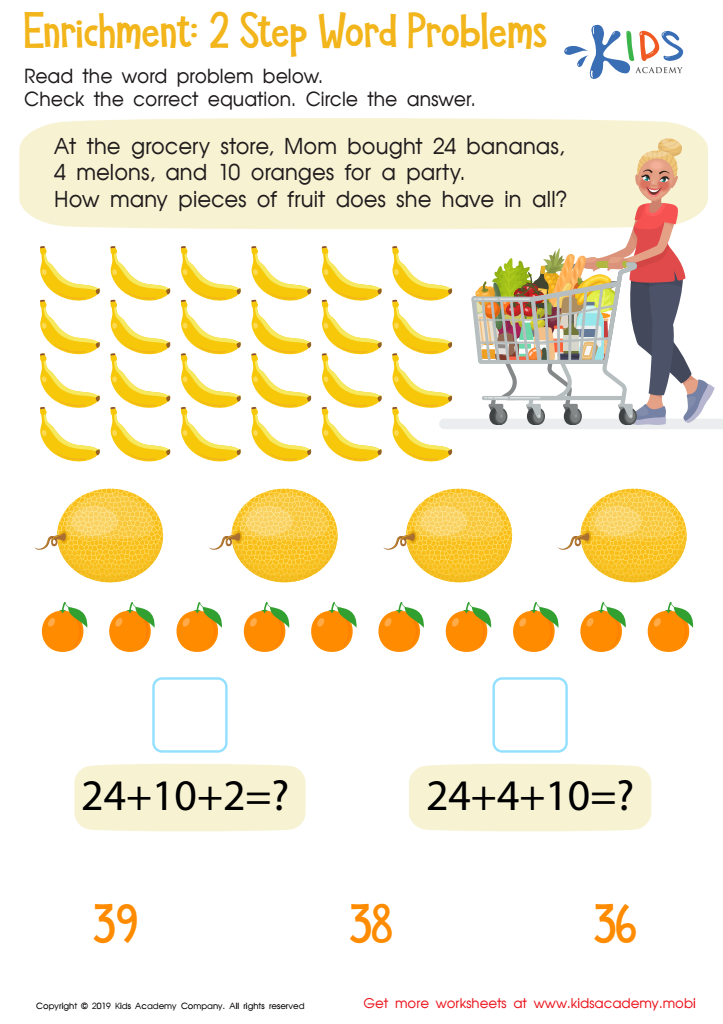
Enrichment -2 Step Word Problems Worksheet
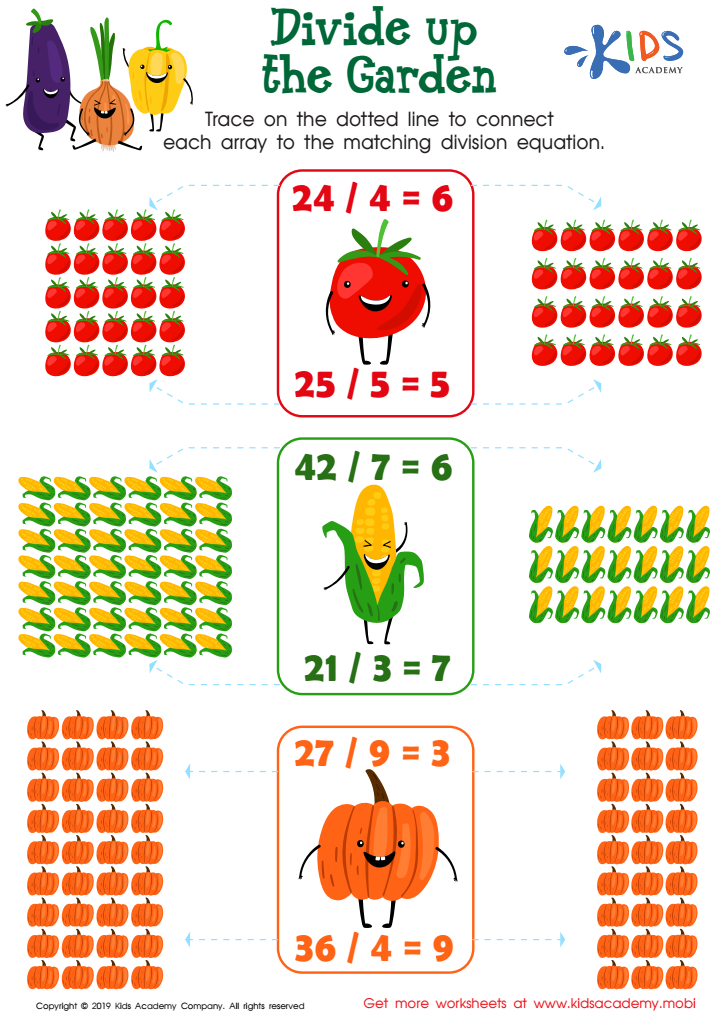
Divide up the Garden Worksheet
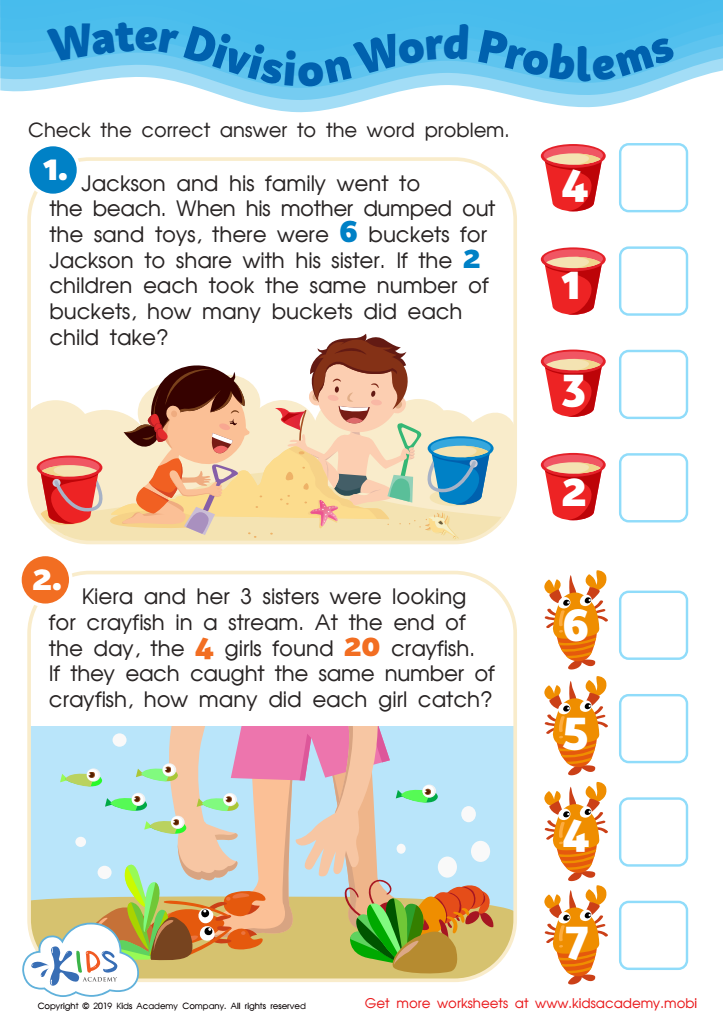
Water Division Word Problems Worksheet
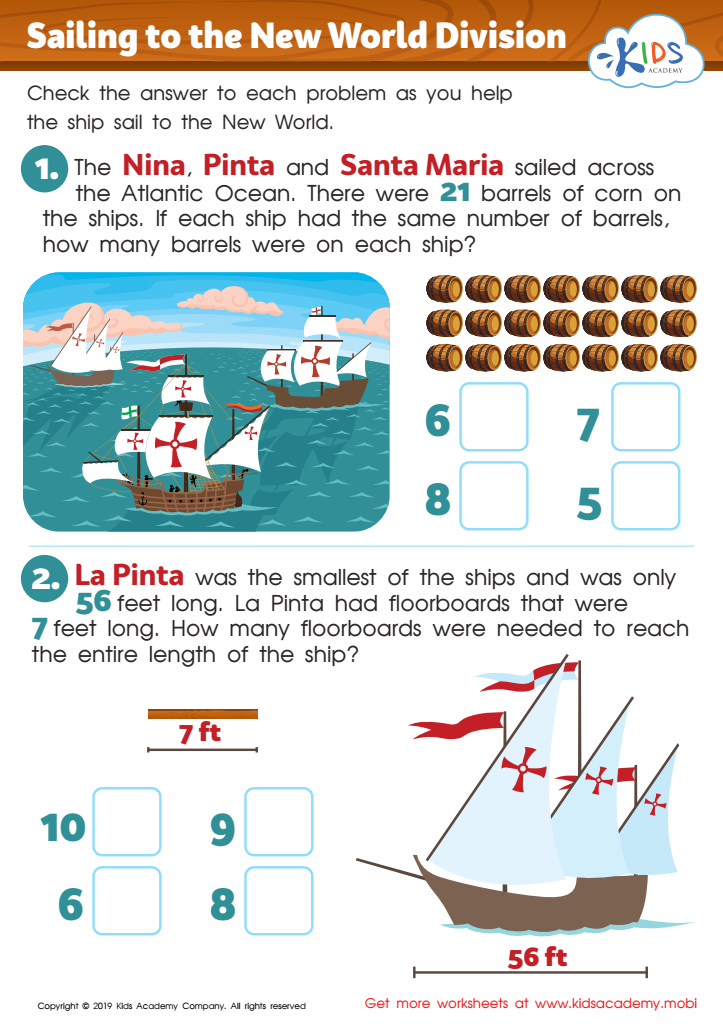
Sailing to the New World Division Worksheet
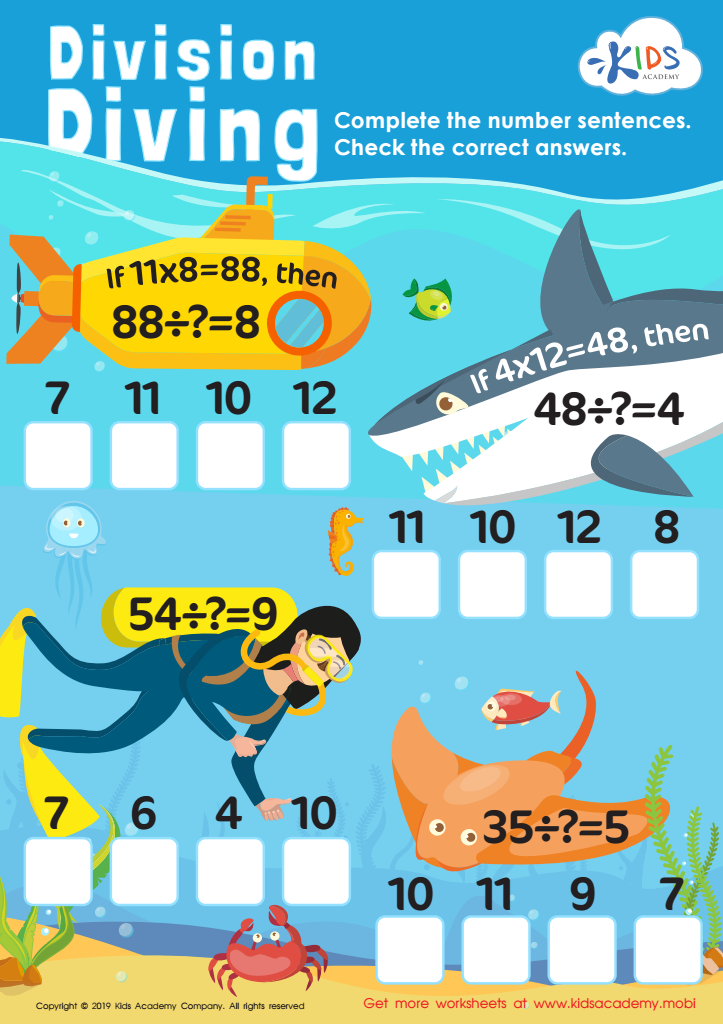
Division Diving Worksheet
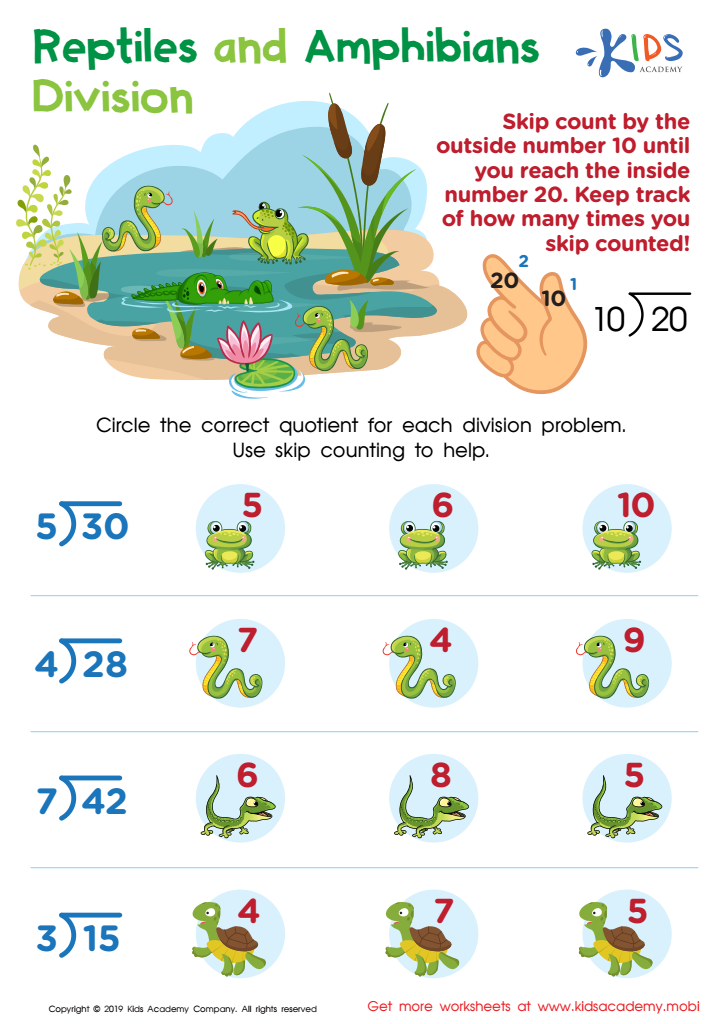
Reptile and Amphibians Division Worksheet
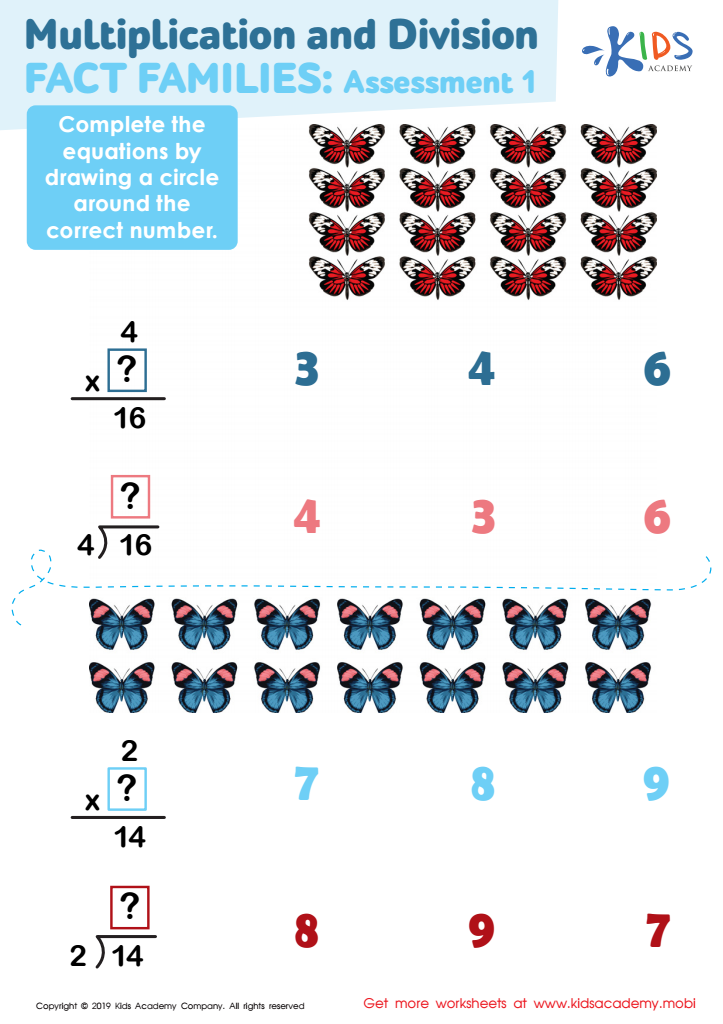
Multiplication and Division Fact Families Assessment 1 Worksheet






.jpg)

Division practice in Normal Math for ages 8-9 is crucial for several reasons. At this developmental stage, children begin to grasp the foundational concepts of arithmetic that are vital for future mathematical understanding. Mastery of division enhances their problem-solving abilities and cognitive skills. By engaging regularly in division exercises, children learn to break down complex problems into manageable parts, fostering both analytical thinking and resilience.
Additionally, division is intrinsically linked to other mathematical concepts such as multiplication, fractions, and division of larger numbers in later grades. A strong grasp of division lays the groundwork for future success in these areas and helps reduce math anxiety.
Moreover, when parents and teachers reinforce division skills, they not only aid in academic achievement but also instill confidence in children's abilities. This reinforcement can translate into improved performance across the board, encouraging students to participate more in class and tackle more difficult mathematical concepts as they progress.
Lastly, engagement in mathematics, including division, prepares children for real-world scenarios, emphasizing its practical applications beyond the classroom. By supporting and prioritizing division practice, parents and teachers play a crucial role in helping children develop both their mathematical competence and confidence.








