Historical Knowledge Normal Math Worksheets for Ages 8-9
5 filtered results
-
From - To
Enhance your child's learning experience with our Historical Knowledge Normal Math Worksheets designed specifically for ages 8-9. These engaging worksheets blend essential math skills with fascinating historical facts, making learning both fun and educational. Each worksheet targets key concepts such as addition, subtraction, and problem-solving, while also introducing children to significant historical events and figures. Perfect for reinforcing classroom lessons or as a supplement at home, these interactive resources encourage critical thinking and creativity. Give your child the tools they need to excel in math and cultivate a love for history. Download and explore our captivating worksheets today!
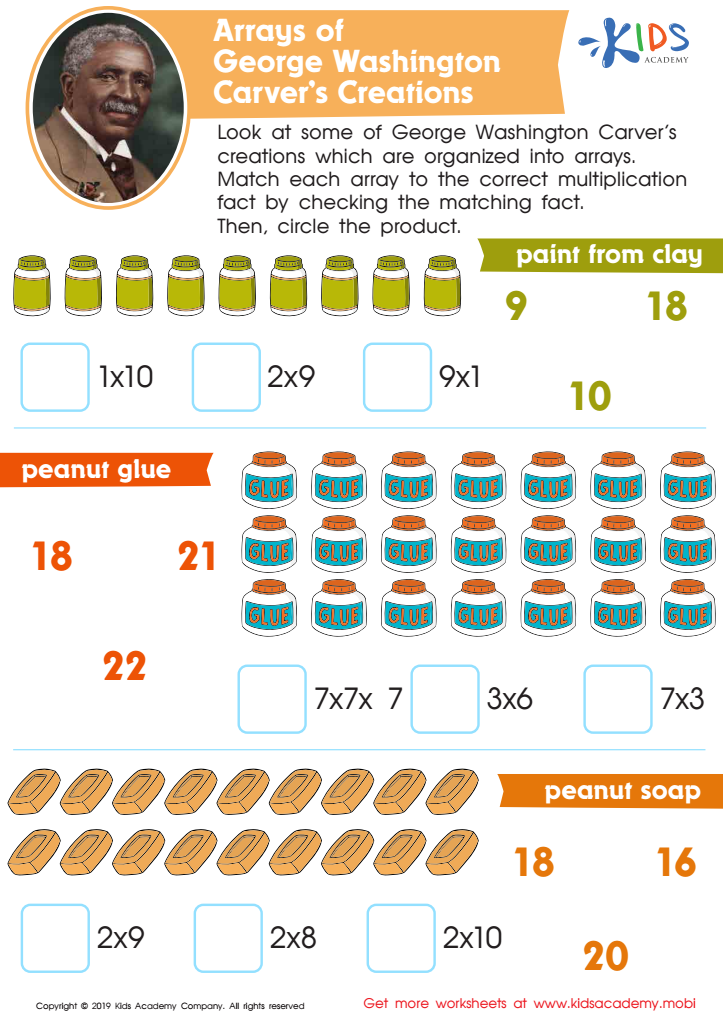
Arrays of George Washington Carver’s Creations Worksheet
 Assign to My Students
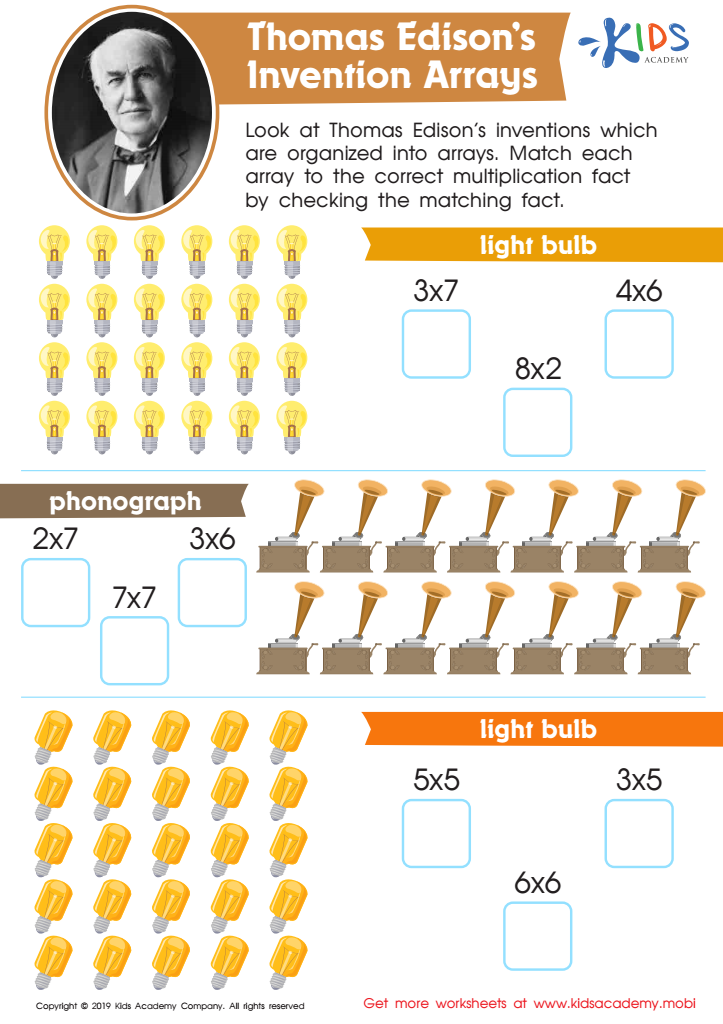
Thomas Edison’s Invention Arrays Worksheet
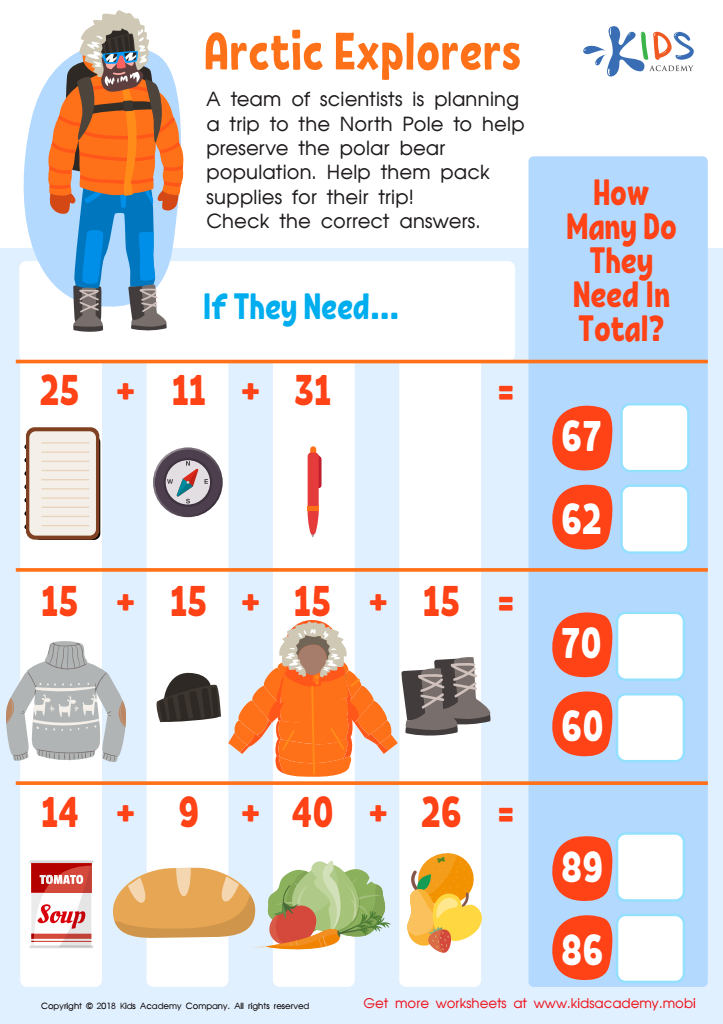
Arctic Explorers Worksheet
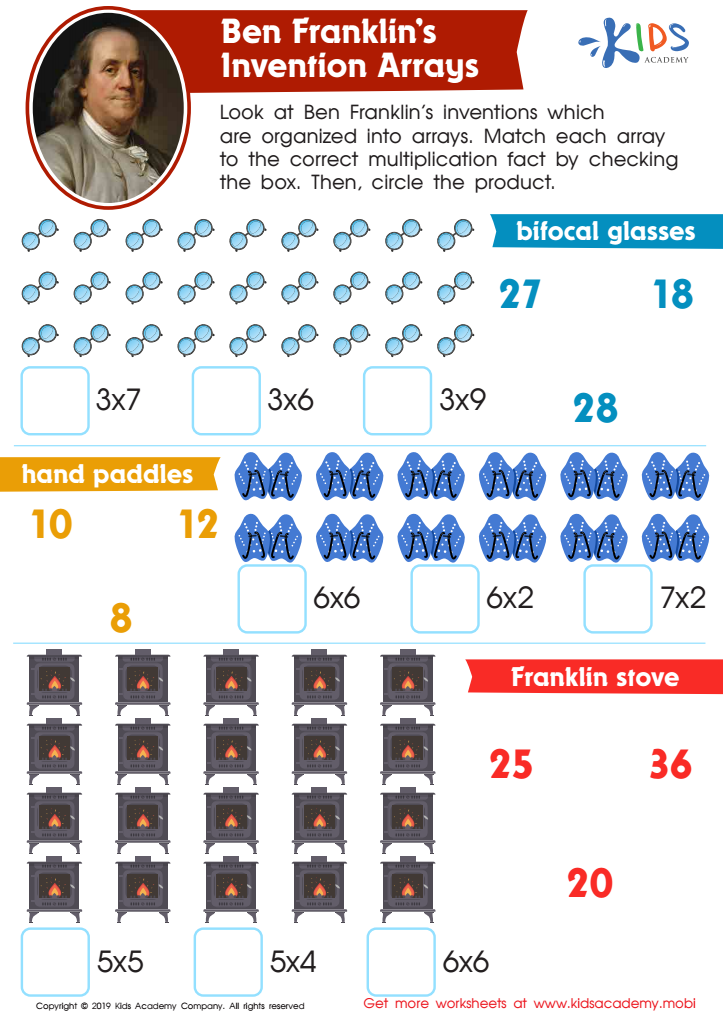
Ben Franklin’s Invention Arrays Worksheet
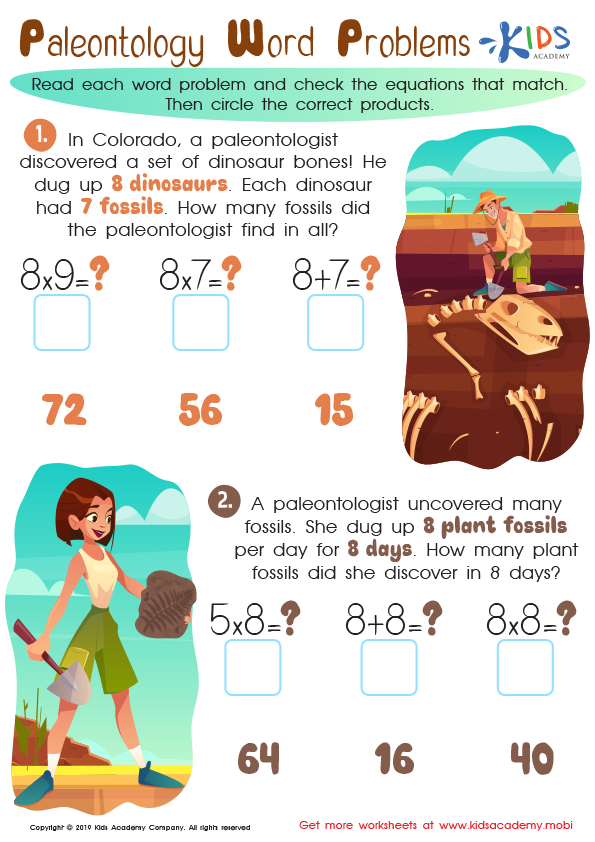
Archeology Word Problems Worksheet







.jpg)
Parents and teachers should prioritize Historical Knowledge Normal Math for ages 8-9 because it lays a crucial foundation for both mathematical skills and historical context. At this age, children are developing critical thinking abilities and starting to understand the importance of context in learning. Integrating historical knowledge into math education helps children see mathematics not just as abstract numbers, but as a language with a rich history and cultural significance.
For example, teaching concepts like measurement through the lens of ancient civilizations can spark interest and imagination. It helps students appreciate how historical contexts have shaped math practices and views, making the subject more relatable and engaging. Understanding how ancient cultures, like the Egyptians or Greeks, used math aids in comprehending why certain mathematical rules exist today, creating a sense of continuity and relevance.
Moreover, this integrated approach promotes skills such as problem-solving, critical analysis, and the ability to make connections, which are essential for academic success. Children become not just proficient mathematicians but also thoughtful learners who recognize the impact of history in our everyday lives, allowing them to approach problems from diverse perspectives with a broader understanding of the world around them.








