Subtraction practice Normal Math Worksheets for Ages 8-9
9 filtered results
-
From - To
Explore our engaging Subtraction Practice Worksheets, specially designed for children aged 8-9. These worksheets provide an effective way to reinforce essential math skills, focusing on subtraction through fun and varied activities. With problems that range from simple to more complex, students will strengthen their understanding of subtraction while enjoying the learning process. Our resources encourage independent practice, promoting confidence in math abilities. Perfect for classroom use or at-home learning, these worksheets come equipped with printable formats and clear instructions, making them easy to use. Help your child master subtraction and build a solid foundation for future math challenges today!
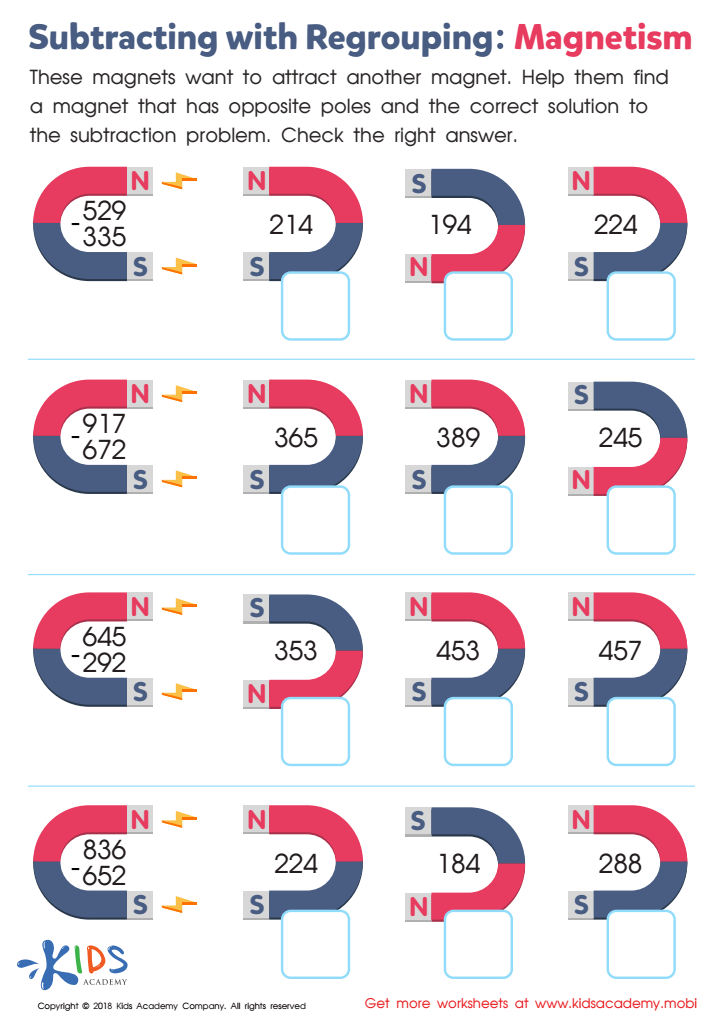
Subtracting with Regrouping: Magnetism Worksheet
 Assign to My Students
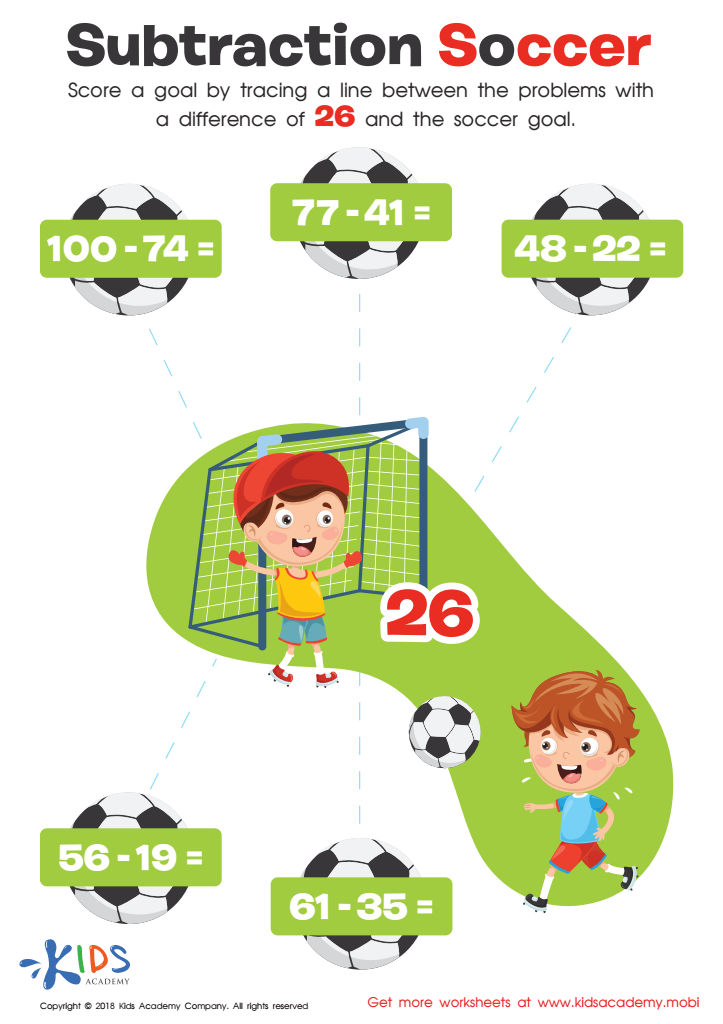
Subtraction Soccer Worksheet
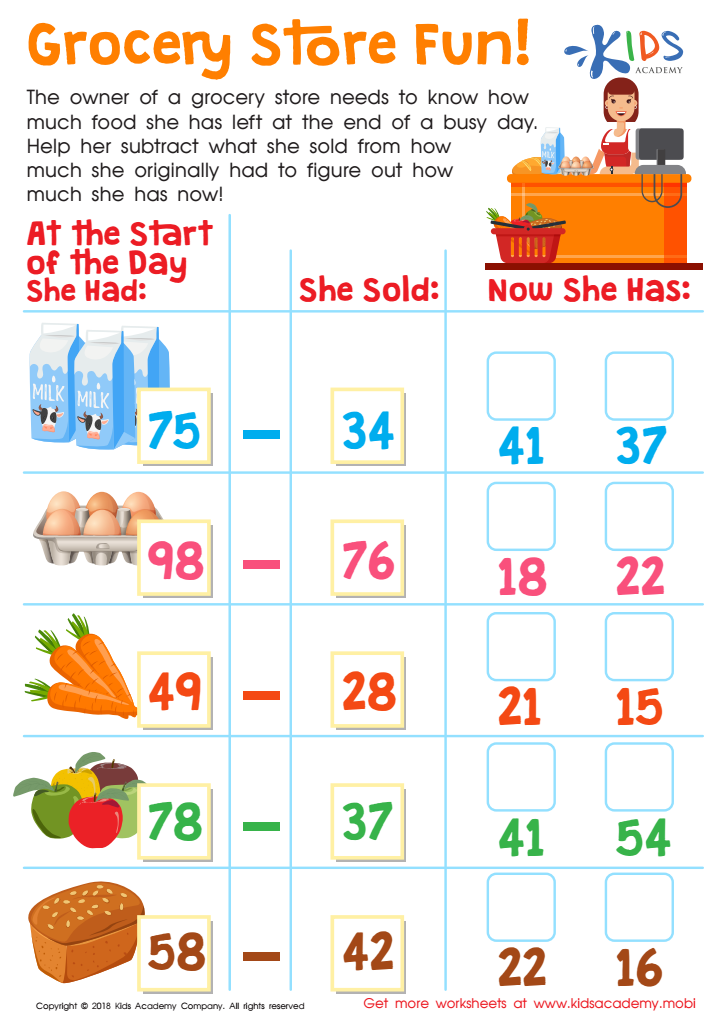
Grocery Store Fun! Worksheet
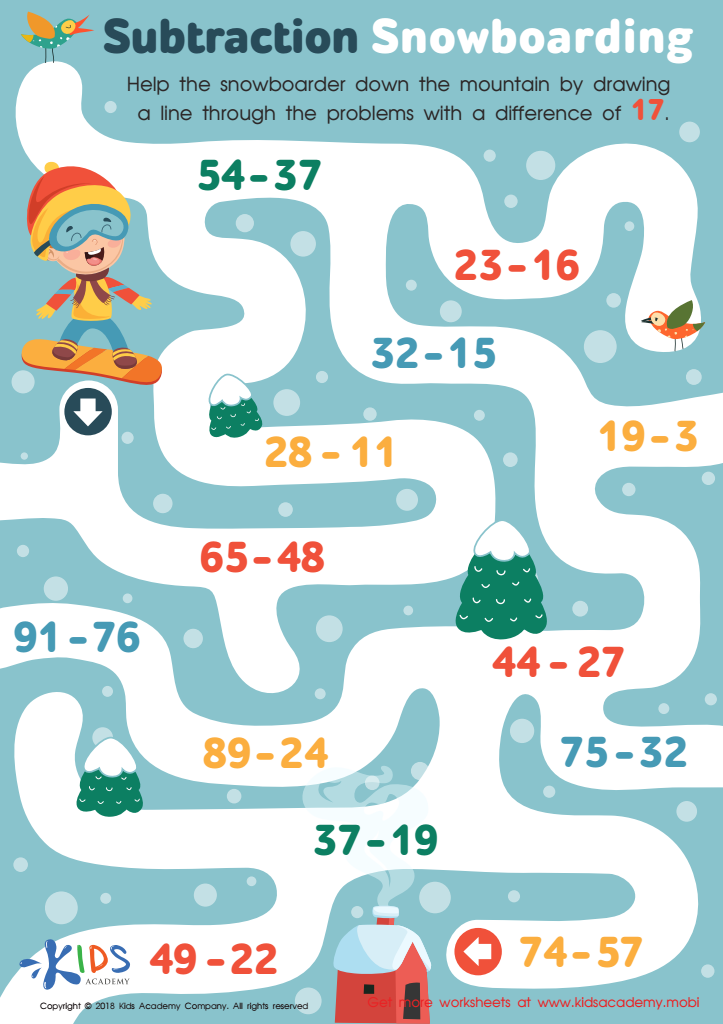
Subtraction Snowboarding Worksheet
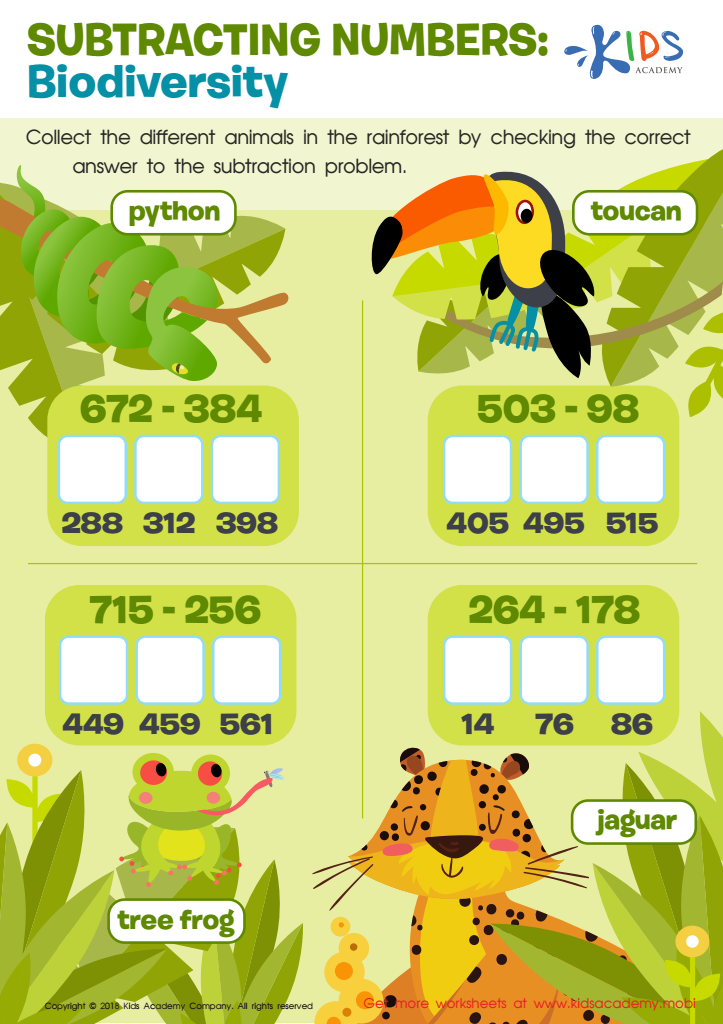
Subtracting Numbers: Biodiversity Worksheet
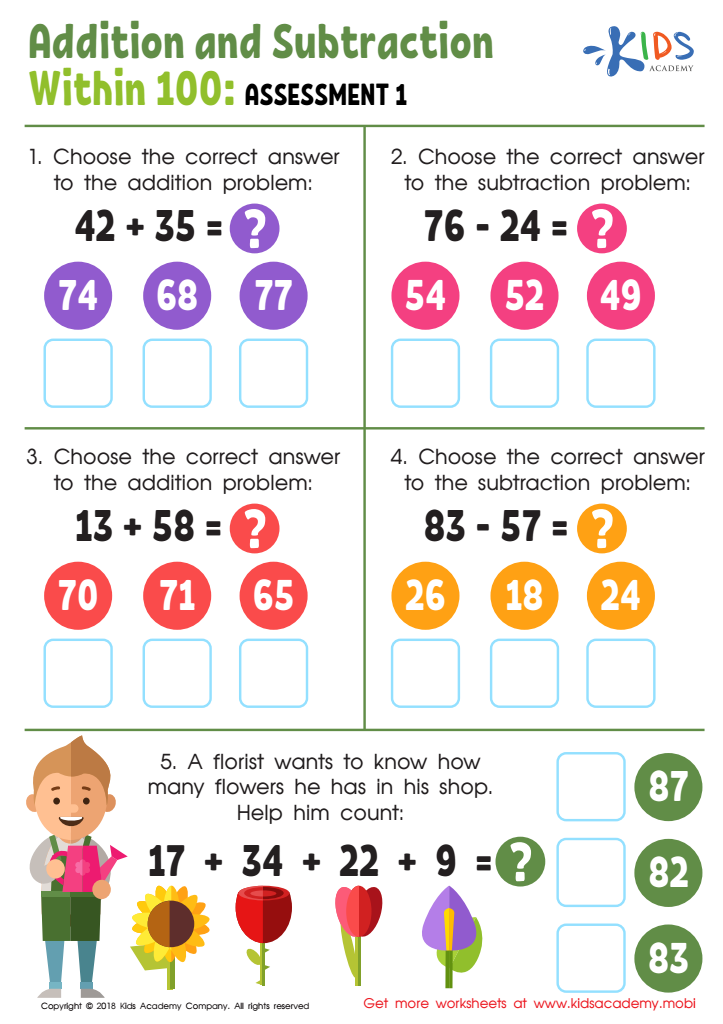
Addition and Subtraction Within 100 Worksheet
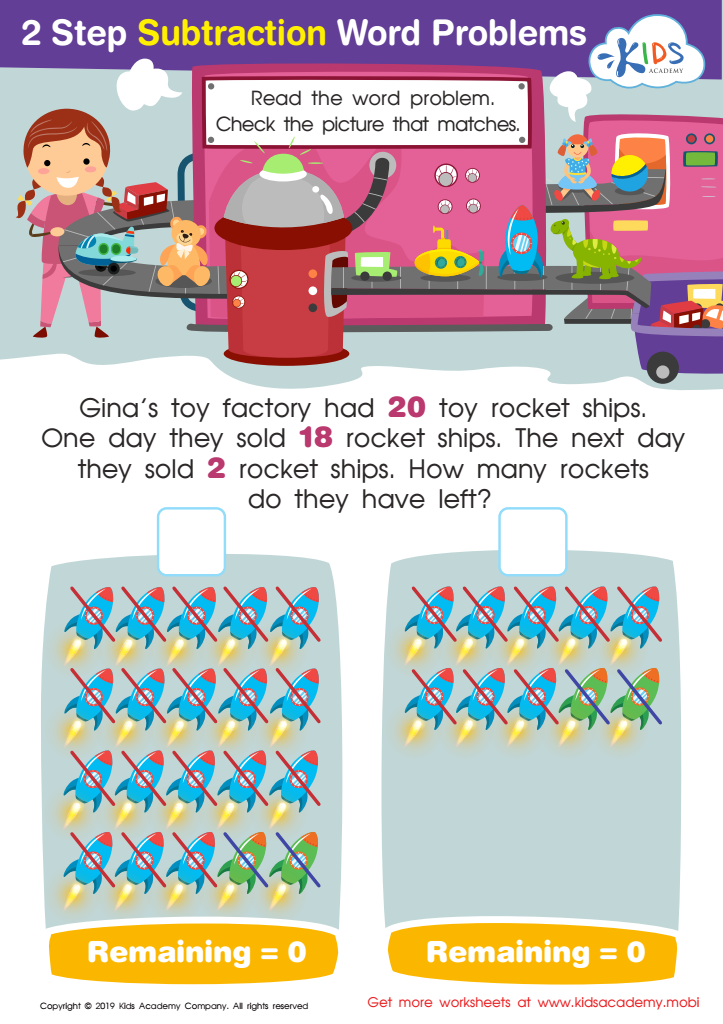
Step Subtraction Word Problems Worksheet
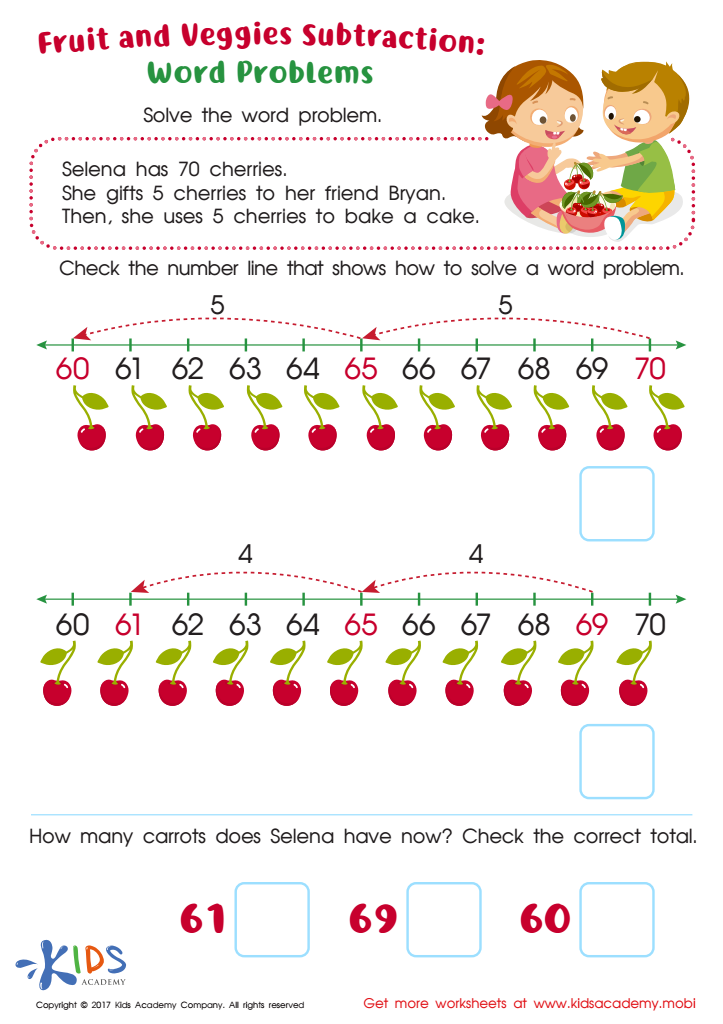
Subtraction Word Problems Free Printable
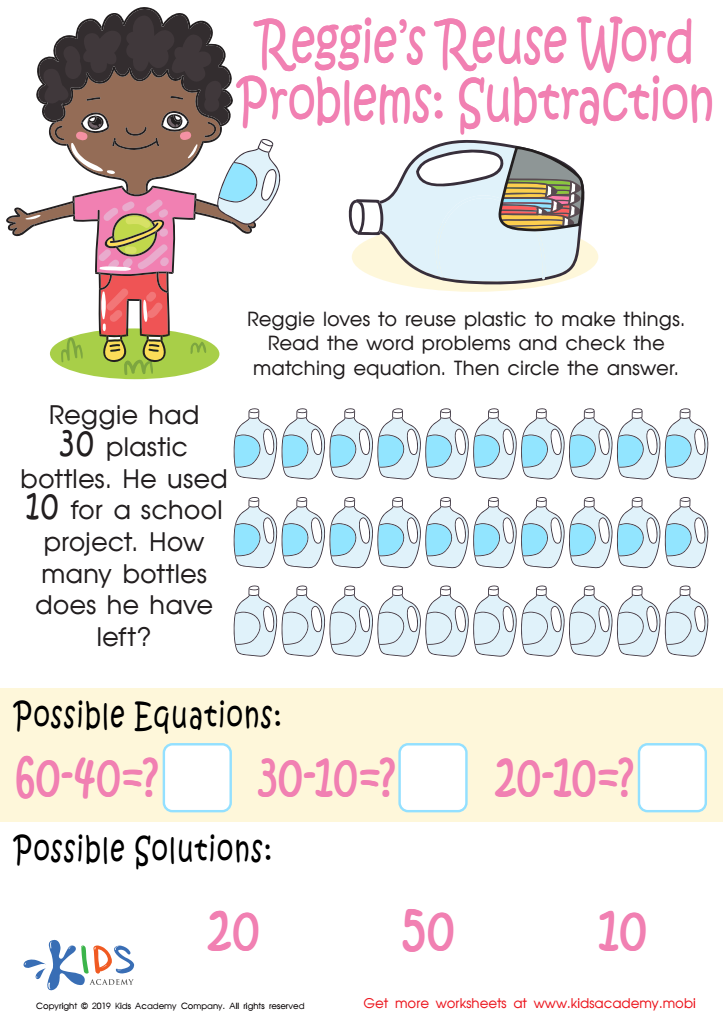
Reggie's Reuse Word Problems: Subtraction Worksheet







Subtraction practice is essential for children aged 8-9 as it lays a crucial foundation for their mathematical understanding and overall academic success. During this age, students are expected to master not only basic subtraction but also apply it in more complex mathematical concepts such as borrowing and multi-digit calculations. Regular practice helps reinforce these skills, making computations more intuitive and less prone to errors.
Moreover, subtraction is not just an isolated skill; it ties into critical thinking and problem-solving abilities. As students learn to manipulate numbers, they build resilience in tackling challenges and develop a logical mindset. Parents and teachers should recognize that confident arithmetic skills translate into broader academic courage in subjects like science and engineering, where mathematical applications are frequent.
Furthermore, practice fosters positive attitudes towards mathematics. When children become familiar with subtraction, they are less likely to feel anxious during math-related tasks, which can be crucial for long-term engagement with the subject. Providing consistent opportunities for subtraction practice empowers children to arrive at solutions independently, thus boosting their self-esteem and motivation. Therefore, fostering subtraction skills during this pivotal stage is vital for life-long learning and cognitive development.








