Understanding biodiversity Normal Math Worksheets for Ages 8-9
3 filtered results
-
From - To
Enhance your child's learning with our “Understanding Biodiversity Normal Math Worksheets” designed for ages 8-9. These engaging worksheets seamlessly blend math skills with the fascinating concept of biodiversity, encouraging young learners to explore various ecosystems while practicing essential math operations. Through exciting problems, kids will tackle addition, subtraction, measurement, and more, all while gaining insights into the importance of biodiversity in our world. Perfect for home and classroom use, these worksheets captivate children's curiosity and foster a love for mathematics and environmental science. Empower your child to discover and thrive with our thoughtful, skill-building resources today!
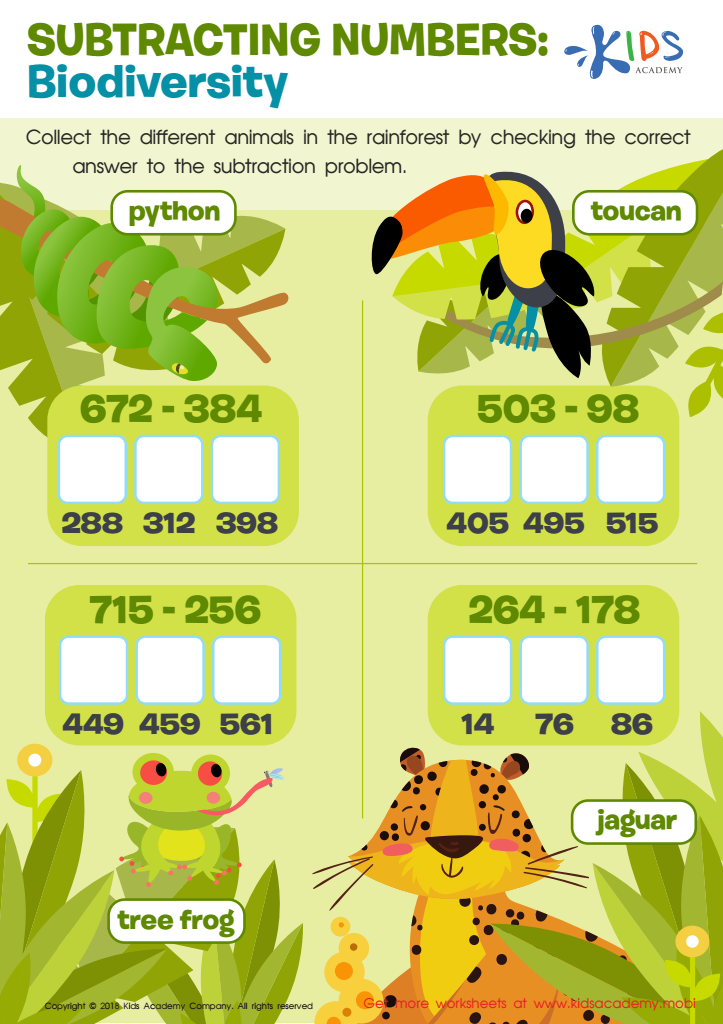
Subtracting Numbers: Biodiversity Worksheet
 Assign to My Students
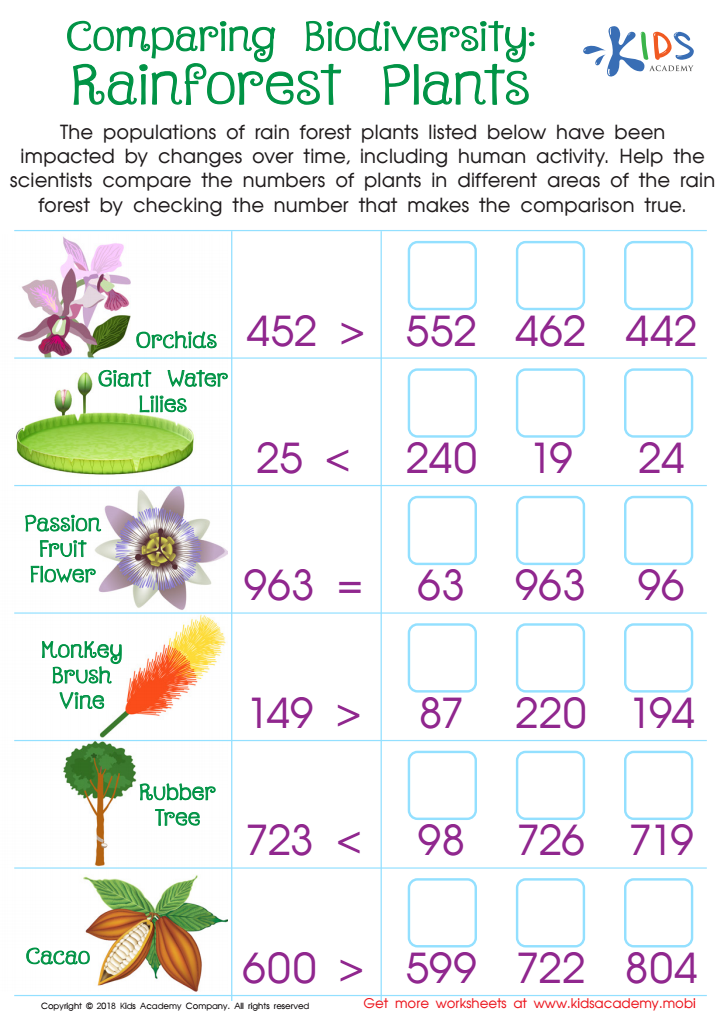
Comparing Biodiversity: Rainforest Plants Worksheet
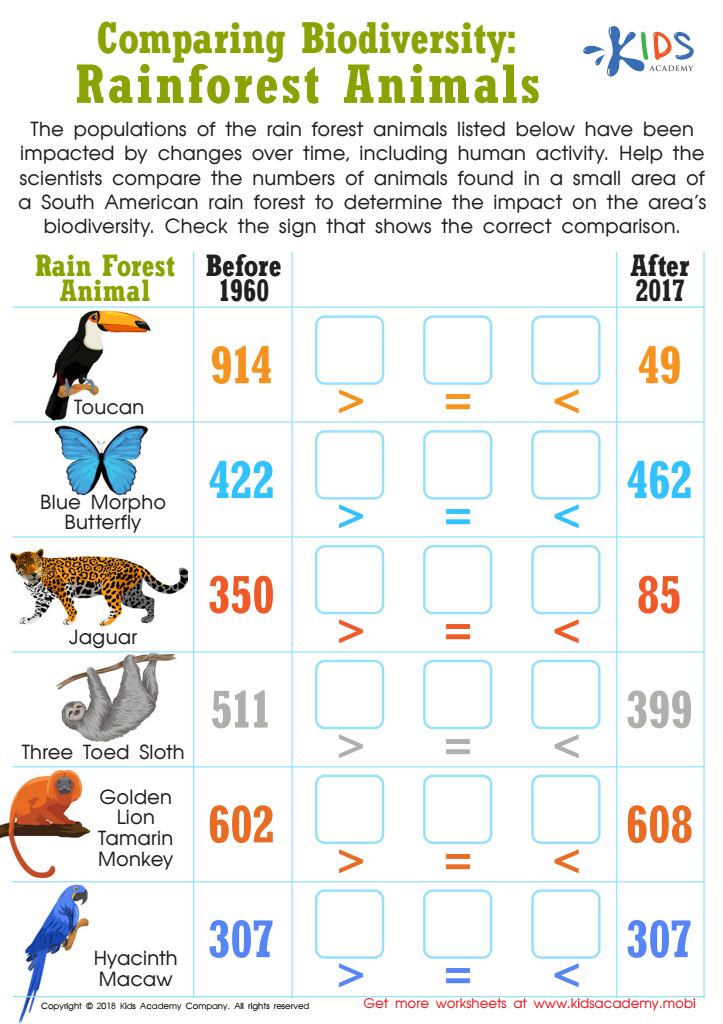
Comparing Biodiversity: Rainforest Animals Worksheet





Understanding biodiversity is crucial for parents and teachers, especially for children aged 8-9, who are beginning to form their perspectives on the environment. This age group is highly impressionable and can greatly benefit from early education on the diverse forms of life that populate our planet. Teaching children about biodiversity fosters a connection to nature, encouraging curiosity about living organisms and their interdependencies.
Biodiversity lessons can seamlessly integrate math skills as students engage in activities like measuring populations, creating graphs to track different species, or analyzing data on ecosystems. This approach enhances their math abilities while making learning relevant and practical. Parents and teachers can cultivate critical thinking skills, as students learn the importance of data analysis in understanding ecological relationships.
Moreover, instilling an appreciation for biodiversity at a young age promotes environmental stewardship. As children recognize the significance of plants, animals, and habitats, they are more likely to advocate for conservation efforts. Ultimately, integrating biodiversity education with normal math teaches students to view the world holistically, merging mathematical reasoning with a compassionate understanding of the environment. This empowers the next generation to make informed decisions about the planet's future.








