Understanding measurements Normal Measurement Worksheets for Ages 8-9
6 filtered results
-
From - To
Discover essential measurement skills with our "Understanding Measurements Normal Measurement Worksheets" designed for children ages 8-9. These engaging worksheets provide a comprehensive approach to learning various measurement concepts, including length, weight, and volume. Each activity is tailored to enhance critical thinking as students practice using both customary and metric units. With visually appealing graphics and age-appropriate exercises, our resources encourage independent learning and help build confidence in mathematical abilities. Ideal for classroom instruction or at-home practice, these worksheets are key tools in cultivating a solid foundation in measurement concepts. Make learning measurement fun and impactful with our expertly designed worksheets!
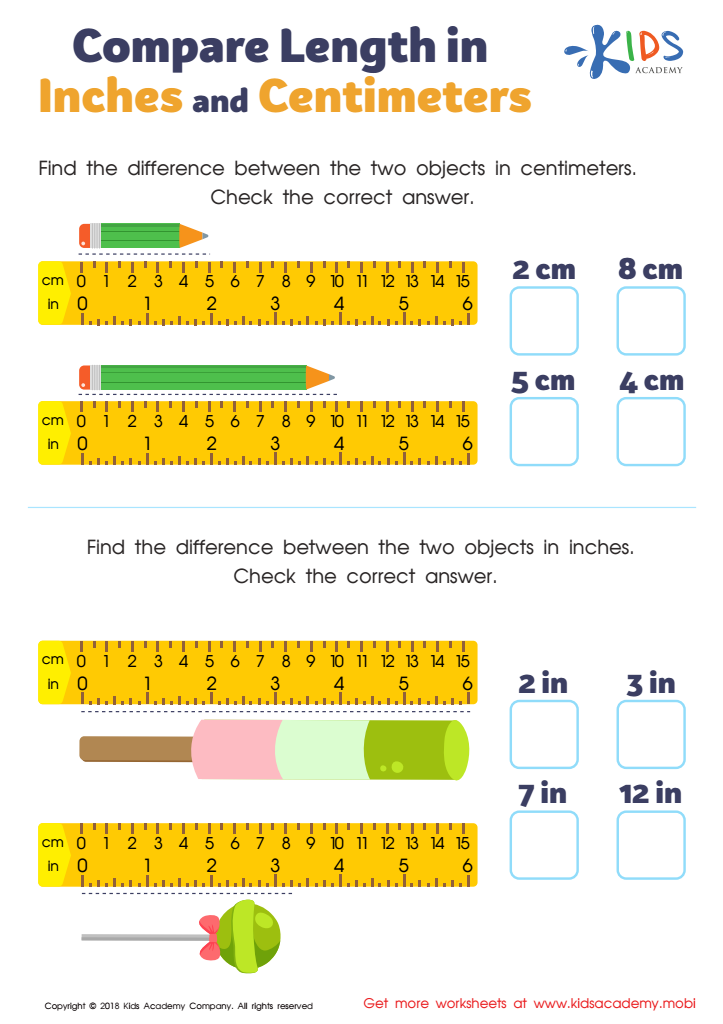
Compare Length in Inches and Centimeters Worksheet
 Assign to My Students
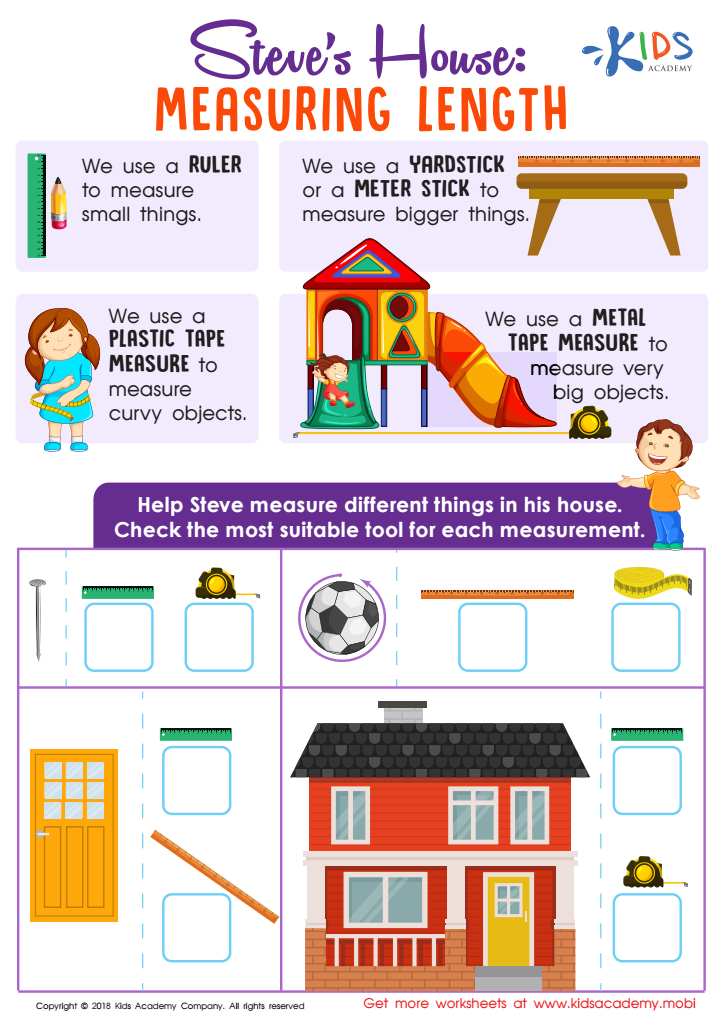
Steve's House: Measuring Length Worksheet
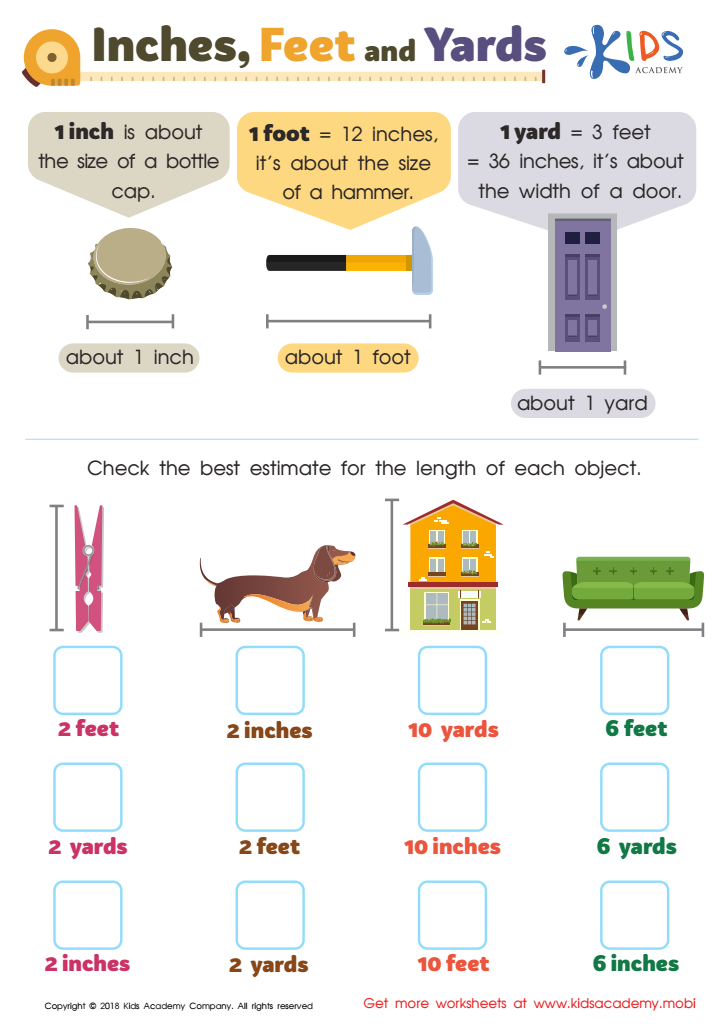
Inches, Feet and Yards Worksheet
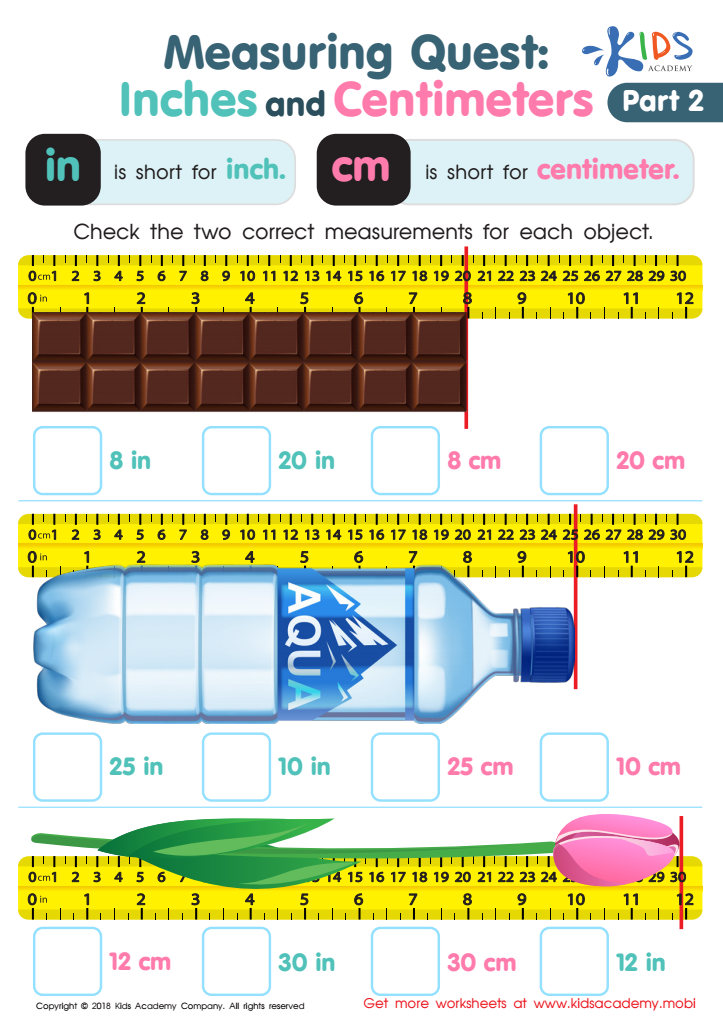
Measuring Quest: Inches and Centimeters - Part 2 Worksheet
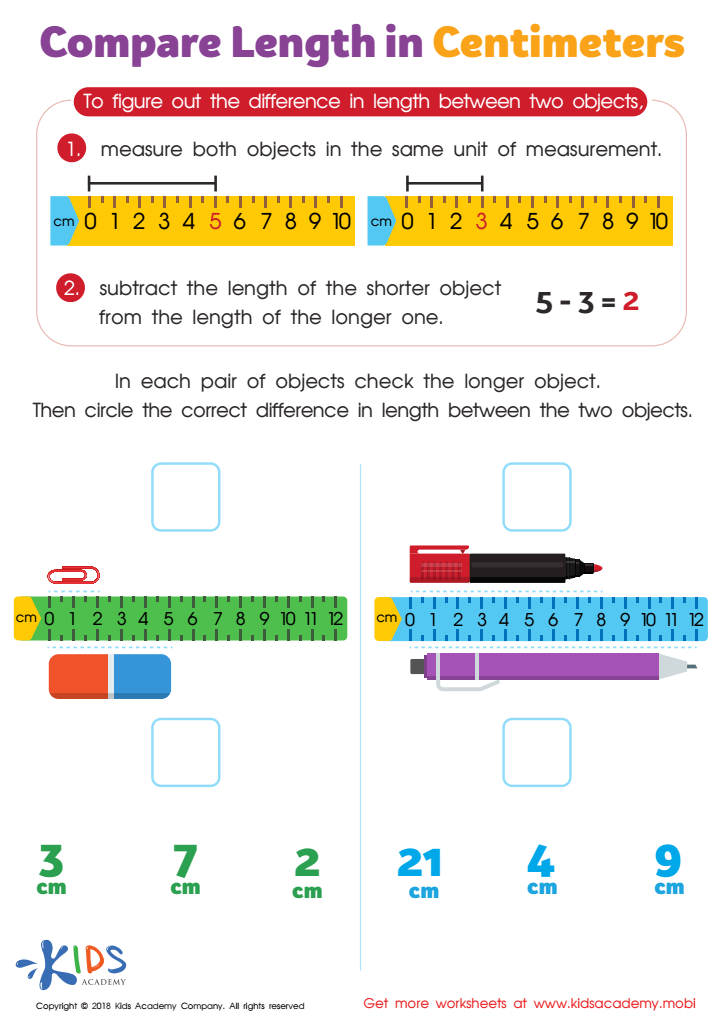
Compare Length in Centimeters Worksheet
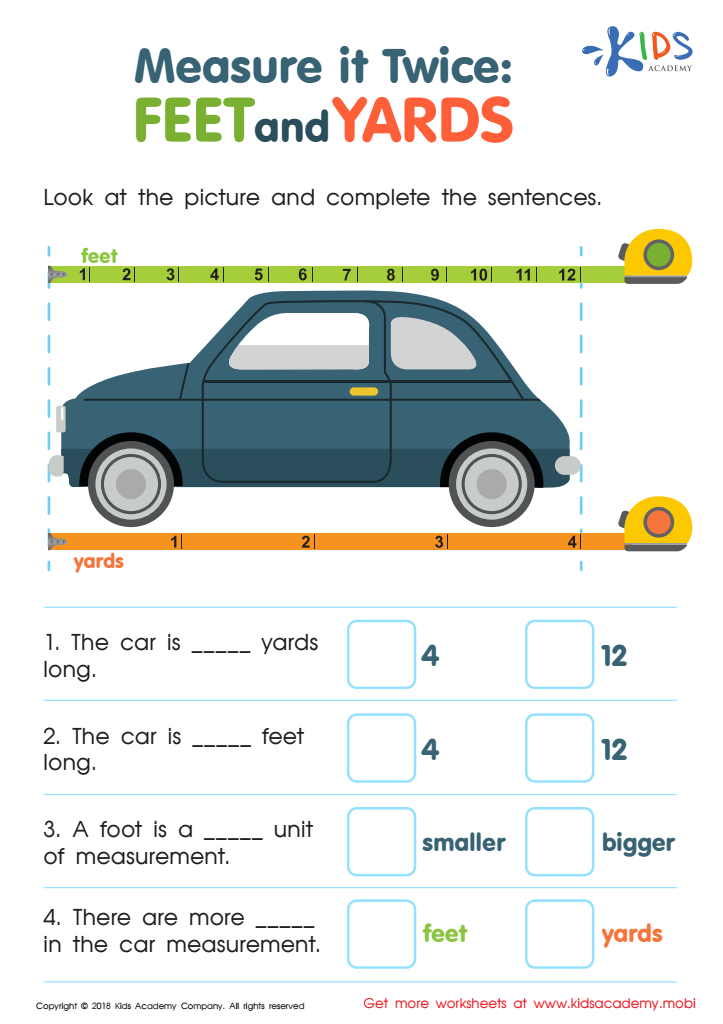
Measure It Twice: Feet and Yards Worksheet








Understanding measurements is crucial for children aged 8-9 as it lays the foundation for vital life skills and academic success. At this age, learners begin to engage more deeply with mathematical concepts, and measurements introduce them to practical applications of math in their everyday lives.
When parents and teachers emphasize the importance of normal measurement, they help children understand how to quantify everything from ingredients in cooking to distances in sports. This knowledge equips students with the skills to solve real-world problems, fostering confidence and independence. For instance, understanding measurements aids in following recipes or crafting, turning abstract concepts into tangible experiences.
Moreover, learning about measurement helps enhance critical thinking skills. Children assess their surroundings, compare sizes, and make estimations, honing their analytical abilities. This also connects to science, as measurements are essential for experiments and observations, enhancing engagement with STEM fields.
Lastly, proficiency in measurements supports future academic endeavors, especially in subjects like geometry and algebra. Therefore, by prioritizing normal measurement education, parents and teachers can effectively prepare children for both academic challenges and real-life situations, shaping well-rounded, mathematically literate individuals.








