Developing analytical skills Normal Reading Worksheets for Ages 8-9
3 filtered results
-
From - To
Enhance your child’s critical thinking with our specialized "Developing Analytical Skills" reading worksheets, designed for ages 8-9. Tailored by educational experts at Kids Academy, these engaging activities not only make reading fun but also foster a deeper understanding of texts. Each worksheet encourages children to analyze stories, identify main ideas, and draw inferences, building essential analytical skills crucial for academic success. Structured to suit varying skill levels, our worksheets offer targeted practice that boosts comprehension and promotes a love for reading. Unlock your child's full potential with tools that ignite curiosity and elevate their analytical prowess.

Author's Purpose Worksheet
 Assign to My Students
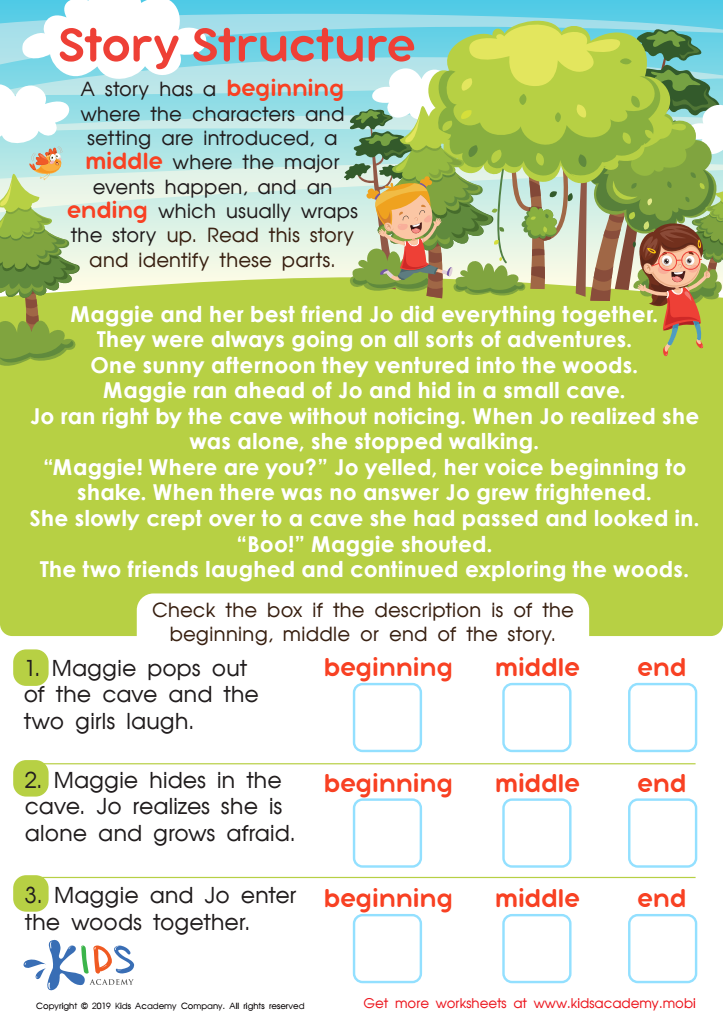
Story Structure Worksheet
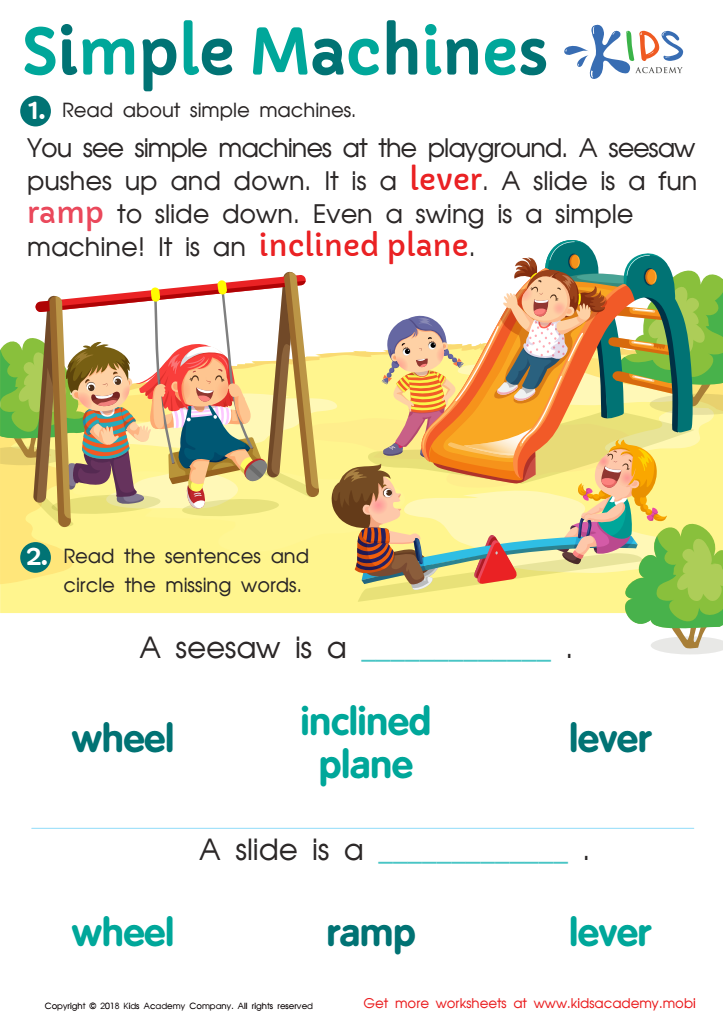
Simple Machines Worksheet







Developing analytical skills in children aged 8-9 is fundamental for their cognitive growth, academic success, and lifelong learning. These skills enable kids to break down complex problems, understand various components, and make reasoned decisions. At this age, children are transitioning from learning to read to reading to learn. Analytical skills empower them to comprehend, evaluate, and synthesize the vast information available to them.
Reading is a powerful tool to nurture these skills. Books with rich narratives and detailed characters encourage children to think critically about the plot, anticipate what might happen next, and draw conclusions based on the text. This enhances their ability to infer and interpret information beyond face value. Sharing books and discussing story elements with parents or teachers builds vocabulary, sharpens comprehension, and fosters an inquisitive mindset.
Besides, analytical thinking is crucial in today’s information-rich world, helping children discern fact from fiction and become discerning consumers of media. These skills lay a robust foundation for future academic subjects like science, math, and history, which require critical thinking and problem-solving abilities.
For these reasons, parents and teachers should emphasize activities that promote analytical thinking as part of early literacy. This focus not only aids in academic performance but also equips children with essential life skills for a complex world.








