Moral lesson understanding Normal Reading Worksheets for Ages 8-9
4 filtered results
-
From - To
Unlock the power of moral comprehension with our "Moral Lesson Understanding Normal Reading Worksheets" designed specifically for ages 8-9. These interactive worksheets engage young readers and enhance their ability to identify and reflect on moral lessons within stories. Each worksheet features age-appropriate narratives that encourage critical thinking, empathy, and deciphering the right from the wrong. Educators can effortlessly integrate these resources into their lesson plans to foster meaningful discussions and improve reading skills. Equip your students with the essential tools to understand the deeper meanings behind texts while cultivating a strong moral foundation. Start exploring our vast collection today!
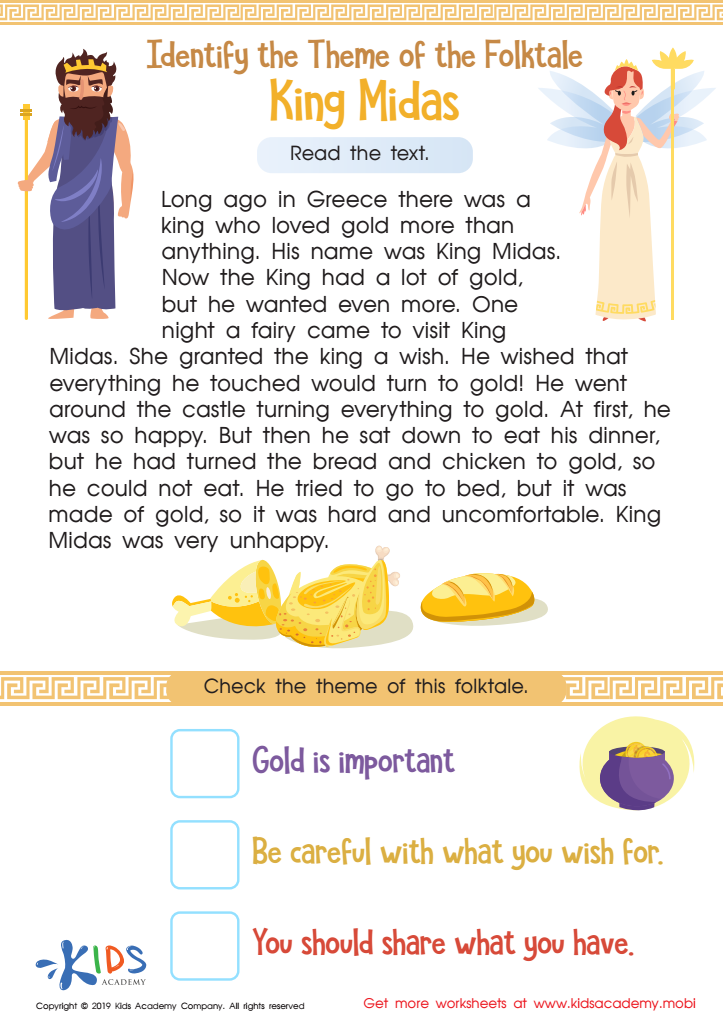
King Midas Worksheet
 Assign to My Students
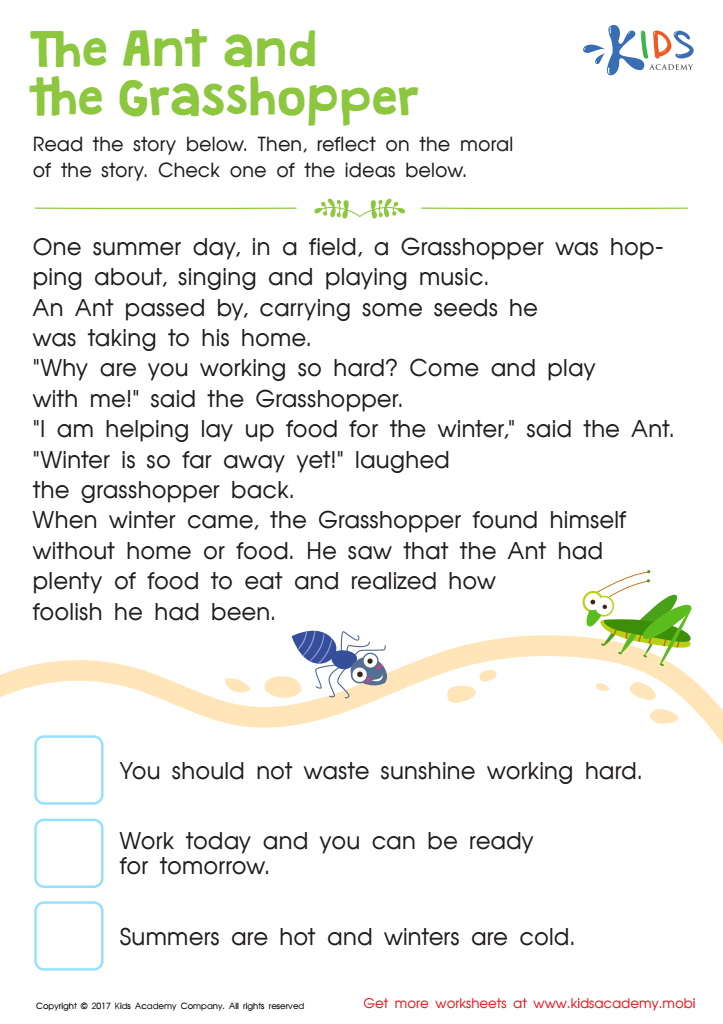
The Ant and The Grasshopper Printable
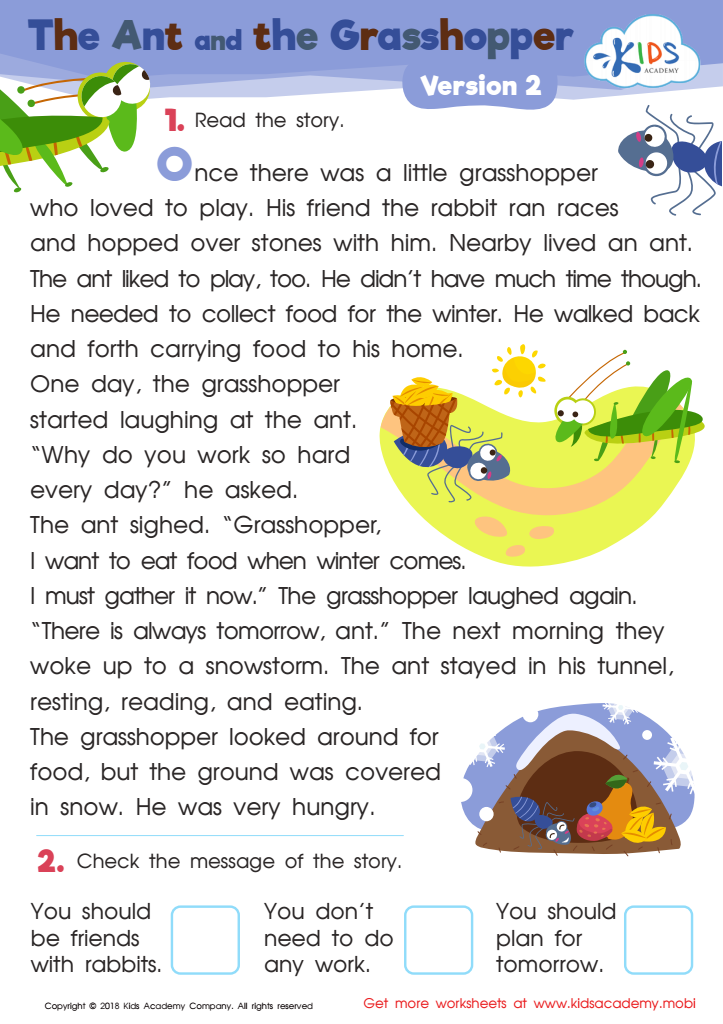
The Ant and The Grasshopper Version 2 Worksheet
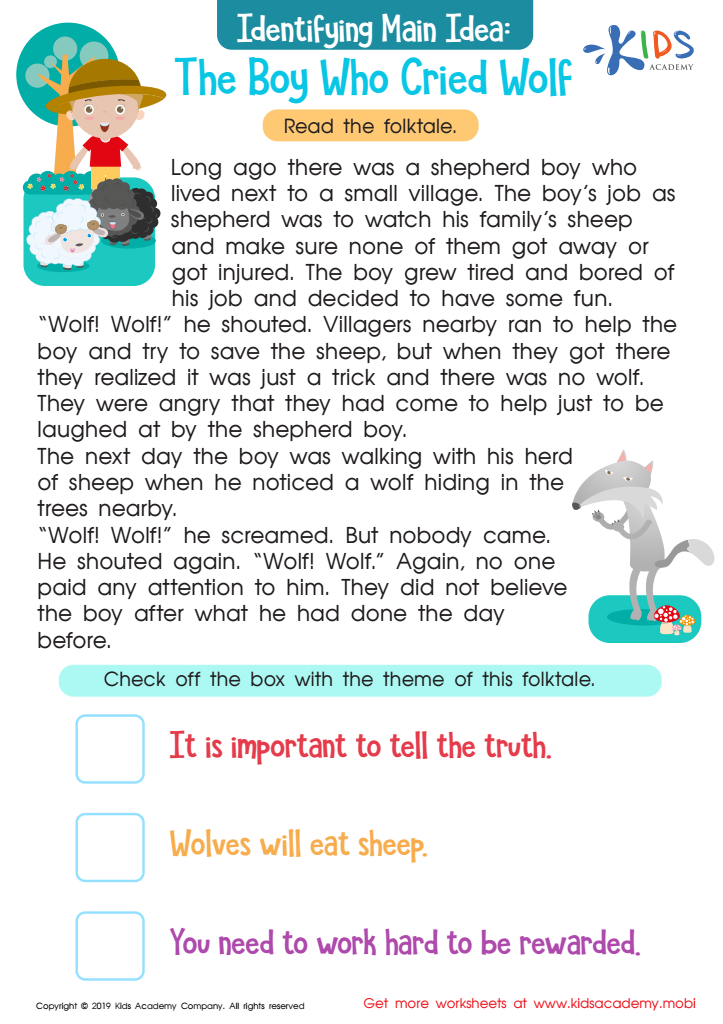
The Boy Who Cried Wolf Part 2 Worksheet







Understanding moral lessons through normal reading is crucial for children aged 8-9, as this age marks a significant stage in their cognitive and emotional development. At this stage, children begin to grasp abstract concepts like fairness, empathy, and respect, which are essential for building their character and decision-making skills. When parents and teachers encourage reading with moral lessons, they help children engage with complex themes and dilemmas, allowing them to reflect on their values and the consequences of actions.
Literature serves as a mirror, enabling children to see themselves in various situations. When they encounter characters facing ethical choices, it promotes discussions about right and wrong, enhancing moral reasoning. This not only supports social development but also fosters critical thinking skills, as children learn to analyze situations and understand different perspectives.
Furthermore, engaging with moral themes in reading allows parents and teachers to initiate meaningful conversations, creating a shared space for discussion and reinforcement of positive values. The insights gained can nurture compassion, inclusivity, and responsibility in the young reader. Therefore, fostering an appreciation for moral lessons in literature is essential for holistic development, shaping not only academically capable students but also socially responsible individuals.








