Animal Classification Normal Science Worksheets for Ages 8-9
3 filtered results
-
From - To
Explore our Animal Classification Normal Science Worksheets designed for children aged 8-9! These engaging worksheets help young learners understand the diverse world of animals through interactive activities. From identifying habitats to categorizing species, these resources enhance critical thinking and observation skills. Each worksheet is thoughtfully crafted to align with educational standards, making science concepts accessible and enjoyable. Perfect for classroom use or at-home learning, our Animal Classification Worksheets encourage curiosity and foster a love for science. Download now to embark on a fun-filled educational journey into the exciting realm of animal classification! Encourage exploration and discovery with every page!
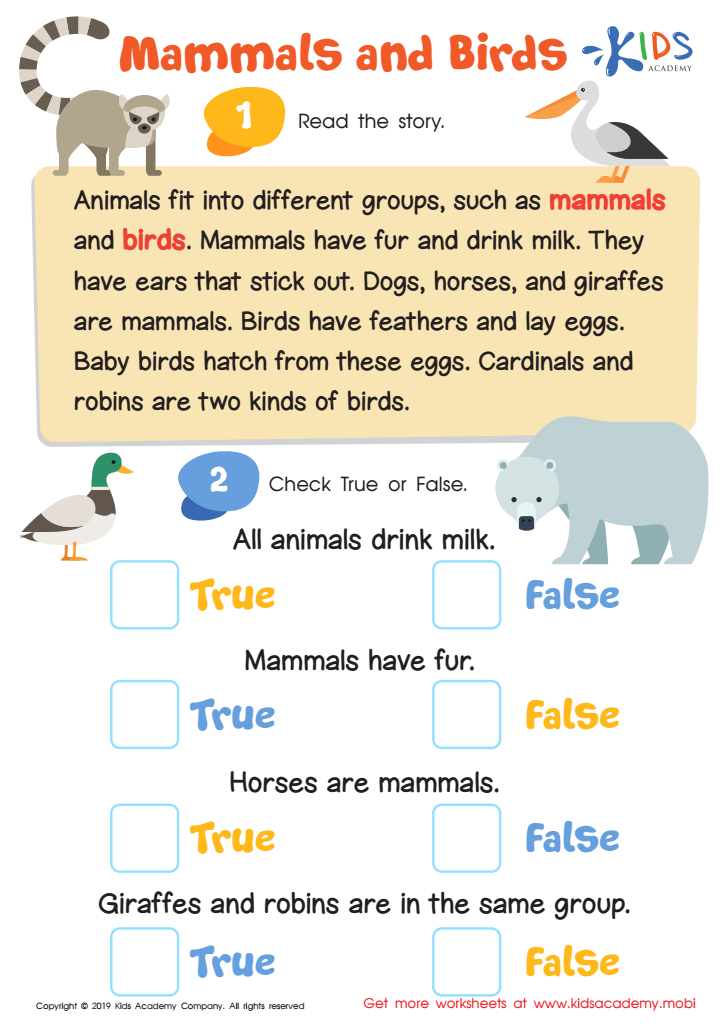
Mammals and Birds Worksheet
 Assign to My Students
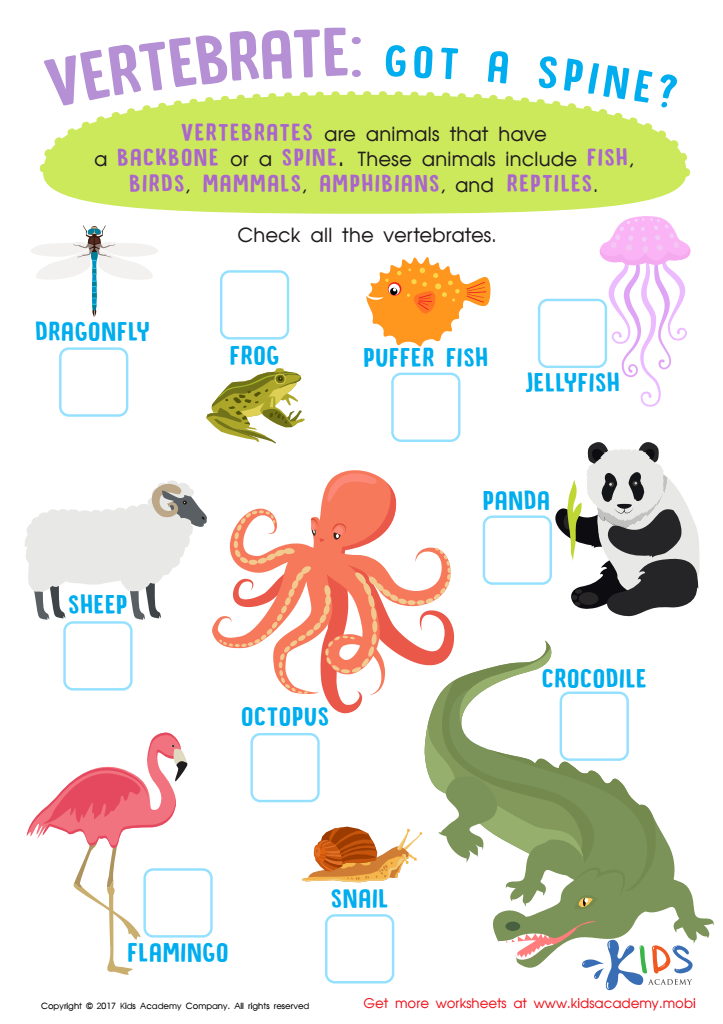
Vertebrates Animals Worksheet for 3rd Grade
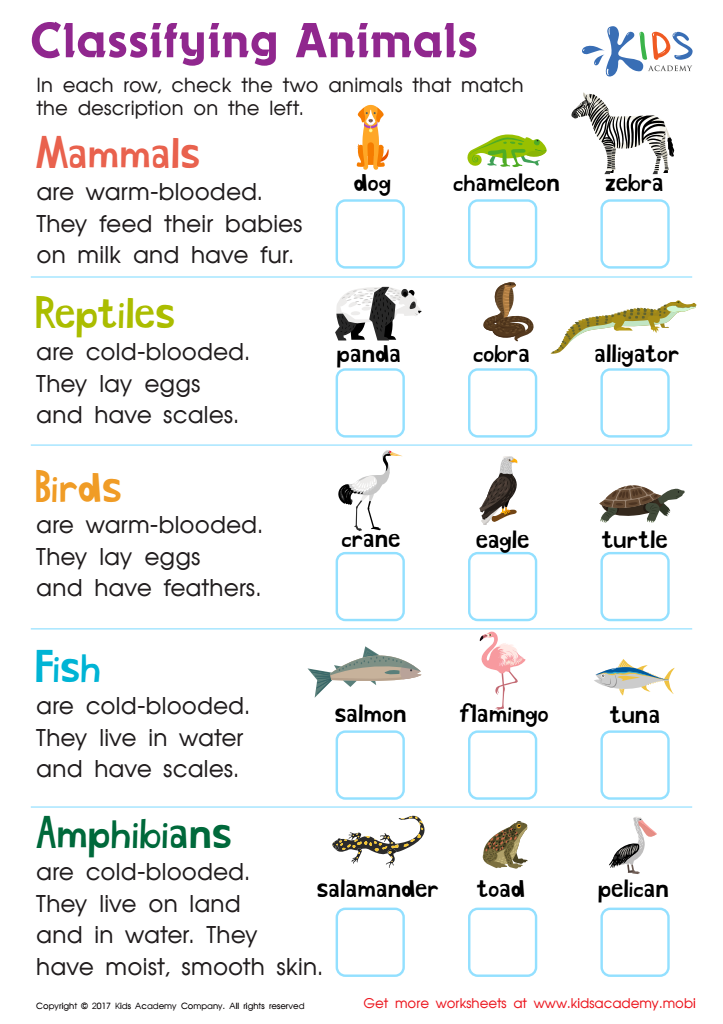
Classifying Animals Worksheet






Understanding animal classification is crucial for parents and teachers, especially for children aged 8-9. At this developmental stage, children are naturally curious about the world around them, and learning about how animals are categorized helps nurture that curiosity. This knowledge not only encourages scientific thinking but also instills respect for biodiversity and ecosystems.
Animal classification, which involves grouping animals based on shared characteristics, introduces children to key scientific concepts, such as habitats, adaptations, and ecosystems. It enables them to recognize the importance of each creature within the environment, fostering empathy and environmental stewardship.
Moreover, engaging with animal classification enhances critical thinking and observation skills. Children learn to compare and contrast different species, recognizing both similarities and differences. This inquiry-based approach aligns perfectly with educational standards, promoting analytical writing and oral communication as students express their newfound understanding.
By participating in discussions and activities related to animal classification, children can deepen their comprehension and retain information more effectively. For teachers and parents, incorporating these lessons supports holistic development, creating informed, compassionate individuals who appreciate the complexity of life on Earth. Ultimately, animal classification lays the foundation for future scientific learning and promotes a lifelong passion for the natural world.







