
Critical Thinking Normal Life Science Worksheets for Ages 8-9
3 filtered results
Difficulty Level
Grade
Age
-
From - To
Subject
Activity
Standards
Unlock your child's potential with our "Critical Thinking Normal Life Science Worksheets for Ages 8-9"! These expertly designed worksheets challenge young minds to explore the wonders of life science while honing crucial critical thinking skills. Perfect for homes or classrooms, each worksheet combines engaging activities with fascinating scientific concepts, guiding kids through observation, analysis, and problem-solving exercises. Fostering a curiosity about biology, ecology, and anatomy, these worksheets also promote logical reasoning and higher-order thinking. Ensure your child's academic and cognitive growth by diving into the enriching world of life sciences with our comprehensive and fun worksheets today!
Favorites
With answer key
Interactive
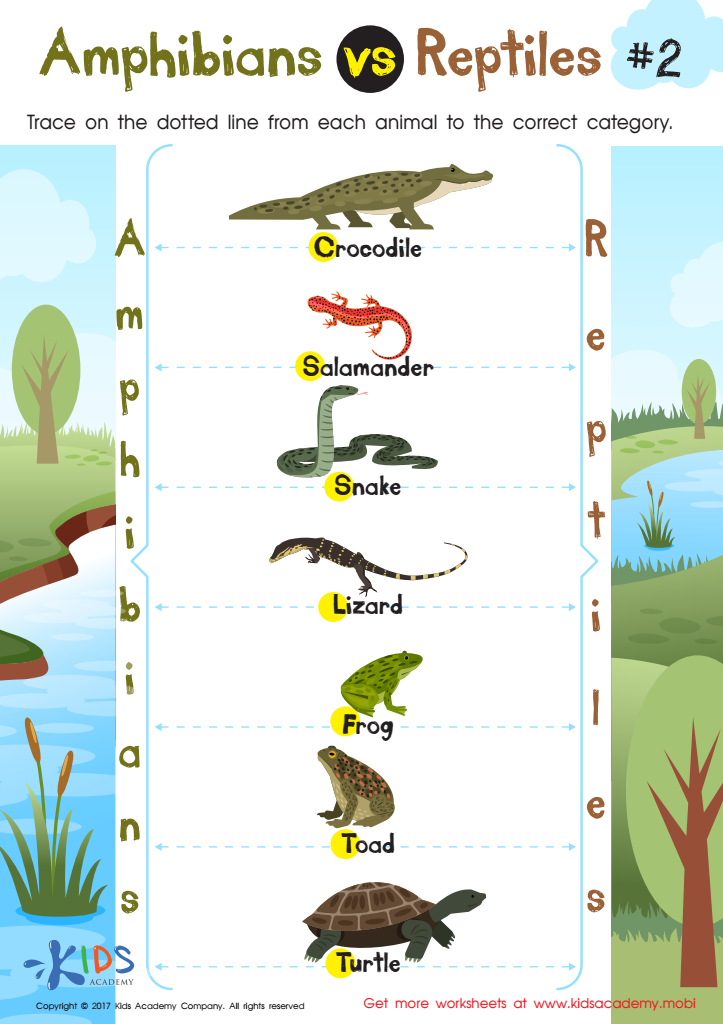
Amphibians vs Reptiles Worksheet for 3rd Grade
Let your 3rd grader challenge themselves and have fun by distinguishing between reptiles and amphibians. With this cool worksheet, they'll explore vivid pictures and learn about these fascinating creatures!
 Assign to My Students
Amphibians vs Reptiles Worksheet for 3rd Grade
Worksheet
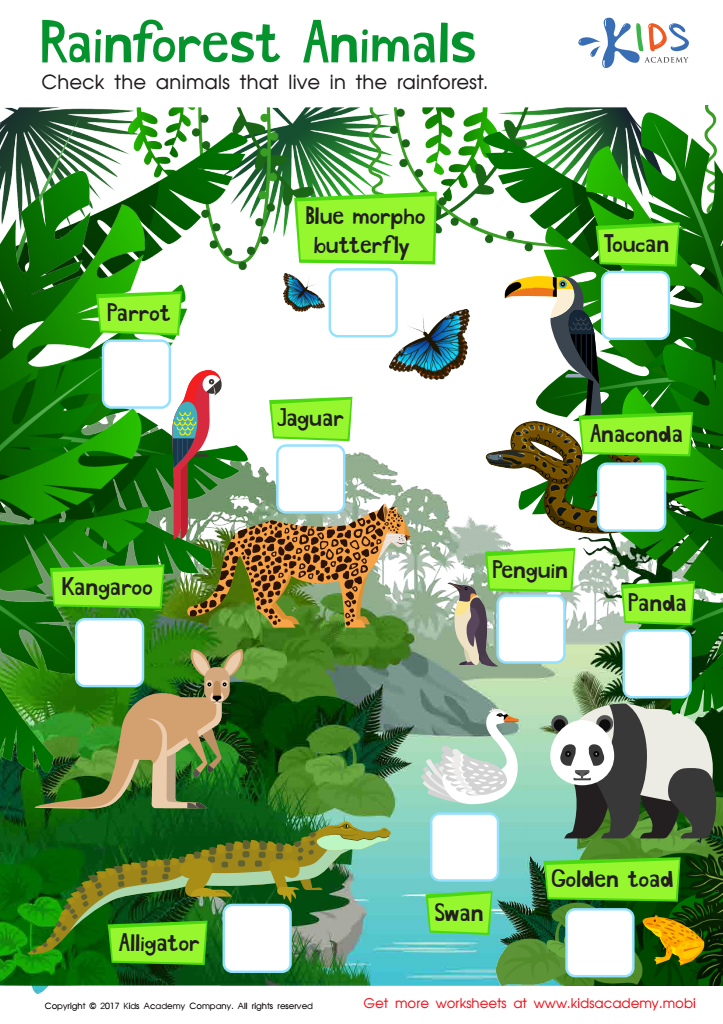
Rainforest Animals Worksheet
Kids love the bright, vivid pics of rainforest animals in this worksheet. It fuels their interest in life science and brings joy to their learning. It encourages them to study these animals in detail.
Rainforest Animals Worksheet
Worksheet
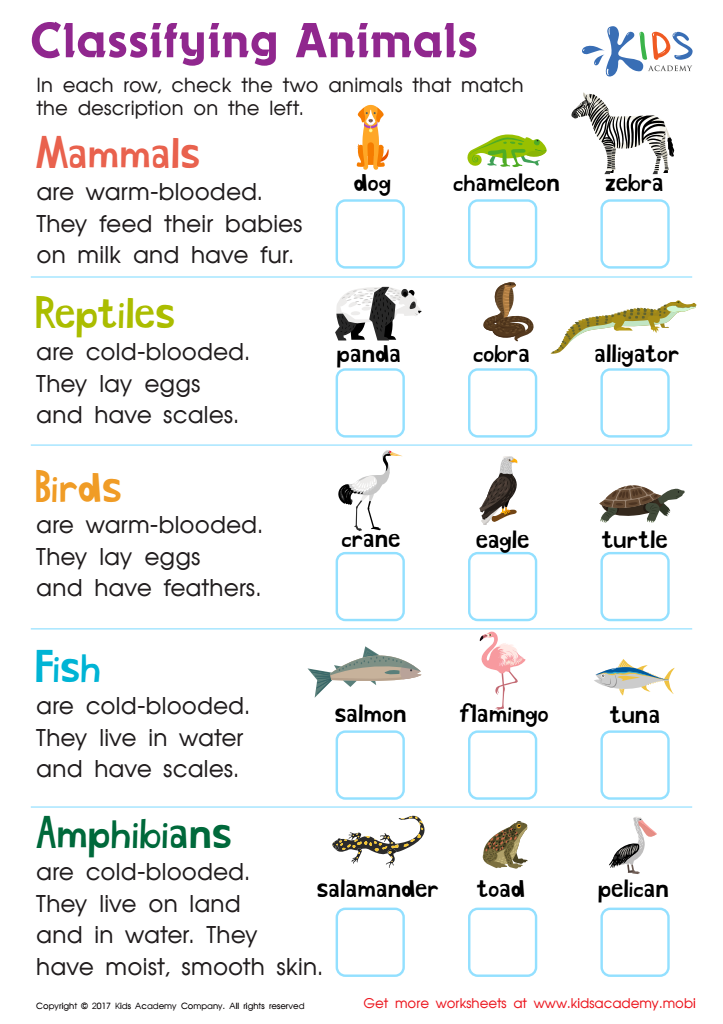
Classifying Animals Worksheet
Print the 2nd grade animal classification worksheet and help kids study the differences between mammals, reptiles, birds, fish and amphibians. Let them pick two examples from the options given.
Classifying Animals Worksheet
Worksheet
Join Kids Academy for Free
Who is primarily going to use this learning content?





Parents and teachers should care about developing critical thinking skills in the context of Normal Life Science for children ages 8-9 because it lays a strong foundation for their overall cognitive development and future academic success. At this crucial stage, children are naturally curious and open to exploring new ideas. By encouraging critical thinking in life sciences, we help them learn how to question, analyze, and evaluate information, which are essential skills for problem-solving and decision-making.
Understanding normal life science concepts, such as ecosystems, the human body, and basic biology, fosters a sense of wonder and appreciation for the natural world. When children question why flowers bloom, how our body heals, or what animals need to survive, they start to engage in scientific thinking naturally. This engagement not only boosts their scientific literacy but also enhances their logic, reasoning, and comprehension skills.
Moreover, critical thinking in science teaches kids that it’s okay to make mistakes and that persistence is key to understanding complex concepts. These lessons are valuable beyond the classroom, helping children to develop resilience and adaptive thinking. Encouraging these skills early ensures that children grow up to be informed, thoughtful, and rational individuals ready to tackle the challenges of the modern world.








