Understanding timelines Normal History Worksheets for Ages 8-9
3 filtered results
-
From - To
Enhance your child's understanding of history with our "Understanding Timelines" worksheets designed for ages 8-9. These engaging resources support young learners in grasping the concept of timelines—essential for organizing historical events chronologically. The worksheets encourage critical thinking, helping children identify key moments and their significance. Through fun and interactive exercises, students will practice creating their own timelines and connecting events effectively. Perfect for use at school or at home, these worksheets are tailored to boost your child's social studies skills, making history both accessible and enjoyable. Spark a love for learning with our comprehensive, easy-to-follow materials today!
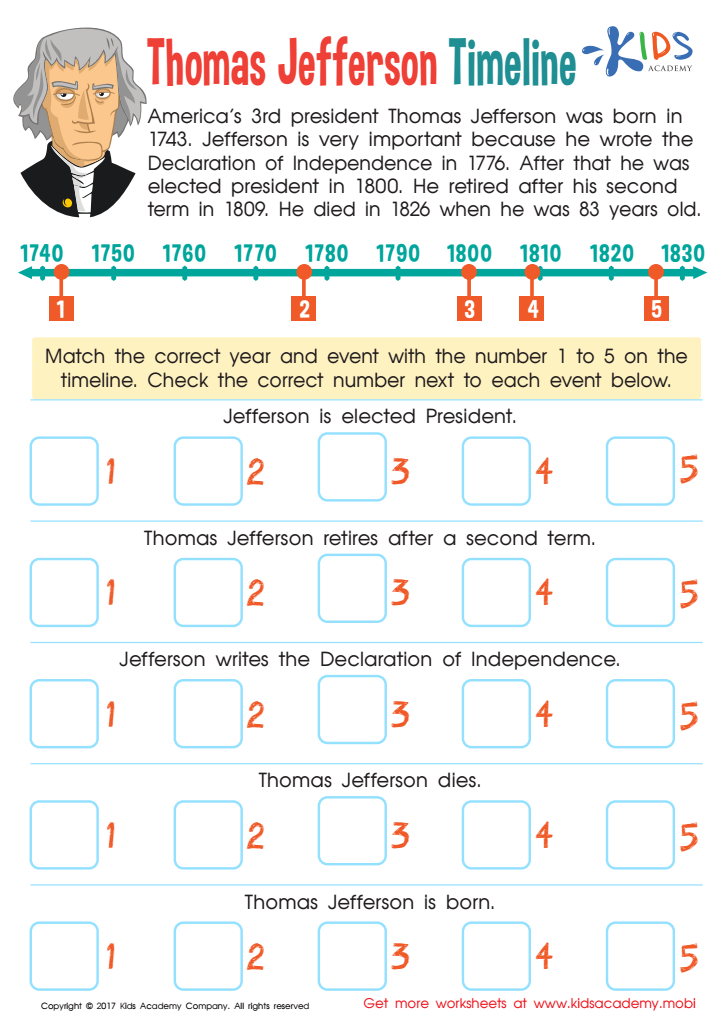
Thomas Jefferson Timeline Worksheet
 Assign to My Students
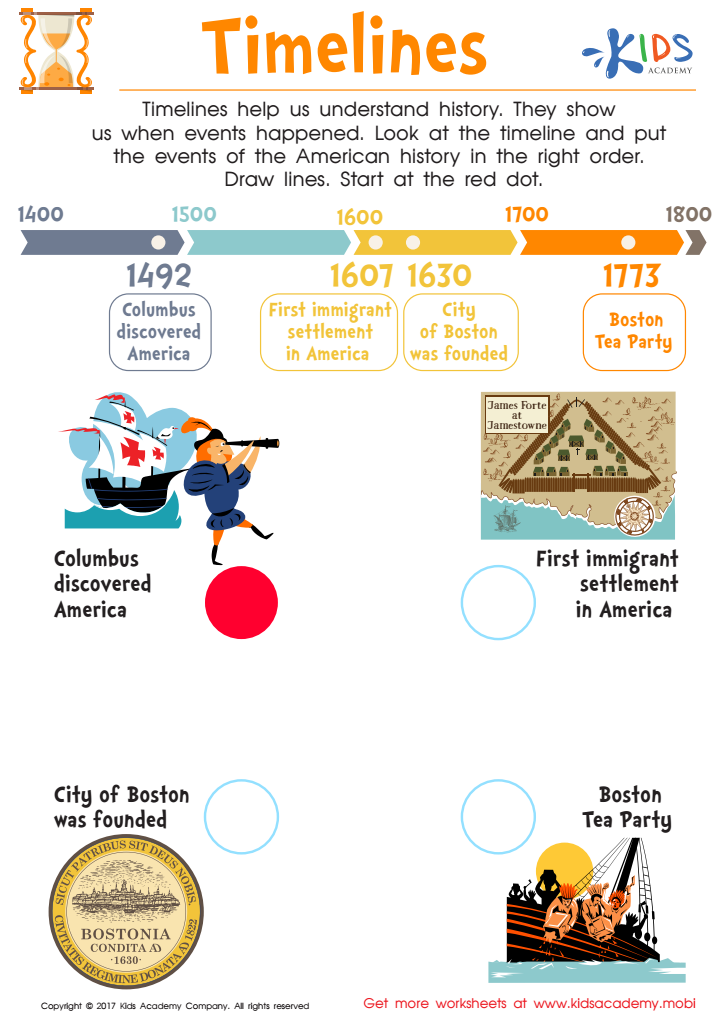
American History Timeline Worksheet
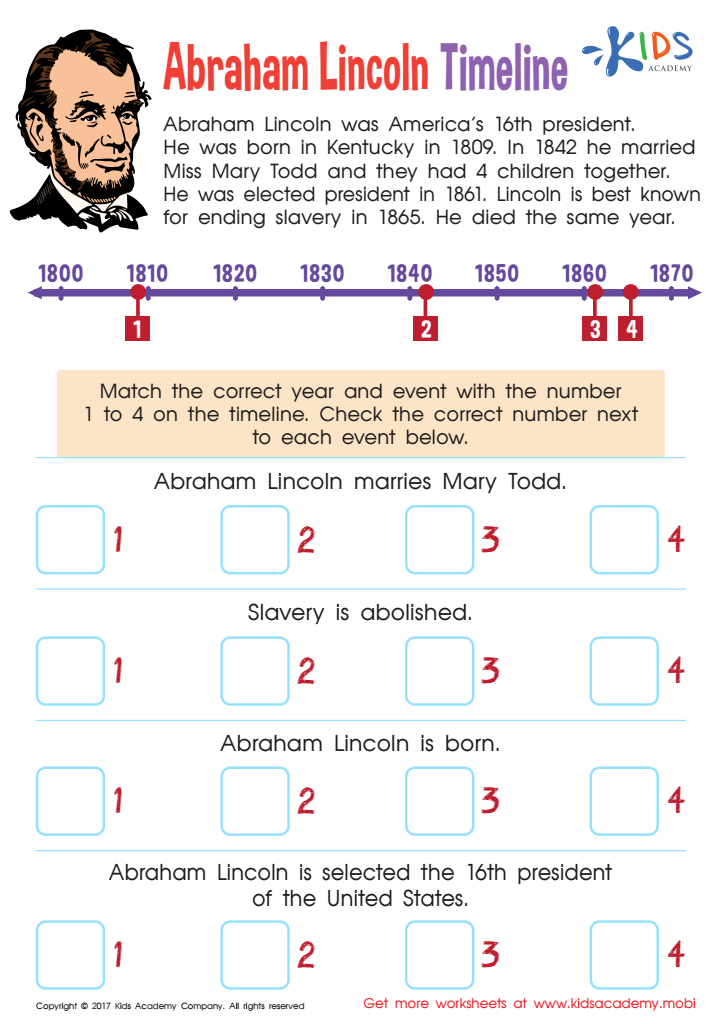
Abraham Lincoln Timeline Worksheet




.jpg)



Understanding timelines in normal history is crucial for children ages 8-9, as it provides them with a foundational framework for interpreting past events. At this age, children are naturally curious and begin to grasp the concept of time and the sequence of events that shape our world. Teaching timelines cultivates critical thinking and helps them connect cause and effect, understanding how various events influence one another across different periods.
Moreover, a structured understanding of timelines enhances a child’s literacy and numeracy skills. By engaging with historical timelines, children learn to read and interpret information, develop analytical skills, and increase their comprehension of text. This early exposure not only fosters an appreciation for history but also encourages empathy as students engage with diverse perspectives and experiences from the past.
Additionally, knowing significant historical timelines instills a sense of identity and belonging as children learn about their heritage and the wider world. As parents and teachers recognize these developmental benefits, they can better guide children in their education, reinforcing learning through interactive activities like creating personal timelines or exploring historical events that reflect their interests. Ultimately, this knowledge supports a well-rounded education and prepares children to be informed and engaged citizens.








