Phonics Skills Normal Vowel Blends Worksheets for 8-Year-Olds
5 filtered results
Difficulty Level
Grade
Age
-
From - To
Subject
Activity
Standards
Unlock the power of reading with our "Phonics Skills Normal Vowel Blends Worksheets" designed for 8-year-olds. These engaging, printable worksheets focus on building strong phonics skills through fun activities that emphasize vowel blends. Children will enhance their reading fluency and comprehension as they tackle exercises that promote word recognition and pronunciation. Perfect for reinforcing classroom learning or as supplemental at-home practice, our worksheets cater to various learning styles, making phonics enjoyable! Foster a love for reading while helping your child master essential literacy skills. Explore our collection today and watch your child's confidence soar!
Favorites
With answer key
Interactive
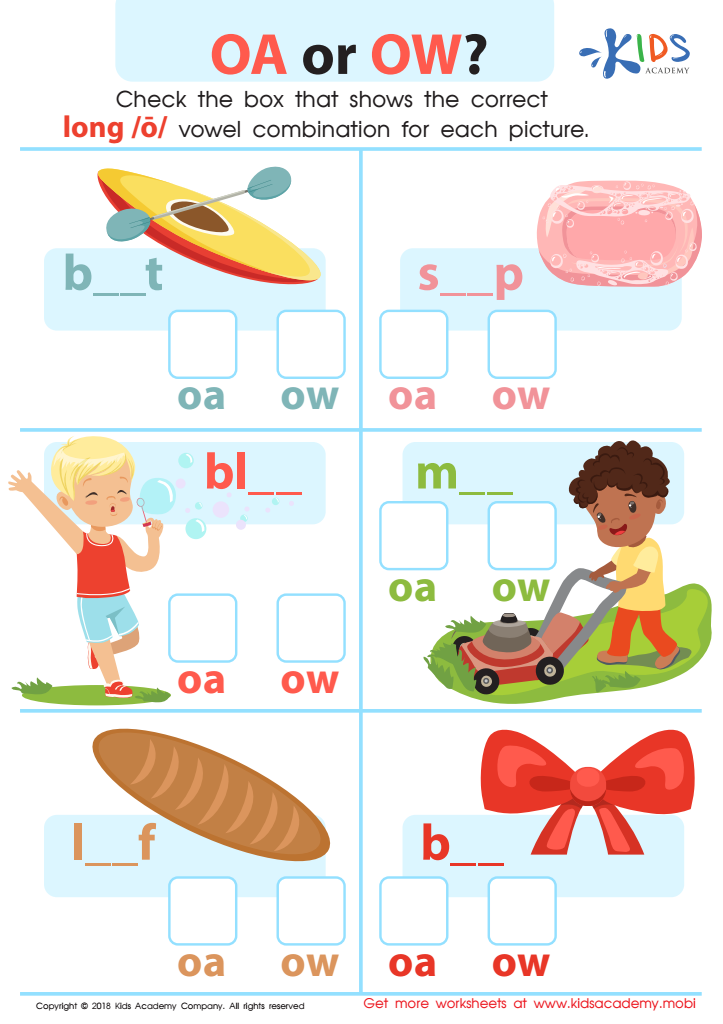
Reading: OA or OW Worksheet
This printable worksheet helps young and emergent readers with decoding words and understanding digraphs (two letters with one sound). It requires students to complete the spelling for each word based on the picture, focusing on /oa/ and /ow/ spellings. It's ideal for a reading classroom and for spelling practice.
Reading: OA or OW Worksheet
Worksheet
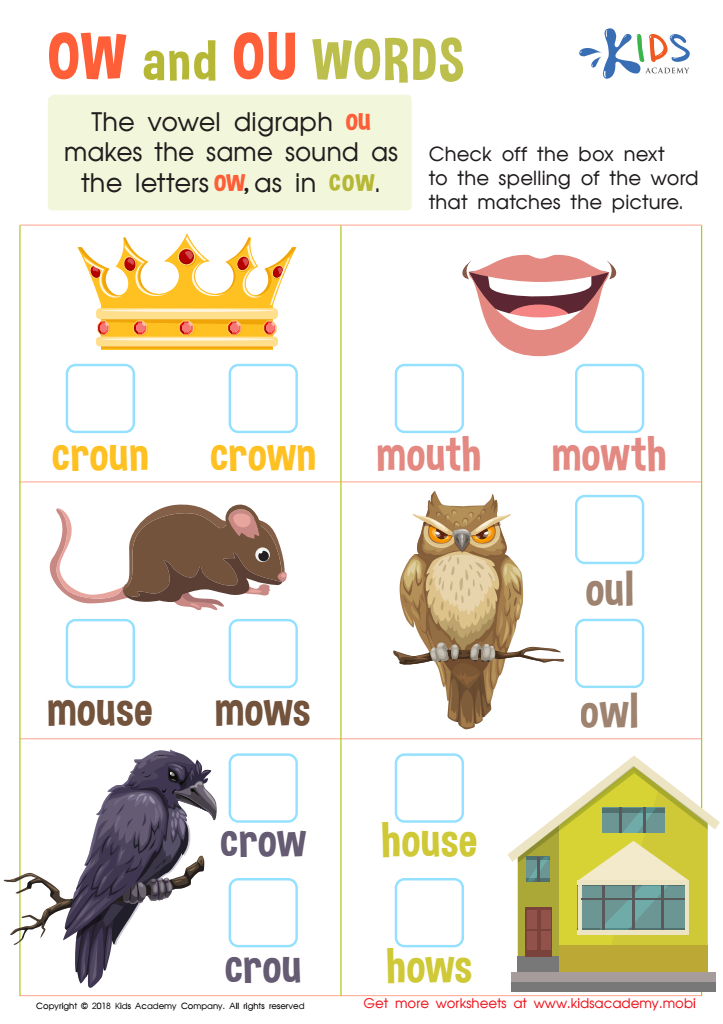
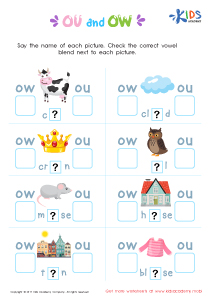
Reading: OW and OU Words Worksheet
Help your kids learn phonetics! Explain the different sounds and long/short variations. Emphasize that some vowel sounds are the same, e.g. ou = ow in cow. For practice, have them read aloud the words in the worksheet and check the box next to the spelling that matches the picture.
Reading: OW and OU Words Worksheet
Worksheet
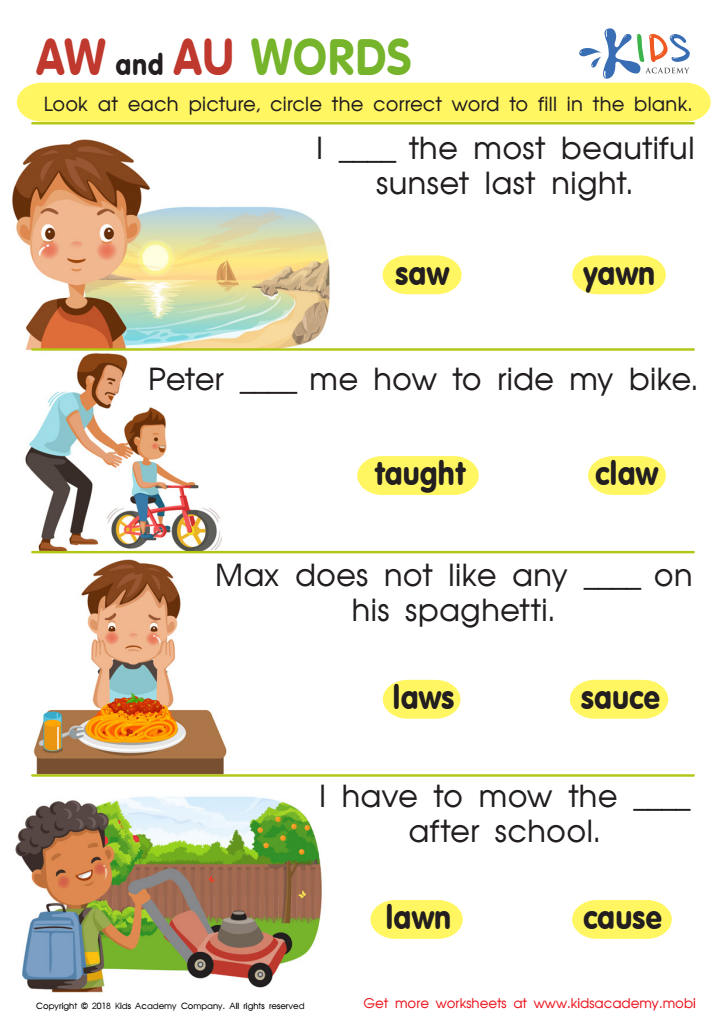
Reading: AW and AU Words Worksheet
This worksheet helps kids recognize that /au/ and /aw/ can make the same sound. Students read sentences and pick the correct word with one of the digraphs. Understanding digraphs improves decoding and reading fluency. Perfect for reading and phonics classes.
Reading: AW and AU Words Worksheet
Worksheet
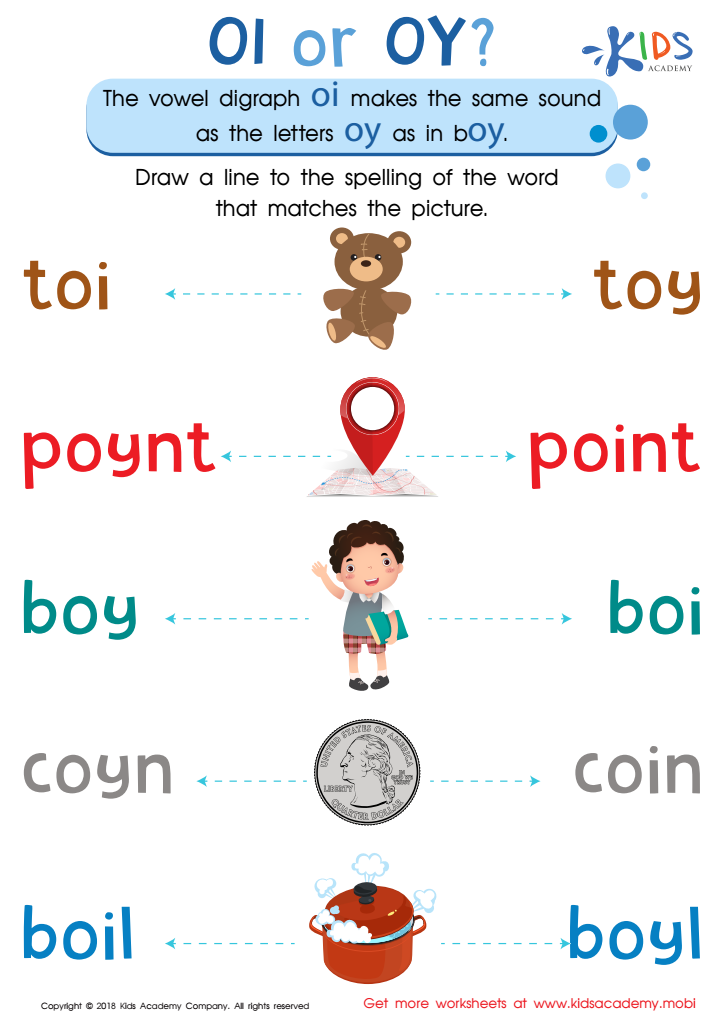
Reading: OI and OY Worksheet
Ask your students if they know the rule for words with /oi/ or /oy/ sound. If not, it's easy to learn! Rule: If /oy/ at end of word, spell with 'oy'; if /oi/ in middle of word, spell with 'oi'. Use this worksheet to help them master these digraphs and improve their ability to decode.
Reading: OI and OY Worksheet
Worksheet
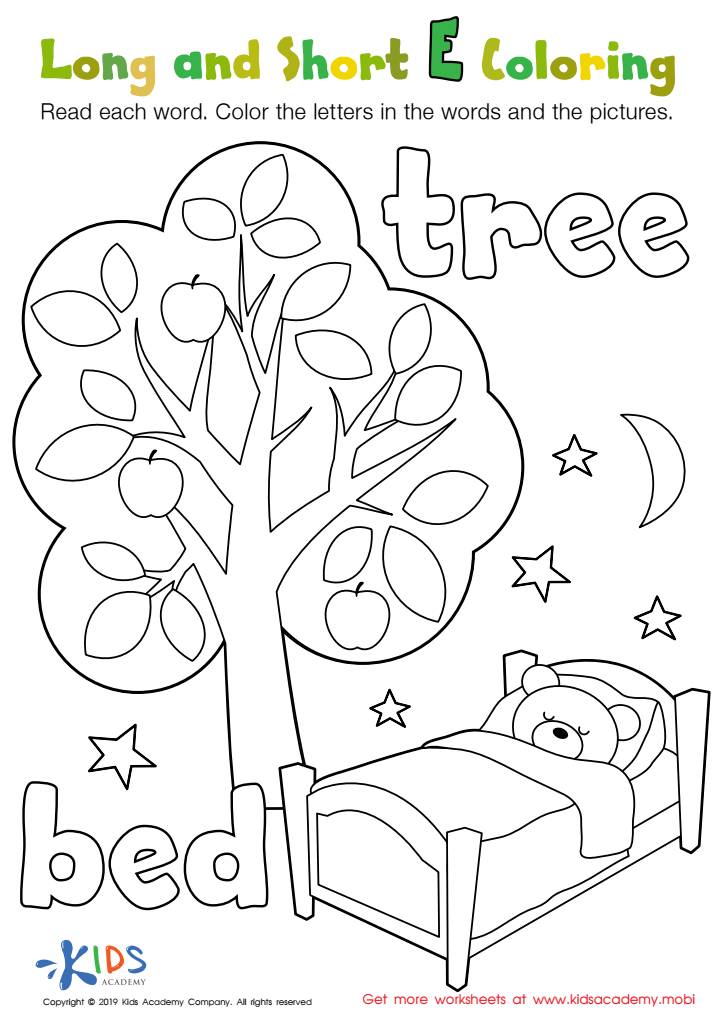
Long and Short E Worksheet
This fun printout makes learning phonics enjoyable for Grade 3 students. Get them to read the words “tree” and “bed” to recognize the different sounds of the letter “E”. After hearing the words they can color the words and the pictures to understand differences between long and short vowels.
Download (PDF)
 Assign to My Students
Assign to My Students
Long and Short E Worksheet
Worksheet
Join Kids Academy for Free
Who is primarily going to use this learning content?





Phonics skills, particularly normal vowel blends, are essential for developing reading proficiency in 8-year-olds. At this age, children are transitioning from learning to read to reading to learn, making phonics instruction vital for their overall literacy development. Proper understanding of vowel blends—combinations of vowels that produce unique sounds—empowers children to decode words effectively. This skill not only enhances their reading fluency but also improves their spelling and writing abilities.
For parents and teachers, fostering phonics skills ensures that children build a strong foundation for future academic success. As readers encounter increasingly complex texts, mastery of vowel blends helps them tackle new vocabulary and understand language patterns. Furthermore, strong phonics skills are linked to higher engagement in reading, leading to improved comprehension and a love for literature.
By emphasizing phonics education, parents and teachers can support children's confidence, motivation, and ultimately their achievement in school. Early intervention is crucial; identifying and addressing gaps in phonics knowledge can prevent struggles in later grades. Thus, investing in phonics skills equips children with the tools necessary for lifelong reading and learning. Overall, prioritizing phonics skills is essential for nurturing competent, confident readers.