Vocabulary expansion Normal Vowel Blends Worksheets for 8-Year-Olds
6 filtered results
-
From - To
Enhance your child's vocabulary with our engaging Vocabulary Expansion Normal Vowel Blends Worksheets designed specifically for 8-year-olds. These fun and interactive worksheets focus on vowel blends, helping young learners strengthen their reading and writing skills while expanding their word bank. Each worksheet provides a variety of activities, including fill-in-the-blanks, matching exercises, and imaginative prompts that encourage creativity and comprehension. By practicing with these worksheets, children will develop confidence in recognizing and using new vocabulary in their everyday speech. Ideal for at-home learning or classroom enrichment, our resources make mastering vowel blends enjoyable and effective! Start your child's linguistic journey today!
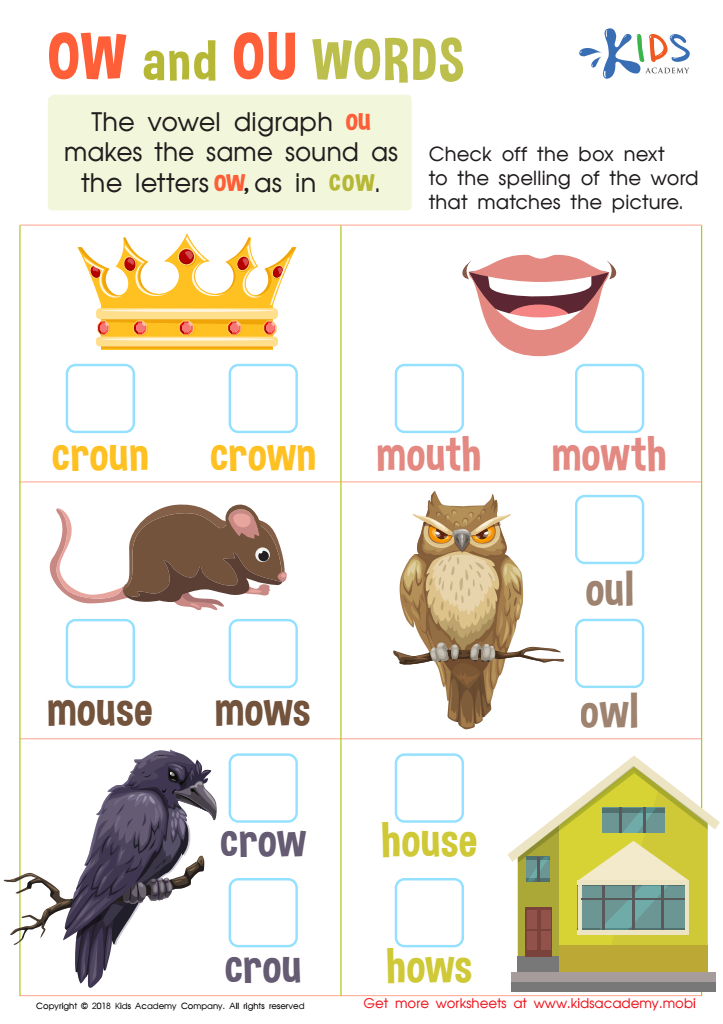
Reading: OW and OU Words Worksheet
 Assign to My Students
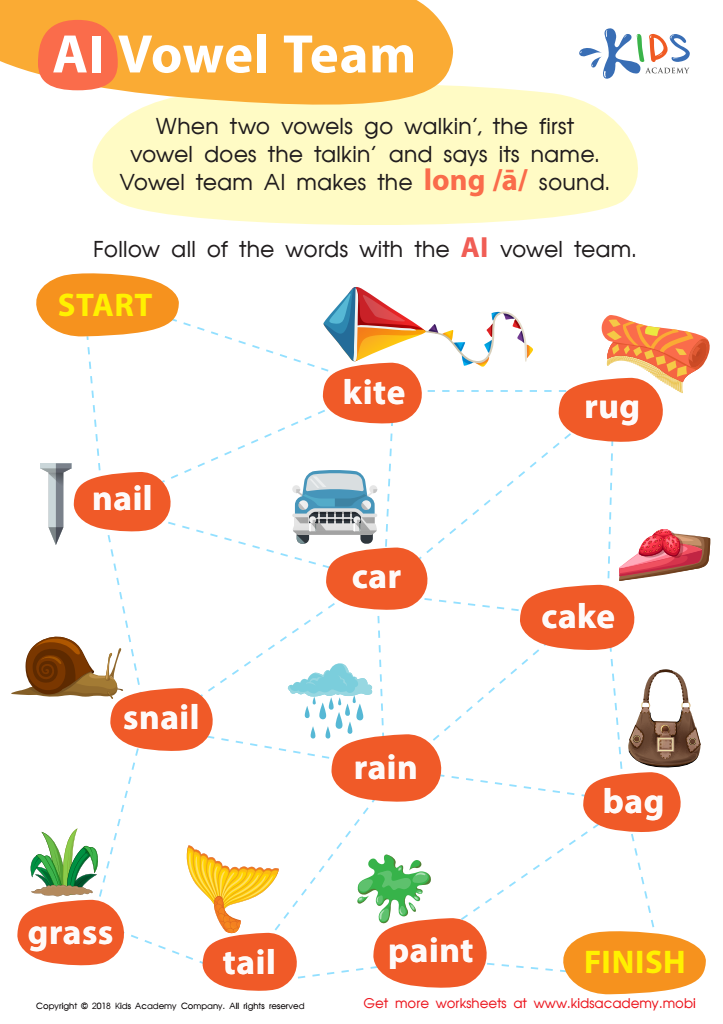
Reading: AI Vowel Team Worksheet
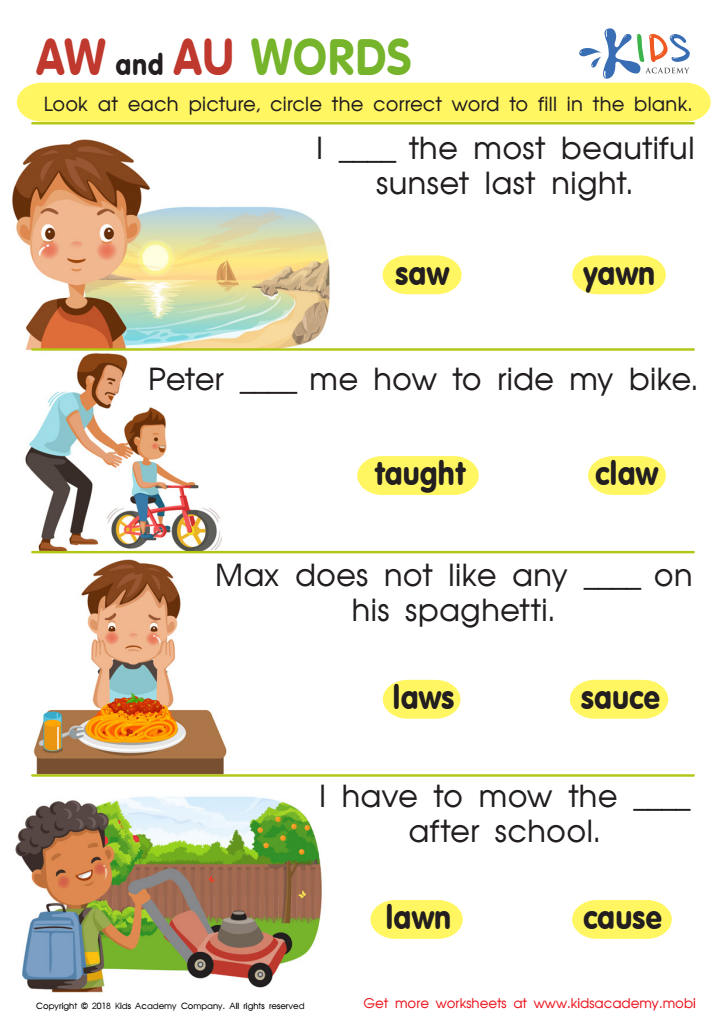
Reading: AW and AU Words Worksheet
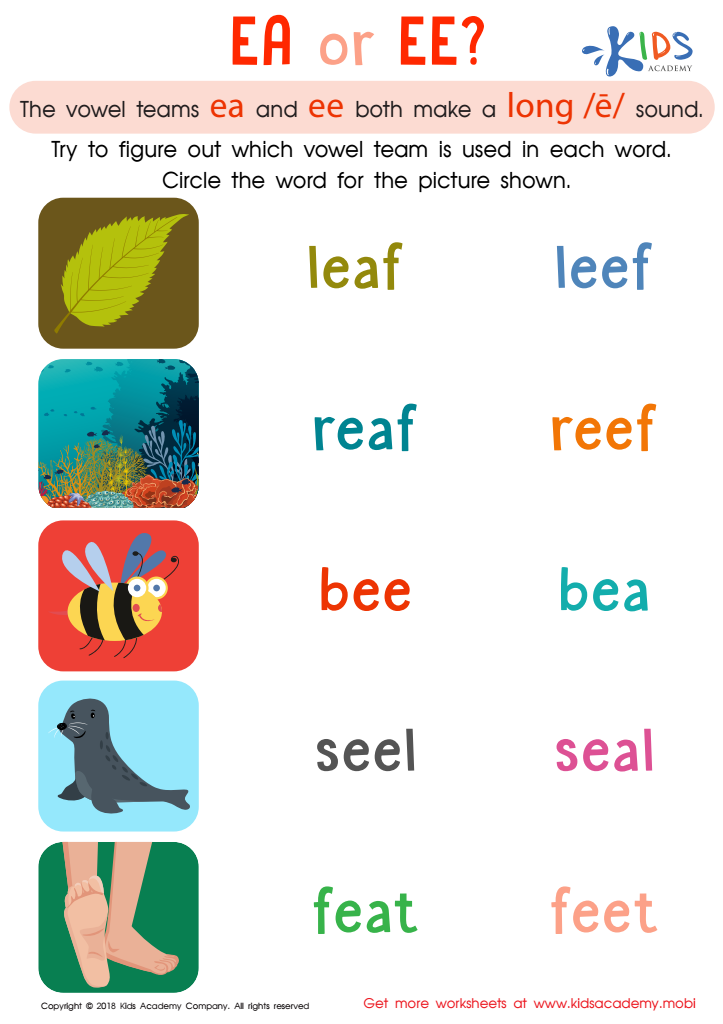
Reading: EA and EE Worksheet
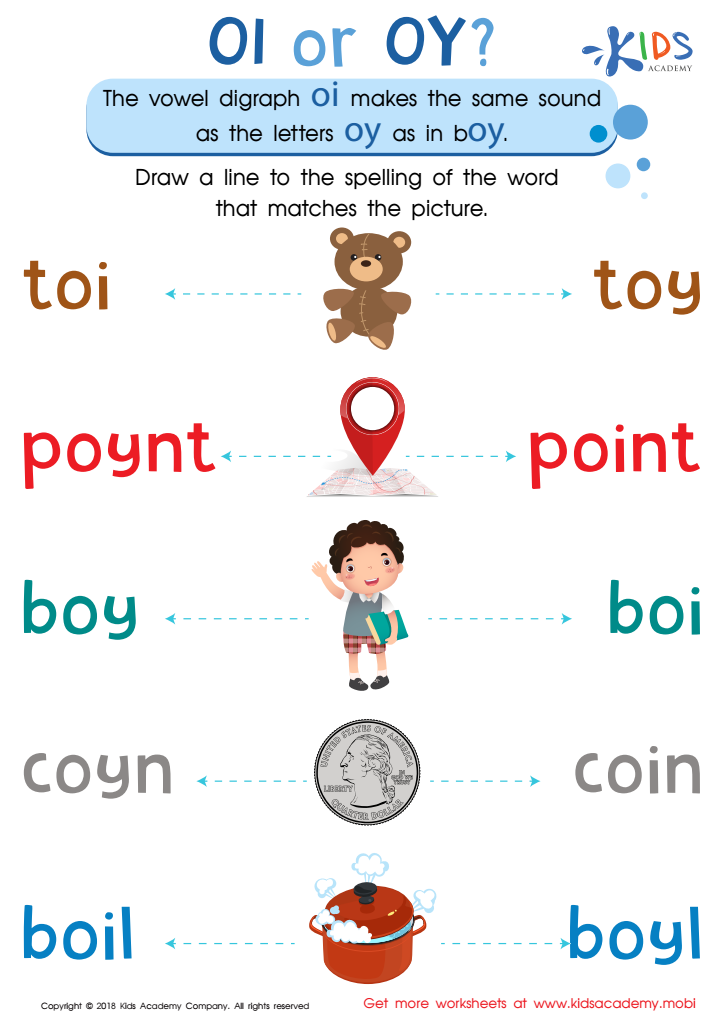
Reading: OI and OY Worksheet
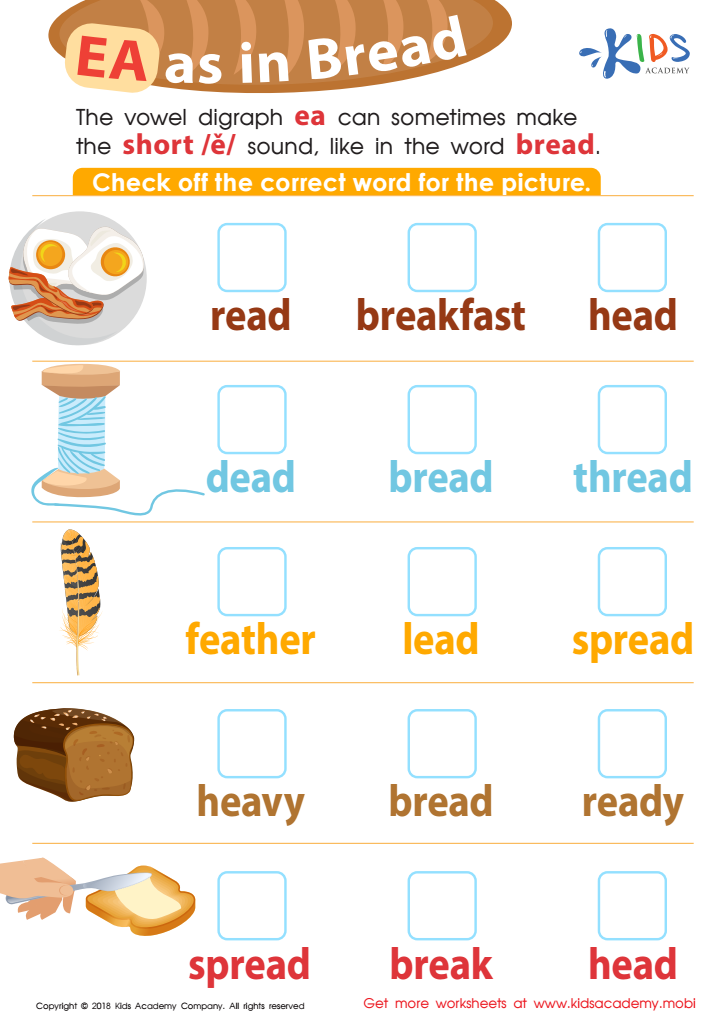
Reading: EA as in Bread Worksheet





Vocabulary expansion, particularly through normal vowel blends, is essential for 8-year-olds as it lays the foundation for effective communication and literacy skills. At this age, children are not only refining their reading abilities but also developing their abilities to express thoughts and ideas clearly. Normal vowel blends, which combine vowels and consonants to create unique sounds, help enhance phonetic awareness and decoding skills, making reading more fluid and enjoyable.
Furthermore, a strong vocabulary contributes to academic success across subjects, as it enables students to understand instructions, engage in discussions, and comprehend texts more thoroughly. When children familiarize themselves with vowel blends, they become more confident readers and writers, leading to improved performance in school.
Additionally, parents and teachers play a crucial role in nurturing vocabulary growth through interactive activities, games, and discussions that incorporate these blends into daily learning. Engaging children in rich language experiences helps stimulate curiosity and promotes a love for reading, which can have lasting positive effects on their overall education. In essence, investing time in vocabulary expansion during this pivotal age not only supports literacy development but also enriches children’s language skills for future learning.








