
Analytical thinking Normal Worksheets for 8-Year-Olds
9 filtered results
Difficulty Level
Grade
Age
-
From - To
Subject
Activity
Standards
Unlock your child’s potential with our Analytical Thinking Normal Worksheets designed specifically for 8-year-olds! These engaging worksheets focus on developing critical thinking skills through fun and interactive activities. Each worksheet encourages problem-solving, logical reasoning, and evidence-based decision-making, making learning enjoyable. Ideal for home or classroom use, our comprehensive resources nurture creativity and enhance cognitive abilities. Children will work on puzzles, comparisons, and various scenarios that promote deeper understanding and analysis. Equip your child with essential skills for lifelong success! Visit our website to download these valuable worksheets and watch your 8-year-old thrive in their learning journey!
Favorites
With answer key
Interactive
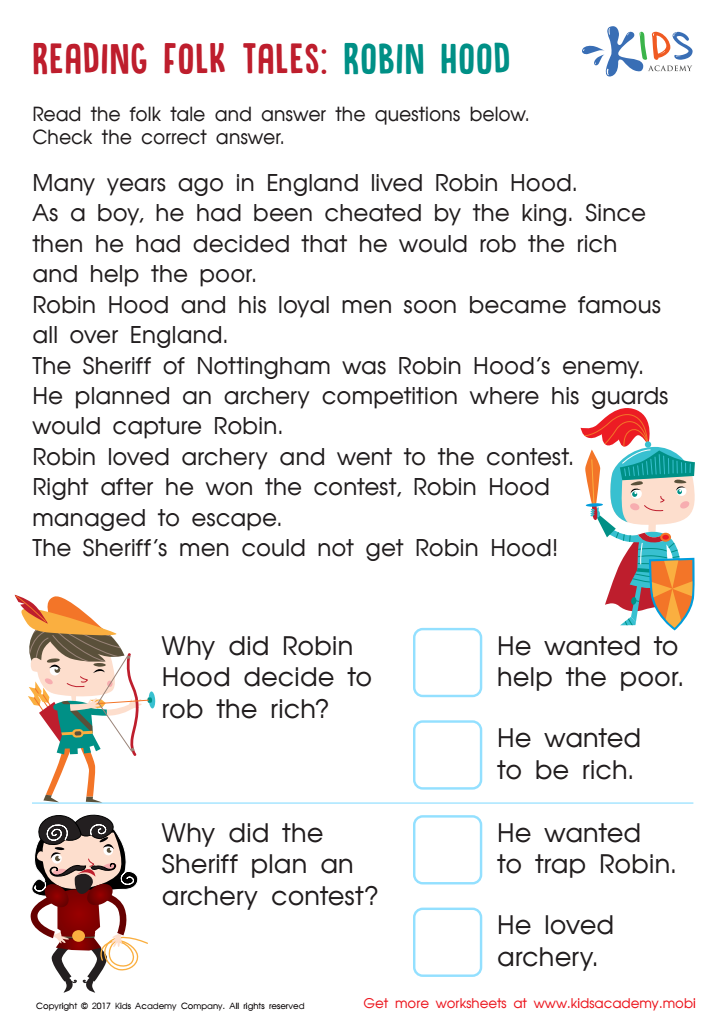
Robin Hood Folktale Worksheet
Have your child practice reading comprehension and inferencing with this Robin Hood folktale worksheet! Get them to read between the lines to find character motivation and answer important questions about the passage. It's a fun way to test their reading skills!
 Assign to My Students
Robin Hood Folktale Worksheet
Worksheet
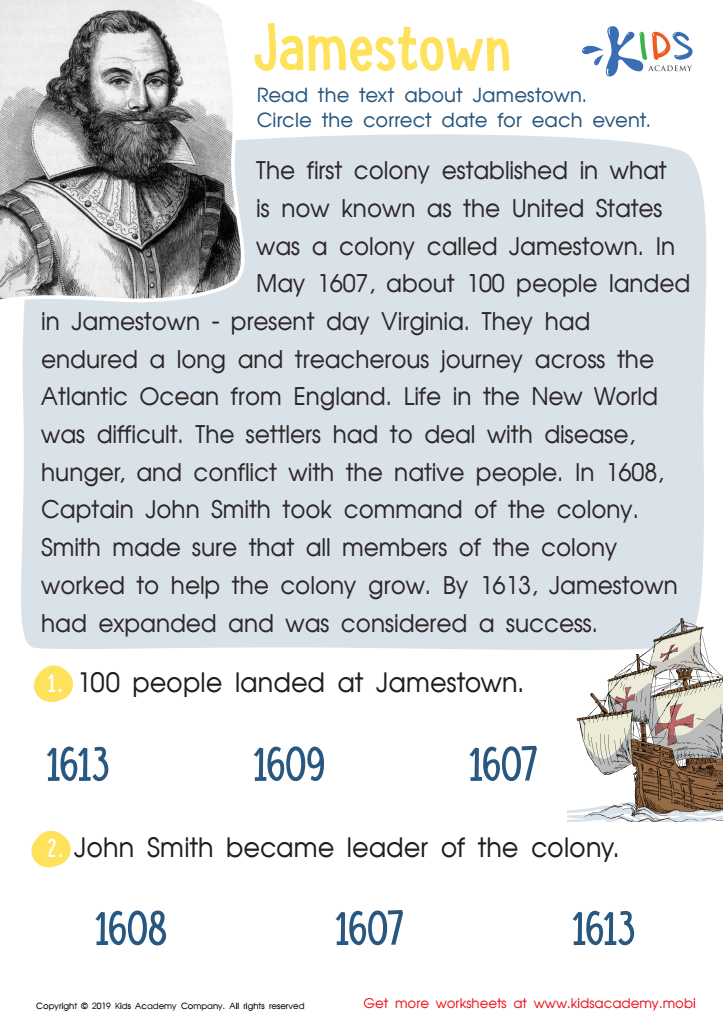
Jamestown Worksheet
Help your kids build vocabulary by reading simple texts and stories to them. This exercise helps them practice reading and grammar, and increases their knowledge of a topic. In this worksheet, kids learn about Jamestown: read text aloud and help them circle the correct date for each event.
Jamestown Worksheet
Worksheet
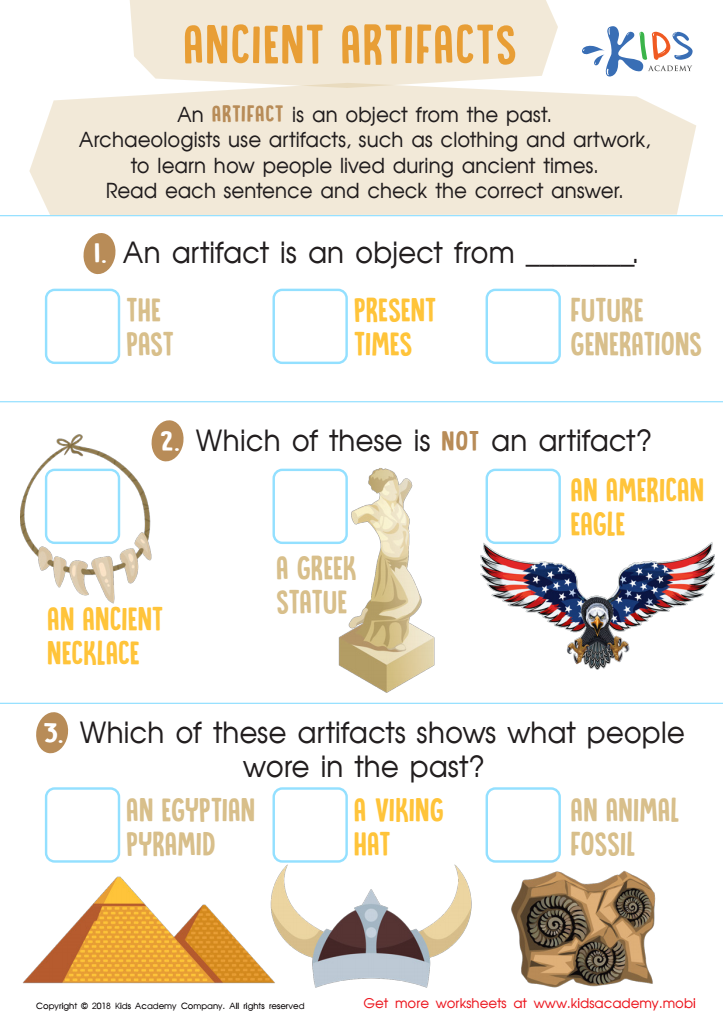
Ancient Artifacts Worksheet
This free worksheet helps kids understand ancient artifacts, from statues to necklaces to fossils. They'll read comprehension questions and select answers from multiple choice options, with pictures to help them grasp the concept. It's a great way for children to learn about artifacts and what they may look like.
Ancient Artifacts Worksheet
Worksheet
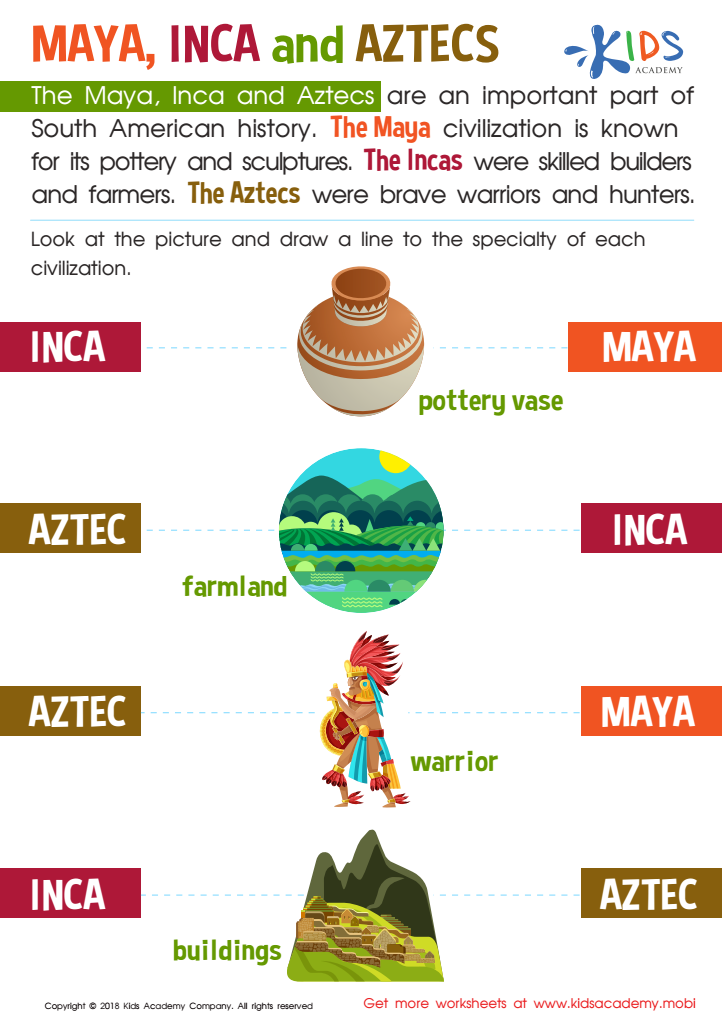
Maya, Inca and Aztecs Worksheet
This worksheet introduces your child to the thrilling histories of the Mayan, Incan and Aztec cultures, teaching them about their warriors, sculptors and farmers. With traceable lines and colorful imagery, they'll connect each culture with its correct associated picture - great for cementing concepts!
Maya, Inca and Aztecs Worksheet
Worksheet
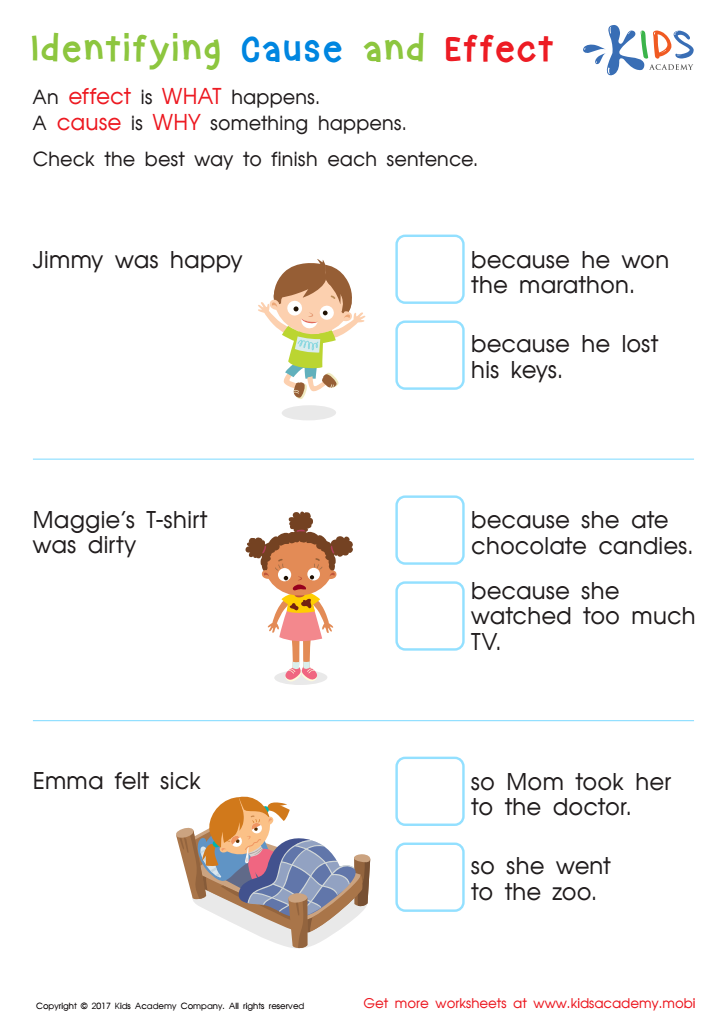
Indentifying Cause and Effect Worksheet
2nd grade cause & effect worksheets give your child practice making connections between events and their results. Fun activities help develop reading and critical thinking skills.
Indentifying Cause and Effect Worksheet
Worksheet
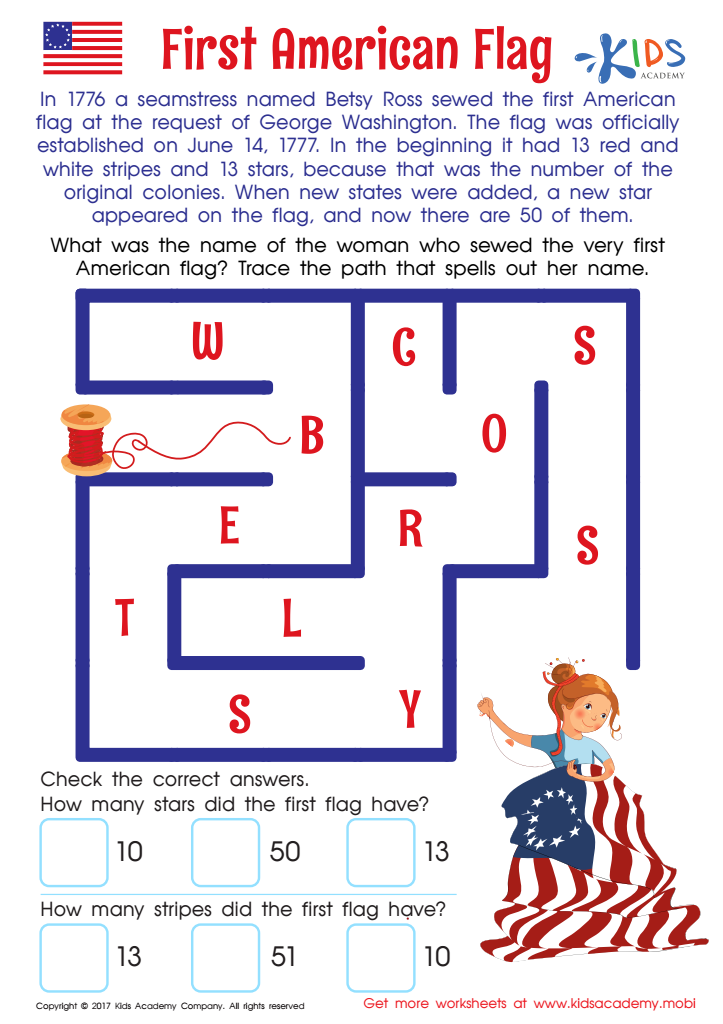
First American Flag Worksheet
Betsy Ross sewed the first American flag at the request of George Washington. This worksheet helps kids learn about this milestone in U.S. history, plus the design and origins of the flag.
First American Flag Worksheet
Worksheet
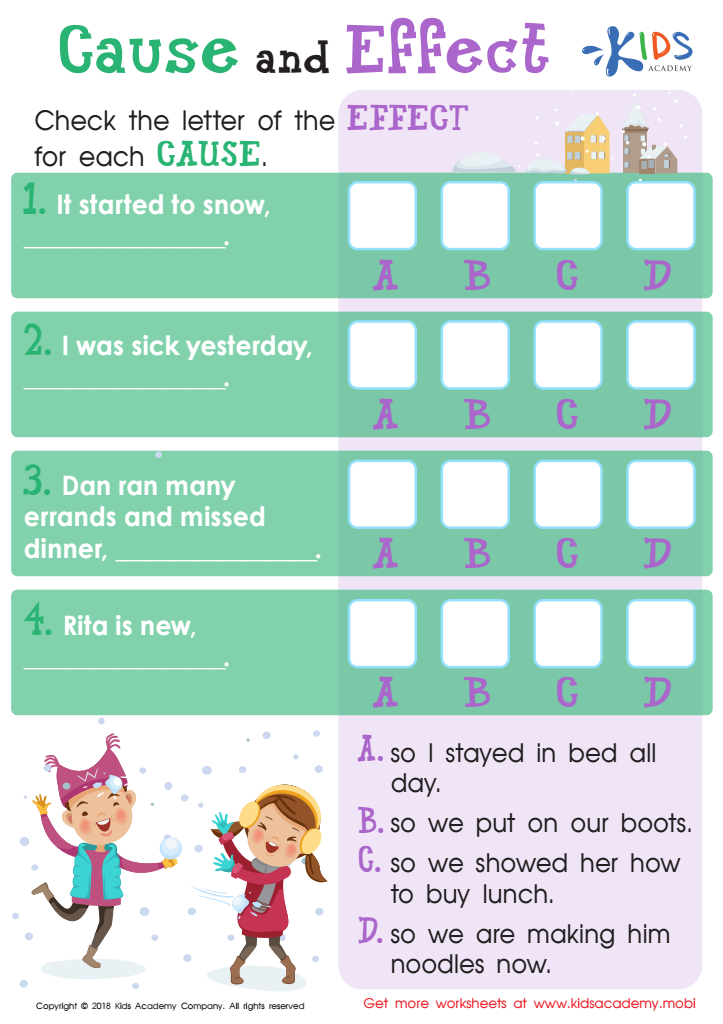
Cause and Effect Worksheet
Help your kids understand the cause-effect relationship of sentences by having them complete this worksheet. There are four incomplete sentences at the top and four options at the bottom. Have them select the appropriate letter for the effect of each cause. This will be the first step to their future of composing grammatically correct and meaningful sentences.
Cause and Effect Worksheet
Worksheet
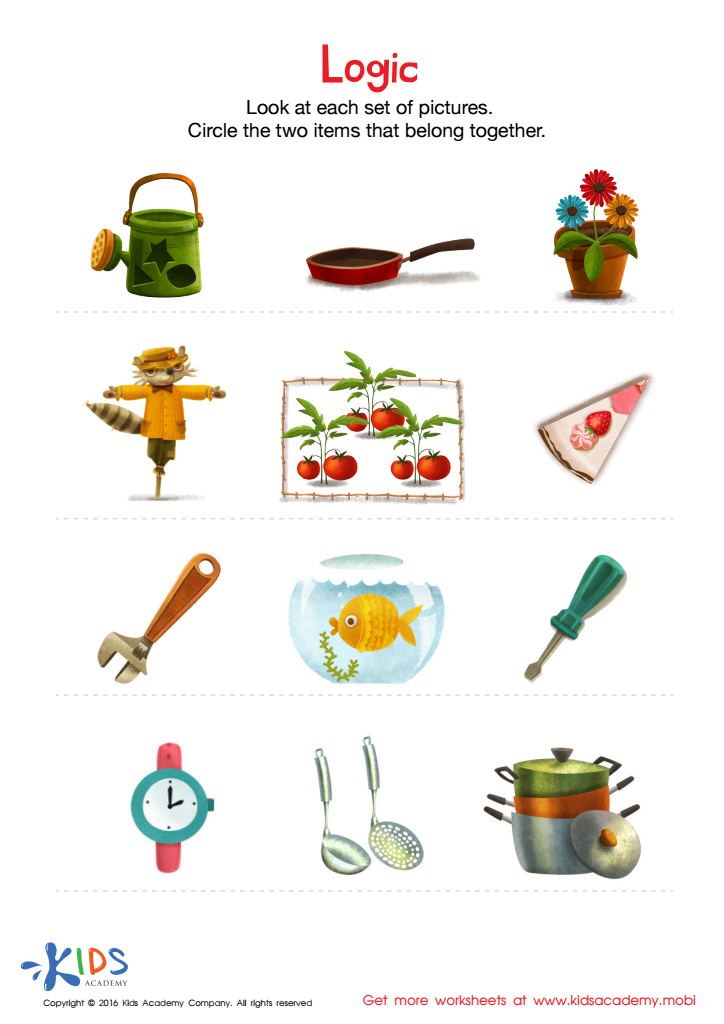
Logic Game Sorting Worksheet
Start your child's logic and reasoning development early with this fun matching worksheet! Through cute images and simple conversations, your little one can learn problem-solving, categorization, and matching skills. Plus, it's a great way for children to explore how items are used in real life. Try it and watch them boost skills with ease and fun!
Logic Game Sorting Worksheet
Worksheet
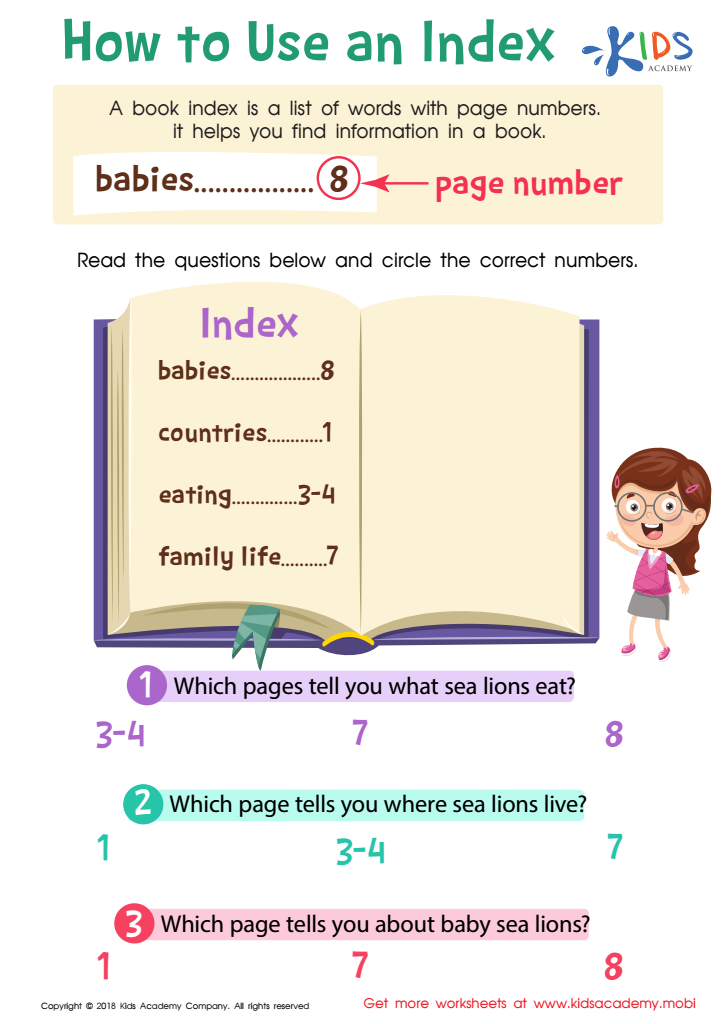
How Use Index Worksheet
Hand your kids a book, point out the index and explain that it's a list of words with page numbers. Ask them to look at the index in the worksheet and circle the correct number to the questions. Every book must have an index to help readers find chapters or information they need.
How Use Index Worksheet
Worksheet
Join Kids Academy for Free
Who is primarily going to use this learning content?






.jpg)

Parents and teachers should prioritize developing analytical thinking skills in 8-year-olds because these abilities lay the foundation for problem-solving and critical thinking, essential for success in academics and life. At this age, children are beginning to think more independently and engage with complex ideas, making it the perfect time to cultivate skills that allow them to analyze situations, draw conclusions, and make informed decisions.
Analytical thinking fosters curiosity, encouraging children to ask questions and explore the "why" behind concepts, rather than just accepting information at face value. It enhances their ability to evaluate evidence, recognize patterns, and consider multiple viewpoints, which are crucial in an increasingly interconnected world. As they face challenges in school subjects like math, science, and reading comprehension, strong analytical skills will help them break problems down into manageable parts and develop strategic approaches to finding solutions.
Furthermore, nurturing these skills prepares children for future educational pursuits and careers, where critical thinking and problem-solving are indispensable. It also encourages resilience, as analytical thinkers learn to approach setbacks logically, seeking alternatives rather than becoming discouraged. Ultimately, supporting analytical thinking in young learners ensures they cultivate a mindset geared towards growth, exploration, and informed decision-making throughout their lives.








