Reading fluency Normal Worksheets for 8-Year-Olds
3 filtered results
-
From - To
Boost your 8-year-old's reading fluency with our expertly crafted worksheets. Designed to promote confident and expressive reading, our engaging activities help young readers improve speed, accuracy, and comprehension. Each worksheet focuses on practice areas like word recognition, sentence structure, and passage reading, all tailored to their age and skill level. Kids will enjoy fun, interactive tasks that enhance their abilities while fostering a love for reading. Perfect for use at home or in the classroom, these worksheets provide a solid foundation for lifelong literacy skills. Empower your child to read with fluency and joy today!
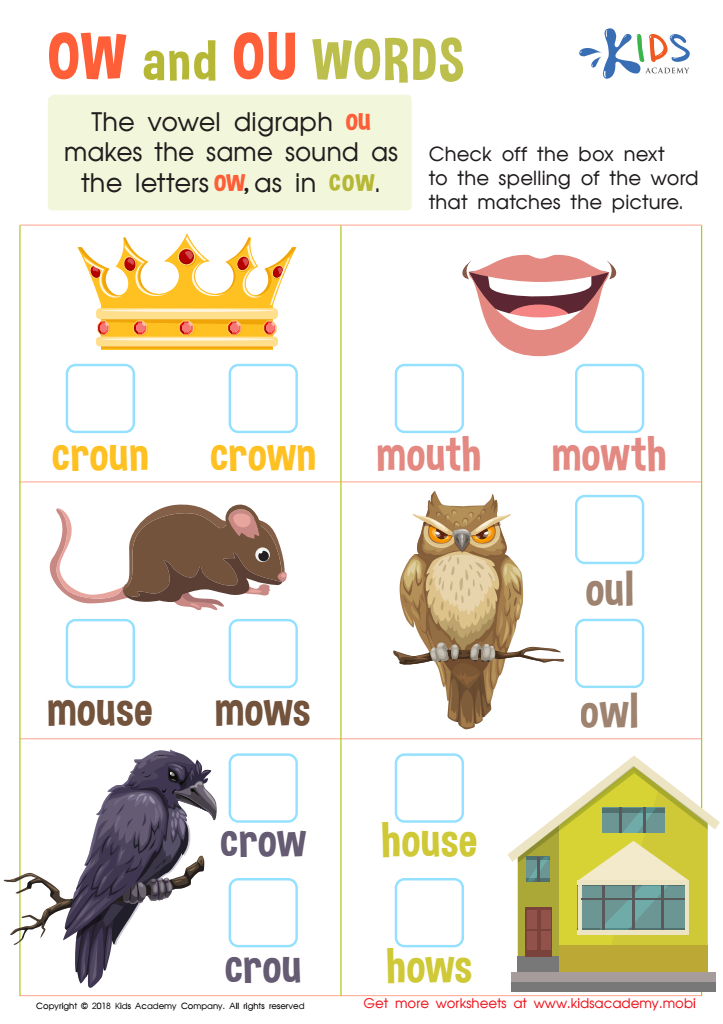
Reading: OW and OU Words Worksheet
 Assign to My Students
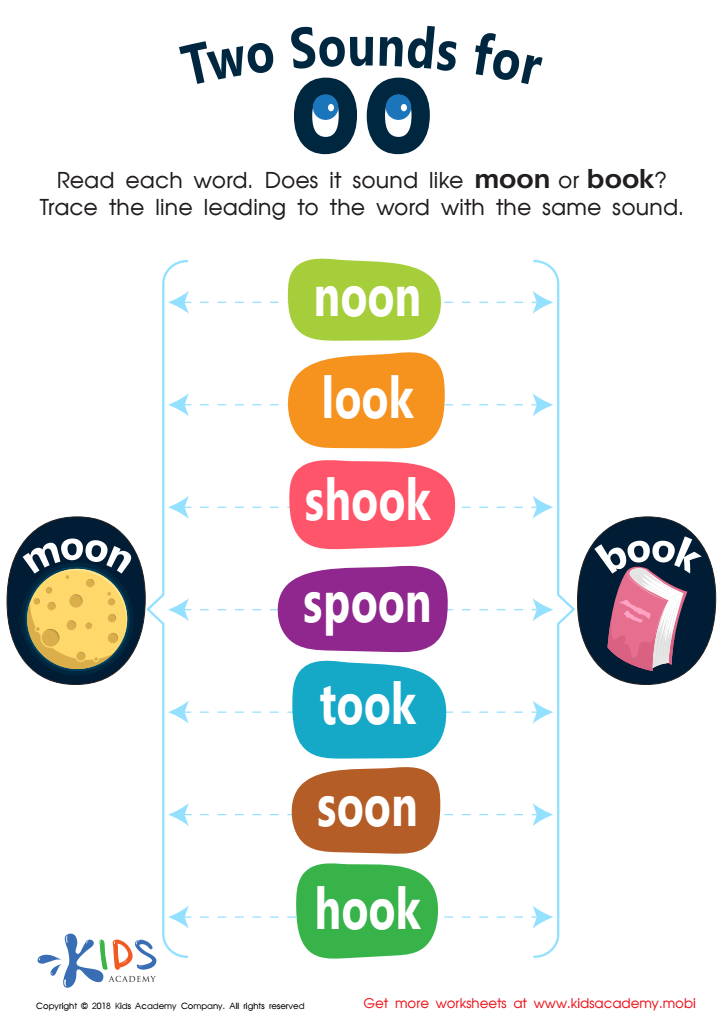
Two Sounds for OO Worksheet
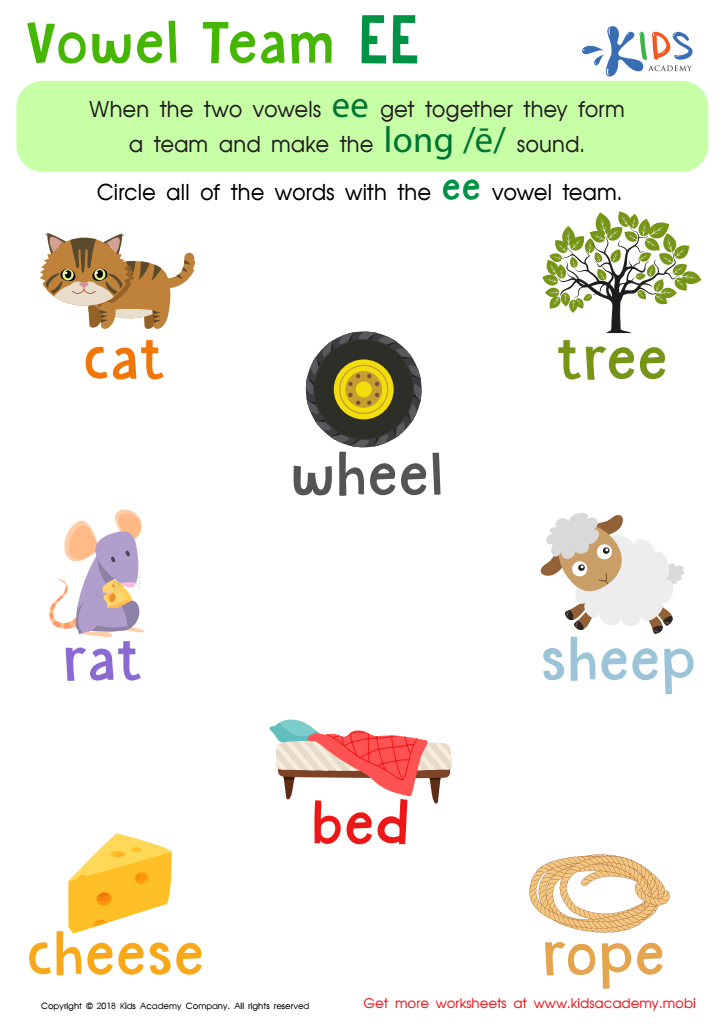
Reading: Vowel Team EE Worksheet





Reading fluency is essential for 8-year-olds because it forms the foundation for all future learning. Fluency involves not just the ability to read text quickly and accurately, but also with proper expression and comprehension. For children of this age, reading fluently means they can transition from "learning to read" to "reading to learn."
Parents and teachers should care deeply about this because reading fluently enhances understanding of subject matter across all areas, including science, social studies, and mathematics. When children read fluently, they can focus on grasping concepts rather than decoding words, thereby improving their overall academic performance.
Moreover, fluency is linked to motivation and confidence in reading. Children who struggle with fluency often find reading laborious and frustrating, which can lead to a lack of interest and negative attitudes toward learning. Conversely, those who read well are more likely to enjoy stories and informational texts, fostering a lifelong love of reading.
Early identification and intervention are crucial for children who face difficulties with reading fluency. Teachers and parents can work together to provide additional support through practice, reading exercises, and positive reinforcement. Strong reading fluency not only equips children with critical academic skills but also opens up a world of imagination, knowledge, and lifelong learning opportunities.








