Recognizing number patterns Normal Worksheets for 8-Year-Olds
3 filtered results
-
From - To
Explore our "Recognizing Number Patterns Normal Worksheets" tailored for 8-year-olds, designed to enhance your child's mathematical skills in a fun and engaging way. Our worksheets focus on identifying and extending numerical patterns through a variety of activities, ensuring a comprehensive understanding of sequences and relationships. Each worksheet includes colorful illustrations and creative exercises that challenge and motivate young learners. Perfect for classroom or home use, these resources aim to build confidence and improve critical thinking. Let your 8-year-old delve into the world of number patterns and watch their mathematical abilities flourish! Download our printable worksheets today for endless learning opportunities.
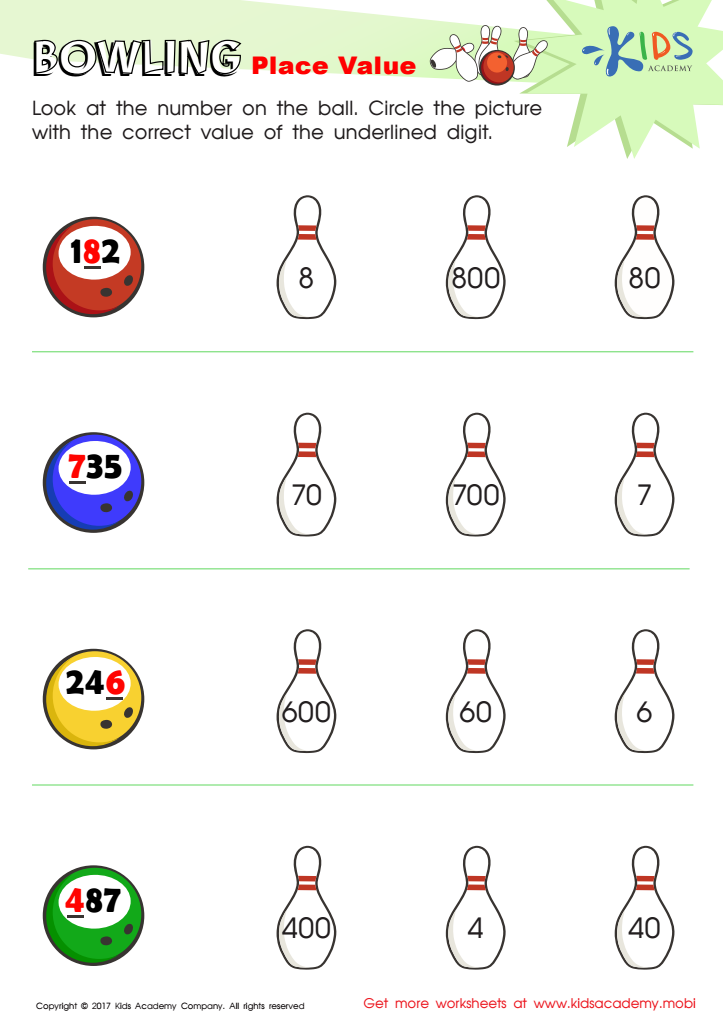
Place Value Worksheet
 Assign to My Students
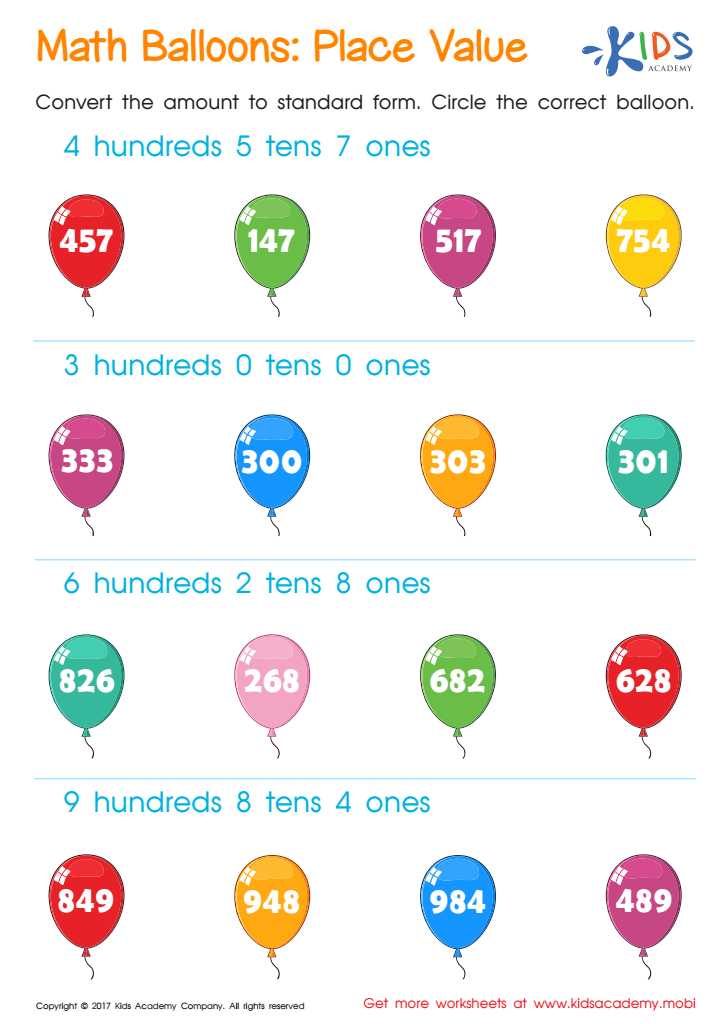
Place Value Printable Worksheet
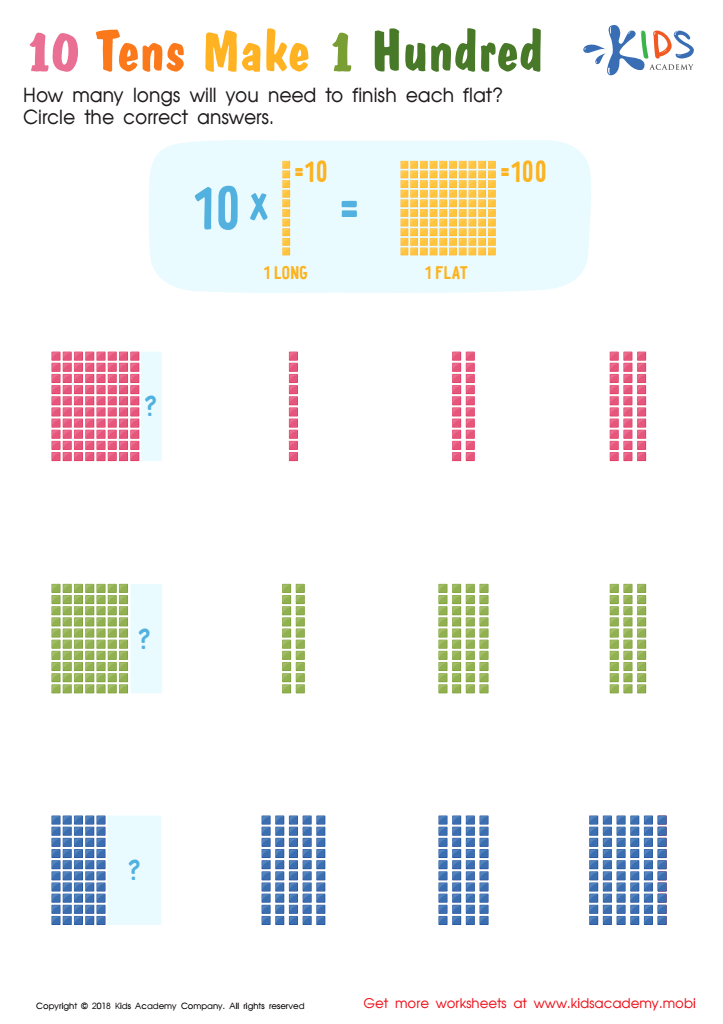
10 Tens Make 1 Hundred Worksheet







Recognizing number patterns is crucial for 8-year-olds as it lays the foundation for essential mathematical concepts and critical thinking skills. At this age, children are increasingly confronted with more complex mathematical operations and problem-solving scenarios. A strong grasp of number patterns enhances their ability to predict outcomes, recognize relationships between numbers, and grasp the concept of operations such as addition, subtraction, multiplication, and division.
For parents and teachers, encouraging this skill promotes confidence in young learners. Recognizing patterns boosts cognitive development by helping children make connections beyond mere rote memorization. It fosters curiosity and encourages them to explore mathematical relationships, which are vital for their future academic experiences. Moreover, number patterns are not limited to math; they also appear in real-life situations, such as calendars, sequences in nature, and even music, allowing children to understand the world mathematically.
Incorporating activities that focus on pattern recognition foster an engaging, playful learning environment where children can thrive. Ultimately, by emphasizing the importance of patterns, parents and teachers can help develop resilient, self-motivated learners who appreciate the beauty and utility of mathematics in everyday life.








