Understanding adjectives Normal Worksheets for 8-Year-Olds
4 filtered results
-
From - To
Welcome to our "Understanding Adjectives Normal Worksheets for 8-Year-Olds" page! Here, you'll find engaging and thoughtfully designed worksheets aimed at reinforcing your child's grasp of adjectives. These worksheets are perfect for third graders, helping them identify, understand, and use adjectives in various contexts. Students will engage in fun activities that promote their creativity while enhancing their reading and writing skills. From descriptive exercises to matching and fill-in-the-blank tasks, our resources ensure an enjoyable learning experience. Perfect for classroom use or at-home practice, these worksheets support essential language skills that will define their communication abilities. Explore our collection today!
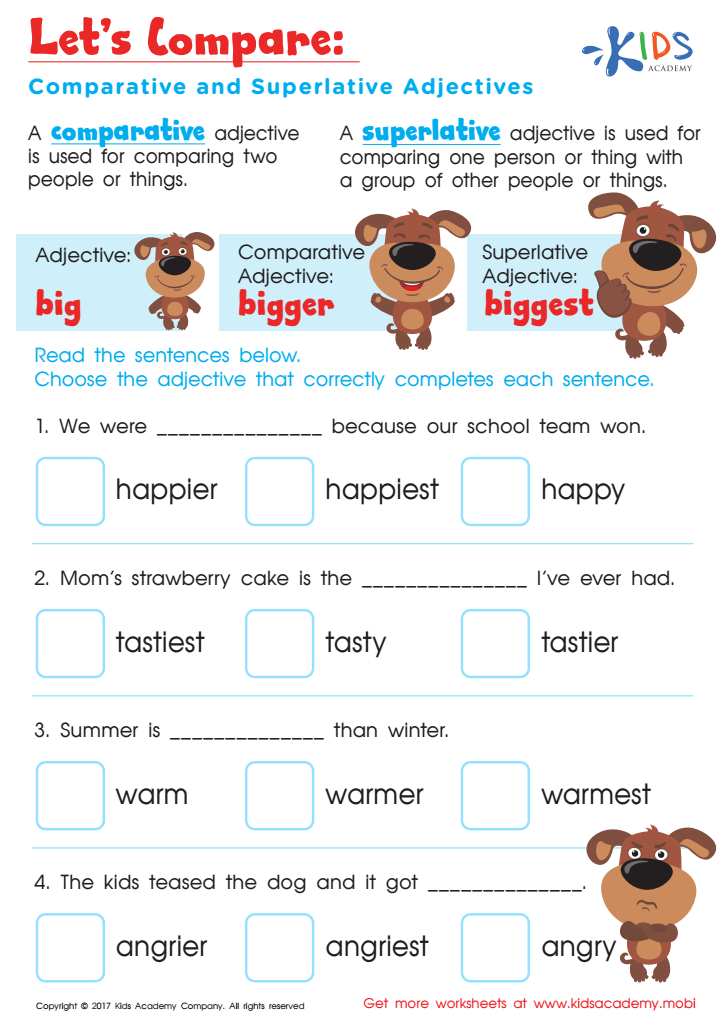
Comparative and Superlative Worksheet
 Assign to My Students
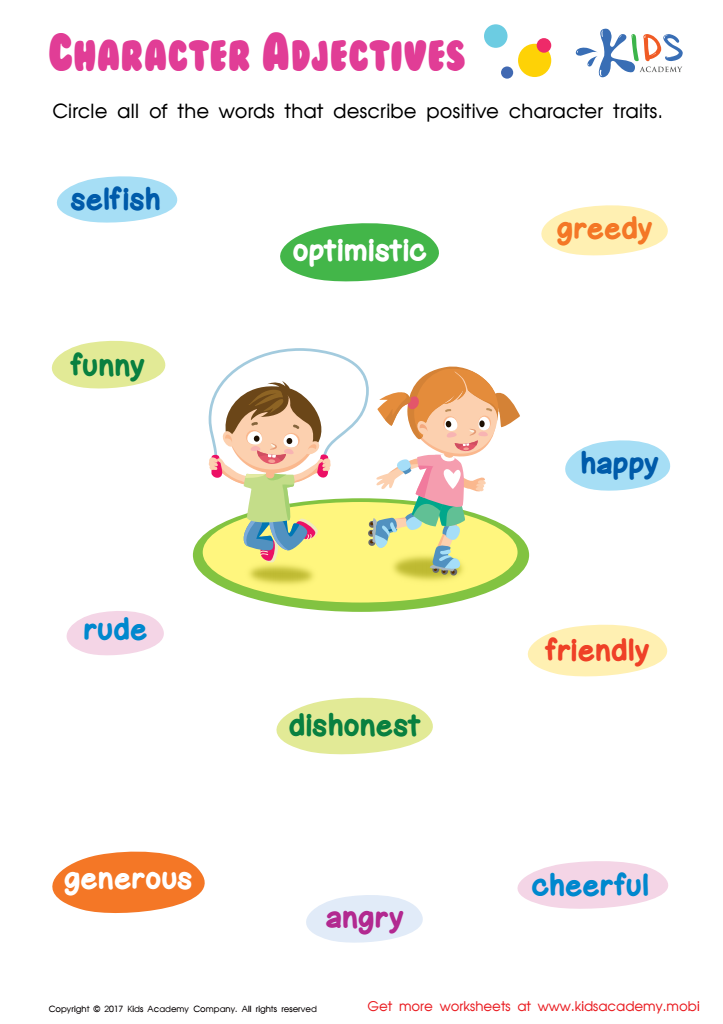
Character Adjectives Worksheet
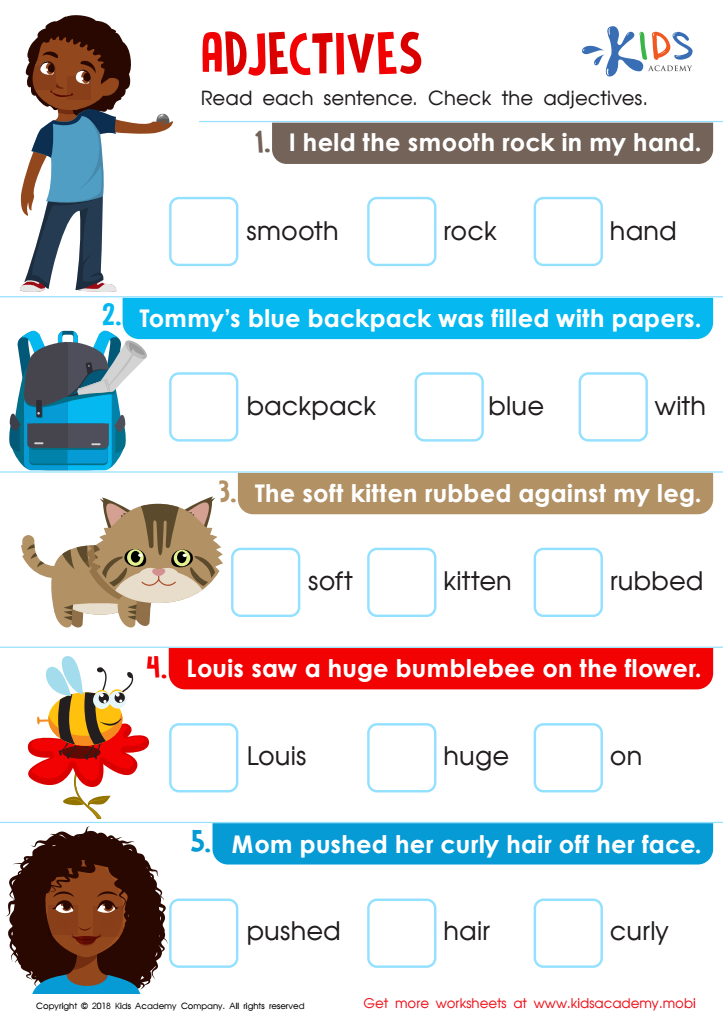
Adjectives Worksheet
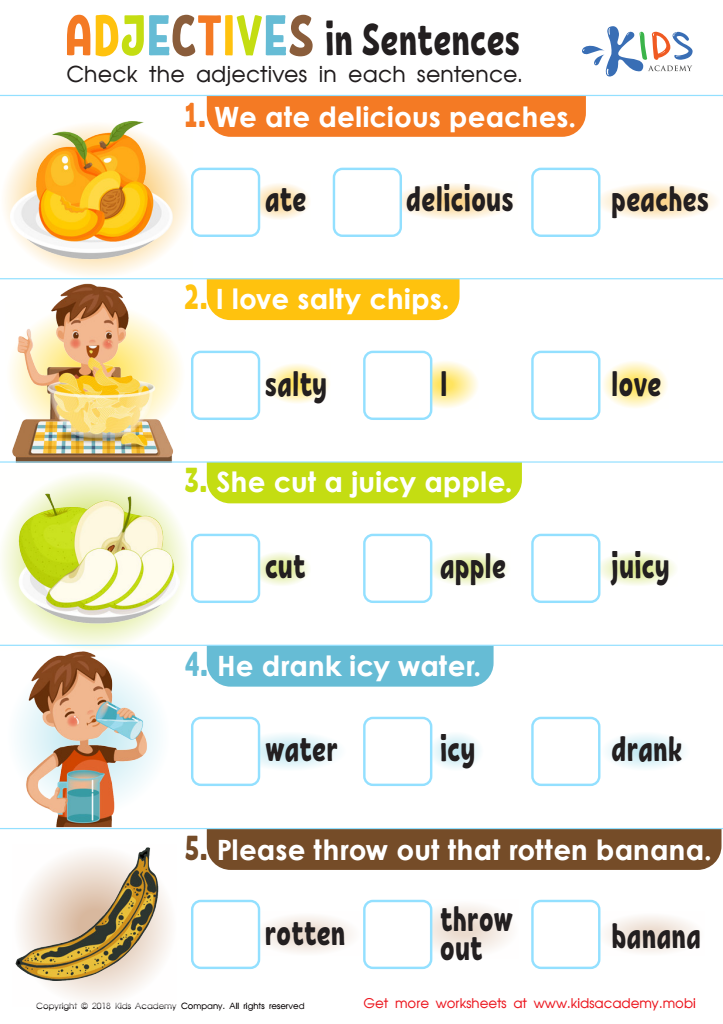
Adjectives in Sentences Worksheet







Understanding adjectives is crucial for 8-year-olds’ language development, and parents and teachers play a vital role in this process. Adjectives are descriptive words that enhance communication by adding detail to nouns, allowing children to express their thoughts and feelings more vividly. When children learn to use adjectives, they can describe characters, settings, and experiences effectively, leading to richer storytelling and better writing skills.
Additionally, proficiency with adjectives improves reading comprehension. When children encounter descriptive language in books, understanding adjectives helps them visualize and connect with the narrative, fostering a deeper engagement with the text. This understanding also enhances critical thinking as students learn to compare and contrast different nouns based on their qualities.
Moreover, adjectives promote creativity; they encourage children to think outside the box and use their imaginations. By incorporating adjectives into their vocabulary, children become more confident in their communication skills, which can boost their participation in classroom discussions and social interactions.
In sum, for parents and teachers, fostering a solid grasp of adjectives in children not only enriches their language skills but also supports their overall academic growth, creativity, and social development. Investing time in teaching this foundational concept reaps long-term benefits in a child’s education.








