Word identification Normal Worksheets for 8-Year-Olds
5 filtered results
-
From - To
Unlock your child's potential with our engaging Word Identification Normal Worksheets designed specifically for 8-year-olds! These worksheets offer fun and interactive exercises that help young learners improve their vocabulary and comprehension skills. Through a variety of activities, including matching words with pictures, filling in the blanks, and identifying targeted vocabulary, your child will develop essential language skills while enjoying the learning process. Our accessible format ensures that students can work independently or alongside parents for guided support. Empower your child’s reading skills today with our high-quality, printable worksheets tailored to foster a love for learning and enhance literacy development!
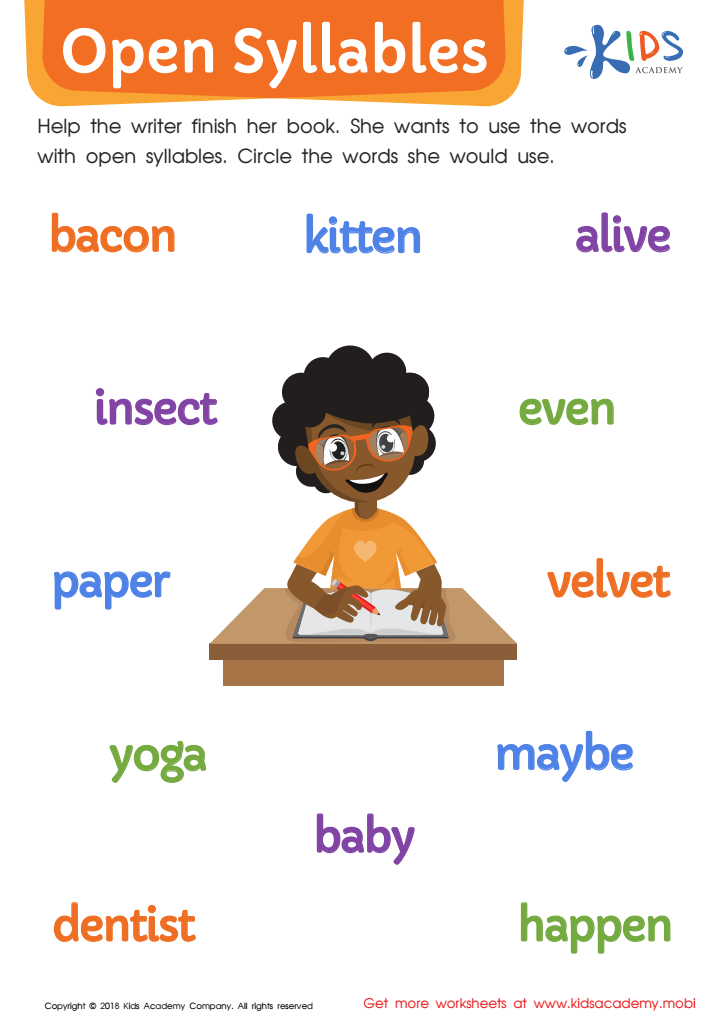
Open Syllables Worksheet
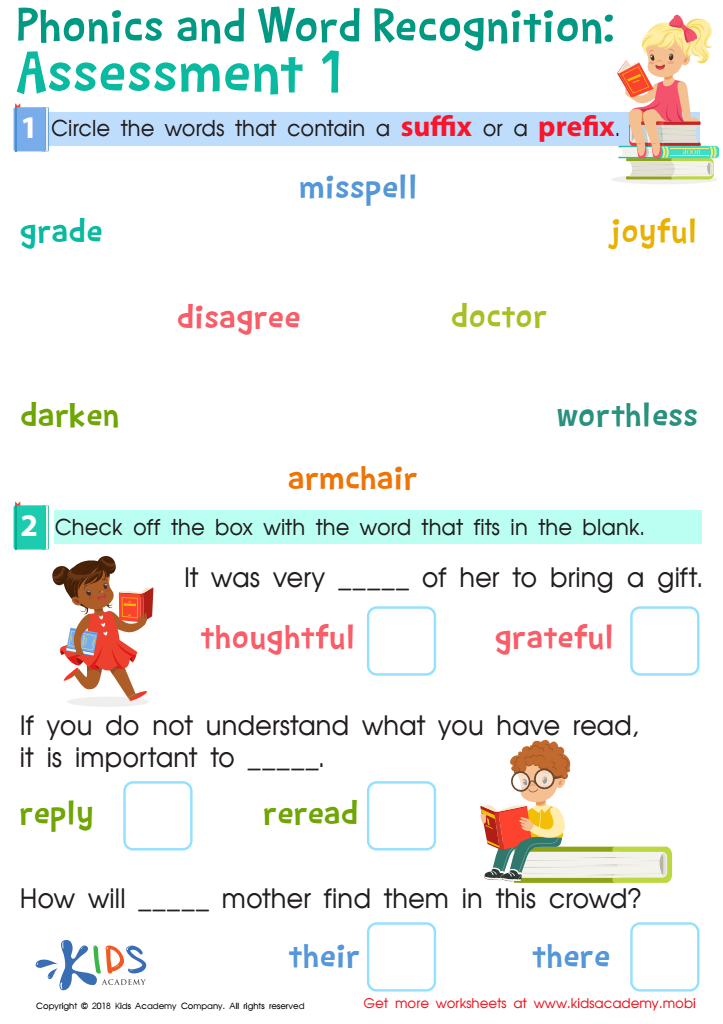
Phonics and Word Recognition: Assessment 1 Worksheet
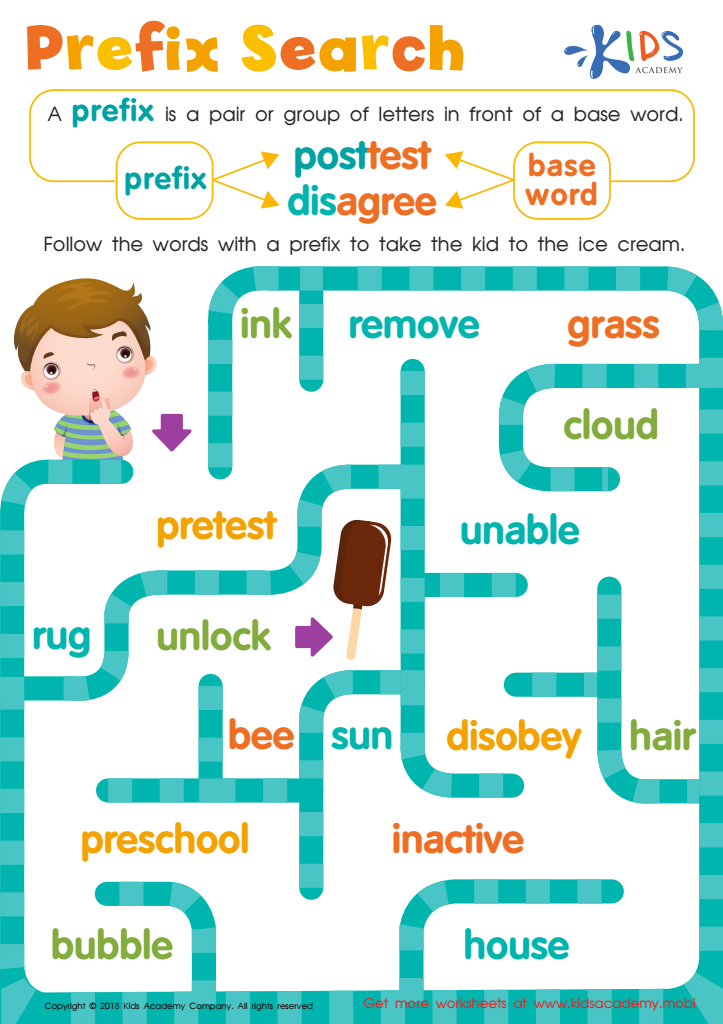
Reading: Prefix Search Worksheet
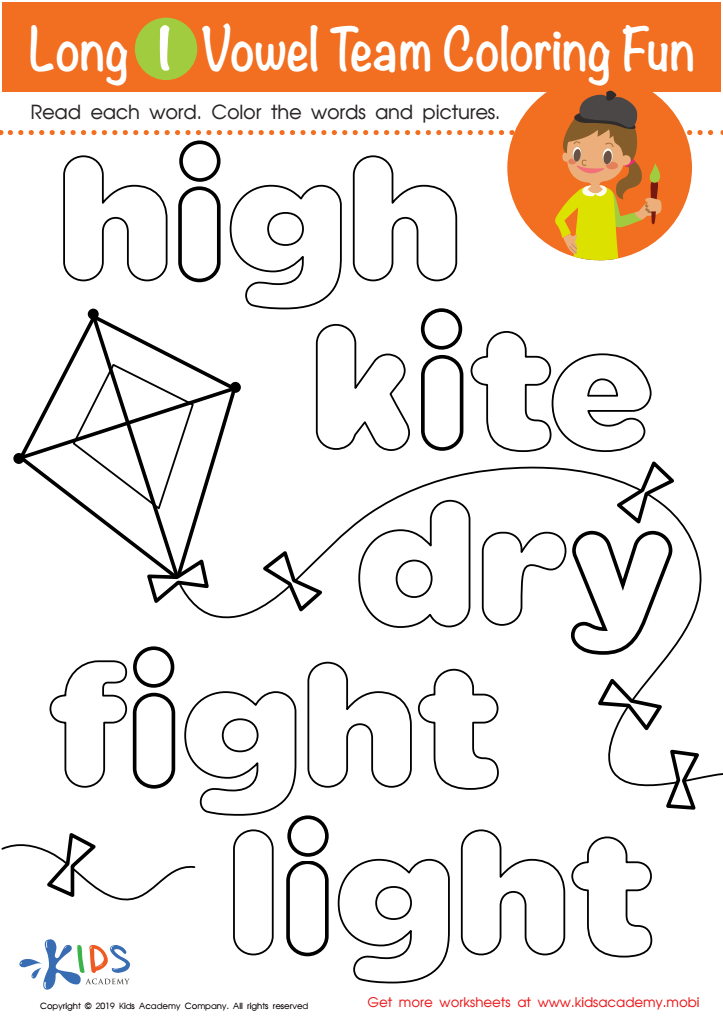
Long I Vowel Team Coloring Worksheet
 Assign to My Students
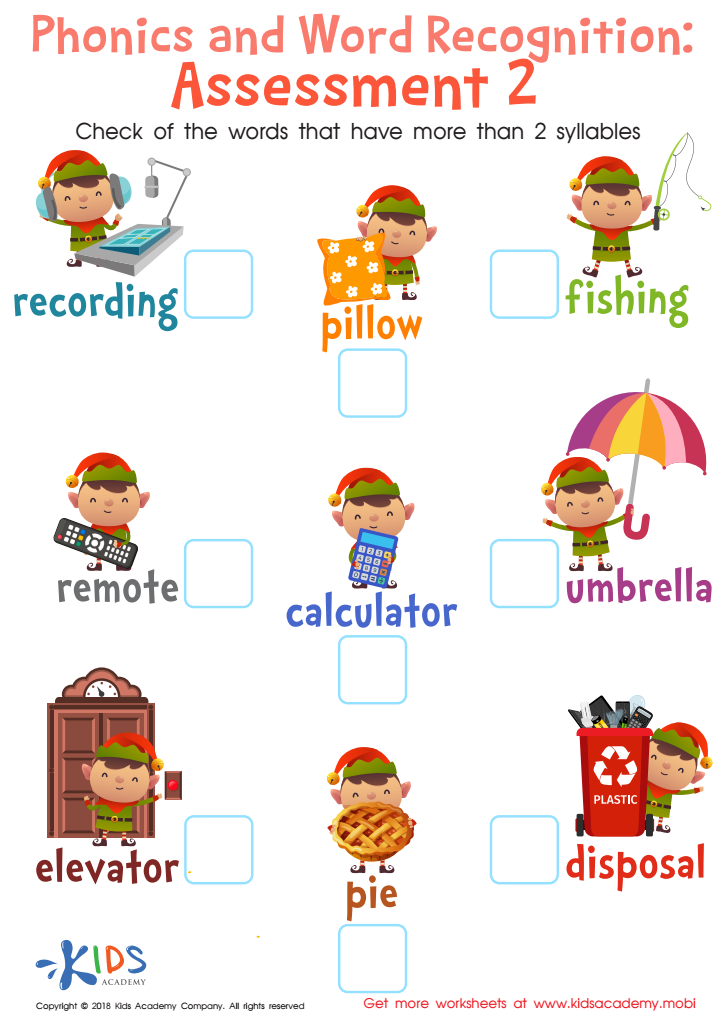
Phonics and Word Recognition: Assessment 2 Worksheet




.jpg)


.jpg)
Word identification is a crucial skill for 8-year-olds as it lays the foundation for reading proficiency and overall academic success. At this age, children transition from learning to read to reading to learn, making effective word identification essential. A strong ability to identify words enables children to comprehend texts more readily, enhancing their engagement with various subjects, from science to social studies.
Additionally, proficient word identification boosts confidence and fosters a love for reading. When children can quickly recognize words, they experience less frustration, allowing them to delve into stories and information rather than grappling with decoding challenges. This promotes a positive attitude towards reading, which is vital for lifelong learning.
For parents and teachers, monitoring word identification skills helps identify areas where a child may need support or enrichment. Early intervention can address challenges before they affect a child’s self-esteem and academic performance. Furthermore, by prioritizing word identification, educators and families contribute to closing achievement gaps, ensuring that every child has the skills needed to thrive in literacy and beyond. Ultimately, strong word identification opens doors to independent reading and critical thinking skills that benefit children throughout their educational journey.








