Reading comprehension Normal Arrays Worksheets for 8-Year-Olds
4 filtered results
-
From - To
Enhance your 8-year-old's reading comprehension with our engaging Normal Arrays Worksheets! These specially designed activities combine math concepts with reading skills, helping young learners develop a solid understanding of arrays through fun exercises. Each worksheet encourages kids to visualize and interpret information, fostering critical thinking and problem-solving abilities. With varied prompts and age-appropriate content, these worksheets cater to different learning styles, making learning enjoyable and effective. Help your child master reading comprehension while exploring the world of arrays. Discover the benefits of structured practice and ignite a passion for learning. Download now and watch your child's confidence grow!
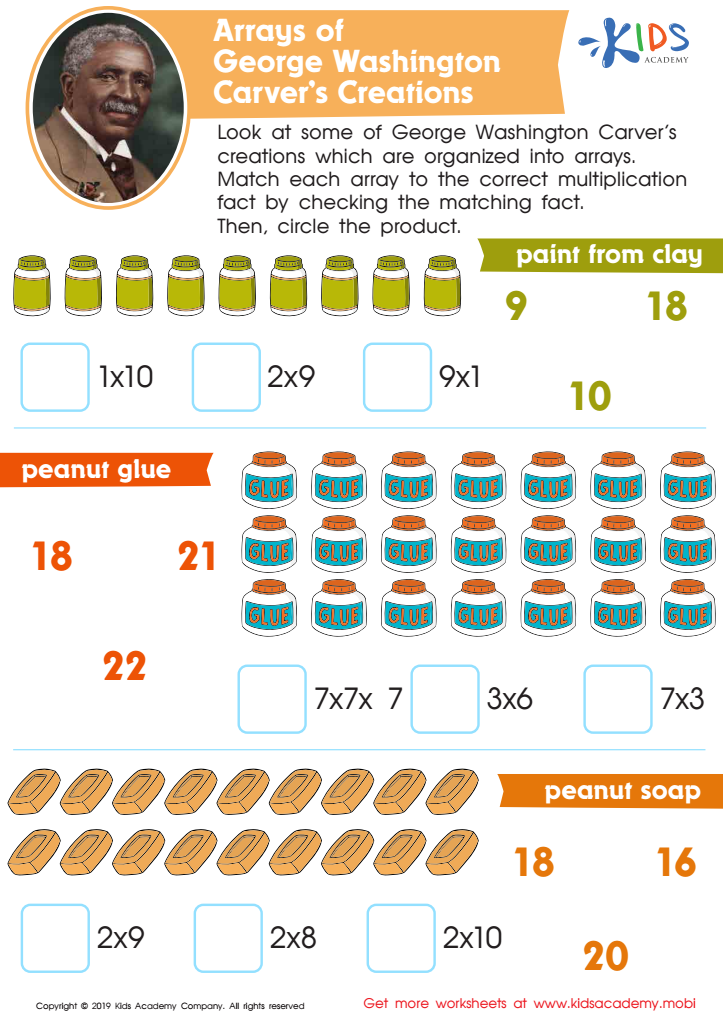
Arrays of George Washington Carver’s Creations Worksheet
 Assign to My Students
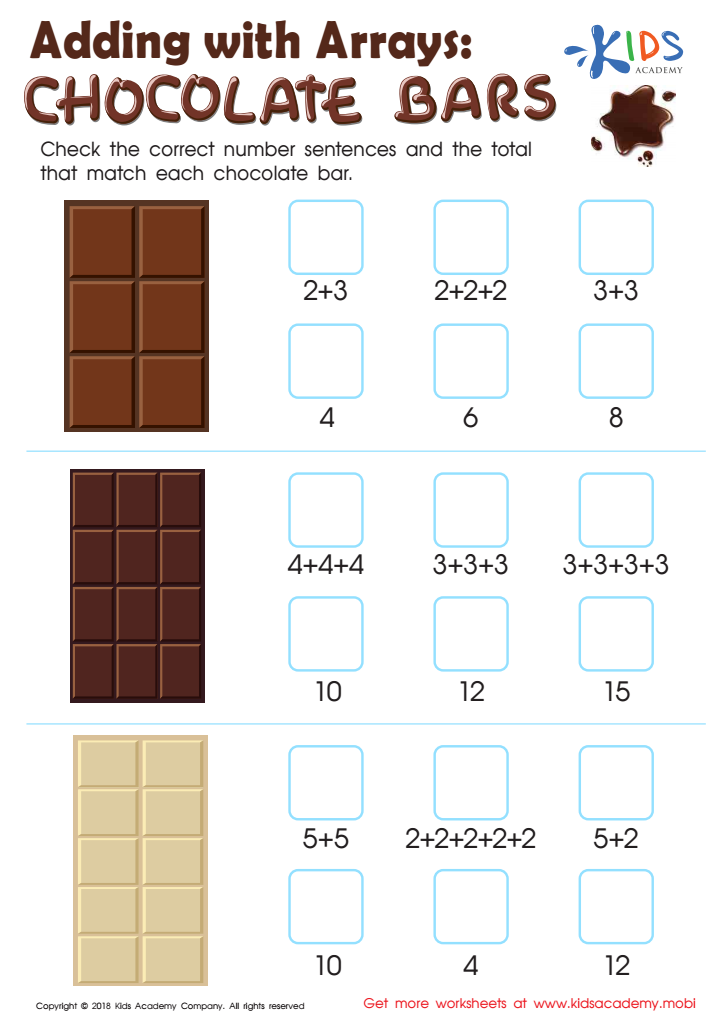
Adding with Arrays: Chocolate Bars Worksheet
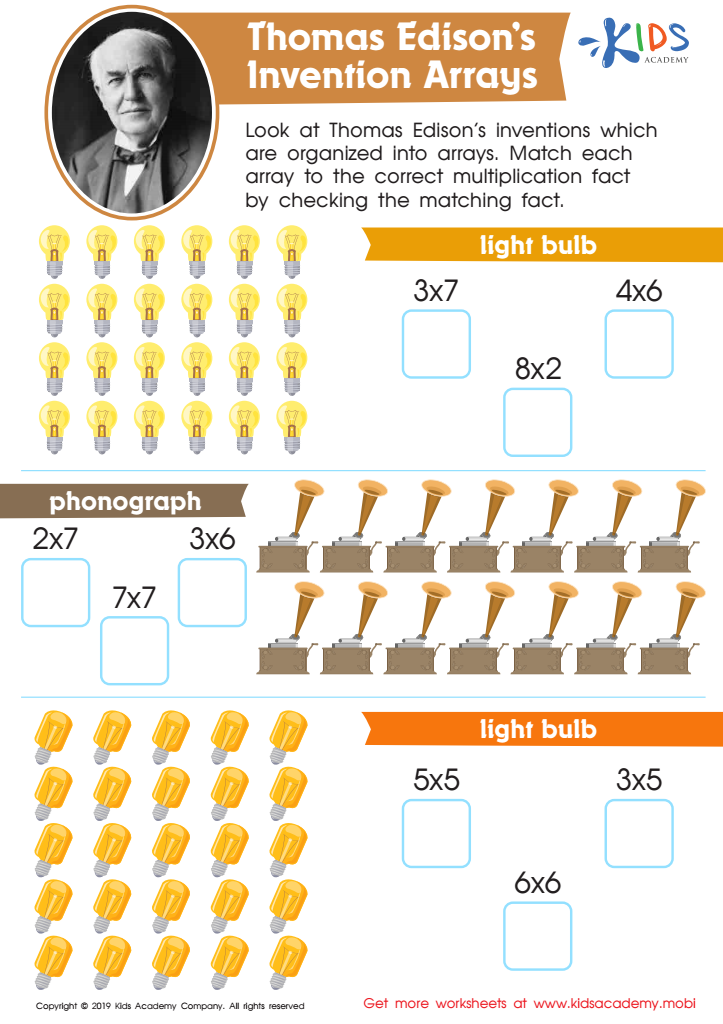
Thomas Edison’s Invention Arrays Worksheet
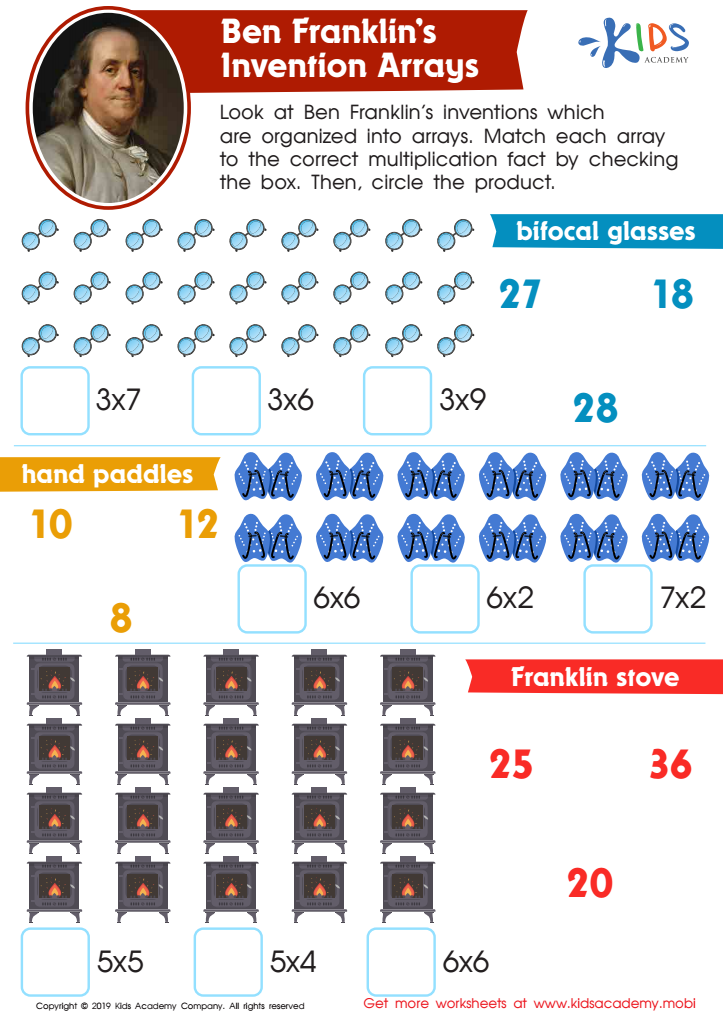
Ben Franklin’s Invention Arrays Worksheet








Reading comprehension is crucial for 8-year-olds as it forms the foundation for their academic success and overall communication skills. Understanding reading comprehension normal arrays—statistics that illustrate how children in that age group typically perform in reading comprehension—can help parents and teachers identify where a child stands in relation to their peers. This awareness enables them to tailor support and interventions to meet individual needs.
Moreover, as children at this age start encountering more complex texts across subjects like science and social studies, strong reading comprehension skills allow them to extract meaning, make connections, and think critically about what they read. It fosters a love for reading, which enhances vocabulary and writing skills.
By caring about reading comprehension normal arrays, parents and teachers can set realistic goals and celebrate progress, creating a motivating learning environment. Additionally, understanding these statistics can alert them to potential learning difficulties early on, allowing for timely interventions. By prioritizing reading comprehension, both parents and teachers can work collaboratively to ensure children develop essential skills that will serve them throughout their lives, not just in academic settings but also in everyday situations.








